




Freezewize | Industrial Cooling Systems & Custom Cold Room Solutions

Cleanability at the Cold Room Entrance

By-Swing Refrigerated Door Cleanability for Cold Room Entrances | B2B Guide
Cleanability at the cold room entrance affects hygiene, inspection readiness, and daily labor. The right by-swing refrigerated door reduces buildup and cleaning friction.

Cleanability at the Cold Room Entrance

by-swing refrigerated door can be the right choice when a cold room entrance needs to stay easy to clean under constant daily traffic. In busy cooler environments, hygiene problems often start at the opening, not deep inside the room. The entrance collects contact, splash, residue, cart marks, and repeated hand use faster than most buyers expect.

That is why cleanability at the cold room entrance is not only a sanitation issue. It is a workflow issue, a maintenance issue, and often an inspection-pressure issue. The right access solution helps the entrance stay easier to wipe down, easier to maintain, and more suitable for repeated daily use.

Where Cleanability Problems Actually Begin

Most cold room cleanliness problems do not begin with a major hygiene failure. They begin with accumulation.

The entrance is one of the most exposed parts of any cooler room. Staff pass through it constantly. Carts and racks brush against the lower sections. Handles, push points, edges, gaskets, and thresholds absorb repeated contact throughout the day. In food facilities, supermarkets, prep kitchens, and refrigerated processing spaces, that means the doorway becomes a collection point for residue, moisture, marks, and wear faster than many teams anticipate.

This matters because the entrance is not a passive surface. It is a working transition zone between cold storage and active operations. If that zone is difficult to clean, the problem compounds quickly. Teams may clean the room itself well while the opening remains harder to sanitize consistently. Over time, the access point starts looking older, feeling heavier, and requiring more attention than it should.

In U.S. facilities, that pressure often shows up in practical ways. Cleaning teams need more time at the doorway. Supervisors notice visible wear in back-of-house areas. Inspection confidence weakens. What looked like a simple door selection begins affecting labor and presentation every day.

Why a Technically Working Door Can Still Be the Wrong Choice

A cold room door can function correctly from a temperature standpoint and still be the wrong fit for sanitary operations.

That happens when the entrance is hard to wipe down, hard to access around hardware, or too exposed to repeated contact without the right surface logic. A door may seal adequately and still create too much cleaning friction. In busy operations, that friction becomes expensive because it repeats every day.

The wrong entrance choice often leads to:

  • more dirt and moisture retention around edges, seals, and hardware
  • slower cleaning routines during shift changes or end-of-day sanitation
  • more visible scuffing and buildup in high-contact zones
  • higher maintenance attention around thresholds, hinges, and impact areas
  • weaker inspection confidence in visible refrigerated work areas
  • an earlier sense that the entrance was not specified for the real environment

This is the real risk. A product can technically work and still fail the operation by creating a daily sanitation burden.

Why the Entrance Carries More Hygiene Pressure Than Expected

The cold room entrance experiences a different kind of stress than the interior room envelope. Inside the room, surfaces may stay relatively stable. At the doorway, everything changes more quickly.

Temperature transition encourages condensation risk. Traffic increases hand contact. Push movement brings more incidental impact. Washdown routines concentrate around the opening because it is both a hygiene boundary and a traffic point. In many operations, the door is also part of the visible back-of-house environment, which means appearance matters alongside sanitation.

That combination makes cleanability a design issue, not just a cleaning issue.

A door that creates hard-to-reach corners, awkward threshold cleanup, or hardware-heavy wipe-down points adds labor every single day. It also increases the chance that the entrance gets cleaned less thoroughly than intended, especially during busy shifts.

Cleanability Comparison That Helps the Decision

When sanitation pressure is part of the buying decision, the key comparison is not just how the door opens. It is how the entrance behaves under repeated traffic and routine cleaning.

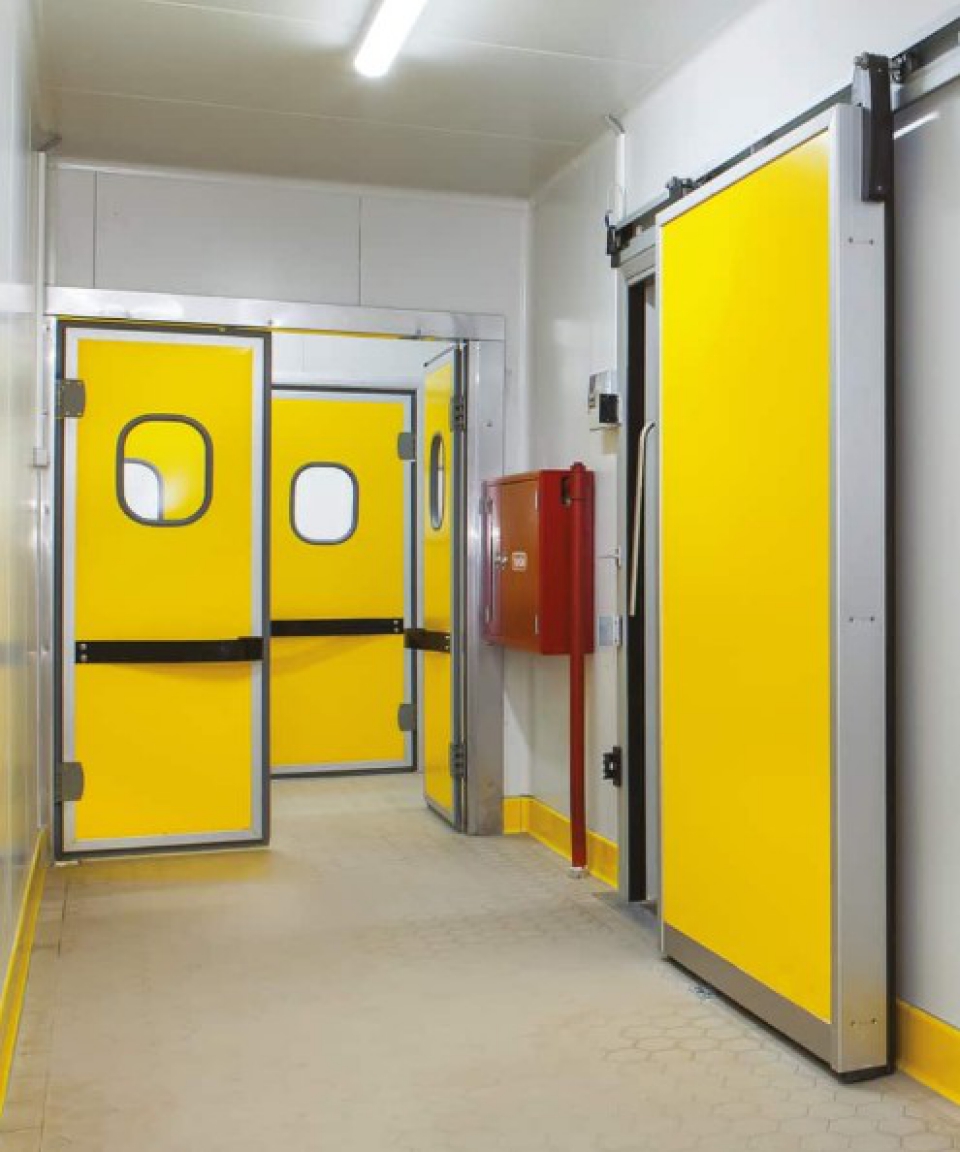
A by-swing refrigerated door is often valuable when the room sees frequent movement and the entrance needs practical, repeatable wipe-down behavior. A standard hinged door may still suit lower-traffic rooms where deliberate access and simpler use patterns reduce cleaning stress. A sliding solution may make sense when opening size or clearance is the main operational issue, though the cleanability logic depends heavily on layout and hardware configuration.

Door TypeBest FitCleanability AdvantageMain Limitation
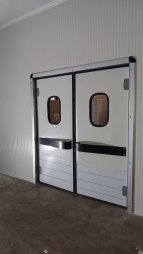
By-swing refrigerated doorFrequent pass-through, active cooler entrances, repeated staff movementSupports smoother traffic flow and can reduce awkward contact points at the openingMust be matched carefully to the room’s cleaning routine and traffic style
Standard hinged refrigerated doorLower to moderate traffic, controlled entrySimple access pattern in less demanding environmentsCan become a heavier-touch cleaning point in busier rooms
Sliding refrigerated doorWider openings, larger passage needs, space-controlled layoutsCan work well where swing clearance is a problemNot always the most natural fit for fast repetitive pedestrian access

This comparison matters because many hygiene issues are really suitability issues. The cleaner door is often the one that best matches the room’s daily behavior.

What Makes a By-Swing Refrigerated Door a Strong Hygiene Choice

A by-swing refrigerated door can improve cleanability because it addresses the operating condition causing the sanitation problem: repeated movement through the opening.

In busy cooler rooms, the entrance should not force staff into awkward contact patterns. The more a door interrupts natural movement, the more touch points, marks, and impact zones tend to build over time. A better-matched by-swing solution helps the opening support traffic more naturally, which can reduce unnecessary contact and help sanitation teams manage the area more consistently.

That benefit becomes stronger when the door is specified with the right surrounding details. Cleanability at the entrance is shaped by more than the door leaf alone. It depends on the full opening condition, including:

  • smooth, wipe-friendly surface logic
  • practical hardware layout
  • threshold design that does not trap unnecessary debris
  • gasket areas that remain serviceable and maintainable
  • impact protection in lower contact zones
  • view panel placement when visibility improves safer movement
  • coordination with adjacent cold room panels and frame details

This is why The Freezewize Cooling System is most relevant when the entrance is evaluated as a complete operating zone rather than a standalone product selection. In real cold room applications, the right door performs best when it is selected together with the opening, traffic behavior, sanitation routine, and service expectations.

The Surrounding Details Matter as Much as the Door

Many buyers focus on the door panel and overlook the surrounding conditions that determine whether the entrance stays easy to clean over time.

Thresholds are a common example. If the threshold area becomes a trap for residue, moisture, or repeated cart marks, sanitation teams lose time every day. The same is true for poorly considered hardware placement, exposed impact zones, or gasket areas that are functional but difficult to keep clean in a fast-moving operation.

In sanitary environments, the cold room entrance should be treated as a working hygiene zone. That means the right decision is rarely about the door alone. It is about the interface between the door, the frame, the panels, the floor transition, and the people using the opening all day.

The best solution is the one that makes the correct cleaning behavior easier to sustain.

Quick Decision Guide

by-swing refrigerated door is usually the better choice when:

  • the cooler room entrance sees frequent daily traffic
  • staff move through the opening from both directions
  • the area is cleaned often and needs fast wipe-down practicality
  • cart or rack movement creates repeated contact pressure
  • hygiene appearance and inspection readiness matter in the back-of-house area

A more conventional hinged solution is usually better when:

  • traffic is lighter and more controlled
  • the entrance does not see repeated short-cycle movement
  • cleaning pressure at the opening is moderate rather than constant
  • the room does not function as a fast-moving access point

A sliding option is usually more suitable when:

  • the opening is wider
  • surrounding space makes swing movement less practical
  • larger items need passage more than rapid pedestrian flow
  • the operating issue is more about clearance than sanitation speed

The clearest rule is simple: if the entrance must stay clean under constant use, choose the door type that reduces cleaning friction, not just the one that closes the opening.

Related Solutions

If cleanability at the cold room entrance is driving the decision, these related solutions are often worth evaluating alongside a by-swing refrigerated door:

  • cooler room swing doors for lower-traffic refrigerated access points
  • sliding cold room doors for wider openings and clearance-sensitive layouts
  • cold room panel systems for better opening integration and surface continuity
  • freezer room door solutions for lower-temperature applications
  • hygienic wall and edge protection for high-contact back-of-house areas
  • view panel and hardware options that support safer, cleaner movement patterns

FAQ

By-swing refrigerated door easier to manage in busy sanitary environments?

In many cases, yes. When traffic is frequent, a by-swing configuration can support smoother passage and reduce the contact patterns that make entrances harder to keep clean.

Why does the cold room entrance get dirty faster than the room interior?

Because it carries more hand contact, cart contact, splash exposure, threshold traffic, and temperature transition pressure than most interior surfaces.

Cleanability only about the door surface?

No. Cleanability depends on the full opening condition, including hardware, thresholds, gaskets, frame details, adjacent panels, and daily traffic behavior.

Standard hinged door still acceptable for clean cooler rooms?

Yes, in the right environment. It can work well in lower-traffic spaces where the entrance does not absorb constant daily movement.

What is the biggest sanitation mistake at the entrance?

Choosing a door that technically works but creates too many awkward cleaning points under real operating conditions.

Should impact protection be considered part of hygiene planning?

Yes. Protecting lower-contact areas can reduce surface damage, limit visible wear, and help the entrance remain easier to maintain over time.

Conclusion

Cleanability at the cold room entrance is not a cosmetic issue. It is a daily operating condition that affects labor, hygiene confidence, maintenance pressure, and long-term suitability.

The best entrance is the one that stays easier to clean after real traffic begins.

If your cooler room opening is exposed to repeated movement, visible sanitation expectations, and daily wipe-down pressure, a properly specified by-swing refrigerated door can be the more practical long-term solution. A careful review of traffic, threshold design, and opening details usually prevents far more trouble than a later correction.


Gallery

Fill the Form!

Write your needs and fill the form to contact us.

Freezewize | Industrial Cooling Systems & Custom Cold Room Solutions
Merhaba, Size yardımcı olabilir miyiz ?
Whatsapp Destek