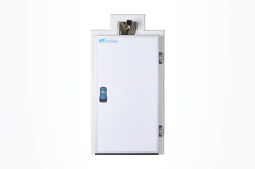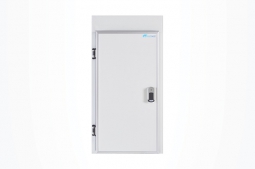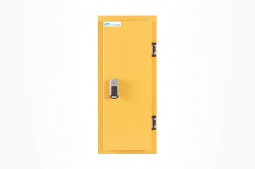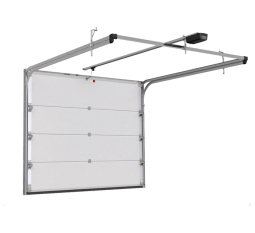





Bi-Parting Cold Room Sliding Door
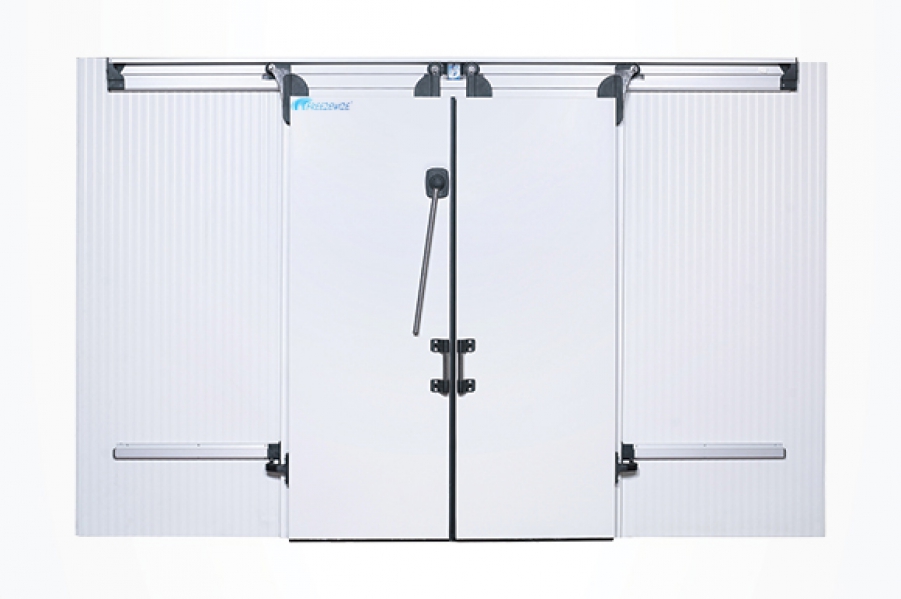
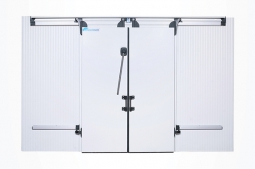
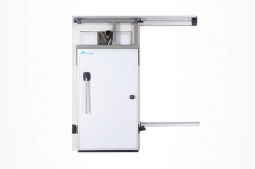
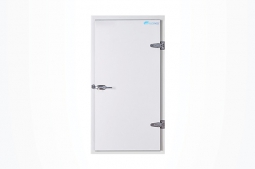
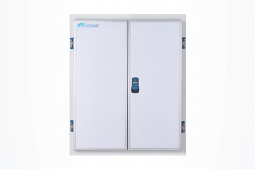
A cold room sliding door provides insulated access for refrigerated facilities where wide openings, pallet movement, equipment traffic, or limited swing space make a conventional hinged door less practical. Freezewize Bi-Parting Cold Room Sliding Door uses two insulated door leaves that move horizontally away from the center, creating a wide and balanced entrance for cold rooms, walk-in coolers, walk-in freezers, food processing plants, warehouses, and industrial cold storage facilities.
This bi-parting cold room door combines polyurethane insulation, heavy-duty sliding hardware, compression sealing, customizable door thickness, plus manual or motorized operation for professional refrigeration projects.
Cold Room Sliding Door Specifications
| Technical Feature | Freezewize Specification |
|---|---|
| Product Type | Bi-Parting Cold Room Sliding Door |
| Door Configuration | Two-piece horizontal sliding door |
| Opening Direction | Two leaves opening from center |
| Applications | Cold Room / Walk-In Cooler / Walk-In Freezer |
| Insulation Core | High-density polyurethane foam |
| PU Density | 40–45 kg/m³ |
| Thermal Conductivity | ≤ 0.022 W/m·K |
| Door Thickness | 60 / 80 / 100 / 120 mm |
| R-Value – 60 mm | R-15 |
| R-Value – 80 mm | R-20 |
| R-Value – 100 mm | R-25 |
| R-Value – 120 mm | R-30 |
| U-Value – 120 mm | Approx. 0.18 W/m²K |
| Surface Options | Pre-painted galvanized steel / AISI 304 stainless steel |
| Sliding System | Heavy-duty ceiling track |
| Frame Options | Insulated aluminum / stainless steel |
| Sealing System | Multi-point compression gasket |
| Low-Temperature Option | Heated gasket available |
| Operating Range | +2°C to −40°C |
| Operation | Manual or motorized |
| Production | Custom production according to project |
Bi-Parting Cold Room Door Design
A bi-parting cold room door divides door movement between two sliding leaves rather than moving one large leaf entirely toward one side.
Both door panels open horizontally from the center. This configuration reduces the lateral travel required on each side of the opening while still creating wide refrigerated access.
For facilities handling pallets, carts, forklifts, food products, production equipment, or large loads, a bi-parting sliding door can provide a more practical entrance than a conventional hinged cold room door.
The design is particularly useful where wide access is required but available wall space beside the opening is limited.
Double Sliding Cold Room Door
A double sliding cold room door is often selected when one large sliding leaf would become difficult to accommodate within available wall space.
By dividing the opening into two leaves, each panel travels a shorter horizontal distance. This can improve layout flexibility around large refrigerated entrances.
The configuration also creates a centered access path, which is useful for:
- Pallet movement
- Forklift traffic
- Production equipment
- Food processing lines
- Large product handling
- Warehouse operations
- Cold chain distribution
- Industrial storage
For these applications, a double-leaf sliding door provides wide access without requiring swing clearance inside or outside the cold room.
Refrigerated Sliding Door Insulation
A refrigerated sliding door forms part of the insulated envelope of a cold room or freezer. Door leaf insulation therefore needs to match operating temperature and project conditions.
Freezewize uses high-density polyurethane foam with a density of 40–45 kg/m³ and thermal conductivity of ≤ 0.022 W/m·K.
Available cold room sliding door thicknesses include:
60 mm — R-15
Suitable for selected chilled applications.
80 mm — R-20
Provides increased thermal resistance for refrigerated rooms.
100 mm — R-25
Suitable for more demanding cold storage conditions.
120 mm — R-30
Designed for higher insulation requirements, including low-temperature applications.
At 120 mm thickness, specified U-value is approximately 0.18 W/m²K.
This range allows door construction to be selected according to cooler, freezer, ambient, and project-specific requirements rather than using one fixed insulation thickness for every application.
Cold Room Sliding Door Sealing
Wide refrigerated openings require effective sealing once the door closes.
Freezewize Bi-Parting Cold Room Sliding Door uses a multi-point compression gasket system designed to create perimeter contact around insulated door leaves.
For lower-temperature freezer applications, a heated gasket option is available according to project conditions.
Correct sealing helps reduce uncontrolled air movement through the closed doorway, which becomes increasingly important where refrigerated and ambient spaces operate with a large temperature difference.
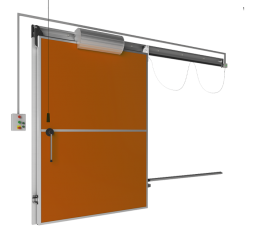
Sliding Door Track System
A cold room sliding door relies heavily on its track system because door weight moves horizontally rather than rotating through hinges.
Freezewize uses a heavy-duty ceiling track system designed for repeated opening and closing in commercial or industrial cold storage environments.
The sliding arrangement keeps the floor area around the entrance clear from a conventional door swing path.
This becomes particularly useful where:
- Pallets wait close to the entrance
- Forklifts approach the door directly
- Storage racks are positioned near access points
- Production areas have restricted working space
- Large clear openings are required
Cooler and Freezer Sliding Door
The same basic cold room sliding door concept can serve chilled and frozen applications when insulation, sealing, thickness, and project configuration are selected correctly.
Freezewize Bi-Parting Cold Room Sliding Door is specified for an operating range from approximately +2°C to −40°C.
This allows project configurations for:
Walk-In Coolers
Refrigerated storage for chilled food, beverages, dairy products, meat, produce, or commercial food operations.
Walk-In Freezers
Low-temperature rooms requiring increased insulation and suitable sealing configuration.
Industrial Freezer Rooms
Larger frozen storage facilities where pallets, equipment, or industrial traffic require wide access.
Door thickness and heated sealing should therefore be selected according to actual operating temperature rather than simply using the same specification across every cold room.
Manual or Motorized Sliding Door
A bi-parting sliding door can be supplied with manual or motorized operation depending on entrance size and traffic pattern.
Manual operation may be suitable for lower-frequency entrances where straightforward operation is preferred.
A motorized cold room sliding door becomes more relevant where repeated opening, larger door dimensions, material handling, or workflow requirements make automated movement beneficial.
Automation should be selected around actual facility traffic rather than added only as an optional feature.
Stainless Steel Sliding Door
Surface selection also changes according to cold room environment.
Freezewize offers:
Pre-Painted Galvanized Steel
Suitable for many standard commercial and industrial refrigerated applications.
AISI 304 Stainless Steel
Suitable for food processing, hygiene-sensitive environments, frequent cleaning, moisture exposure, or locations requiring improved corrosion resistance.
A stainless steel refrigerated sliding door is especially relevant where the entrance forms part of a regularly washed or hygiene-controlled production area.
Bi-Parting vs Single Sliding Door
Choosing between a single sliding door and a bi-parting cold room door depends primarily on opening width and available wall space.
| Requirement | Single Sliding Door | Bi-Parting Sliding Door |
|---|---|---|
| Standard opening | Suitable | Suitable |
| Very wide opening | Possible | Strong option |
| Wall space on one side | More required | Less travel per side |
| Centered opening | No | Yes |
| Pallet / equipment traffic | Suitable | Highly suitable |
| Large industrial access | Suitable | Strong option |
| No swing clearance | Yes | Yes |
A single sliding door remains practical for many standard openings. A bi-parting sliding door becomes especially useful where opening width or available wall space makes a single large moving leaf less efficient.
Cold Storage Applications
Freezewize cold room sliding door solutions can be used across a wide range of refrigerated facilities:
- Food processing plants
- Meat processing facilities
- Seafood facilities
- Dairy operations
- Cold storage warehouses
- Frozen food warehouses
- Supermarkets
- Distribution centers
- Logistics facilities
- Pharmaceutical cold storage
- Walk-in coolers
- Walk-in freezers
Each facility creates different requirements for opening dimensions, surface material, insulation thickness, traffic, sealing, and automation.
Custom Bi-Parting Sliding Door
Large refrigerated entrances rarely follow one standard dimension.
Freezewize manufactures each Bi-Parting Cold Room Sliding Door according to project requirements. Door dimensions, insulation thickness, frame material, surface finish, gasket configuration, operating temperature, and manual or motorized operation can be selected according to facility conditions.
This allows the double sliding cold room door to be engineered around actual cold room structure rather than forcing the project around a standard door.
Complete Cold Room Integration
Freezewize Cooling System supplies the Bi-Parting Cold Room Sliding Door as an individual product or as part of a complete cold storage project.
Our turnkey scope includes project design, cooling-load calculation, insulated cold room panels, cold room doors, refrigeration systems, electrical control and automation systems, installation, testing, commissioning, and final handover.
This allows door dimensions, insulated wall structure, operating temperature, refrigeration capacity, traffic pattern, plus automation requirements to be considered within one coordinated cold storage system.
For a wide cold room, walk-in freezer, food processing plant, or industrial warehouse entrance, contact Freezewize Cooling System to specify a cold room sliding door suited to your opening dimensions and operating conditions.