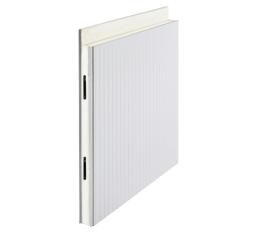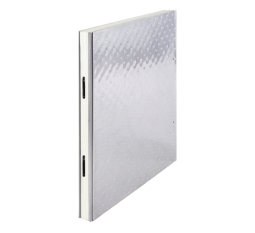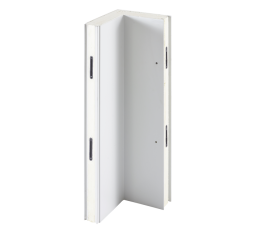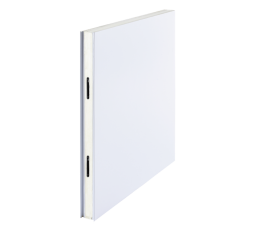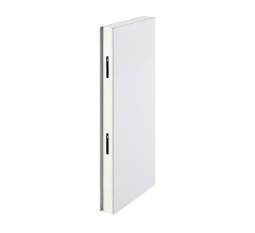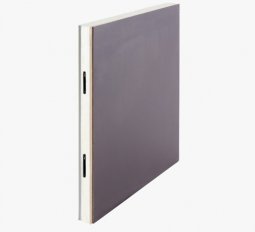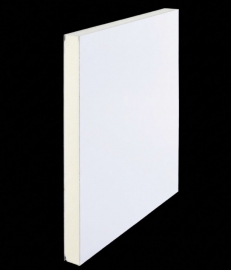





Aluminum Diamond Plate Floor Panel
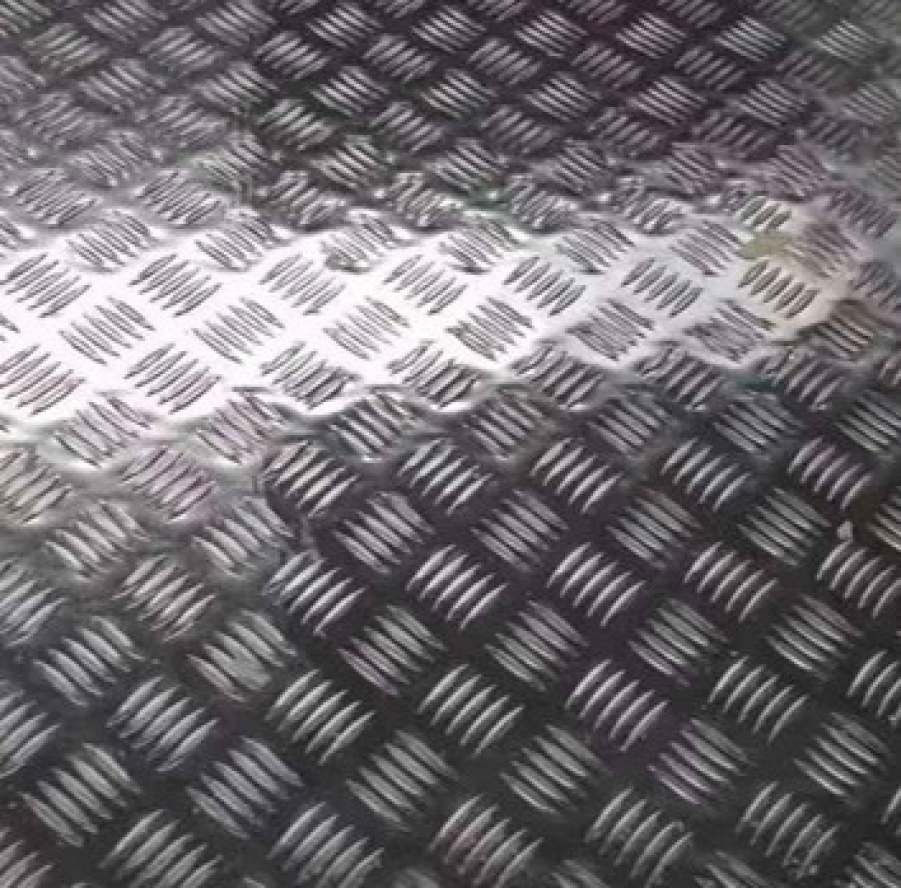
A diamond plate floor panel is an insulated cold room floor panel built with a patterned aluminum working surface, reinforced floor structure, plus polyurethane insulation. It creates a durable floor inside refrigerated spaces while reducing heat transfer through the base of a cold room.
Freezewize Aluminum Diamond Plate Floor Panel combines high-density polyurethane insulation with a reinforced aluminum diamond plate surface. Its modular construction integrates with cold room wall panels, doors, corners, plus complete walk-in cooler or freezer systems.
This aluminum diamond plate floor is suitable for walk-in coolers, walk-in freezers, food storage rooms, commercial refrigeration, food processing facilities, refrigerated warehouses, seafood storage, cold chain operations, plus industrial cold rooms.
Unlike a simple metal floor covering, Freezewize Diamond Plate Floor Panel forms part of the insulated cold room envelope. Its construction provides floor insulation, a durable working surface, modular connection, plus refrigerated-room integration within one floor system.
Diamond Plate Basics
A diamond plate floor panel performs two primary functions.
First, it creates a usable cold room floor surface.
Second, it reduces thermal transfer between refrigerated space and supporting floor below.
A typical construction combines:
- Aluminum diamond plate surface
- Reinforced floor structure
- High-density polyurethane insulation
- Insulated panel body
- Modular panel connections
Each component has a separate role.
Diamond plate provides the working surface.
Reinforcement supports operating loads.
Polyurethane provides thermal insulation.
Panel connections create a continuous modular floor.
This combination separates an insulated diamond plate floor panel from a standard sheet of aluminum diamond plate installed over an existing floor.
Technical Floor Configuration
| Technical Feature | Freezewize Configuration |
|---|---|
| Product Name | Aluminum Diamond Plate Floor Panel |
| Primary Keyword | Diamond Plate Floor Panel |
| Product Type | Insulated cold room floor panel |
| Top Surface | Aluminum diamond plate |
| Insulation Core | High-density polyurethane foam |
| Floor Structure | Reinforced insulated construction |
| Panel Connection | Modular cam-lock integration |
| Main Applications | Walk-In Cooler / Walk-In Freezer / Cold Storage |
| Low-Temperature Use | Down to −40°C / −40°F |
| Surface Character | Raised diamond-pattern aluminum |
| Moisture Exposure | Corrosion-resistant aluminum surface |
| Traffic Type | Selected according to project use |
| Panel Thickness | Project-specific |
| Aluminum Thickness | Project-specific |
| Load Capacity | Confirmed according to actual project load |
| Dimensions | Project-specific production |
Final aluminum thickness, floor-panel thickness, surface configuration, load capacity, plus panel dimensions need confirmation according to project requirements.
Integrated Floor Construction
An important distinction exists between a diamond plate floor panel and a diamond plate sheet.
A diamond plate sheet is primarily a surface material.
A Freezewize floor panel is an insulated construction component.
The floor system combines surface material with insulation plus structural support.
This creates four functional layers:
Diamond Plate Surface
Receives daily traffic, cleaning, product movement, plus operational contact.
Reinforced Construction
Helps distribute loads across floor-panel structure.
PU Insulation Core
Reduces conductive heat transfer through cold room floor.
Modular Connection
Connects adjacent floor panels into a continuous refrigerated enclosure.
This construction makes Diamond Plate Floor Panel suitable for modular walk-in cooler plus freezer projects where flooring needs both thermal insulation and a durable metal surface.
Diamond Plate Surface
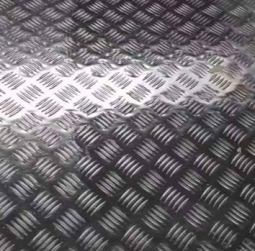
Aluminum diamond plate uses a raised repeating pattern across the sheet surface.
In American terminology, similar material is also commonly called:
- Diamond plate
- Diamond tread plate
- Aluminum tread plate
- Tread plate
For Freezewize's U.S. market positioning, diamond plate should remain the primary term.
The patterned surface creates more texture than smooth aluminum sheet.
This makes diamond plate particularly relevant in commercial cold rooms where personnel, carts, product containers, plus cleaning routines place repeated demands on floor surfaces.
Freezewize should avoid presenting pattern alone as a guaranteed anti-slip system.
Actual traction also depends on:
- Ice
- Water
- Oil
- Food residue
- Footwear
- Cleaning chemicals
- Surface condition
The correct description is a textured diamond plate working surface, not an unsupported slip-resistance certification.
Insulated Floor Function
A cold room loses thermal energy through every part of its enclosure.
Heat can enter through:
- Walls
- Ceiling
- Doors
- Joints
- Penetrations
- Floor
Floor heat gain becomes especially important in low-temperature rooms.
A diamond plate floor panel uses polyurethane insulation below its aluminum surface to reduce this thermal transfer.
This creates a direct relationship:
Building floor → insulated floor panel → refrigerated space
Without suitable floor insulation, heat below room adds to refrigeration load.
Freezer projects require particular attention because temperature difference between room interior plus surrounding structure becomes greater.
Panel vs Overlay
This distinction is especially important for U.S. buyers.
A diamond plate overlay is typically installed over an existing floor surface.
A diamond plate floor panel forms part of cold room construction itself.
| Feature | Diamond Plate Floor Panel | Diamond Plate Overlay |
|---|---|---|
| Insulated panel construction | Yes | Usually no |
| PU insulation core | Yes | No |
| Cold room envelope role | Yes | Surface protection only |
| Modular floor connection | Yes | Not primary function |
| Diamond plate surface | Yes | Yes |
| Floor elevation | Part of panel system | Installed over existing floor |
| Thermal insulation | Primary function | Depends on base floor |
| Walk-in construction | Integrated | Secondary layer |
Freezewize Aluminum Diamond Plate Floor Panel is designed as an integrated insulated floor system, not simply a metal covering.
Cooler Floor Use
A walk-in cooler floor panel supports positive-temperature refrigerated storage while creating a durable interior floor.
Common applications include:
- Restaurant walk-in coolers
- Supermarket cold rooms
- Hotel refrigerated storage
- Beverage rooms
- Dairy storage
- Fresh produce
- Chilled meat
- Seafood storage
- Commercial foodservice
Not every walk-in cooler requires an insulated raised floor.
Existing building conditions, room temperature, hygiene requirements, moisture, traffic, plus local construction design all influence floor selection.
Where an insulated modular floor is required, Aluminum Diamond Plate Floor Panel provides both thermal separation plus a metallic working surface.
Freezer Floor Use
Floor insulation becomes more important in freezer rooms.
Freezewize Diamond Plate Floor Panel supports low-temperature applications reaching −40°C / −40°F, subject to project configuration.
A freezer floor needs coordination across:
- PU insulation
- Floor-panel joints
- Wall-floor connections
- Door threshold
- Moisture control
- Frost conditions
- Supporting slab
- Traffic loads
Diamond plate forms the working surface.
PU insulation handles thermal separation.
Both functions need correct specification.
A durable aluminum surface alone does not create a suitable freezer floor.
Freezer Floor Heat
A building slab below a freezer normally remains warmer than freezer interior.
Heat therefore moves toward refrigerated space.
As freezer temperature decreases, temperature difference becomes greater.
This increases thermal demand across floor.
Important project data includes:
- Freezer setpoint
- Floor area
- Building slab conditions
- Ambient temperature
- Insulation requirement
- Operating schedule
- Stored product
Floor thermal load should be included during refrigeration-system calculation.
Traffic Load Planning
A cold room floor needs to match actual facility traffic.
There is no useful universal statement such as:
“This floor handles heavy traffic.”
Engineering needs to define what heavy means.
Different rooms may use:
- Personnel only
- Lightweight carts
- Mobile racks
- Pallet jacks
- Heavy product carts
- Material-handling equipment
- Forklifts
Each creates a different mechanical demand.
Final Diamond Plate Floor Panel configuration should therefore follow actual operating conditions.
Wheel Load Control
Rolling loads deserve special attention.
Vehicle or cart weight reaches floor through individual wheels.
A 1,000 lb load distributed over a broad area creates very different pressure from the same weight carried by four small hard wheels.
Important information includes:
- Equipment weight
- Payload
- Number of wheels
- Wheel diameter
- Wheel width
- Wheel material
- Travel frequency
Small, hard wheels create concentrated pressure.
This makes wheel load especially important when specifying floor panels for pallet jacks or heavily loaded carts.
Point Load Control
Static equipment can also create concentrated pressure.
Examples include:
- Rack feet
- Equipment legs
- Shelving supports
- Machinery bases
A room may remain within a general distributed floor-load limit while one small rack foot creates excessive local stress.
Floor engineering should therefore consider:
distributed load
plus
point load
as separate conditions.
Where necessary, load-distribution plates or reinforced floor construction can be evaluated.
Forklift Floor Use
Forklift traffic requires project-specific evaluation.
A forklift introduces:
- High wheel loads
- Axle loads
- Turning forces
- Braking forces
- Repeated dynamic traffic
Forklift suitability should not be assumed from a generic floor description.
Technical evaluation needs:
- Forklift weight
- Maximum payload
- Wheel configuration
- Tire dimensions
- Loaded axle information
- Turning radius
- Daily traffic frequency
Freezewize can determine suitable floor construction once these operating conditions are known.
This is more technically reliable than publishing one universal forklift rating.
Doorway Traffic Zones
Doorways usually become the highest-traffic point inside a cold room.
Almost every person, cart, pallet jack, or product load crosses the same area.
This concentrates floor wear around:
- Threshold
- Ramp
- First floor joint
- Door-side panel edges
- Turning area
Diamond Plate Floor Panel layout should therefore be coordinated with door position.
A floor joint located directly at a high-impact threshold may behave differently from one located inside a low-traffic section.
Floor planning should consider actual movement through room.
Threshold Integration
Cold room floor plus door need one coordinated elevation.
Important dimensions include:
- Floor-panel thickness
- Finished floor level
- Door opening height
- Door frame
- Threshold
- Gasket position
- Ramp height
Poor threshold geometry creates operational problems.
A raised edge can increase wheel impact.
Incorrect finished level can interfere with door sealing.
A badly positioned ramp can restrict pallet-jack movement.
Freezewize cold room doors plus Diamond Plate Floor Panels can be coordinated during project design to avoid these conflicts.
Ramp Design
An insulated floor panel raises cold room interior above building floor.
This often requires a ramp.
Ramp geometry depends on:
- Finished floor height
- Available approach space
- Door width
- Cart traffic
- Pallet-jack traffic
- Personnel use
A short ramp creates a steeper approach.
A longer ramp provides a smoother transition but needs more external space.
Ramp design therefore belongs inside cold room layout planning rather than being added after installation.
Subfloor Preparation
Even a strong diamond plate floor panel needs a suitable base.
Before installation, supporting floor should be checked for:
- Flatness
- Level
- Structural condition
- Cracks
- Moisture
- Debris
- Drainage problems
An uneven subfloor can create:
- Panel rocking
- Joint height differences
- Concentrated loads
- Surface movement
- Threshold misalignment
Insulated floor panels should not be used to correct major concrete-floor defects.
Base preparation needs completion first.
Joint Alignment
Floor-panel joints receive direct traffic.
This makes alignment especially important.
A small level difference between two floor panels creates a repeated impact every time a wheel crosses that joint.
Over time, repeated impact can affect:
- Aluminum edges
- Panel connections
- Cart wheels
- Pallet-jack wheels
- Surface condition
Good installation aims for smooth transitions between adjacent diamond plate floor panels.
Joint performance should be judged by movement across floor, not appearance alone.
Cam-Lock Floor System
Freezewize Aluminum Diamond Plate Floor Panel integrates with modular cam-lock cold room construction.
Cam-lock connections help position adjacent insulated panels during assembly.
This supports:
- Modular installation
- Panel alignment
- Continuous floor insulation
- Controlled connections
- Cold room integration
Cam-lock hardware does not replace proper floor preparation.
Substrate still needs sufficient level plus stability.
Mechanical locking works best when panels begin from correct geometry.
Floor Wall Junction
Floor panels meet wall panels around entire room perimeter.
This junction influences:
- Thermal continuity
- Cleaning
- Moisture
- Wall alignment
- Floor geometry
- Hygienic finishing
Floor thickness also changes finished wall height.
Wall plus floor should therefore be designed together.
This becomes particularly important around freezer rooms where thermal continuity through lower wall junction helps protect complete enclosure performance.
Moisture Exposure
Aluminum diamond plate is well suited to many refrigerated environments exposed to humidity or cleaning.
Its corrosion-resistant surface provides a practical working layer around cold storage traffic.
Typical applications include:
- Seafood cold rooms
- Food processing
- Commercial kitchens
- High-humidity storage
- Cold chain handling
- Refrigerated production spaces
Actual corrosion behavior still depends on aluminum grade, chemicals, cleaning products, plus environmental exposure.
Where a specific alloy or chemical-resistance requirement exists, final material specification should be confirmed during quotation.
Cleaning Conditions
Diamond plate has a textured surface.
Cleaning routines therefore need to reach raised pattern geometry.
Facility teams should control:
- Food residue
- Water
- Cleaning chemicals
- Ice
- Dirt
- Drainage
A patterned floor provides a durable industrial surface but does not eliminate cleaning requirements.
Proper sanitation depends on complete room design, including:
- Floor
- Wall-floor junction
- Drains
- Doors
- Hygienic profiles
Drain Integration
Some refrigerated rooms need floor drains.
A drain interrupts insulated floor construction.
This area requires planning around:
- Drain location
- Floor slope
- Opening dimensions
- Sealing
- Insulation continuity
- Cleaning access
Random site cutting after floor installation creates less predictable results.
Drain locations should be identified before panel production whenever project conditions allow.
Condensation Control
Visible moisture does not always mean floor-panel failure.
Location provides useful clues.
Doorway Moisture
Check door openings, ambient humidity, threshold, plus traffic.
Joint Moisture
Inspect floor connection plus sealing.
Wall Edge Moisture
Inspect wall-floor transition.
Drain Moisture
Review drain penetration.
General Moisture
Review room conditions, cleaning practice, refrigeration operation, plus humidity.
Diagnosis should identify moisture source before changing floor components.
Freezer Frost Control
Diamond plate texture does not prevent ice.
Frost occurs when moisture reaches sufficiently cold surfaces.
Typical moisture sources include:
- Frequent door opening
- Warm ambient air
- Damaged door gaskets
- Cleaning water
- Open joints
- Poor penetrations
Freezer entrance areas deserve particular attention.
Ice accumulation around a threshold should trigger investigation into moisture entry, not immediate assumption that floor material is wrong.
Food Processing Floors
An aluminum diamond plate floor can support refrigerated food-processing environments where moisture, personnel movement, carts, plus frequent operation occur together.
Applications include:
- Meat storage
- Poultry cold rooms
- Seafood facilities
- Dairy storage
- Prepared food
- Produce rooms
Final floor choice still needs to match hygiene requirements.
Facilities with especially intensive washdown or stringent surface requirements may favor stainless steel construction instead.
Product selection should follow actual operating environment.
Walk-In Cooler Floors
Commercial walk-in coolers represent a strong application for Diamond Plate Floor Panels.
Common sectors include:
- Restaurants
- Hotels
- Supermarkets
- Grocery stores
- Foodservice
- Catering
- Convenience stores
U.S. walk-in cooler buyers are already familiar with aluminum diamond plate flooring terminology.
This makes the product name immediately understandable without requiring explanation of “checker plate.”
The floor becomes part of a complete modular walk-in enclosure.
Walk-In Freezer Floors
Walk-in freezers usually place greater importance on insulated flooring than positive-temperature coolers.
A diamond plate freezer floor panel combines insulated construction with a durable metal surface.
Important design factors include:
- Freezer temperature
- Floor insulation
- Door threshold
- Panel joints
- Product load
- Traffic
- Frost control
Freezer floors should be specified as part of complete thermal enclosure rather than selected only by surface appearance.
Warehouse Floor Use
Refrigerated warehouse projects create greater traffic demands.
Operations may include:
- Pallet movement
- Mobile racks
- Picking carts
- Pallet jacks
- Material-handling equipment
Floor selection should begin with traffic information before surface material is finalized.
Large permanent warehouses may also require a structural insulated slab rather than modular floor panels.
Freezewize can evaluate suitable construction according to room size, load, temperature, plus building conditions.
Diamond vs Plywood
Freezewize offers both Aluminum Diamond Plate Floor Panel plus Plywood Cold Room Floor Panel.
| Selection Factor | Diamond Plate Floor | Plywood Floor |
|---|---|---|
| Aluminum working surface | Yes | No |
| Patterned metal finish | Yes | No |
| Moisture exposure | Strong choice | Requires evaluation |
| General dry storage | Suitable | Strong choice |
| Modular cold rooms | Yes | Yes |
| Load configuration | Project specific | Project specific |
| Cleaning exposure | More suitable | Surface dependent |
| Cost priority | Project dependent | Often economical |
Plywood remains useful where structural reinforcement plus cost efficiency dominate.
Diamond plate becomes attractive where a durable metallic working surface, moisture resistance, plus U.S.-familiar walk-in flooring are priorities.
Diamond vs Stainless
Aluminum Diamond Plate Floor Panel also differs from Stainless Steel Cold Room Floor Panel.
Aluminum Diamond Plate
Strong fit for:
- Walk-in coolers
- Walk-in freezers
- Commercial refrigeration
- General food storage
- Moisture exposure
- Textured metal flooring
- Modular cold rooms
Stainless Steel Floor
Strong fit for:
- Intensive hygiene environments
- Frequent wet cleaning
- Food processing
- Seafood processing
- Corrosion-sensitive applications
- Higher-spec sanitary requirements
Neither material is automatically better.
Correct choice depends on hygiene, traffic, cleaning, moisture, temperature, plus project budget.
Diamond Floor Selection
A correct diamond plate floor panel specification begins with project data.
Room Temperature
Define cooler or freezer operating conditions.
Floor Dimensions
Establish total insulated floor area.
Traffic Type
Identify personnel, carts, pallet jacks, or other equipment.
Wheel Loads
Provide maximum equipment weight plus wheel configuration.
Point Loads
Identify racks or equipment with concentrated supports.
Moisture Conditions
Review humidity, cleaning, plus product environment.
Subfloor Quality
Check level plus structural stability.
Door Geometry
Coordinate threshold plus finished floor elevation.
Drainage
Identify floor drains before production.
Surface Specification
Confirm aluminum thickness or material requirements according to project.
These details allow Freezewize Cooling System to configure Aluminum Diamond Plate Floor Panel around real operating conditions instead of using one universal floor specification.
Complete Floor System
Freezewize cold room flooring includes three main configurations:
- Aluminum Diamond Plate Floor Panel
- Stainless Steel Cold Room Floor Panel
- Plywood Cold Room Floor Panel
Each has a distinct role.
Diamond Plate Floor Panel provides an insulated modular floor with a patterned aluminum working surface.
Stainless Steel Floor Panel targets demanding hygiene plus wet-processing environments.
Plywood Floor Panel provides reinforced insulated flooring where load distribution plus project economy are key priorities.
This product separation gives buyers a clear selection path.
Turnkey Floor Integration
Freezewize Cooling System supplies Aluminum Diamond Plate Floor Panel individually or integrates flooring into complete refrigerated projects.
Turnkey scope includes:
- Project design
- Cooling-load calculation
- Insulated cold room panels
- Cold room flooring
- Cold room doors
- Industrial refrigeration systems
- Electrical controls
- Automation
- Installation
- Testing
- Commissioning
- Final handover
Integrated design allows diamond plate floor panels, insulation, traffic loads, door thresholds, ramps, walls, refrigeration capacity, plus installation geometry to be coordinated before production.
For walk-in coolers, walk-in freezers, commercial refrigeration, food storage, cold chain facilities, or industrial cold rooms, contact Freezewize Cooling System to specify an Aluminum Diamond Plate Floor Panel according to room temperature, floor dimensions, traffic, moisture conditions, plus operating requirements.