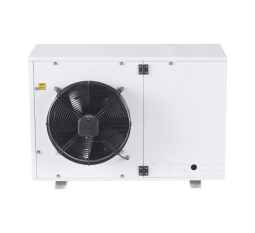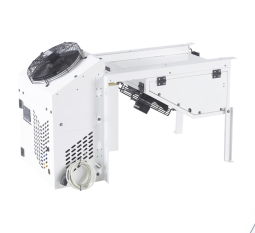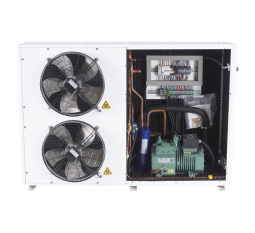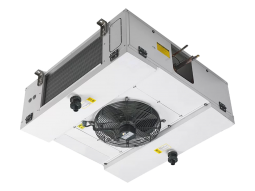





Low-Temperature Condensing Units
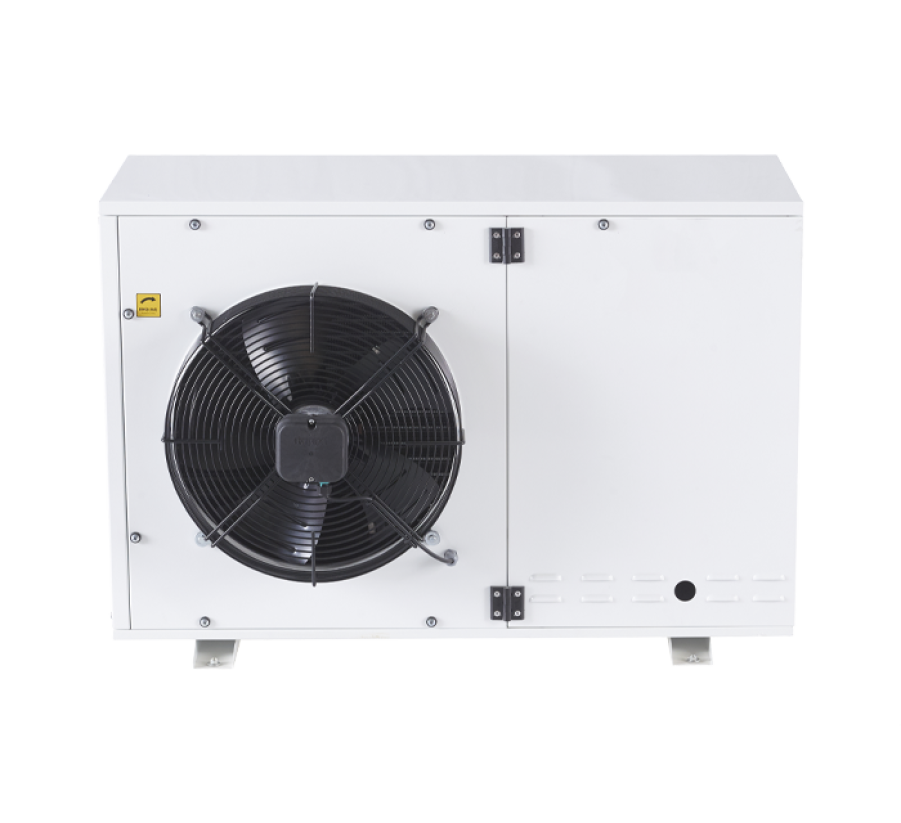
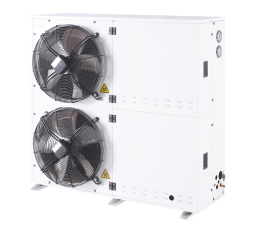
A low-temperature condensing unit is a refrigeration assembly designed to provide cooling capacity for freezer rooms, walk-in freezers, frozen food storage, refrigerated warehouses, plus other sub-zero cold storage applications. It works with an evaporator inside freezer space to remove heat, reject that heat to surrounding air, then maintain stable low-temperature operation.
Freezewize Low-Temperature Condensing Units are engineered around freezer temperature, cooling load, ambient conditions, product load, door traffic, evaporator selection, compressor operating conditions, electrical supply, plus regional refrigerant requirements.
Unlike a standard medium-temperature condensing unit used primarily with chilled cold rooms, a low-temperature condensing unit operates under more demanding refrigeration conditions. Lower evaporating temperatures, greater compression ratios, frost formation, defrost requirements, heavy product loads, plus longer operating cycles all influence equipment selection.
Low-Temperature Unit Basics
A freezer refrigeration system removes heat from a space operating below freezing conditions.
A typical remote freezer system contains:
- Low-temperature condensing unit
- Freezer evaporator
- Expansion device
- Refrigerant piping
- Defrost system
- Temperature controls
- Electrical controls
- Drainage components
The evaporator absorbs heat inside freezer room.
The low-temperature condensing unit compresses refrigerant, rejects collected heat, then returns refrigerant toward expansion stage.
This refrigeration cycle continues whenever freezer requires cooling.
Low-temperature operation creates different compressor conditions from standard chilled-storage applications.
For this reason, freezer equipment should be selected specifically for low-temperature duty.
Unit Configuration
| Technical Feature | Freezewize Configuration |
|---|---|
| Product Type | Low-Temperature Condensing Unit |
| System Category | Remote freezer refrigeration equipment |
| Primary Application | Freezer rooms |
| Storage Type | Frozen product storage |
| Typical Projects | Walk-In Freezers / Cold Storage Warehouses / Food Processing |
| Compressor | Industrial refrigeration compressor selected according to duty |
| Condenser | High-efficiency air-cooled condenser configuration |
| Refrigeration Circuit | Optimized according to low-temperature application |
| Evaporator Integration | Matched according to freezer load |
| Defrost Coordination | Selected according to freezer application |
| Refrigerant | Region-appropriate refrigerant supply |
| Ambient Conditions | Project-specific |
| Electrical Supply | Project-specific |
| Capacity Selection | Cooling-load based |
| Installation Location | Outdoor / Rooftop / Technical Area according to project |
| Production | Project-specific configuration |
Exact capacity, compressor model, refrigerant, electrical supply, condenser size, controls, accessories, plus operating conditions should be confirmed during technical selection.
Low-Temperature Operation
“Low temperature” describes refrigeration duty rather than outdoor climate.
A low-temperature condensing unit is selected for applications where evaporator operates at a sufficiently low condition to maintain frozen storage temperatures.
This creates a more demanding refrigeration cycle.
As evaporating temperature drops:
- Compressor pressure ratio changes
- Refrigeration capacity changes
- Compressor operating conditions become more demanding
- Discharge temperature requires attention
- System efficiency changes
- Defrost becomes more important
- Refrigerant mass flow changes
- Evaporator selection becomes more critical
This is why a medium-temperature condensing unit should not automatically be used for freezer duty simply because nominal horsepower appears sufficient.
Freezer Condensing Unit
A freezer condensing unit needs to maintain refrigeration capacity during real operating conditions.
Freezer load changes throughout each day.
Major influences include:
- Product entering freezer
- Product incoming temperature
- Door opening frequency
- Ambient temperature
- Room insulation
- Evaporator frost
- Defrost cycles
- Lighting
- Personnel
- Equipment
- Refrigeration system condition
Correct unit selection considers peak refrigeration demand rather than ideal empty-room conditions.
A freezer that works perfectly overnight may struggle during daytime loading if condensing equipment was selected without operational load data.
Walk-In Freezer Applications
A walk-in freezer condensing unit is commonly used with commercial plus industrial freezer rooms.
Applications include:
- Restaurants
- Supermarkets
- Grocery stores
- Hotels
- Foodservice facilities
- Meat storage
- Poultry storage
- Seafood storage
- Frozen bakery products
- Frozen prepared foods
- Distribution facilities
Small commercial freezers plus large industrial freezer rooms require different equipment capacities, compressor configurations, condenser sizes, plus controls.
“Walk-in freezer” therefore describes application type, not one fixed refrigeration package.
Cooling Load Selection
Correct low-temperature condensing unit sizing starts with freezer cooling-load calculation.
Main load categories include:
Transmission Load
Heat enters through:
- Wall panels
- Ceiling panels
- Floor
- Freezer doors
- Panel joints
- Thermal bridges
Insulation thickness, room dimensions, ambient conditions, plus freezer temperature influence this load.
Product Load
Frozen storage often receives products at different temperatures.
Products entering warmer than freezer setpoint release heat until reaching storage temperature.
Daily product quantity strongly influences refrigeration demand.
Infiltration Load
Warm ambient air enters whenever freezer door opens.
This introduces heat plus moisture.
Internal Load
Heat also comes from:
- Evaporator fans
- Lighting
- Personnel
- Motors
- Material-handling equipment
Defrost Load
Heat introduced during defrost eventually needs to be removed again.
All these factors influence final low-temperature condensing unit capacity.
Product Temperature
Product load deserves special attention in freezer design.
Consider two identical freezer rooms.
The first receives products already frozen.
The second receives large quantities of product at a substantially higher temperature.
Their refrigeration requirements are not equal.
Important product information includes:
- Product type
- Daily product weight
- Incoming temperature
- Required final temperature
- Loading frequency
- Required cooling time
A freezer designed only for frozen-product holding should not automatically be expected to perform rapid product freezing.
Storage duty plus product freezing duty are different refrigeration tasks.
Frozen Storage Duty
A frozen storage room primarily maintains products already near required storage temperature.
Its refrigeration system mainly compensates for:
- Heat transmission
- Door openings
- Internal loads
- Small product-temperature changes
- Defrost recovery
This type of duty differs from rapid freezing.
A properly selected freezer condensing unit maintains stable storage conditions while responding to normal daily load variation.
Low Temperature vs Blast Freezing
Low-temperature storage plus blast freezing should not be treated as identical applications.
Low-Temperature Condensing Unit
Primary focus:
- Frozen storage
- Stable freezer temperature
- Continuous holding conditions
- Temperature recovery after access
- Long-term freezer operation
Blast Freezer Refrigeration System
Primary focus:
- Rapid product temperature reduction
- High product load
- High airflow
- Shorter pull-down targets
- More demanding refrigeration capacity
A standard freezer room may operate continuously at low temperature without needing blast-freezing performance.
Freezewize therefore separates Low-Temperature Condensing Units from Blast Freezer Refrigeration Systems.
This provides clearer equipment selection plus more accurate refrigeration engineering.
Medium vs Low Temperature
Medium-temperature plus low-temperature condensing units serve different applications.
| Selection Factor | Medium Temperature | Low Temperature |
|---|---|---|
| Primary Application | Chilled cold rooms | Freezer rooms |
| Product Condition | Chilled | Frozen |
| Evaporating Duty | Higher | Lower |
| Frost Potential | Lower | Greater |
| Defrost Demand | Application dependent | More important |
| Compressor Duty | Medium-temperature | Low-temperature specific |
| Door Moisture Effect | Condensation | Condensation plus frost/ice |
| System Selection | Cooler load | Freezer load |
This difference is why Freezewize uses separate product categories for Cold Room Condensing Units plus Low-Temperature Condensing Units.
Compressor Selection
Compressor selection is central to low-temperature refrigeration.
Required compressor needs to operate safely within expected:
- Evaporating condition
- Condensing condition
- Refrigeration capacity
- Ambient temperature
- Refrigerant
- Electrical supply
- Operating profile
Horsepower alone does not define freezer capacity.
Two compressors with similar motor ratings can provide different refrigeration capacities at low evaporating conditions.
Performance data needs to be reviewed at actual freezer duty.
A compressor suitable for chilled storage may operate outside preferred conditions when pushed into deep freezer service.
Compressor Operating Envelope
Every refrigeration compressor has an approved operating envelope.
This defines acceptable combinations of:
- Suction condition
- Discharge pressure
- Evaporating temperature
- Condensing temperature
- Refrigerant
- Motor loading
A low-temperature condensing unit needs compressor selection inside this approved operating range.
Extreme ambient temperatures or unusually low evaporating conditions can move operating point closer to compressor limits.
Correct engineering protects reliability.
Compression Ratio
Low evaporating pressure combined with higher condensing pressure creates greater compression ratio.
Higher compression ratio can affect:
- Compressor efficiency
- Discharge temperature
- Refrigeration capacity
- Compressor stress
- Power consumption
This is one reason ambient temperature matters strongly in freezer refrigeration.
A low-temperature unit serving a freezer during mild weather faces different conditions from the same unit rejecting heat during extreme summer temperatures.
High Ambient Selection
Condenser performance depends on surrounding air temperature.
High outdoor temperature makes heat rejection more difficult.
This is particularly important in U.S. regions with hot summer conditions.
Projects in areas such as:
- Texas
- Arizona
- Florida
- Nevada
- Southern California
may require different condenser selection than equipment operating in mild climates.
High ambient selection should evaluate:
- Design outdoor temperature
- Condenser capacity
- Airflow
- Compressor operating envelope
- Equipment location
- Solar exposure
- Air recirculation
Freezewize evaluates ambient conditions during project selection instead of applying one universal condensing unit configuration worldwide.
Condenser Airflow
A low-temperature condensing unit needs unrestricted condenser airflow.
Poor installation positions include:
- Tight enclosed corners
- Areas with blocked air intake
- Locations near hot exhaust
- Closely grouped condensers without airflow planning
- Poorly ventilated equipment rooms
Hot discharge air returning into condenser inlet raises entering-air temperature.
This increases condensing pressure plus compressor demand.
Equipment placement should therefore protect clear intake plus discharge paths.
Outdoor Installation
Outdoor condensing units need installation conditions suited to local environment.
Project planning should consider:
- Ambient temperature
- Rain
- Snow
- Direct sun
- Airborne debris
- Service clearance
- Structural support
- Noise
- Electrical protection
Cold weather can also influence condensing-pressure control.
A unit serving a freezer still needs stable refrigeration operation when outdoor ambient falls significantly below summer conditions.
Low Ambient Operation
Low outdoor temperature creates a different condenser problem.
Very cold ambient air can cause condenser pressure to fall below preferred operating conditions.
Depending on system design, low-ambient control strategies may be needed to maintain stable refrigeration operation.
This becomes especially important in northern U.S. climates or outdoor installations exposed to severe winter weather.
A low-temperature condensing unit therefore needs evaluation across expected annual ambient range, not only peak summer conditions.
Evaporator Matching
A low-temperature condensing unit works with a compatible freezer evaporator.
Correct matching requires:
- Refrigeration capacity
- Evaporating condition
- Refrigerant
- Coil temperature
- Airflow
- Fin spacing
- Defrost method
- Expansion device
- Room temperature
Condensing unit plus evaporator should be selected as one refrigeration circuit.
An oversized compressor cannot compensate for poor evaporator airflow.
A large evaporator cannot correct insufficient condensing capacity.
System balance matters.
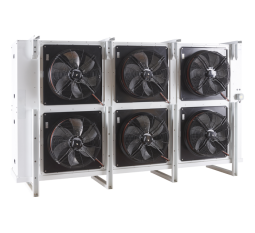
Freezer Evaporator
Freezer evaporators operate below freezing conditions.
Moisture from room air freezes on evaporator coil.
As frost builds:
- Airflow decreases
- Heat transfer declines
- Fan performance changes
- Temperature distribution worsens
Defrost removes this frost.
Low-temperature system design therefore needs evaporator plus defrost coordination from beginning.
Defrost Strategy
Defrost is a major difference between cooler plus freezer refrigeration.
A freezer evaporator cannot operate indefinitely while frost accumulates.
Common defrost strategies vary according to equipment configuration plus application.
Selection needs to consider:
- Room temperature
- Evaporator design
- Moisture load
- Door traffic
- Refrigeration system
- Operating schedule
Defrost should remove necessary frost without adding unnecessary heat into freezer.
Excessive defrost increases thermal load.
Insufficient defrost leaves coil blocked.
Correct balance supports stable freezer operation.
Defrost Recovery
After defrost, refrigeration system needs to remove heat introduced into evaporator area.
This creates a temporary recovery load.
A properly engineered freezer condensing unit should handle normal defrost recovery without destabilizing stored-product temperature.
Defrost timing also matters.
Large freezer installations with multiple evaporators may coordinate defrost sequences instead of heating all evaporators simultaneously.
System strategy depends on project size.
Door Infiltration
Door openings affect freezer rooms more severely than many cooler applications.
Warm humid air entering a freezer quickly reaches low temperatures.
Moisture can freeze on:
- Evaporator coils
- Door frames
- Floors
- Ceilings
- Product surfaces
Frequent door opening therefore increases both refrigeration load plus frost accumulation.
Cooling-load calculation should include:
- Door dimensions
- Opening frequency
- Opening duration
- Traffic type
- Ambient humidity
- Surrounding temperature
A busy distribution freezer needs a different low-temperature condensing unit selection from a low-traffic storage room of equal size.
Temperature Recovery
Freezer temperature often rises temporarily after:
- Door openings
- Product loading
- Defrost
- Long loading periods
Recovery performance depends on total refrigeration system.
Slow recovery can indicate:
- Insufficient capacity
- Excessive infiltration
- Warm product load
- Evaporator frost
- Restricted condenser airflow
- Refrigerant problems
- Poor room insulation
Replacing condensing unit should not be first response before these conditions are checked.
Freezer Insulation
Refrigeration capacity cannot compensate efficiently for a weak freezer envelope.
Low-temperature rooms need suitable:
- Wall insulation
- Ceiling insulation
- Floor insulation
- Freezer doors
- Panel joints
- Door sealing
- Penetration sealing
A poorly insulated freezer creates permanent additional refrigeration load.
Freezewize can coordinate Low-Temperature Condensing Units with insulated cold room panels, freezer doors, plus floor systems within complete project design.
Floor Heat Gain
Freezer flooring deserves special attention.
Building slab or ground below freezer normally remains warmer than refrigerated room.
Heat therefore moves upward.
Floor insulation reduces this load.
Large freezer rooms have substantial floor area, making floor heat transfer a meaningful part of cooling-load calculation.
For modular freezer projects, insulated floor panels can form part of complete enclosure.
For large permanent freezer warehouses, structural floor design may use different insulation strategies.
Refrigerant Strategy
Freezewize does not specify one universal refrigerant for every Low-Temperature Condensing Unit.
Refrigerant selection follows:
- Destination market
- Application
- Compressor compatibility
- Available components
- Required capacity
- Safety requirements
- Service availability
- Regional regulations
Freezewize therefore manufactures systems around region-appropriate refrigerant supply.
This approach is especially important across the United States, Europe, Africa, Middle East, plus other export markets where refrigerant requirements differ.
U.S. Freezer Projects
U.S. walk-in freezer refrigeration projects require equipment selection around applicable federal requirements plus project conditions.
Current U.S. Department of Energy rules classify dedicated condensing systems separately by medium temperature / low temperature plus indoor / outdoor application.
Applicable walk-in refrigeration equipment uses AWEF efficiency metrics under DOE requirements.
Freezewize should therefore confirm:
- Equipment classification
- Application temperature
- Indoor or outdoor location
- Refrigeration capacity
- Electrical supply
- Refrigerant
- Applicable efficiency requirements
before final U.S. equipment specification.
Compliance should be verified for selected configuration rather than claimed universally across every custom condensing unit.
Electrical Requirements
Electrical supply needs confirmation before production.
Important data includes:
- Voltage
- Phase
- Frequency
- Available electrical capacity
- Control voltage
- Installation requirements
U.S. projects often use electrical configurations different from European installations.
Incorrect voltage selection can create major commissioning problems.
Electrical information should therefore be collected during quotation stage.
Control Strategy
Low-temperature refrigeration needs reliable controls.
System controls can manage functions such as:
- Room temperature
- Compressor operation
- Evaporator fans
- Defrost timing
- Pressure protection
- Alarms
- System safety
Control architecture depends on project size plus required automation level.
A small walk-in freezer may use a relatively simple control strategy.
A large industrial freezer warehouse may require centralized monitoring, alarms, logging, plus more complex sequencing.
Refrigeration Protection
Low-temperature equipment operates under demanding conditions.
Protection devices can monitor conditions related to:
- Refrigerant pressure
- Compressor operation
- Electrical faults
- Temperature
- Fan operation
- System control
Exact protection package depends on unit configuration.
Project documentation should identify required control plus safety components before manufacturing.
Unit Location
Low-Temperature Condensing Units may be installed:
- Outdoors
- On rooftops
- Beside buildings
- On equipment platforms
- Inside suitable machine rooms
Each location creates different conditions.
Rooftop
Requires structural support plus service access.
Outdoor Ground Level
Requires airflow clearance plus physical protection.
Machine Room
Requires adequate heat removal plus ventilation.
Equipment Platform
Needs safe technician access plus structural coordination.
Final location should be known before unit selection.
Service Access
Maintenance access affects long-term operating cost.
Technicians need access to:
- Compressor
- Condenser coil
- Fans
- Electrical components
- Valves
- Refrigeration connections
- Controls
Placing equipment in an extremely restricted space can make routine service difficult.
Service clearance should be considered during layout design.
Condenser Maintenance
Condenser coil needs effective airflow.
Dust, grease, leaves, plus other debris reduce heat transfer.
Dirty condenser conditions can produce:
- Higher condensing pressure
- Reduced refrigeration capacity
- Greater compressor load
- Longer run time
Routine maintenance should include condenser inspection plus cleaning according to operating environment.
Hot or dusty installations need greater attention.
Compressor Short Cycling
Low-temperature compressors should not start plus stop excessively.
Short cycling can result from several conditions:
- Oversized equipment
- Control settings
- Low refrigeration load
- Pressure-control problems
- Sensor issues
- Refrigerant conditions
Frequent cycling increases mechanical stress.
Correct sizing plus control setup supports more stable operation.
Undersized Units
An undersized freezer condensing unit may show:
- Continuous compressor operation
- Slow temperature recovery
- Difficulty reaching setpoint
- Poor recovery after loading
- Problems during hot weather
These symptoms do not always prove insufficient compressor capacity.
Possible causes also include:
- Dirty condenser
- Frosted evaporator
- Open doors
- Damaged insulation
- Refrigerant loss
- Poor airflow
System diagnosis should review complete refrigeration circuit.
Oversized Units
More capacity is not automatically better.
Excessive condensing-unit capacity can contribute to:
- Short cycling
- Unstable temperature control
- Higher initial cost
- Poor part-load behavior
Selection goal should be correct low-temperature capacity, not largest available compressor.
Cooling-load engineering provides a better basis than horsepower alone.
Low-Temperature Applications
Freezewize Low-Temperature Condensing Units support:
Walk-In Freezers
Commercial frozen storage for restaurants, supermarkets, hotels, plus foodservice facilities.
Frozen Meat Storage
Freezer rooms used in meat processing, distribution, plus long-term storage.
Poultry Freezers
Frozen poultry storage plus processing support.
Seafood Freezers
Low-temperature storage for frozen fish plus seafood products.
Frozen Food Warehouses
Industrial storage for packaged frozen foods.
Bakery Freezers
Frozen dough, bakery products, ingredients, plus prepared goods.
Cold Chain Logistics
Frozen staging, storage, distribution, plus transport-support facilities.
Industrial Cold Storage
Large freezer rooms requiring project-specific refrigeration engineering.
Each application creates a different refrigeration load.
Selection Data Required
Freezewize needs project information before selecting a low-temperature condensing unit.
Room Dimensions
Length, width, height.
Freezer Temperature
Required room setpoint.
Ambient Temperature
Summer plus winter conditions around condenser.
Product Type
Meat, seafood, poultry, frozen food, pharmaceutical, or other products.
Daily Product Load
Maximum quantity entering freezer.
Incoming Temperature
Temperature of products before entering room.
Door Size
Opening dimensions.
Door Traffic
Frequency plus duration.
Panel Insulation
Wall, ceiling, floor thickness plus construction.
Evaporator Requirement
Quantity, airflow, plus defrost strategy.
Electrical Supply
Voltage, phase, frequency.
Installation Location
Outdoor, rooftop, machine room, or another technical area.
Refrigerant Requirement
Selected according to regional compatibility.
Pull-Down Requirement
Required where product temperature needs reduction rather than storage only.
These inputs allow refrigeration capacity to follow actual operation.
Unit vs Freezer System
A Low-Temperature Condensing Unit is one part of freezer refrigeration.
A Freezer Room Refrigeration System describes the complete cooling system.
This distinction is important.
Low-Temperature Condensing Unit
Contains condensing-side refrigeration equipment.
Freezer Room Refrigeration System
Can include:
- Low-temperature condensing unit
- Evaporator
- Expansion components
- Refrigeration piping
- Defrost
- Controls
- Drainage
- Electrical system
This product separation gives customers a clearer buying path.
Customers needing one refrigeration component can select a condensing unit.
Customers planning a complete freezer project can select a Freezer Room Refrigeration System.
Complete System Integration
Freezewize Low-Temperature Condensing Units work with:
- Cold Room Evaporators
- Freezer controls
- Refrigerant piping
- Expansion components
- Defrost systems
- Insulated freezer panels
- Freezer doors
- Insulated floor systems
Every component influences complete freezer performance.
Correct compressor selection without suitable evaporator design creates an unbalanced system.
Correct refrigeration equipment inside poorly insulated room also creates unnecessary load.
Engineering needs to connect equipment plus enclosure.
Turnkey Freezer Integration
Freezewize Cooling System supplies Low-Temperature Condensing Units individually or integrates them into complete freezer projects.
Turnkey scope includes:
- Project design
- Cooling-load calculation
- Low-temperature condensing unit selection
- Freezer evaporators
- Refrigeration piping
- Defrost coordination
- Insulated cold room panels
- Freezer doors
- Floor systems
- Electrical controls
- Automation
- Installation
- Testing
- Commissioning
- Final handover
This integrated approach allows low-temperature condensing unit capacity, compressor duty, evaporator selection, ambient conditions, freezer insulation, product load, door traffic, defrost strategy, refrigerant, plus electrical requirements to be evaluated as one coordinated refrigeration system.
For walk-in freezers, frozen food storage, meat or seafood freezers, refrigerated warehouses, cold chain facilities, or industrial freezer projects, contact Freezewize Cooling System to specify a low-temperature condensing unit around actual freezer temperature, cooling load, ambient conditions, product movement, plus operating requirements.