




Freezer Room Refrigeration Systems
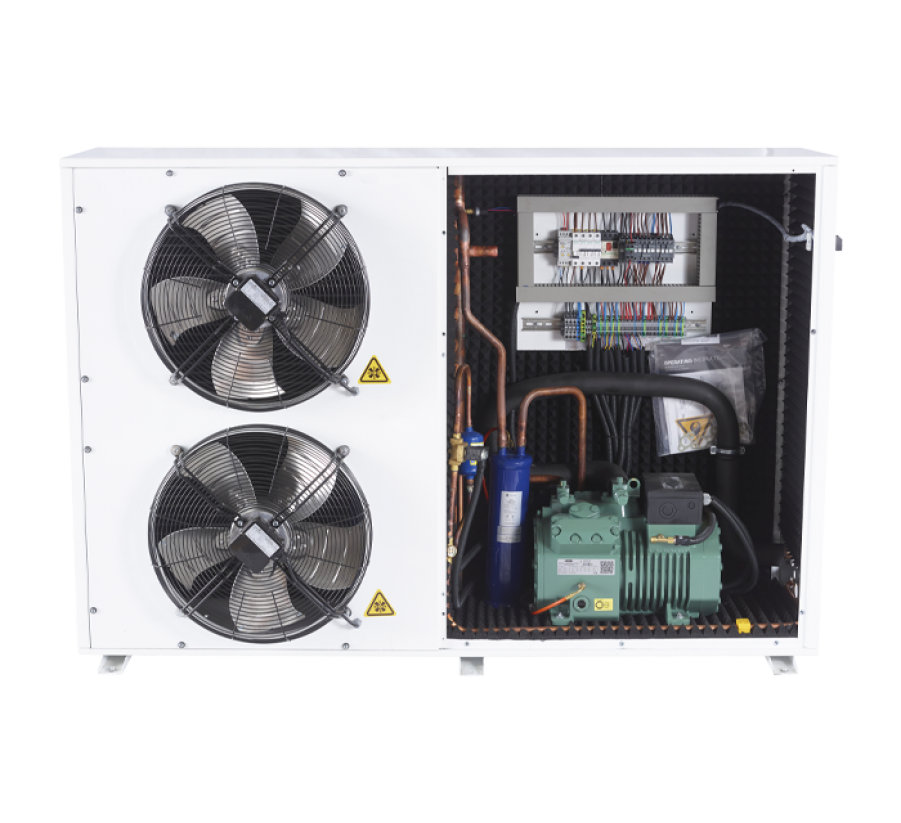
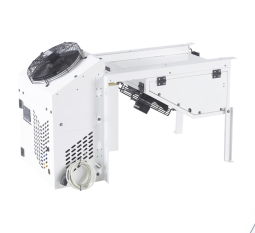
A freezer room refrigeration system is a complete low-temperature cooling system designed to remove heat from an insulated freezer room and maintain stable frozen-storage conditions. Unlike a standalone refrigeration component, the system combines condensing equipment, evaporators, refrigerant controls, piping, defrost management, electrical controls, and temperature regulation as one coordinated refrigeration circuit.
Freezewize Freezer Room Refrigeration Systems are engineered for walk-in freezers, frozen food rooms, meat and poultry storage, seafood facilities, refrigerated warehouses, cold chain operations, and industrial frozen-storage projects.
Standard Freezewize frozen-storage applications are commonly designed around −18°C to −25°C (-0.4°F to -13°F). Final refrigeration capacity depends on room dimensions, insulation, ambient temperature, product type, incoming product temperature, daily loading, door traffic, required recovery time, and operating schedule.
A correctly designed freezer system starts with the real thermal load rather than room volume or compressor horsepower alone.
Freezer System Basics
Heat continuously enters a freezer through several sources:
- Wall panels
- Ceiling panels
- Floor
- Freezer doors
- Panel joints
- Product loading
- Door openings
- Lighting
- Personnel
- Fan motors
- Defrost cycles
- Material-handling equipment
The refrigeration system must remove this heat while maintaining required frozen-storage temperature.
A typical freezer room refrigeration system contains:
- Low-temperature compressor
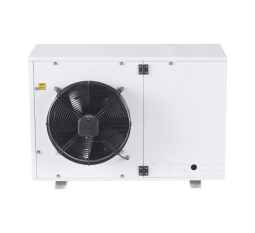
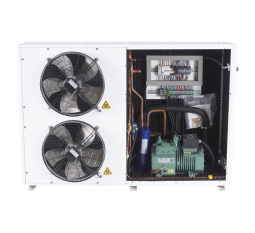
- Condensing section
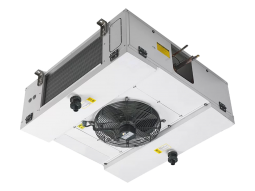
- Freezer evaporator
- Expansion control
- Refrigerant piping
- Filter drier
- Solenoid control
- Defrost system
- Temperature controller
- Pressure protection
- Electrical controls
- Sensors
- Drainage
- Alarm functions according to project
System balance matters.
A larger compressor does not compensate for poor evaporator airflow, and a high-capacity evaporator cannot compensate for insufficient condensing capacity.
System Configuration
| Technical Feature | Freezewize Configuration |
|---|---|
| Product Type | Freezer Room Refrigeration System |
| Primary Purpose | Frozen product storage |
| Standard Room Range | −18°C to −25°C / -0.4°F to -13°F |
| System Type | Low-temperature refrigeration |
| Condensing Section | Project-specific low-temperature configuration |
| Evaporator | Freezer-duty evaporator |
| Defrost | Selected according to application |
| Air Distribution | Based on room geometry and storage layout |
| Controls | Project-specific |
| Refrigerant | Region-appropriate refrigerant configuration |
| Electrical Supply | Project-specific |
| Capacity Selection | Cooling-load based |
| Applications | Walk-In Freezers / Warehouses / Food Processing / Cold Chain |
Exact compressor model, evaporator quantity, refrigerant, electrical configuration, airflow, controls, and accessories are defined during engineering.
Complete Refrigeration Circuit
A freezer room system contains several components with different responsibilities.
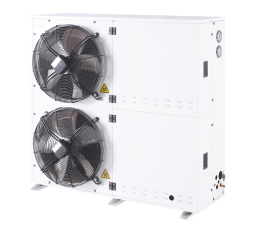
Condensing Section
The condensing section compresses refrigerant and rejects collected heat toward ambient air.
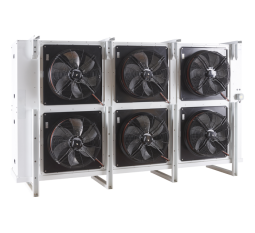
Freezer Evaporator
The evaporator absorbs heat from room air and distributes cooled air through refrigerated space.
Expansion Control
The expansion device regulates refrigerant flow entering the evaporator.
Refrigerant Piping
Piping connects low-temperature condensing equipment with evaporator circuits.
Defrost System
Defrost removes frost from evaporator surfaces and restores airflow.
Refrigeration Controls
Controls manage temperature, compressor operation, fans, defrost, alarms, and system protection.
All sections need compatible selection.
Walk-In Freezer Refrigeration
A walk-in freezer refrigeration system is one of the most common commercial applications.
Typical facilities include:
- Restaurants
- Supermarkets
- Grocery stores
- Hotels
- Commercial kitchens
- Foodservice facilities
- Convenience stores
- Frozen food storage rooms
Larger Freezewize systems extend beyond commercial walk-ins into industrial freezer rooms and refrigerated warehouses.
This is why Freezer Room Refrigeration Systems remains the broader product name while walk-in freezer refrigeration system serves as an important supporting term for U.S. projects.
Frozen Storage Duty
Frozen-storage systems primarily maintain products already frozen or close to required storage temperature.
The main refrigeration loads come from:
- Transmission through enclosure
- Door infiltration
- Product loading
- Internal heat
- Defrost recovery
- Operational activity
This duty differs fundamentally from rapid product freezing.
A freezer designed for storage should not automatically be expected to freeze large quantities of warm product quickly.
Storage vs Blast Freezing
A storage freezer and a blast freezer perform different jobs.
| Design Factor | Freezer Room System | Blast Freezer System |
|---|---|---|
| Primary Purpose | Frozen storage | Rapid product freezing |
| Product Condition | Usually frozen or near target | Often warmer |
| Airflow | Storage-oriented | High velocity |
| Product Load | Moderate to high | Very high |
| Pull-Down Time | Secondary | Critical |
| Core Temperature | Storage requirement | Process requirement |
| Refrigeration Selection | Room-load based | Product-process based |
A blast freezer is not simply a colder storage room.
It is a process refrigeration system.
Cooling Load Calculation
Correct freezer room refrigeration system sizing starts with cooling-load calculation.
Major load categories include:
Transmission Load
Heat enters through:
- Walls
- Ceiling
- Floor
- Doors
- Panel joints
Transmission depends on insulation, surface area, ambient temperature, and freezer temperature.
Product Load
Product load depends on:
- Product type
- Daily quantity
- Incoming temperature
- Final temperature
- Loading frequency
Two identical rooms can require very different refrigeration capacity when product load differs.
Infiltration Load
Door openings introduce warm, humid air.
This increases both refrigeration demand and frost formation.
Internal Load
Internal heat sources can include:
- Lighting
- Personnel
- Fans
- Forklifts
- Electrical equipment
Defrost Load
Heat introduced during defrost must later be removed again.
Product Temperature
Incoming product temperature has a major effect on freezer load.
A room receiving products already at frozen-storage temperature behaves very differently from one receiving chilled or warm products.
Important project data includes:
- Product mass
- Incoming temperature
- Required storage temperature
- Daily loading
- Required cooling time
Product data should therefore be collected before final system selection.
Door Infiltration
Door traffic is one of the most important operational variables.
Frequent openings increase:
- Heat load
- Moisture entry
- Evaporator frost
- Recovery demand
A busy logistics freezer and a low-traffic storage room should not use the same assumptions simply because dimensions are identical.
Relevant information includes:
- Door width
- Door height
- Opening frequency
- Opening duration
- Surrounding temperature
- Surrounding humidity
Compressor Selection
Freezer compressors operate under demanding low-temperature conditions.
Selection depends on:
- Refrigeration capacity
- Evaporating condition
- Condensing condition
- Refrigerant
- Ambient temperature
- Electrical supply
- Operating profile
Horsepower alone does not define usable freezer capacity.
Actual compressor performance must be evaluated at real design conditions.
Evaporator Selection
A freezer evaporator transfers heat from refrigerated air into refrigerant.
Correct selection considers:
- Cooling capacity
- Room temperature
- Airflow
- Air throw
- Room geometry
- Product layout
- Frost formation
- Defrost
- Refrigerant
Evaporator position can be as important as nominal capacity.
Airflow Distribution
Cold air needs to reach stored products and return toward the evaporator.
Poor airflow creates:
- Warm zones
- Uneven product temperature
- Longer compressor operation
- Slow recovery
Important layout factors include:
- Evaporator position
- Rack orientation
- Pallet height
- Room length
- Ceiling height
- Door position
- Return-air clearance
Refrigeration design should therefore use the actual room plan.
Multiple Evaporators
Larger freezer rooms may require several evaporators.
Multiple units can improve:
- Air distribution
- Room coverage
- Temperature uniformity
They also require coordination of:
- Refrigerant piping
- Drainage
- Controls
- Defrost sequencing
Evaporator quantity should follow airflow and load engineering rather than equipment count preference.
Frost Management
Moisture entering a freezer eventually freezes on cold surfaces.
Evaporator frost reduces:
- Heat transfer
- Airflow
- Cooling capacity
A suitable defrost strategy is therefore essential.
Defrost requirements depend on:
- Freezer temperature
- Moisture load
- Door traffic
- Evaporator configuration
- Operating schedule
Too little defrost allows coil blockage.
Too much defrost introduces unnecessary heat.
Defrost Recovery
After defrost, the refrigeration system must remove added heat.
Large installations may benefit from staggered defrost schedules so all evaporators are not unavailable simultaneously.
This helps maintain better room stability.
Drainage
Defrost water requires a controlled drainage path.
Freezer drainage needs careful planning because water can refreeze.
Design should consider:
- Drain slope
- Route
- Insulation
- Freeze protection where required
- Discharge point
Ice below an evaporator often indicates drainage or defrost problems rather than insufficient refrigeration capacity.
Freezer Envelope
A refrigeration system cannot efficiently compensate for a poor thermal enclosure.
The freezer envelope includes:
- Wall panels
- Ceiling panels
- Floor insulation
- Freezer doors
- Corners
- Panel joints
- Service penetrations
Weak insulation or air leakage creates continuous refrigeration load.
Freezewize therefore coordinates refrigeration equipment with insulated cold room construction.
Floor Insulation
Freezer floors require particular attention because heat can move upward from building slab or ground.
Large freezer areas can create significant floor heat gain.
Floor design should be considered together with:
- Room temperature
- Structural load
- Insulation
- Traffic
- Moisture conditions
Ambient Temperature
Condensing equipment rejects heat into surrounding air.
Higher ambient temperature increases refrigeration demand on condenser and compressor.
Hot-climate projects need realistic design conditions.
Cold-climate outdoor systems may require different control strategies.
Equipment should therefore be selected for expected annual operating conditions rather than one universal ambient assumption.
Refrigerant Strategy
Freezewize does not use one refrigerant for every freezer project.
Refrigerant selection follows:
- Destination market
- Application
- Temperature
- Compressor compatibility
- Capacity
- Safety requirements
- Component availability
- Service availability
- Regional regulation
Systems are configured around region-appropriate refrigerant requirements.
Electrical Design
Required electrical information includes:
- Voltage
- Phase
- Frequency
- Available capacity
- Defrost load
- Fan load
- Control voltage
Export projects should confirm electrical supply before equipment production.
Refrigeration Controls
Controls may manage:
- Room temperature
- Compressor operation
- Evaporator fans
- Defrost
- Pressure protection
- Alarms
- Sensors
- System safety
Control architecture should match facility complexity.
A restaurant walk-in freezer does not require the same control strategy as a large frozen-food distribution center.
Monitoring
Projects requiring stronger traceability can include:
- Temperature monitoring
- Alarm reporting
- Data logging
- Equipment status monitoring
Required functions should be defined before final control selection.
Temperature Recovery
Room temperature can rise temporarily after:
- Door opening
- Product loading
- Defrost
- Extended access
Slow recovery can indicate:
- Excess product load
- Poor airflow
- Frosted evaporator
- Dirty condenser
- Door leakage
- Weak insulation
- Incorrect controls
- Insufficient capacity
Complete system diagnosis should happen before capacity is increased.
Energy Performance
Freezer energy performance depends on the complete system.
Important factors include:
- Correct sizing
- Compressor selection
- Condenser performance
- Evaporator matching
- Airflow
- Defrost strategy
- Insulation
- Door management
- Controls
One “high-efficiency” component cannot correct poor system design.
Freezer Applications
Freezewize Freezer Room Refrigeration Systems support:
- Frozen meat
- Poultry
- Seafood
- Frozen vegetables
- Prepared foods
- Bakery products
- Ice cream
- Packaged frozen goods
- Cold chain logistics
- Industrial frozen storage
Each application should be engineered around actual product and operating conditions.
System Selection Data
Before selecting a freezer room refrigeration system, Freezewize evaluates:
- Room dimensions
- Target temperature
- Ambient conditions
- Product type
- Daily product quantity
- Incoming product temperature
- Door dimensions
- Door traffic
- Insulation
- Rack layout
- Electrical supply
- Refrigerant requirements
- Monitoring requirements
These inputs provide a reliable basis for system engineering.
System vs Condensing Unit
A Low-Temperature Condensing Unit is one component.
A Freezer Room Refrigeration System is a complete refrigeration solution.
The full system can include:
- Condensing equipment
- Evaporator
- Expansion control
- Refrigerant piping
- Defrost
- Controls
- Sensors
- Electrical protection
This distinction gives customers a clearer product-selection path.
Turnkey Freezer Integration
Freezewize Cooling System designs, supplies, and installs Freezer Room Refrigeration Systems as standalone refrigeration packages or as part of complete freezer projects.
Turnkey scope includes:
- Project design
- Cooling-load calculation
- Refrigeration engineering
- Low-temperature condensing equipment
- Freezer evaporators
- Refrigerant piping
- Defrost coordination
- Electrical controls
- Automation
- Insulated cold room panels
- Freezer doors
- Floor systems
- Installation
- Testing
- Commissioning
- Final handover
For walk-in freezers, frozen-food warehouses, meat and poultry storage, seafood facilities, cold chain logistics, or industrial freezer projects, Freezewize Cooling System engineers each freezer room refrigeration system around actual temperature, product load, room geometry, ambient conditions, and operating requirements.