




Cold Room Internal Profiles
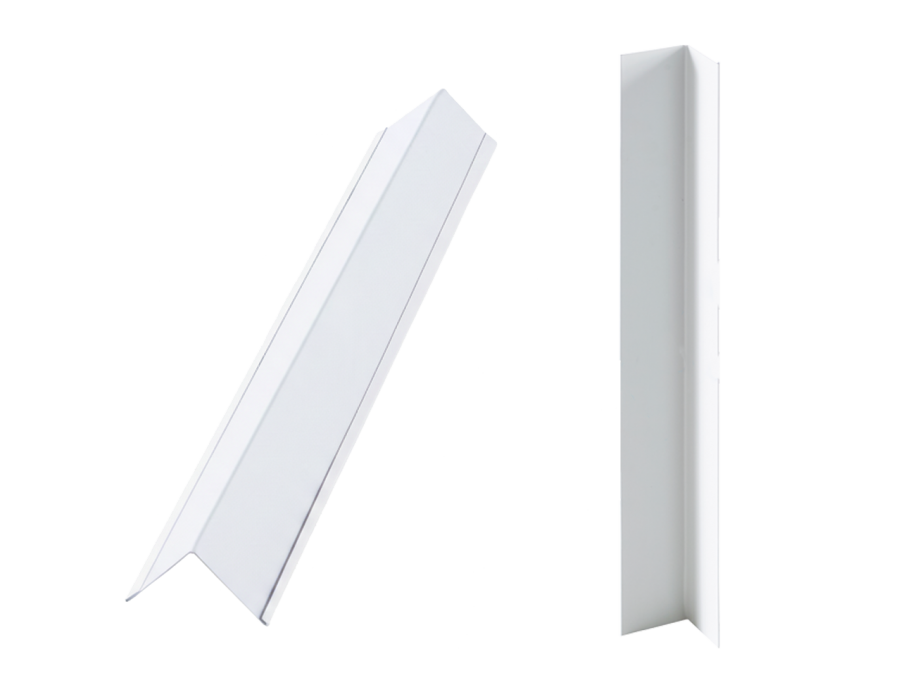
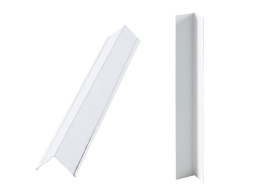
A cold room internal profile is a finishing component used to cover, protect, and complete visible joints between insulated panels inside a refrigerated room. Internal profiles provide controlled finishing around inside corners, wall-to-ceiling connections, panel edges, and other interior transition points.
Freezewize Cold Room Internal Profiles are designed for walk-in coolers, walk-in freezers, food storage rooms, food processing facilities, refrigerated warehouses, pharmaceutical cold rooms, supermarkets, and industrial cold storage projects.
Depending on project requirements, internal profiles can be supplied in aluminum, PVC, or galvanized steel.
Their primary role is internal panel-joint finishing, exposed-edge protection, connection coverage, and consistent interior detailing.
An internal profile does not replace insulation or the primary panel connection.
Internal Profile Basics
Cold room panels create walls and ceilings.
Where these components meet, visible junctions remain.
Typical internal-profile locations include:
- Wall-wall corners
- Wall-ceiling joints
- Panel edges
- Panel terminations
- Interior transition zones
Without suitable finishing, these areas can show:
- Exposed panel edges
- Visible fasteners
- Irregular sealant
- Sharp metal edges
- Uneven corners
A cold room internal profile creates a controlled finishing layer over these transitions.
Profile Configuration
| Technical Feature | Freezewize Configuration |
|---|---|
| Product Type | Cold Room Internal Profile |
| Primary Function | Interior panel-joint finishing |
| Materials | Aluminum / PVC / Galvanized Steel |
| Main Application | Modular insulated panels |
| Typical Locations | Inside Corners / Wall-Ceiling Joints / Panel Edges |
| Cold Room Type | Cooler / Freezer / Cold Storage |
| Profile Geometry | Project-specific |
| Sealing | According to joint requirement |
| Dimensions | Project-specific |
| Installation | Integrated with panel construction |
Exact width, geometry, material thickness, fastening method, and sealing detail should follow actual connection design.
Inside Corner Trim
One of the most common applications is the inside wall corner.
For U.S. projects, useful terminology includes:
- Inside corner trim
- Internal corner trim
- Inside corner profile
- Internal angle
- Cold room liner trim
These terms describe a finishing component installed where two interior panel surfaces meet.
Cold Room Internal Profiles remains the stronger product-family name because the category also covers wall-ceiling joints and panel-edge transitions.
Internal Corner Function
An internal corner profile helps:
- Cover panel edges
- Cover selected fasteners
- Protect sealant
- Reduce sharp edges
- Create consistent geometry
- Improve completed appearance
The underlying panel corner should already be assembled correctly.
Trim should never be used to hide a failed panel joint.
Panel Joint Finishing
A panel joint can contain:
- Interlocking panel geometry
- Insulation
- Gaskets
- Sealant
- Fasteners
The internal profile forms the visible finishing layer over that construction.
Each layer performs a different function.
Panel joint = structural and thermal continuity
Sealant = air and moisture control
Internal profile = protection and finishing
Wall-Wall Connections
Where two cold room walls meet, a vertical internal profile can create a clean corner line.
Good wall-wall finishing depends on:
- Correct panel orientation
- Square room geometry
- Plumb walls
- Consistent joint sealing
A profile cannot compensate for a wall that leans or twists.
Geometry should be corrected before trim installation.
Wall-Ceiling Connections
Wall-ceiling perimeter joints are another major application.
An internal profile can cover:
- Panel edges
- Sealant
- Selected fasteners
- Minor construction transitions
This creates a more consistent ceiling perimeter.
Suspended ceilings should be correctly leveled before internal trim is installed.
Ceiling Perimeter
Long ceiling perimeters make small profile misalignments easy to see.
Installation should maintain:
- Straight profile lines
- Consistent elevation
- Clean joints
- Uniform fastening
Good trim installation improves both appearance and inspectability.
Profile Geometry
Different junctions can require different profile shapes.
Possible geometries include:
- Angled profiles
- V-shaped profiles
- L-shaped profiles
- Other project-specific trim forms
Profile geometry should follow actual panel connection rather than one universal shape.
Aluminum Internal Profiles
Aluminum provides:
- Low weight
- Clean geometry
- Good rigidity
- Easy handling
- General corrosion resistance
It can be used across many commercial and industrial cold room interiors.
Exact finish and alloy should follow project requirements.
PVC Internal Profiles
PVC provides a lightweight finishing option.
Typical advantages include:
- Smooth surface
- Easy handling
- Moisture resistance
- Low weight
PVC can suit:
- Walk-in coolers
- Walk-in freezers
- Food storage
- Commercial refrigeration
Chemical exposure, impact, and low-temperature conditions should still be considered.
Galvanized Steel Profiles
Galvanized steel provides a rigid metallic option.
It can be useful where:
- Greater stiffness is required
- Metallic trim is preferred
- Project specification favors galvanized construction
Moisture and cleaning exposure should be evaluated according to real operating conditions.
Material Comparison
| Selection Factor | PVC | Aluminum | Galvanized Steel |
|---|---|---|---|
| Weight | Low | Low | Moderate |
| Rigidity | Moderate | High | High |
| Moisture Resistance | Strong | Strong | Application dependent |
| Installation Handling | Easy | Easy | Moderate |
| Interior Finishing | Strong | Strong | Strong |
| Industrial Use | Suitable | Strong | Strong |
Material should match the room environment.
Internal vs Hygienic
These products are related but not identical.
Cold Room Internal Profile
Primary purpose:
- Cover panel joints
- Finish inside corners
- Protect edges
- Complete wall-ceiling transitions
Cold Room Hygienic Profile
Primary purpose:
- Create rounded cleanable transitions
- Support sanitation
- Form cove geometry
- Improve washdown accessibility
A useful distinction is:
Internal Profile = general finishing
Hygienic Profile = sanitation-oriented finishing
Internal vs External
Internal Profile
Used mainly on the refrigerated-room side.
External Profile
Used mainly around outside surfaces and exterior panel edges.
Separate pages help both customers and search engines understand each product role.
Internal vs U-Channel
A U-channel and internal profile also perform different functions.
U-Channel
- Positions panels
- Establishes base alignment
- Supports installation
Internal Profile
- Covers installed joints
- Finishes corners
- Protects interior edges
The U-channel helps install the panel.
The internal profile finishes the panel connection.
Edge Protection
Internal profiles protect vulnerable panel edges from:
- Cleaning tools
- Light cart contact
- Repeated wiping
- Installation damage
Heavy-impact locations still require dedicated guards.
Internal trim should not be treated as forklift protection.
Sharp Edge Control
Exposed panel metal can create sharp edges around:
- Corners
- Panel terminations
- Door areas
- Ceiling transitions
A correctly installed profile covers these surfaces and creates safer interior detailing.
Joint Coverage
Profile width needs to cover the actual connection.
Too narrow:
- Sealant remains visible
- Panel edge remains exposed
- Fasteners may remain uncovered
Too wide:
- Unnecessary material
- Larger cleaning surface
- Heavy appearance
Profile dimensions should follow actual joint geometry.
Sealant Protection
Internal profiles can protect selected sealant lines from:
- Mechanical contact
- Cleaning
- Direct abrasion
Sealant still needs to be applied correctly before trim installation.
A profile does not repair a failed underlying seal.
Air Sealing
Cold room airtightness comes mainly from:
- Proper panel engagement
- Joint design
- Sealant
- Gaskets
- Insulation continuity
Internal trim is not automatically an airtight barrier.
This distinction is especially important in freezer construction.
Moisture Diagnosis
Moisture around internal trim can indicate:
- Air leakage
- Thermal bridge
- Failed sealing
- Insulation gap
- Cleaning-water intrusion
- High humidity
The profile may show where a problem appears without being its root cause.
Freezer Frost
In low-temperature rooms, air leakage can create frost around panel joints.
Possible causes include:
- Damaged seals
- Open joints
- Service penetrations
- Door infiltration
Adding trim over a poorly sealed connection will not solve the problem.
Cooler Applications
Cold Room Internal Profiles are suitable for:
- Restaurants
- Hotels
- Grocery stores
- Supermarkets
- Beverage rooms
- Produce coolers
- Dairy storage
- Commercial kitchens
Compact commercial walk-ins benefit from clean, consistent interior finishing because all surfaces remain close to daily traffic.
Freezer Applications
Freezer interiors require additional attention to:
- Air sealing
- Vapor control
- Low-temperature material behavior
- Panel thickness
- Frost risk
Internal trim should integrate with the complete thermal envelope.
Food Processing Rooms
Large food-processing rooms use internal profiles around:
- Wall intersections
- Ceiling transitions
- Panel terminations
- Process-room boundaries
Where a rounded cleanable transition is required, a dedicated hygienic profile may be a better choice.
Pharmaceutical Cold Rooms
Internal profiles can help create:
- Controlled corners
- Protected edges
- Covered joints
- Consistent inspection surfaces
Specific regulatory or cleanroom requirements remain project-specific.
Cleaning Conditions
Cleaning method influences material choice.
A dry storage room may use light routine cleaning.
A meat or seafood facility can require intensive sanitation.
Selection should consider:
- Water exposure
- Chemicals
- Temperature
- Mechanical abrasion
Fastening
Profile fastening depends on:
- Material
- Panel facing
- Connection geometry
- Room conditions
Fasteners should secure trim without unnecessarily damaging panel skins.
Consistent fastening also improves appearance.
Profile Joints
Long profile runs require multiple sections.
Connections should remain:
- Straight
- Aligned
- Smooth
- Properly sealed where required
Offset trim joints create both visual and cleaning problems.
Corner Cutting
Field cutting needs accuracy.
Poor cutting can leave:
- Wide gaps
- Sharp edges
- Excessive sealant
- Uneven overlap
Correct tools should be used according to profile material.
Door Transitions
Internal profiles often terminate near:
- Hinged door frames
- Sliding doors
- Thresholds
- Door gaskets
Trim must not interfere with:
- Hinges
- Door movement
- Gasket compression
- Internal release hardware
- Sliding guides
Door layout should be known before final profile installation.
Service Penetrations
Cold room walls can contain:
- Refrigeration piping
- Electrical cables
- Sensors
- Drainage
- Sprinklers
Internal trim should never be used to hide poorly sealed penetrations.
The penetration must first receive correct thermal and air-sealing detail.
Retrofit Applications
Existing cold rooms may need new internal profiles due to:
- Damaged trim
- Corrosion
- Panel repairs
- Failed sealant
- Renovation
Underlying problems should be repaired before new trim is installed.
Panel Repairs
Internal profiles can finish suitable repaired panel edges.
However:
Trim is the final layer, not the repair itself.
Damaged insulation, loose panel skins, or structural problems need proper repair first.
Thermal Continuity
The insulated panel provides thermal resistance.
The joint maintains enclosure continuity.
The internal profile provides finishing.
This hierarchy should remain clear.
Metal trim should never be presented as a primary insulation component.
Interior Appearance
Straight internal profiles create a more professional cold room finish.
Useful characteristics include:
- Straight lines
- Uniform corners
- Consistent fasteners
- Controlled sealant
- Clean surface transitions
Good finishing also makes future damage easier to identify.
Impact Exposure
If one internal corner is repeatedly damaged, the problem may be traffic layout rather than trim quality.
Potential causes include:
- Tight cart turning radius
- Racks positioned too close
- Missing corner guard
- Poor door traffic path
Operational causes should be corrected instead of repeatedly replacing trim.
Internal Profile Selection
Correct cold room internal profile selection depends on:
Connection Type
Wall-wall, wall-ceiling, corner, edge, or termination.
Panel Type
Confirm actual insulated panel construction.
Material
PVC, aluminum, or galvanized steel.
Room Temperature
Cooler or freezer.
Moisture Exposure
Dry or wet environment.
Cleaning Conditions
Light cleaning or intensive sanitation.
Door Locations
Coordinate trim terminations.
Hygiene Requirement
Identify where a dedicated hygienic profile is more appropriate.
U.S. Terminology
Useful U.S. supporting terms include:
- Inside corner trim
- Walk-in cooler inside corner trim
- Walk-in freezer corner trim
- Insulated panel inside corner trim
- Internal panel trim
- Cold room liner trim
These terms can be used naturally without replacing Cold Room Internal Profiles as the main product-family name.
Product Role
Within Freezewize Cold Room Accessories:
- Cold Room Ceiling T-Hanger — ceiling support
- Cold Room Hygienic Profiles — hygienic transitions
- Cold Room U-Channel Profile — panel positioning
- Cold Room Internal Profiles — internal joint finishing
- Cold Room External Profiles — exterior joint finishing
- Stainless Steel Cold Room Shelving — storage organization
Cold Room Internal Profiles have one clear role:
Cover and protect visible internal panel connections while creating consistent finished corners and transitions inside refrigerated rooms.
Complete Panel Integration
Freezewize Cooling System supplies Cold Room Internal Profiles individually or integrates internal finishing into complete cold room projects.
Turnkey coordination can include:
- Insulated cold room panels
- Corner panels
- Ceiling panels
- U-channel profiles
- Internal profiles
- Hygienic profiles
- Cold room doors
- Refrigeration systems
- Electrical controls
- Installation
- Testing
- Commissioning
- Final handover
For walk-in coolers, walk-in freezers, food processing facilities, supermarkets, refrigerated warehouses, pharmaceutical cold rooms, or industrial cold storage projects, Freezewize Cooling System can specify cold room internal profilesaccording to actual panel geometry, connection type, material requirement, cleaning conditions, and interior finishing needs.