




Blast Freezer Refrigeration Systems
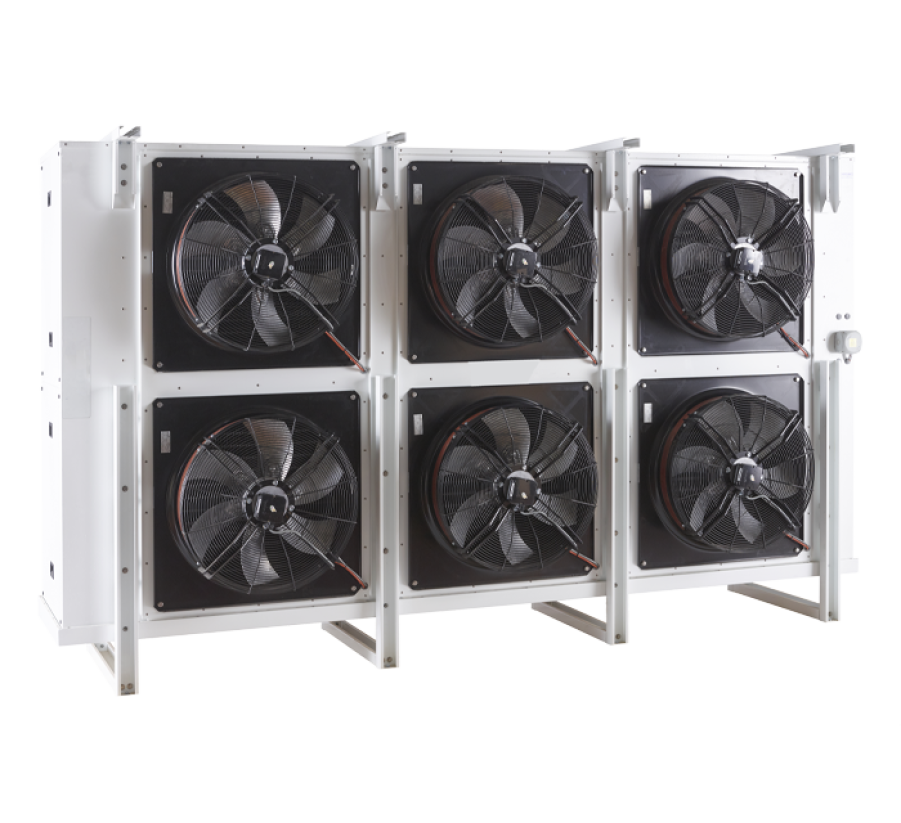
A blast freezer refrigeration system is a high-capacity refrigeration system designed to reduce product temperature rapidly under controlled low-temperature, high-airflow conditions. Unlike a storage freezer that mainly maintains already-frozen products, a blast freezer removes a large amount of product heat within a defined freezing period.
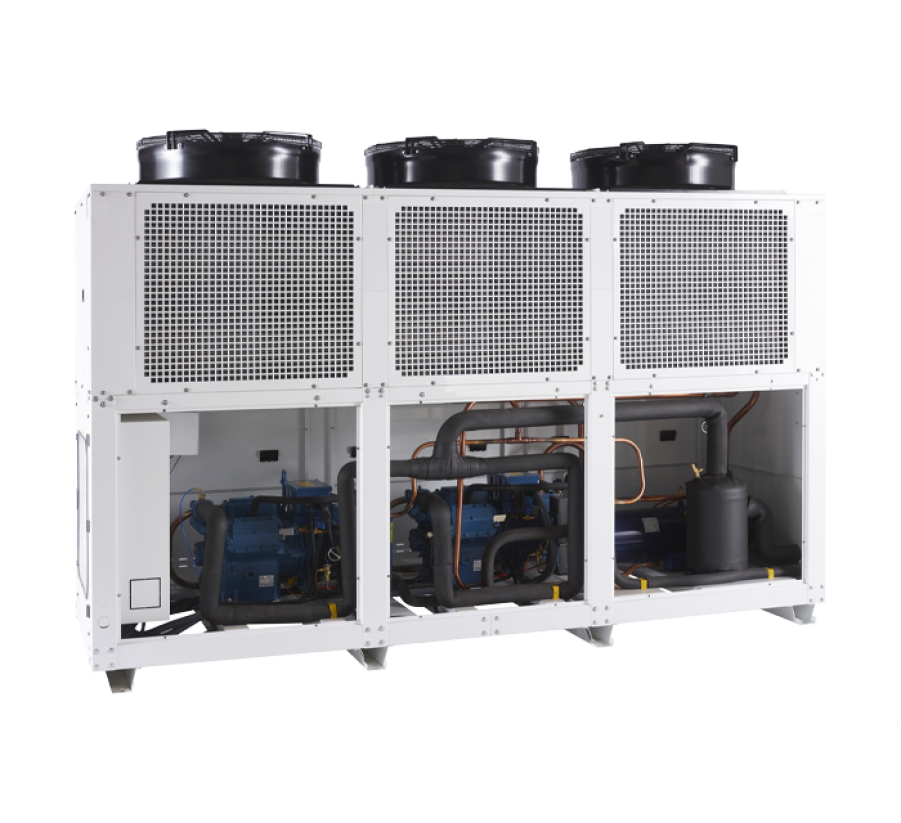
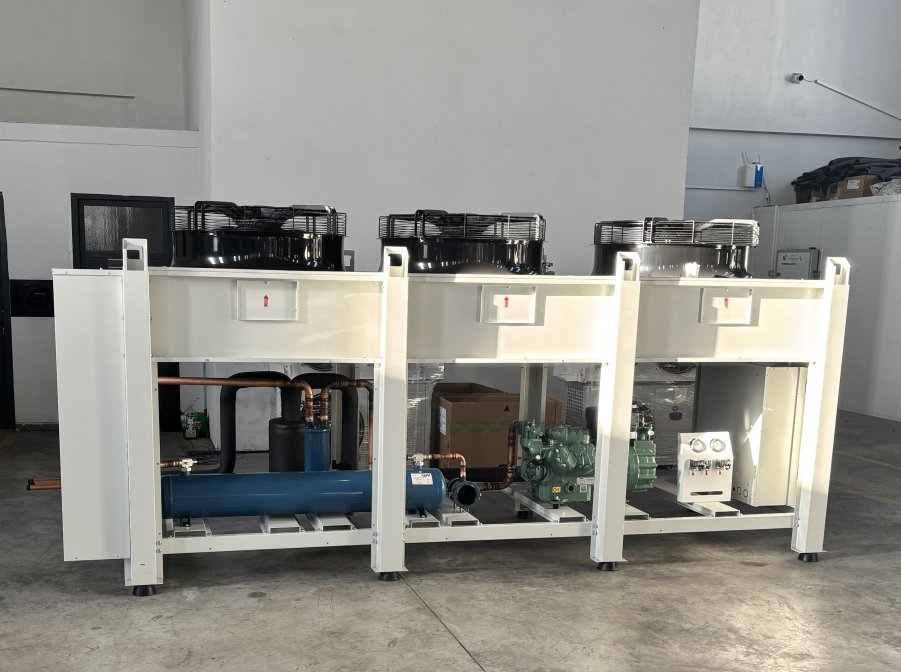
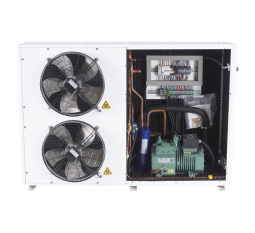
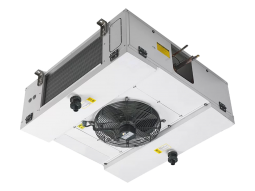
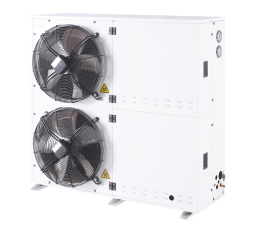
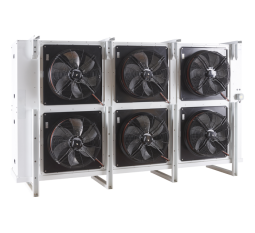
Freezewize Blast Freezer Refrigeration Systems combine industrial compressors, low-temperature condensing equipment, high-capacity evaporators, controlled airflow, defrost management, electrical controls, plus refrigeration piping into one engineered freezing system.
Typical Freezewize blast freezer room conditions operate around −30°C to −40°C (-22°F to -40°F). Room temperature alone does not determine freezing performance. Product type, initial temperature, product weight, thickness, packaging, loading density, target core temperature, required freezing time, airflow, plus refrigeration capacity all influence final system design.
A correctly engineered blast freezer system therefore starts with the product and required freezing process rather than room dimensions alone.
Blast Freezer Basics
A normal freezer room primarily maintains frozen products at stable storage temperature.
A blast freezer refrigeration system performs a different job.
Its purpose is to remove product heat quickly.
A typical blast freezing process requires:
- Low room temperature
- High refrigeration capacity
- Strong evaporator airflow
- Controlled product spacing
- Suitable air paths
- Defined product load
- Target product core temperature
- Required freezing time
- Effective defrost
- Accurate temperature controls
These factors work together.
A powerful compressor alone does not create rapid freezing.
A very low room temperature alone does not guarantee fast product pull-down.
High airflow without correct product arrangement also produces inconsistent freezing.
Blast freezing is a complete process.
System Configuration
| Technical Feature | Freezewize Configuration |
|---|---|
| Product Type | Blast Freezer Refrigeration System |
| Primary Function | Rapid product freezing |
| Typical Room Temperature | −30°C to −40°C / -22°F to -40°F |
| System Architecture | Industrial low-temperature refrigeration |
| Condensing Section | High-capacity low-temperature configuration |
| Compressor | Selected according to product load plus freezing duty |
| Evaporator | High-capacity blast freezer evaporator |
| Airflow | High-airflow configuration |
| Defrost | Selected according to operating cycle |
| Controls | Temperature, defrost, protection, process control according to project |
| Refrigerant | Region-appropriate refrigerant supply |
| Electrical Supply | Project-specific |
| Capacity Selection | Product-load plus freezing-time based |
| Applications | Meat / Poultry / Seafood / Frozen Food / Food Processing |
| Production | Project-specific engineering |
Exact compressor configuration, refrigeration capacity, evaporator quantity, airflow, refrigerant, electrical supply, control architecture, plus freezing cycle depend on project requirements.
Freezing Process Design
The starting point for a blast freezer refrigeration system is not compressor horsepower.
It is the required product process.
Engineering needs to answer:
What product is being frozen?
How much product enters each cycle?
What is incoming product temperature?
What core temperature is required?
How quickly must product reach that target?
Only after these questions are defined can refrigeration capacity be selected correctly.
This separates blast freezer engineering from standard frozen-storage sizing.
Core Temperature
Room air temperature plus product temperature are not the same measurement.
A blast freezer room might operate near −35°C while product core remains much warmer during early stages of freezing.
The refrigeration system removes heat from product surface first.
Heat from product interior then moves toward colder surface.
This continues until required product core temperature is reached.
For this reason, a blast freezer project should define:
- Initial core temperature
- Required final core temperature
- Maximum freezing time
- Product dimensions
- Product packaging
- Product loading pattern
Room temperature alone cannot confirm completed freezing.
Air vs Core Temperature
This distinction is one of the most important blast freezer concepts.
Air temperature describes environment surrounding product.
Core temperature describes temperature inside product.
A controller reading −35°C does not mean a large meat carton has reached −18°C internally.
Product thickness, thermal properties, airflow, packaging, plus freezing time influence internal temperature reduction.
Process validation should therefore use product-temperature measurements where required by operation.
Product Load
Product load creates a major part of blast freezer refrigeration demand.
A freezer holding already-frozen products needs mainly to offset enclosure plus operational heat.
A blast freezer receiving warm product needs to remove significant product heat.
Required information includes:
- Product type
- Product weight per batch
- Number of batches
- Initial temperature
- Target temperature
- Freezing time
- Packaging type
A blast freezer processing 1,000 kg per cycle has a fundamentally different refrigeration requirement from one processing 10,000 kg per cycle.
Room dimensions alone cannot describe this difference.
Freezing Time
Required freezing time directly influences refrigeration capacity.
Removing a given amount of heat over 20 hours requires lower average capacity than removing similar heat over 6 hours.
Shorter freezing targets generally require:
- Greater refrigeration capacity
- Greater evaporator capacity
- Higher airflow
- Better product spacing
- More careful air distribution
This makes freezing time a primary design input.
Freezewize should always request target freezing duration before final Blast Freezer Refrigeration System selection.
Product Thickness
Two products with equal weight can freeze at different rates.
Thickness strongly influences heat-transfer distance from product center toward surface.
Examples include:
- Thin fish fillets
- Individual poultry products
- Large meat cuts
- Full cartons
- Bulk packaged food
- Large blocks
A thick product has a longer internal heat-transfer path.
This means freezing time cannot be estimated reliably from total weight alone.
Product geometry matters.
Product Packaging
Packaging influences airflow exposure plus heat transfer.
Common formats include:
- Open trays
- Plastic bags
- Cartons
- Crates
- Pallets
- Wrapped meat
- Boxes
Airflow around individual exposed products differs greatly from airflow around tightly stacked cartons.
Engineering needs to understand actual loading format.
A blast freezer refrigeration system designed around open products may perform differently once products are packed densely inside cardboard cartons.
Loading Density
Putting more product inside a blast freezer increases production capacity only until airflow becomes restricted.
Overloading can create:
- Blocked air paths
- Slow freezing
- Uneven product temperatures
- Longer compressor operation
- Warm product centers
Blast freezer capacity therefore depends on both refrigeration capacity plus usable airflow around products.
More product is not always more productive when air circulation becomes restricted.
High Airflow Design
Blast freezing relies heavily on forced air movement.
Evaporator fans move cold air rapidly across product surfaces.
Effective airflow supports faster heat transfer.
Air needs a controlled path:
Evaporator discharge → product → return air → evaporator
If product blocks this path, system performance declines.
Airflow design should consider:
- Evaporator position
- Air velocity
- Product racks
- Pallet locations
- Room dimensions
- Return-air clearance
- Product spacing
This is why blast freezer refrigeration equipment should be selected alongside actual room layout.
Airflow Uniformity
High airflow alone is insufficient.
It also needs reasonable distribution.
Poor airflow can create:
- Fast-freezing products near evaporator
- Slow products near room end
- Warm spots behind pallets
- Different freezing times between racks
Uniformity matters especially when products from one batch need comparable freezing results.
Evaporator quantity, air throw, room length, rack layout, plus product spacing all influence distribution.
Evaporator Selection
A blast freezer evaporator differs in duty from a basic frozen-storage evaporator.
Selection considers:
- High refrigeration capacity
- Low evaporating temperature
- Airflow requirement
- Product load
- Room geometry
- Frost accumulation
- Defrost method
- Fin spacing
- Fan performance
The evaporator converts refrigeration capacity into actual heat removal from room air plus product.
Incorrect evaporator selection can limit complete system even when condensing equipment has enough nominal capacity.
Frost Accumulation
Blast freezing creates demanding evaporator conditions.
Moisture can reach cold coil from:
- Product
- Door opening
- Incoming air
- Cleaning
- Room infiltration
This moisture freezes on evaporator.
Frost reduces:
- Airflow
- Coil heat transfer
- Refrigeration capacity
Blast freezer evaporator design therefore needs to consider frost accumulation carefully.
High product moisture or frequent loading can increase defrost demand.
Defrost Strategy
A blast freezer refrigeration system requires defrost suited to its process cycle.
Defrost timing often needs coordination with production.
For example:
Freezing cycle → product unloading → defrost → next loading cycle
This approach can provide better process control than defrost occurring unexpectedly during active freezing.
Exact sequence depends on operation.
Defrost design should consider:
- Product cycles
- Frost accumulation
- Evaporator configuration
- Room temperature
- Door traffic
- Available downtime
Defrost is part of production planning.
Defrost Recovery
Defrost introduces heat into cold environment.
After defrost, refrigeration system needs to remove this heat before next process reaches stable operating conditions.
Recovery time therefore matters.
A high-throughput food plant with short intervals between batches needs a different defrost strategy from a facility running one cycle daily.
Production schedule should be known during system design.
Drain Freeze Protection
Defrost water needs to leave evaporator.
At blast freezer temperatures, water can freeze quickly.
Drainage design should consider:
- Drain slope
- Pipe routing
- Insulation
- Freeze protection
- Discharge location
Poor drainage can create ice below evaporator or blocked drain lines.
This problem becomes both operational plus safety-related.
Drain design belongs inside blast freezer engineering.
Blast vs Storage Freezer
A blast freezer system should not be confused with a standard storage freezer.
| Design Factor | Blast Freezer | Storage Freezer |
|---|---|---|
| Primary Purpose | Rapid product freezing | Frozen product holding |
| Product Load | High process load | Usually lower |
| Airflow | High | Storage-oriented |
| Freezing Time | Critical | Not primary target |
| Core Temperature | Process criterion | Product already frozen |
| Refrigeration Capacity | High relative to room size | Storage-load based |
| Frost Load | Often higher | Lower depending on use |
| Production Cycle | Important | Less process-driven |
| Room Temperature | Very low | Standard frozen storage |
| Equipment Selection | Product-process based | Room-load based |
This distinction is fundamental.
A standard freezer should not automatically be converted into a blast freezer simply by lowering thermostat setpoint.
Refrigeration Capacity
Blast freezer capacity must be calculated around total heat removal.
Main load categories include:
Product Load
Usually the dominant process load.
Transmission Load
Heat entering through walls, ceiling, floor, plus doors.
Infiltration Load
Warm air entering during loading or unloading.
Internal Load
Fans, lighting, personnel, equipment.
Defrost Load
Heat introduced during defrost.
Pull-Down Load
Heat removed from room structure or products during temperature reduction.
All loads contribute to required blast freezer refrigeration system capacity.
Product Heat Removal
Product freezing is more complex than simply cooling a product through several degrees.
Heat removal can involve:
- Cooling product toward its freezing range.
- Removing heat during phase change.
- Continuing product cooling toward final core temperature.
This creates substantial refrigeration demand.
Food composition also matters.
Water content, fat, solids, product density, plus packaging influence freezing behavior.
This is another reason generic “BTU per cubic foot” sizing is insufficient for industrial blast freezing.
Compressor Selection
Blast freezer compressors need to provide sufficient capacity under demanding low-temperature operating conditions.
Selection depends on:
- Required refrigeration capacity
- Evaporating temperature
- Condensing temperature
- Ambient conditions
- Refrigerant
- Compressor operating envelope
- Electrical supply
- Production cycle
Nominal horsepower alone does not define usable blast-freezing capacity.
Capacity needs evaluation at actual low-temperature duty.
Compressor Operating Envelope
Low evaporating temperatures combined with high ambient conditions create demanding compressor operation.
Engineering needs to keep compressor inside approved operating envelope.
Relevant conditions include:
- Suction pressure
- Discharge pressure
- Evaporating temperature
- Condensing temperature
- Refrigerant
- Motor loading
Correct selection supports reliable operation across complete freezing cycle.
High Compression Ratio
Blast freezer operation often produces a greater compression ratio than medium-temperature refrigeration.
Higher compression ratio influences:
- Compressor capacity
- Power consumption
- Discharge temperature
- Operating efficiency
- Compressor loading
This becomes especially important in hot climates.
Low evaporating temperature plus high outdoor ambient creates one of the most demanding combinations for refrigeration equipment.
Condensing Equipment
Condensing section needs to reject all heat removed from product plus heat generated through compression.
A blast freezer system therefore needs strong heat-rejection capacity.
Condenser selection considers:
- Total refrigeration duty
- Ambient temperature
- Compressor capacity
- Equipment location
- Airflow
- Refrigerant
Undersized condenser performance can limit complete blast freezing process.
High Ambient Conditions
Freezewize exports refrigeration systems across different climates.
A blast freezer operating in Texas or Arizona can face significantly higher condenser inlet temperatures than a system operating in northern Europe.
High ambient conditions influence:
- Condensing pressure
- Compressor capacity
- Power requirement
- Heat rejection
- System operating envelope
Design should therefore use realistic local ambient conditions.
One blast freezer configuration should not be copied unchanged across every market.
Low Ambient Conditions
Cold climates create different condenser challenges.
Outdoor equipment exposed to very low winter temperature may require appropriate condensing-pressure control according to system design.
Projects should be evaluated across expected annual ambient range.
Summer design protects peak heat rejection.
Winter design protects stable refrigeration operation.
Product Loading Temperature
Incoming product temperature changes process load dramatically.
Examples:
Product arriving at +2°C
versus
Product arriving at +20°C
creates very different heat-removal requirements before frozen core temperature is achieved.
Production data should therefore specify actual incoming temperature rather than an assumed value.
This is particularly important in meat, poultry, seafood, plus prepared-food processing.
Batch Size
Blast freezing often operates in batches.
Useful information includes:
- kg or lb per batch
- batches per day
- time between batches
- loading time
- unloading time
- sanitation time
- defrost time
A system designed for one batch every 12 hours differs from one expected to process continuous back-to-back cycles.
Production schedule influences equipment utilization plus recovery requirements.
Continuous Production
Some industrial facilities need near-continuous freezing operation.
This changes system priorities.
Design may need to consider:
- Multiple blast rooms
- Multiple evaporators
- Staged compressors
- Redundancy
- Defrost sequencing
- Production continuity
A single blast room can become a production bottleneck when defrost or maintenance stops freezing.
High-throughput facilities benefit from system architecture designed around actual factory workflow.
Meat Blast Freezing
Meat processing is a major blast freezer application.
Important design inputs include:
- Product type
- Carcass, cuts, cartons, or packaged product
- Product thickness
- Incoming temperature
- Batch mass
- Final core temperature
- Freezing time
Large meat products can require longer freezing time due to greater internal heat-transfer distance.
Product arrangement around airflow becomes critical.
Poultry Blast Freezing
Poultry applications can include:
- Whole chicken
- Chicken parts
- Packaged poultry
- Cartons
- Prepared products
Product format influences airflow exposure.
Dense cartons restrict direct cold-air contact compared with individually arranged products.
Refrigeration system plus rack layout should reflect actual packaging.
Seafood Blast Freezing
Seafood facilities often require rapid temperature reduction for fish or processed seafood products.
Key inputs include:
- Product dimensions
- Moisture
- Packaging
- Initial temperature
- Target temperature
- Batch load
High humidity plus product moisture can also influence evaporator frost formation.
Defrost strategy deserves close attention.
Prepared Food Freezing
Blast freezing also supports:
- Ready meals
- Bakery products
- Prepared foods
- Frozen vegetables
- Processed products
Each product has different physical characteristics.
A refrigeration system should not use one generic freezing-time assumption across all food types.
Product trials or verified process calculations can become important where precise production targets apply.
Product Quality
Rapid freezing is commonly used where operators want to reduce freezing time plus protect product quality through controlled processing.
Freezing rate influences ice formation inside food.
Faster, controlled freezing generally produces smaller ice structures than slow freezing, helping reduce physical damage to food structure.
Final product quality still depends on:
- Raw material
- Packaging
- Storage conditions
- Freezing rate
- Final temperature
- Thawing method
A blast freezer supports product-quality control, but refrigeration equipment alone does not determine final food quality.
Door Opening Control
Blast freezer doors create significant heat plus moisture entry during loading.
Large pallet or trolley doors can remain open for extended periods.
This affects:
- Refrigeration load
- Frost formation
- Floor icing
- Evaporator frost
- Recovery time
Loading workflow should therefore minimize unnecessary door-open time.
Door type, opening size, traffic, plus sealing need coordination with refrigeration design.
Freezer Door Integration
Blast freezer applications require door systems suited to low-temperature conditions.
Important factors include:
- Insulation
- Gasket sealing
- Heated frame where required
- Heated threshold where required
- Door size
- Traffic
- Closing speed
A weak doorway can create a permanent moisture source inside high-performance blast freezer.
Freezewize refrigeration systems can be coordinated with insulated freezer doors during complete project design.
Floor Insulation
Blast freezer floors experience substantial temperature difference.
Suitable floor insulation helps reduce heat entering from building slab or ground.
Floor design should consider:
- Room temperature
- Freezing-cycle duration
- Building floor conditions
- Structural loads
- Pallet traffic
- Forklifts
- Drainage
Industrial blast freezer flooring should be treated as both thermal plus structural construction.
Panel Insulation
Walls plus ceiling also need insulation compatible with low-temperature operation.
Weak enclosure performance increases total system load continuously.
Important elements include:
- Panel thickness
- Panel joints
- Corners
- Ceiling transitions
- Door openings
- Service penetrations
Adding refrigeration capacity is not an efficient substitute for poor enclosure design.
Air Leakage
Air infiltration has two effects inside blast freezer:
Heat enters.
Moisture enters.
Moisture can become frost or ice.
Repeated air leakage therefore increases both refrigeration load plus defrost requirement.
Panel joints, doors, penetrations, plus ceiling transitions need controlled sealing.
Temperature Sensors
Blast freezer controls can use several temperature measurements depending on process requirements.
Possible measurements include:
- Room air temperature
- Evaporator temperature
- Product core temperature
- Return-air temperature
These measurements serve different purposes.
Room sensor controls refrigeration environment.
Product probe helps determine freezing progress where required.
Evaporator sensing can support defrost or protection logic.
Correct sensor placement matters.
Core Temperature Probe
Where process control requires target product core temperature, a suitable product probe provides direct information.
Probe placement needs to represent meaningful product condition.
Measuring only outer surface can indicate cold conditions before product center reaches target.
Batch operations can use core-temperature data alongside time plus room conditions to verify freezing progress.
Exact food-safety procedure remains facility-specific.
Control System
A blast freezer refrigeration system needs controls matched to production process.
Control functions can include:
- Room temperature
- Compressor staging
- Evaporator fans
- Defrost
- Product probes
- Cycle timing
- Alarm functions
- Pressure protection
- System status
Large systems may also integrate monitoring or data logging according to project requirements.
Controls should support process operation rather than simply turn equipment on or off.
Freezing Cycle Control
A practical blast freezing sequence may include:
- Product loading
- Door closure
- Blast freezing start
- High-airflow refrigeration
- Product or time monitoring
- Target condition reached
- Product unloading
- Defrost or sanitation where required
- Preparation for next cycle
Actual sequence depends on production process.
Understanding this cycle during design helps size refrigeration plus defrost recovery correctly.
Alarm Functions
Potential alarms include:
- High room temperature
- Sensor failure
- Compressor fault
- High pressure
- Low pressure
- Fan failure
- Extended freezing cycle
- Door-open condition
Required alarms depend on facility.
A production plant may need different alarm logic from a smaller batch-freezing facility.
Electrical Load
Blast freezer systems often have substantial electrical demand.
Loads can include:
- Compressors
- Condenser fans
- Evaporator fans
- Defrost heaters
- Controls
- Drain heaters
- Door heaters
Electrical design should therefore begin early.
Project data needs:
- Voltage
- Phase
- Frequency
- Available power
- Control requirements
U.S. electrical configurations need specific confirmation before equipment manufacturing.
Refrigerant Strategy
Freezewize does not apply one refrigerant to every Blast Freezer Refrigeration System.
Refrigerant selection depends on:
- Destination market
- Capacity
- Application
- Compressor compatibility
- Operating temperatures
- Safety requirements
- Service availability
- Local regulation
Systems are therefore produced around region-appropriate refrigerant requirements.
This approach supports projects across the United States, Europe, Africa, Middle East, plus other international markets.
U.S. Blast Freezers
For the U.S. market, blast freezer systems should be clearly distinguished from standard walk-in storage freezers.
Blast freezing is fundamentally a process cooling application because equipment is designed around rapid removal of large product loads rather than only maintaining frozen storage temperature.
Project engineering needs to consider:
- Food process
- Product load
- Freezing time
- Core-temperature target
- Room configuration
- Refrigerant requirements
- Electrical supply
- Applicable local codes
- Equipment installation
This distinction also helps prevent the wrong storage-freezer equipment from being quoted for an industrial freezing process.
Blast Freezer Sizing
Correct blast freezer refrigeration system sizing requires more information than a normal freezer quote.
Freezewize should request:
Room Dimensions
Length, width, height.
Product Type
Meat, poultry, seafood, prepared food, bakery, produce, or another product.
Batch Weight
Maximum product mass per cycle.
Incoming Temperature
Temperature before freezing.
Target Core Temperature
Required internal product temperature.
Freezing Time
Maximum acceptable cycle duration.
Product Dimensions
Thickness, shape, carton size.
Packaging
Open, wrapped, bagged, boxed, palletized.
Product Arrangement
Rack, trolley, pallet, hanging, shelving.
Daily Cycles
Number of batches.
Ambient Temperature
Conditions around condensing equipment.
Door Traffic
Loading plus unloading pattern.
Insulation
Wall, ceiling, floor, plus door construction.
Electrical Supply
Voltage, phase, frequency.
Refrigerant Requirements
Selected according to destination region.
Without these inputs, accurate blast freezer selection is difficult.
System vs Condensing Unit
A customer requesting blast freezing may need either a refrigeration component or a complete system.
Low-Temperature Condensing Unit
Provides condensing-side equipment.
Blast Freezer Refrigeration System
Includes coordinated process refrigeration:
- Compressor
- Condensing equipment
- Blast evaporator
- High airflow
- Expansion controls
- Refrigerant piping
- Defrost
- Sensors
- Electrical controls
- Process logic
This difference should remain clear across Freezewize product pages.
Blast vs Freezer System
Freezewize now has two separate system products:
Freezer Room Refrigeration System
Designed primarily for frozen storage.
Blast Freezer Refrigeration System
Designed primarily for rapid product freezing.
This separation prevents keyword overlap plus helps customers choose equipment according to actual process.
The question is not:
“How cold does room need to be?”
The more important question is:
“Are we storing frozen product or actively freezing product?”
That decision determines which refrigeration system category should be evaluated.
Complete Blast Freezer Integration
Freezewize Cooling System designs, supplies, plus installs Blast Freezer Refrigeration Systems as complete industrial freezing solutions.
Turnkey scope includes:
- Project design
- Product-load calculation
- Freezing-process calculation
- Cooling-load calculation
- Blast freezer refrigeration engineering
- Low-temperature condensing equipment
- Industrial blast evaporators
- Airflow planning
- Refrigeration piping
- Defrost coordination
- Electrical controls
- Automation
- Insulated cold room panels
- Freezer doors
- Floor systems
- Installation
- Testing
- Commissioning
- Final handover
This integrated approach allows blast freezer refrigeration capacity, product core temperature, batch weight, freezing time, airflow, room insulation, ambient conditions, defrost strategy, refrigerant, plus electrical demandto be evaluated within one coordinated process.
For meat, poultry, seafood, prepared foods, frozen food production, food processing plants, cold chain facilities, or industrial freezing projects, contact Freezewize Cooling System to engineer a blast freezer refrigeration systemaround actual product load, incoming temperature, target core temperature, freezing time, room geometry, plus production schedule.
Gallery