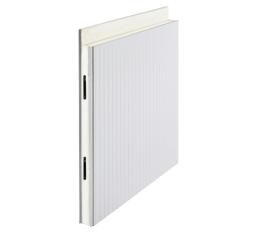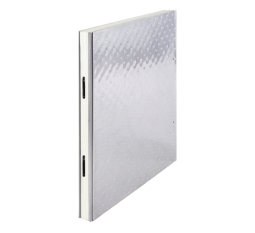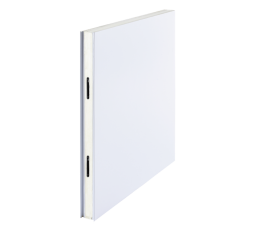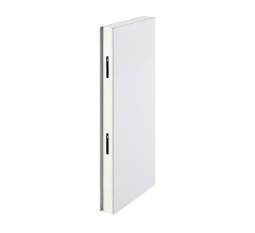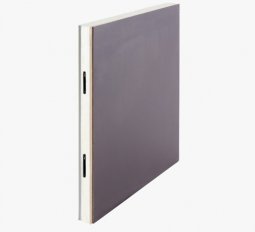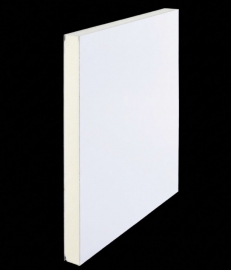





PU Cold Room Sandwich Panel
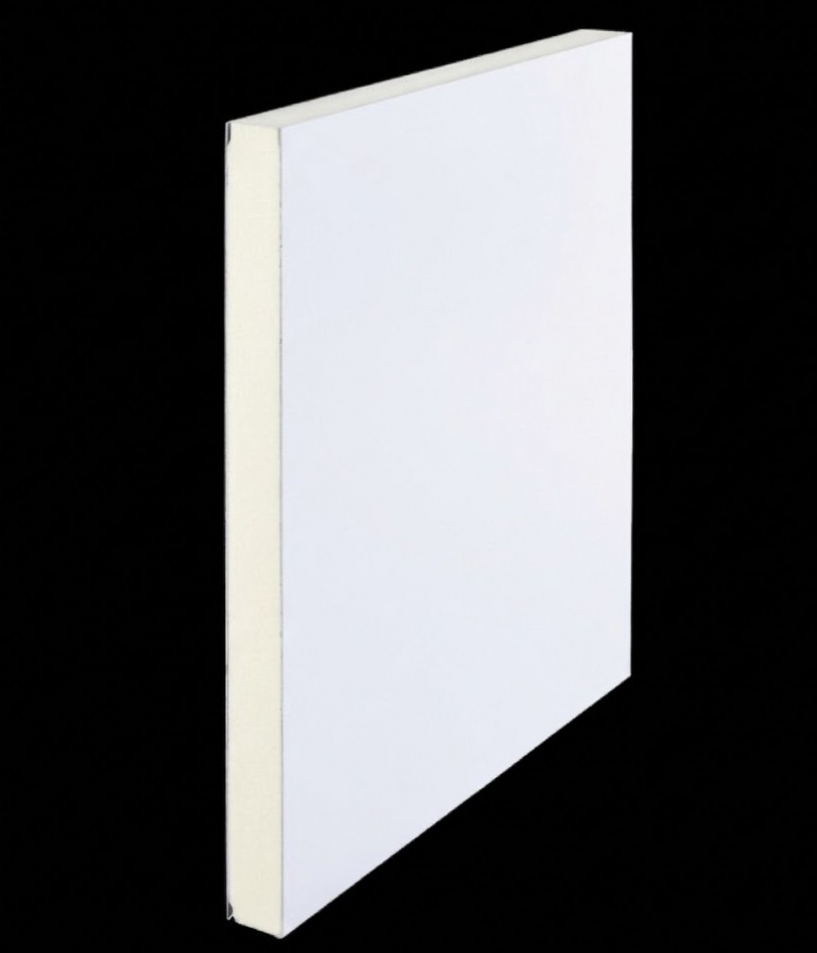
A cold room sandwich panel is an insulated construction panel used to form thermal walls around refrigerated spaces. Sandwich panel construction combines durable steel facings with a polyurethane insulation core, creating one integrated building element for cold storage.
Freezewize PU Cold Room Sandwich Panel uses high-density polyurethane insulation, durable steel surfaces, plus tongue-and-groove edge connections. This sandwich panel system is designed for walk-in coolers, freezer rooms, food processing facilities, refrigerated warehouses, cold chain operations, commercial refrigeration, plus industrial cold storage projects.
Unlike Freezewize Cam-Lock Cold Room Panel, this PU sandwich panel uses tongue-and-groove joint geometry without an internal cam-lock mechanism. Connection method, insulation continuity, wall layout, installation quality, room temperature, plus project geometry determine final sandwich panel performance.
Sandwich Panel Basics
A sandwich panel combines an insulation core between two protective surfaces.
In cold storage construction, this structure creates an insulated boundary between refrigerated space and warmer ambient conditions.
Basic cold room sandwich panel construction includes:
- Outer steel facing
- Polyurethane insulation core
- Inner steel facing
- Tongue-and-groove edge profile
Each layer has a specific role.
Steel facings protect panel surfaces.
Polyurethane insulation reduces heat transfer.
Joint geometry connects adjacent sandwich panels.
Combined construction creates a rigid, insulated wall system suitable for temperature-controlled rooms.
A cold room does not stay cold because sandwich panels create cooling.
Refrigeration equipment removes heat.
Sandwich panel insulation reduces heat entering refrigerated space.
This distinction connects cold room construction directly with refrigeration engineering.
Sandwich Panel Specifications
| Technical Feature | Freezewize Specification |
|---|---|
| Product Type | PU Cold Room Sandwich Panel |
| Panel Category | Insulated cold room sandwich panel |
| Primary Function | Cold room wall insulation |
| Insulation Core | High-density polyurethane foam |
| Panel Structure | Steel facing / PU core / steel facing |
| Joint Type | Tongue-and-groove connection |
| Cam-Lock Mechanism | Not used |
| Primary Applications | Walk-In Cooler / Freezer Room / Cold Storage |
| Surface Function | Durable, cleanable finish |
| Construction Type | Modular sandwich panel assembly |
| Integration | Doors / Corners / Ceiling / Floor / Service penetrations |
| Dimensions | Project-specific production |
| System Design | Cold storage application based |
Freezewize selects final sandwich panel configuration according to project requirements. Panel thickness, surface specification, dimensions, thermal demand, plus installation details need confirmation during quotation or engineering stage.
Polyurethane Sandwich Panel
Polyurethane forms the insulating core inside a PU sandwich panel.
Its main purpose is limiting conductive heat gain.
Heat naturally moves from warmer surroundings toward colder refrigerated space. Refrigeration equipment continuously removes this incoming thermal load.
Sandwich panel insulation reduces that load.
This creates a direct relationship:
Sandwich panel insulation → lower heat gain → lower refrigeration demand
Cold room panel selection therefore affects more than construction cost.
A polyurethane sandwich panel becomes part of complete refrigeration performance.
Poor insulation increases heat entering room.
Higher heat gain increases cooling demand.
Higher cooling demand affects equipment operation, energy consumption, plus temperature stability.
Sandwich Panel Construction
Sandwich construction gives each material a defined function.
Steel Facings
Steel surfaces support:
- Mechanical protection
- Dimensional stability
- Clean finishing
- Washable surfaces
- Interior wall protection
- Exterior panel protection
PU Insulation
Polyurethane core supports:
- Thermal resistance
- Reduced heat transfer
- Lightweight insulated construction
- Continuous panel insulation
Joint Profile
Tongue-and-groove joint geometry supports:
- Panel alignment
- Continuous wall assembly
- Controlled joint position
- Reduced joint gaps
- Modular installation
A cold room sandwich panel performs well only when facing, core, joint, plus installation operate together.
Strong insulation cannot correct a poorly assembled joint.
Accurate joints cannot compensate for inadequate insulation.
Cold Room Sandwich Panel Walls
One sandwich panel does not create a cold room.
Complete walls contain multiple sandwich panels connected together.
Every connection becomes part of room performance.
A large refrigerated facility may contain dozens or hundreds of sandwich panel joints.
Each joint influences:
- Wall alignment
- Air sealing
- Thermal continuity
- Surface continuity
- Installation quality
- Long-term room stability
For this reason:
Sandwich panel quality and joint quality must be evaluated together.
A high-quality PU core inside poorly installed panels will not deliver complete enclosure performance.
Tongue-and-Groove Connection
Freezewize PU Cold Room Sandwich Panel uses tongue-and-groove edge geometry.
One panel edge fits into corresponding profile on adjacent sandwich panel.
This connection supports:
- Accurate positioning
- Modular wall assembly
- Joint alignment
- Reduced visible gaps
- Thermal continuity
- Cleaner installation
Unlike a Cam-Lock Cold Room Panel, this sandwich panel contains no internal mechanical cam-lock fastening system.
Joint performance therefore depends strongly on:
- Correct panel positioning
- Full tongue engagement
- Straight wall alignment
- Suitable support
- Accurate installation
- Proper joint sealing
Tongue-and-groove geometry gives sandwich panels a controlled connection shape, but installation quality remains critical.
Sandwich Panel vs Cam-Lock
Freezewize supplies both PU Cold Room Sandwich Panel and Cam-Lock Cold Room Panel.
Both products provide insulated cold room construction.
Main difference lies in connection method.
| Project Factor | PU Cold Room Sandwich Panel | Cam-Lock Cold Room Panel |
|---|---|---|
| Polyurethane insulation | Yes | Yes |
| Steel sandwich construction | Yes | Yes |
| Tongue-and-groove profile | Primary connection | Used with lock structure |
| Internal cam lock | No | Yes |
| Mechanical joint pulling | No internal mechanism | Yes |
| Modular installation | Yes | Yes |
| Cold room walls | Yes | Yes |
| Walk-in cooler use | Yes | Yes |
| Freezer room use | Project specific | Project specific |
| Joint compression | Installation controlled | Lock assisted |
| Project-based production | Yes | Yes |
Neither system is automatically superior.
A PU sandwich panel suits projects where tongue-and-groove construction matches installation strategy.
Cam-lock panels become attractive where internal mechanical joint compression is preferred.
PU vs Cam-Lock
“PU” and “cam-lock” describe two different panel characteristics.
PU describes insulation material.
Cam-lock describes connection technology.
This difference is important.
A cam-lock panel may also use polyurethane insulation.
A PU sandwich panel without cam locks still contains polyurethane insulation.
Buyers searching polyurethane sandwich panel usually focus on insulated wall construction.
Buyers searching cam lock cold room panel often focus on connection method or modular assembly.
Freezewize separates these pages to answer both search intents clearly.
Sandwich Panel Insulation
Insulation performance does not stop at sandwich panel center.
Complete cold room construction includes:
- Sandwich panel surfaces
- Panel joints
- Corners
- Door openings
- Ceiling connections
- Floor connections
- Refrigeration penetrations
- Electrical penetrations
Each detail interrupts thermal continuity.
Good cold room design limits these interruptions.
For example, a strong sandwich panel wall can still develop problems where refrigeration pipes pass through an oversized unsealed opening.
Panel thickness remains important.
Connection details remain equally important.
Conductive Heat Transfer
Heat moving through solid sandwich panel material is conductive heat transfer.
Main influences include:
- PU insulation
- Sandwich panel thickness
- Thermal conductivity
- Temperature difference
- Wall surface area
Increasing thermal resistance reduces conductive heat gain.
However, conductive heat transfer represents only one part of cold room performance.
Air entering through open gaps creates another problem.
Air Infiltration
Air infiltration occurs when warm ambient air passes through openings or poorly sealed construction.
Common sources include:
- Sandwich panel joints
- Door frames
- Service penetrations
- Corner connections
- Ceiling transitions
- Damaged panel edges
Warm air carries heat plus moisture.
Inside colder environments, this moisture can contribute to condensation or frost.
A thicker cold room sandwich panel does not repair an air gap.
Correct diagnosis needs to identify whether performance loss comes from:
insulation or air leakage.
These problems require different solutions.
Sandwich Panel Thickness
Sandwich panel thickness should follow actual refrigeration requirements.
Freezewize’s current public PU Cold Room Sandwich Panel information does not publish one universal thickness table for every application.
This is preferable to applying one generic thickness to all projects.
Correct sandwich panel thickness depends on:
- Target temperature
- Ambient temperature
- Room dimensions
- Climate
- Product load
- Door traffic
- Operating hours
- Refrigeration capacity
- Ceiling exposure
- Floor insulation
Cooling-load calculation helps determine suitable enclosure performance.
Sandwich panel specification can then follow real project demand.
Cooler Sandwich Panel
A cold room sandwich panel used in a walk-in cooler generally operates under a lower temperature difference than a freezer enclosure.
Typical cooler applications include:
- Fruit storage
- Vegetable storage
- Dairy rooms
- Beverage storage
- Fresh seafood
- Chilled meat
- Prepared food
- Restaurant cold rooms
- Supermarket storage
Positive temperature does not remove insulation requirements.
Poor sandwich panel joints still increase air leakage.
Weak insulation still increases heat gain.
Incorrect wall construction still affects refrigeration load.
Correct cooler design matches sandwich panel insulation with actual operating conditions.
Freezer Sandwich Panel
A freezer sandwich panel works under greater thermal pressure.
Room temperatures drop farther below ambient conditions.
This increases heat transfer across enclosure surfaces.
Freezer projects therefore need stronger attention to:
- Sandwich panel thickness
- Joint integrity
- Floor insulation
- Ceiling insulation
- Door sealing
- Corners
- Vapor movement
- Service penetrations
- Condensation
- Frost
Typical freezer sandwich panel applications include:
- Frozen meat storage
- Frozen poultry storage
- Frozen seafood rooms
- Frozen vegetables
- Ice cream storage
- Frozen prepared foods
- Frozen bakery products
- Cold chain warehouses
A freezer should be treated as one insulated system.
Strong walls alone do not compensate for weak floor, ceiling, or door construction.
Sandwich Panel Joint Integrity
Panel centers normally receive most attention during purchasing.
Joint condition deserves equal attention.
A sandwich panel joint can become a thermal weak point when:
- Tongue profile remains partially engaged
- Panel edges are damaged
- Floor is uneven
- Panels lean
- Debris remains inside joint
- Installation sequence creates stress
- Seal continuity breaks
Repeated poor joints across a long wall can create larger problems than one isolated defect.
Joint inspection should therefore be part of installation control.
First Sandwich Panel
First sandwich panel establishes wall direction.
If initial panel sits incorrectly, later panels follow same reference.
A small error at starting point can become a major dimensional problem across a long wall.
Before continuing installation, verify:
- Starting position
- Vertical alignment
- Floor level
- Wall reference line
- Corner location
- Door location
- Room dimensions
Accurate first-panel installation protects entire sandwich panel wall.
Floor Level
Sandwich panel installation depends on base condition.
An uneven floor creates:
- Misaligned panel joints
- Uneven wall heights
- Non-square door openings
- Poor ceiling alignment
- Visible wall distortion
Tongue-and-groove joints cannot repair major floor-level differences.
Floor condition should be checked before sandwich panel installation begins.
Freezer projects also require coordination between wall panels plus insulated floor construction.
Sandwich Panel Corners
Corners create another transition inside cold room enclosure.
Wall direction changes while thermal continuity needs to remain stable.
Corner planning needs to consider:
- Sandwich panel thickness
- Internal room dimension
- External room dimension
- Surface finish
- Joint orientation
- Hygienic detailing
- Installation sequence
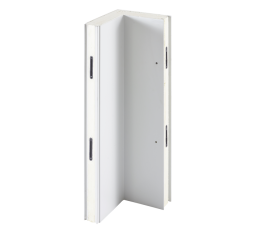
Freezewize offers a dedicated Cold Room Corner Panel for these transitions.
This prevents PU Cold Room Sandwich Panel from being forced into every room geometry through uncontrolled field cutting.
Sandwich Panel Ceiling Connection
Cold room walls connect directly with insulated ceiling construction.
Wall-to-ceiling transition needs accurate sealing plus insulation continuity.
Weak ceiling connections can create:
- Air leakage
- Moisture
- Condensation
- Temperature variation
- Visible joint problems
Freezewize supplies a separate Cold Room Ceiling Panel designed around overhead enclosure requirements.
Ceiling systems also need to account for:
- Support
- Panel span
- Refrigeration pipes
- Lighting
- Sensors
- Drain lines
- Service loads
A strong sandwich panel wall cannot compensate for poor ceiling construction.
Sandwich Panel Floor Connection
Wall-to-floor transition affects complete room geometry.
Projects may use:
- Structural floors
- Insulated freezer floors
- Plywood floor panels
- Stainless steel floor panels
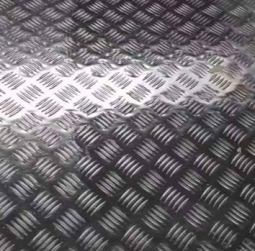
- Aluminum checker plate floor panels
Finished floor elevation influences:
- Wall height
- Door opening
- Ceiling level
- Threshold position
Sandwich panel dimensions should therefore reflect finished cold room geometry.
Designing wall panels from unfinished structural dimensions creates avoidable installation corrections.
Door Integration
Cold room doors interrupt sandwich panel walls.
Door openings need early planning.
Important details include:
- Clear opening width
- Clear opening height
- Sandwich panel thickness
- Door frame dimensions
- Door type
- Threshold
- Header structure
- Hinged or sliding movement
- Nearby sandwich panel joints
Door position also affects workflow.
A technically correct doorway located beside racks or equipment can create operational problems.
Freezewize integrates cold room doors with sandwich panel systems during complete project design.
Refrigeration Penetrations
Cold room refrigeration systems require multiple services to pass through sandwich panel walls.
Typical penetrations include:
- Suction piping
- Liquid lines
- Drain lines
- Electrical cables
- Sensor wiring
- Control cables
Every penetration interrupts sandwich panel insulation.
Oversized holes create unnecessary gaps.
These gaps increase:
- Air leakage
- Moisture movement
- Condensation risk
- Finishing difficulty
- Exposed insulation risk
Penetration location plus size should be planned before panel cutting.
Good service coordination protects sandwich panel continuity.
Electrical Penetrations
Electrical systems create similar requirements.
Cold room lighting, sensors, controls, heaters, plus automation may require cable routing through insulated walls.
Each opening needs:
- Controlled size
- Suitable sealing
- Insulation continuity
- Accessible finishing
- Moisture consideration
Random field drilling creates inconsistent penetration quality.
Electrical routes should be coordinated with sandwich panel layout during project design.
Sandwich Panel Layout
Good layout reduces unnecessary panel cutting.
Planning should identify:
- Starting panel
- Door locations
- Corners
- Wall lengths
- End panels
- Narrow sections
- Penetrations
- Ceiling transitions
Poor layout often creates very narrow cut pieces near doors or corners.
Freezewize offers a dedicated Narrow Cold Room Panel where project geometry requires smaller insulated sections.
Manufactured narrow panels provide a cleaner solution than uncontrolled site cuts in many applications.
Sandwich Panel Cutting
Some cutting may still be necessary.
However, excessive sandwich panel cutting creates:
- Material waste
- Exposed insulation
- Additional edge treatment
- More labor
- Longer installation
- Increased sealing work
Good project design reduces field modification.
Cold room geometry, doors, corners, ceiling structure, plus service penetrations should be planned before production whenever possible.
Sandwich Panel Installation
Installation quality strongly affects final cold room performance.
Key controls include:
- Check floor dimensions.
- Verify floor level.
- Establish wall reference lines.
- Position first sandwich panel.
- Confirm vertical alignment.
- Engage tongue-and-groove joints.
- Check door openings.
- Complete corner transitions.
- Coordinate ceiling system.
- Seal penetrations.
- Inspect final sandwich panel joints.
Fast installation has value only when geometry remains accurate.
Joint Gap Diagnosis
A visible gap between sandwich panels can have several causes.
Possible reasons include:
- Incomplete tongue engagement
- Damaged panel edge
- Uneven floor
- Incorrect starting alignment
- Debris
- Panel cutting
- Structural movement
Applying sealant immediately does not always solve root cause.
First identify whether gap comes from:
joint engagement,
panel alignment,
substrate condition, or
movement.
Repair method should follow diagnosis.
Sandwich Panel Condensation
Condensation location often provides clues about enclosure weakness.
One Sandwich Panel Joint
Inspect local joint engagement.
Multiple Vertical Joints
Review installation consistency.
Door Perimeter
Check frame-to-sandwich-panel connection.
Ceiling Line
Inspect ceiling transition.
Refrigeration Pipe Area
Review penetration sealing.
Floor Line
Inspect wall-to-floor transition.
Condensation does not automatically mean polyurethane insulation has failed.
Location matters.
Repeated patterns often identify the actual construction detail requiring attention.
Sandwich Panel Surfaces
Cold room sandwich panels need durable internal plus external surfaces.
Surface performance influences:
- Cleaning
- Hygiene
- Moisture resistance
- Appearance
- Impact tolerance
- Long-term maintenance
Steel-facing construction protects PU insulation while creating usable cold room walls.
Surface selection should match operating environment.
Food processing, seafood, warehouses, commercial coolers, plus dry storage facilities create different surface demands.
Food Processing Sandwich Panels
A cold room sandwich panel is widely suited to temperature-controlled food environments.
Applications include:
- Meat processing
- Poultry
- Seafood
- Dairy
- Prepared food
- Fruit
- Vegetables
- Chilled ingredients
Food processing facilities often require frequent cleaning.
Sandwich panel walls need to coordinate with:
- Hygienic profiles
- Floor transitions
- Door frames
- Ceiling connections
- Drainage
- Service penetrations
Cleanability depends on complete room construction, not only panel surface.
Refrigerated Warehouse Panels
Large cold storage warehouses introduce additional sandwich panel considerations.
Long wall runs increase:
- Number of joints
- Alignment sensitivity
- Installation tolerances
- Door coordination
- Service penetrations
- Total thermal surface area
A small dimensional error repeated across many sandwich panels becomes significant.
Warehouse projects benefit from detailed panel schedules plus installation drawings.
Total sandwich panel area also influences cooling-load calculation.
Sandwich Panel Impact Areas
Sandwich panels form insulated walls.
They are not intended to operate as forklift barriers.
High-traffic environments should identify likely impact zones:
- Doorways
- Corners
- Loading areas
- Pallet staging
- Warehouse aisles
- Cart routes
Repeated impact can damage steel facing or expose PU insulation.
Protective barriers may be appropriate where material-handling traffic approaches sandwich panel walls.
Preventing physical damage protects thermal plus hygienic performance.
Retrofit Sandwich Panels
Existing buildings require careful site measurement before sandwich panel production.
Important checks include:
- Floor level
- Ceiling height
- Structural columns
- Beams
- Existing walls
- Drainage
- Door openings
- Refrigeration services
- Electrical services
- Installation access
Existing facilities often differ from old drawings.
Actual site dimensions should guide sandwich panel production.
Sandwich Panel Selection
Correct cold room sandwich panel specification starts with project data.
Room Temperature
Define required refrigerated condition.
Ambient Temperature
Higher ambient temperature increases enclosure load.
Cold Room Dimensions
Wall plus ceiling surface influence total heat gain.
Stored Product
Product type affects refrigeration demand.
Door Traffic
Frequent opening increases thermal load.
Sandwich Panel Construction
Connection system needs to match project requirements.
Surface Environment
Humidity, cleaning, corrosion, plus impact exposure influence panel finish.
Door Openings
Door frames need coordination with sandwich panel thickness.
Ceiling Structure
Wall height plus overhead construction need matching geometry.
Floor Construction
Finished floor elevation changes room dimensions.
Service Penetrations
Refrigeration plus electrical routes should be planned early.
These details allow Freezewize Cooling System to select a sandwich panel system according to real operating conditions.
Sandwich Panel Applications
Freezewize PU Cold Room Sandwich Panel supports many refrigerated projects.
Walk-In Coolers
Restaurants, supermarkets, hotels, foodservice facilities, plus retail storage.
Freezer Rooms
Frozen product storage requiring insulated wall construction.
Food Processing
Temperature-controlled production plus storage areas.
Cold Chain Logistics
Chilled or frozen distribution facilities.
Refrigerated Warehouses
Large industrial cold storage projects.
Pharmaceutical Storage
Controlled-temperature rooms.
Produce Storage
Fruit plus vegetable cold rooms.
Same sandwich panel concept can serve different applications, but final specification needs project-based engineering.
Complete Sandwich Panel System
Freezewize Cooling System uses multiple insulated panel products to create complete cold room enclosures.
Product family includes:
- Cam-Lock Cold Room Panel
- PU Cold Room Sandwich Panel
- Cold Room Corner Panel
- Cold Room Ceiling Panel
- Narrow Cold Room Panel
- Stainless Steel Cold Room Floor Panel
- Plywood Cold Room Floor Panel
- Aluminum Checker Plate Floor Panel
Each panel solves a specific construction requirement.
PU Cold Room Sandwich Panel primarily forms insulated refrigerated walls through polyurethane sandwich construction plus tongue-and-groove connections.
Other panel types complete corners, ceilings, floors, plus dimensional transitions.
Turnkey Sandwich Panel Integration
Freezewize Cooling System supplies PU Cold Room Sandwich Panel systems individually or integrates sandwich panels into complete cold storage projects.
Turnkey scope includes:
- Project design
- Cooling-load calculation
- Insulated sandwich panel systems
- Cold room doors
- Industrial refrigeration systems
- Electrical control systems
- Automation
- Installation
- Testing
- Commissioning
- Final handover
This approach allows sandwich panel construction, room geometry, doors, ceiling, floor, refrigeration load, penetrations, plus installation sequence to be evaluated within one coordinated cold storage system.
For walk-in coolers, freezer rooms, food processing facilities, refrigerated warehouses, cold chain operations, or industrial cold storage projects, contact Freezewize Cooling System to specify a cold room sandwich panel solution around your temperature, room dimensions, insulation requirements, and installation conditions.