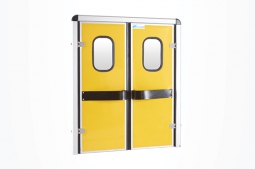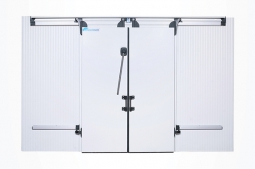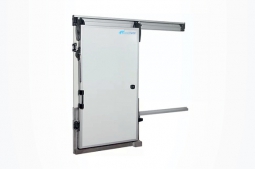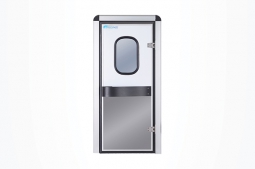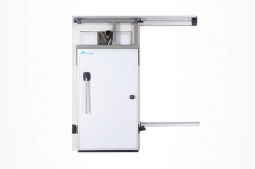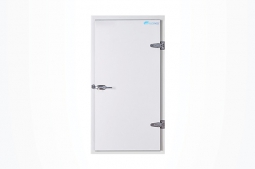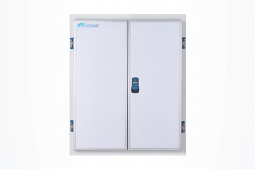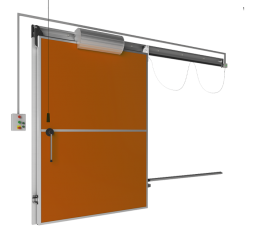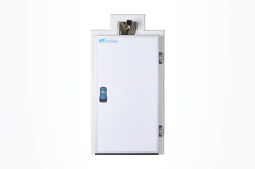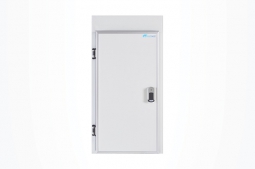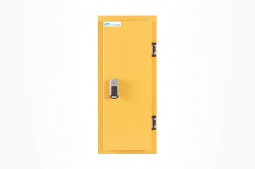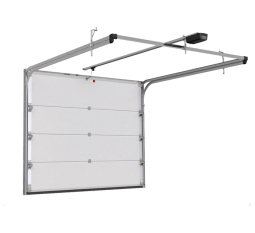





Hinged Cold Room Door
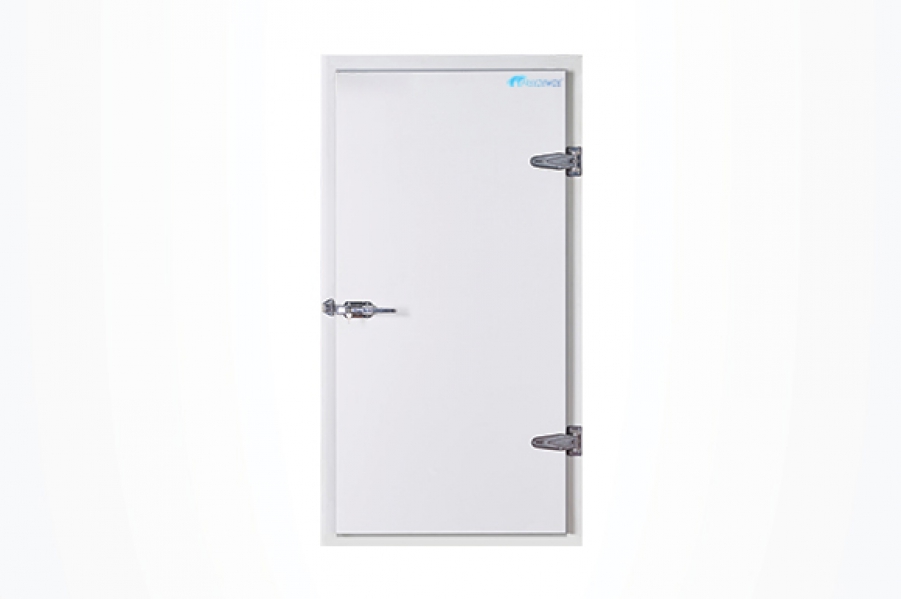
A hinged cold room door is an insulated access door designed for chilled rooms, walk-in coolers, food processing areas, refrigerated warehouses, supermarkets, seafood facilities, dairy operations, plus other positive-temperature cold storage applications. Freezewize Cooling System manufactures each Hinged Cold Room Door around reliable insulation, controlled sealing, adjustable industrial hinges, hygienic surface options, plus practical daily access.
Unlike sliding door systems, a hinged cold room door uses a simple swing movement that works particularly well for personnel entrances, smaller product access points, preparation rooms, and refrigerated spaces where wide pallet openings are not required.
Correct door thickness, hinge capacity, sealing, frame design, opening direction, plus surface material help create a cold room entrance suited to actual operating conditions.
Hinged Door Specifications
| Technical Feature | Freezewize Specification |
|---|---|
| Product Type | Hinged Cold Room Door |
| Door Configuration | Insulated hinged door |
| Primary Application | Cold room / Chilled storage / Food processing |
| Operating Range | 0°C to +10°C / 32°F to 50°F |
| Insulation Core | High-density polyurethane foam |
| PU Density | 40–45 kg/m³ |
| Thermal Conductivity | ≤ 0.022 W/m·K |
| 60 mm Thickness | R-15 |
| 80 mm Thickness | R-20 |
| 100 mm Thickness | R-25 |
| U-Value at 100 mm | Approx. 0.22 W/m²K |
| Surface Options | AISI 304 stainless steel / corrosion-resistant coated steel |
| Frame Options | Insulated aluminum / stainless steel |
| Hinge System | Heavy-duty adjustable industrial hinges |
| Sealing System | Flexible magnetic seal with moisture-resistant gasket |
| Air Sealing | Multi-point thermal sealing |
| Moisture Protection | Corrosion-resistant hardware and condensation-oriented design |
| Production | Customized according to project requirements |
Daily Cold Room Access
A hinged cold room door provides one of the most direct access methods for refrigerated spaces.
Door leaf movement follows a conventional hinged path, making operation familiar to personnel while avoiding sliding tracks, motors, or more complex opening systems where those components are unnecessary.
This simplicity makes a cold room hinged door especially relevant for:
- Walk-in cooler entrances
- Chilled storage rooms
- Food preparation areas
- Seafood processing rooms
- Dairy cold rooms
- Produce storage
- Supermarket back rooms
- Restaurant cold storage
- Pharmaceutical chilled storage
- Temperature-controlled work areas
Hinged access is especially practical for personnel movement, routine cold-room access, and smaller refrigerated openings. Sliding systems become more relevant as opening width or material traffic increases.
Insulated Door Construction
An insulated cold room door needs to continue thermal resistance across an opening that interrupts insulated wall panels.
Freezewize Hinged Cold Room Door uses high-density polyurethane foam with 40–45 kg/m³ density and thermal conductivity of ≤ 0.022 W/m·K.
Available thickness options create different insulation levels:
60 mm — R-15
Suitable for selected positive-temperature refrigerated spaces where moderate thermal resistance matches operating conditions.
80 mm — R-20
Provides increased insulation for chilled storage, processing areas, plus commercial cold rooms.
100 mm — R-25
Offers stronger thermal resistance for more demanding positive-temperature cold storage applications.
At 100 mm thickness, specified U-value is approximately 0.22 W/m²K.
Door thickness needs to match room temperature, surrounding panel construction, ambient conditions, opening frequency, plus operating schedule.
A thicker door is not automatically better for every application. Correct specification balances insulation requirement, door weight, hardware load, installation geometry, plus project cost.
Hinge System Performance
Hinges define how a hinged cold room door moves, aligns, closes, plus transfers door-leaf weight into its frame.
Freezewize uses heavy-duty adjustable industrial hinges.
Adjustable hardware allows alignment to be corrected during installation or service when required.
Hinge alignment matters because a door leaf that drops, twists, or sits unevenly can affect:
- Magnetic seal contact
- Frame clearance
- Closing movement
- Threshold alignment
- Opening force
- Long-term gasket wear
Hinge capacity should correspond with door dimensions, insulation thickness, surface material, plus expected operating frequency.
A large stainless steel cold room door places different mechanical demands on hinges than a compact personnel door.
Magnetic Door Sealing
A cold room entrance only performs as intended when door leaf, gasket, frame, plus hinge alignment work together.
Freezewize Hinged Cold Room Door uses a flexible magnetic seal with moisture-resistant gasket plus multi-point thermal sealing.
Magnetic sealing helps maintain contact around the door perimeter once the leaf closes.
Consistent perimeter contact helps limit unwanted air leakage through a closed refrigerated entrance.
Air leakage can contribute to:
- Temperature fluctuation
- Moisture movement
- Condensation
- Increased refrigeration demand
- Localized surface moisture
- Reduced cold room stability
Door sealing therefore needs to be evaluated as part of complete cold room performance rather than as a small accessory around the frame.
Walk-In Cooler Door
A walk-in cooler door often serves staff more frequently than large material-handling equipment.
For this type of application, hinged access offers a practical balance of insulation, manual operation, simple hardware, plus straightforward maintenance.
Freezewize Hinged Cold Room Door operates within a specified temperature range of 0°C to +10°C (32°F to 50°F), making it particularly suitable for positive-temperature cold rooms and cooler applications.
Common uses include:
Fresh Food Storage
Fruit, vegetables, prepared food, plus temperature-sensitive ingredients.
Dairy Storage
Milk products, cheese, ingredients, plus chilled production materials.
Seafood Storage
Fresh fish and seafood storage requiring controlled temperature plus moisture-resistant construction.
Meat Chilling
Positive-temperature chilled meat areas where freezer-level door construction is not required.
Retail Cold Rooms
Supermarket or food-retail walk-in coolers serving back-of-house operations.
Foodservice Storage
Restaurant, hotel, catering, plus commercial kitchen cold rooms.
Stainless Steel Surface
Surface material influences hygiene, cleaning, corrosion exposure, appearance, plus maintenance.
Freezewize offers:
AISI 304 Stainless Steel
A strong choice for food processing, seafood, dairy, hygiene-sensitive rooms, humid conditions, plus facilities exposed to frequent cleaning.
Coated Steel
Suitable for many standard cold storage and commercial refrigeration environments.
Stainless steel becomes particularly relevant around seafood or humid refrigerated environments because door surfaces, frames, plus hardware face repeated moisture exposure.
Surface selection should follow actual facility conditions rather than appearance alone.
Opening Direction Planning
Opening direction affects how a hinged cold room door interacts with staff, equipment, wall space, plus surrounding workflow.
Before production, project planning should evaluate:
- Left-hand or right-hand opening
- Available swing clearance
- Nearby shelving
- Personnel movement
- Product movement
- Wall obstructions
- Equipment position
- Emergency access requirements
- Floor transition
- Room layout
Door handing belongs in project design, not only installation.
An incorrectly oriented door can obstruct internal workflow, reduce usable space, or interfere with nearby equipment.
Hinged Versus Sliding
A hinged cold room door and a sliding cold room door solve different access problems.
| Project Requirement | Hinged Cold Room Door | Sliding Cold Room Door |
|---|---|---|
| Personnel access | Strongchoice | Suitable |
| Smaller opening | Strongchoice | Possible |
| Simple manual operation | Strongchoice | Suitable |
| Limited wall space beside opening | Strongchoice | Needs sliding travel |
| Limited swing clearance | Requires space | Strongchoice |
| Wide pallet access | Possible | Oftenstronger |
| Forklift movement | Application dependent | Oftenstronger |
| Simple hardware | Advantage | More components |
| Routine walk-in cooler access | Strong choice | Suitable |
Hinged access remains practical when personnel movement, simple operation, compact opening size, plus easy inspection matter most.
Sliding door systems become more relevant where wide access or surrounding swing clearance creates operational constraints.
This distinction also helps each Freezewize door page target a different search intent.
Cooler Versus Freezer
Positive-temperature cold rooms and sub-zero freezer rooms require different door configurations.
Hinged Cold Room Door
Primary focus:
- Positive-temperature rooms
- Chilled storage
- Walk-in coolers
- Food processing
- 0°C to +10°C operation
Hinged Freezer Door
Primary focus:
- Sub-zero applications
- Walk-in freezers
- Frozen storage
- Stronger frost-control requirements
- Dedicated low-temperature configuration
Insulation thickness, sealing, frame design, frost control, operating temperature, plus daily access conditions should be evaluated separately for each application.
Keeping these product types distinct also gives Google clearer topic separation between hinged cold room door and hinged freezer door searches.
Moisture-Prone Cold Rooms
Some chilled facilities expose doors to more moisture than standard dry storage.
Seafood processing, fish storage, food production, plus washing-intensive environments are strong examples.
Suitable product configuration may include:
- AISI 304 stainless steel surface
- Corrosion-resistant coated steel
- Insulated aluminum or stainless frame
- Moisture-resistant gasket
- Corrosion-resistant hardware
- Condensation-oriented detailing
These features make surface and hardware selection especially important where humidity, washdown routines, salt exposure, or food processing conditions increase environmental stress.
Door Selection Factors
Correct hinged cold room door specification requires more than width and height.
Room Temperature
Door construction needs to correspond with chilled operating conditions.
Opening Dimensions
Larger doors increase leaf weight and hardware load.
Traffic Frequency
Repeated daily cycles place greater demand on hinges, frame alignment, plus sealing.
Surface Environment
Cleaning frequency, moisture, hygiene, plus corrosion exposure influence material selection.
Panel Thickness
Door frame integration needs to correspond with insulated wall construction.
Swing Clearance
Surrounding floor area must allow full door movement without hitting equipment or obstructing traffic.
Product Movement
Personnel access requires different clear opening dimensions than carts or pallet handling.
Maintenance Access
Hinges, gaskets, handles, plus frame contact points should remain accessible for inspection.
Evaluating these conditions before manufacturing produces a cold room hinged door matched to real facility use.
Custom Cold Room Door
Cold rooms rarely share identical dimensions, traffic conditions, or panel structures.
Freezewize Cooling System manufactures each Hinged Cold Room Door according to project requirements.
Custom configuration can address:
- Door width
- Door height
- 60 / 80 / 100 mm insulation
- Stainless or coated surface
- Frame material
- Opening direction
- Hinge arrangement
- Room temperature
- Wall panel integration
- Sealing requirements
- Installation conditions
Custom production allows the insulated cold room door to fit room architecture instead of forcing a cold room project around a fixed standard opening.
Complete Cold Room Integration
Freezewize Cooling System supplies the Hinged Cold Room Door as an individual product or integrates it into complete cold storage projects.
Turnkey project scope includes project design, cooling-load calculation, insulated cold room panels, cold room doors, industrial refrigeration systems, electrical control and automation systems, installation, testing, commissioning, plus final handover.
This approach allows door dimensions, panel thickness, room temperature, refrigeration capacity, access direction, surface requirements, plus operating workflow to be evaluated together.
For walk-in coolers, chilled storage rooms, seafood facilities, food processing areas, supermarkets, or commercial cold storage projects, contact Freezewize Cooling System to specify a hinged cold room door designed around your opening, temperature, and daily operating conditions.