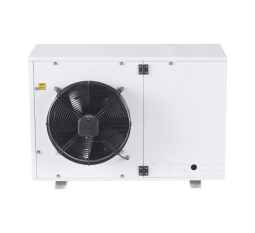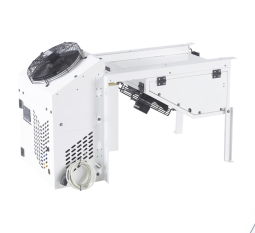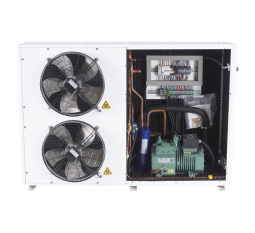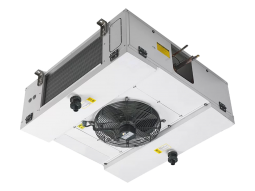





Cold Room Evaporators
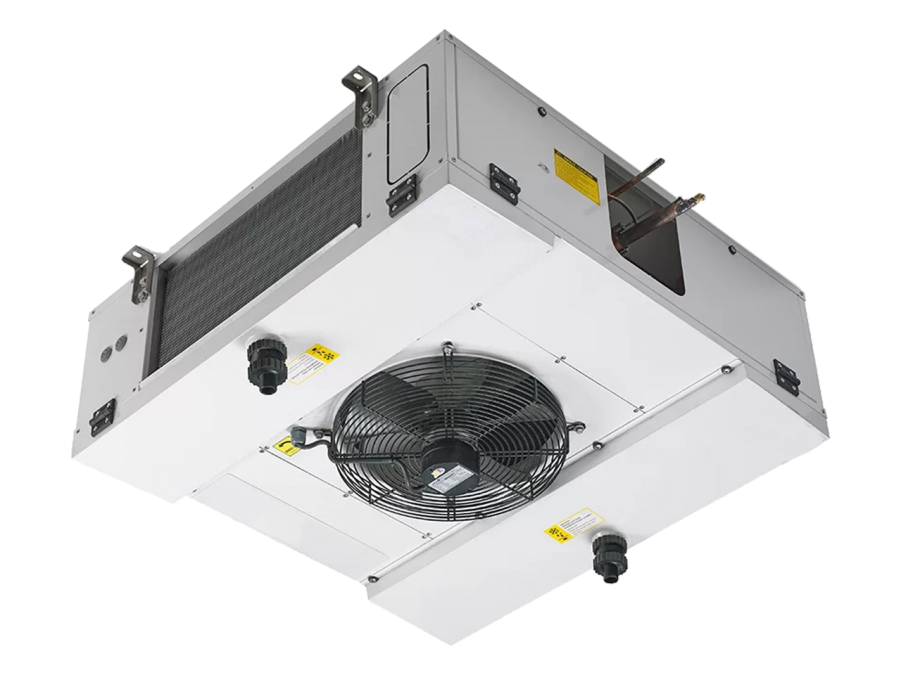
A cold room evaporator is an air-cooling component that absorbs heat from refrigerated space, cools circulating air, then distributes conditioned air throughout a cold room. It works with a condensing unit, refrigerant piping, expansion device, controls, plus drainage to complete a refrigeration circuit.
Freezewize Cold Room Evaporators are designed for walk-in coolers, walk-in freezers, food processing rooms, refrigerated warehouses, pharmaceutical storage, cold chain facilities, plus industrial cold storage projects.
Each cold room evaporator is selected according to refrigeration capacity, room temperature, room dimensions, product load, airflow requirement, condensing-unit capacity, refrigerant, defrost strategy, plus operating conditions.
Correct evaporator selection is not only about cooling capacity. Airflow, air throw, coil surface, frost behavior, defrost, product layout, ceiling clearance, drain routing, plus evaporator position all influence real cold room performance.
Evaporator Basics
A refrigeration system moves heat from inside a cold room toward an external environment.
Inside refrigerated space, evaporator performs heat-absorption work.
Warm room air passes across cold evaporator coil.
Refrigerant inside coil absorbs heat.
Fans then distribute cooled air back into room.
Basic refrigeration path follows:
Evaporator → Compressor → Condenser → Expansion Device → Evaporator
Evaporator therefore connects refrigeration capacity with actual room conditions.
A powerful condensing unit cannot cool products effectively when evaporator airflow is poorly distributed.
Likewise, a large evaporator cannot compensate for insufficient condensing capacity.
Both sides need correct matching.
Evaporator Configuration
| Technical Feature | Freezewize Configuration |
|---|---|
| Product Type | Cold Room Evaporator |
| U.S. Related Term | Unit Cooler |
| Primary Function | Heat absorption plus cold-air distribution |
| Applications | Cooler / Freezer / Cold Storage |
| Temperature Duty | Medium-temperature plus low-temperature configurations |
| Coil | Refrigeration heat-exchange coil |
| Fans | Industrial airflow configuration |
| Casing | Durable refrigerated-room construction |
| Defrost | Selected according to application |
| Drainage | Condensate / defrost drainage according to project |
| Condensing Unit Matching | Required |
| Refrigerant | Region-appropriate refrigerant configuration |
| Mounting | Selected according to room geometry |
| Capacity | Cooling-load based |
| Dimensions | Project-specific |
| Controls | According to refrigeration architecture |
Exact evaporator capacity, coil configuration, fan quantity, airflow, fin spacing, defrost type, electrical supply, refrigerant, dimensions, plus mounting details should be confirmed during technical selection.
Unit Cooler Terminology
In the U.S. refrigeration market, unit cooler is commonly used for a fan-assisted evaporator installed inside walk-in coolers or freezers.
This creates an important keyword relationship:
Cold Room Evaporator
→ Unit Cooler
→ Walk-In Cooler Evaporator
→ Walk-In Freezer Evaporator
These terms describe closely related equipment.
“Cold room evaporator” provides clear international technical meaning.
“Unit cooler” connects product with familiar American commercial refrigeration terminology.
For Freezewize, Cold Room Evaporators should remain primary product name while unit cooler becomes a strong U.S. secondary keyword.
Heat Absorption
A cold room evaporator does not create cold energy.
It absorbs heat.
Refrigerant enters evaporator at a condition allowing it to absorb thermal energy from surrounding air.
Fans move room air across coil.
Heat passes from air toward refrigerant.
Cooled air returns into refrigerated space.
This process continues until room conditions reach required setpoint.
Evaporator performance therefore depends on both:
heat-transfer capacity
plus
air movement
Strong coil performance with inadequate airflow creates poor room distribution.
High airflow with insufficient coil capacity creates another imbalance.
Evaporator Capacity
Evaporator capacity needs to correspond with actual refrigeration load.
Selection should consider:
- Room temperature
- Room dimensions
- Panel insulation
- Product load
- Door traffic
- Ambient conditions
- Internal heat loads
- Condensing-unit capacity
- Refrigerant
- Defrost requirement
Room dimensions alone are insufficient.
Two identical cold rooms may require different evaporators.
A low-traffic beverage cooler receiving pre-chilled products has different thermal demand from a food-processing room receiving warm products throughout each shift.
Correct cold room evaporator sizing starts with cooling-load calculation.
Condensing Unit Matching
An evaporator operates as one part of a refrigeration circuit.
It needs to match condensing equipment.
Important matching conditions include:
- Refrigeration capacity
- Evaporating condition
- Condensing condition
- Refrigerant
- Expansion control
- Room temperature
- Defrost strategy
An evaporator substantially larger than condensing-side capacity does not automatically improve performance.
An oversized condensing unit paired with a small evaporator also creates an unbalanced system.
Freezewize evaluates both sides together.
This creates a clear product relationship:
Cold Room Condensing Unit + Cold Room Evaporator = Remote Refrigeration System
Cooler Evaporators
A walk-in cooler evaporator operates in chilled storage conditions.
Typical applications include:
- Restaurants
- Hotels
- Supermarkets
- Grocery stores
- Beverage storage
- Dairy rooms
- Fresh produce
- Chilled meat
- Seafood storage
- Foodservice facilities
Cooler evaporator selection needs sufficient capacity plus uniform airflow without unnecessary air velocity around sensitive products.
Product type matters.
Some stored products tolerate strong airflow well.
Others can experience undesirable surface drying when exposed to excessive air velocity.
Air distribution therefore needs to match storage purpose.
Freezer Evaporators
A walk-in freezer evaporator operates below freezing conditions.
This introduces additional challenges.
Moisture freezes on cold evaporator coil.
Frost accumulation affects:
- Airflow
- Heat transfer
- Fan performance
- Refrigeration capacity
Freezer evaporators therefore require suitable frost management plus defrost strategy.
Selection needs to consider:
- Freezer temperature
- Refrigeration capacity
- Product load
- Door infiltration
- Moisture load
- Coil configuration
- Defrost
- Drainage
A freezer evaporator should not simply be selected as a larger cooler evaporator.
Low-temperature duty changes operating conditions significantly.
Cooler vs Freezer
| Selection Factor | Cooler Evaporator | Freezer Evaporator |
|---|---|---|
| Primary Duty | Chilled storage | Frozen storage |
| Coil Temperature | Higher | Lower |
| Frost Formation | Lower | Greater |
| Defrost Demand | Application dependent | Critical |
| Moisture Behavior | Condensation | Frost / Ice |
| Drain Conditions | Condensate | Defrost water plus freeze risk |
| Airflow Selection | Product dependent | Product plus frost dependent |
| Condensing Unit | Medium-temperature | Low-temperature |
This distinction helps prevent cooler equipment from being incorrectly specified for freezer duty.
Airflow Distribution
A cold room requires more than low air temperature.
Cooled air needs to reach stored products.
Poor airflow creates:
- Warm zones
- Slow temperature recovery
- Uneven product temperatures
- Long compressor run time
- Poor refrigeration efficiency
Evaporator position should create a clear air path through refrigerated space.
Air needs to leave evaporator, travel across room, circulate around stored products, then return toward coil.
Blocked circulation reduces effective cooling even when equipment capacity is correct.
Air Throw
Air throw describes how far conditioned air travels from evaporator.
Required air throw depends on:
- Room length
- Room width
- Ceiling height
- Evaporator position
- Fan configuration
- Rack layout
- Product arrangement
A small walk-in cooler needs different airflow from a long refrigerated warehouse.
For large rooms, one evaporator may not provide enough distribution across complete space.
Multiple evaporators can provide better coverage.
Evaporator quantity should therefore follow room geometry plus airflow requirements, not equipment count preference.
Product Airflow
Stored products influence airflow directly.
Poor storage practices include:
- Boxes against evaporator fans
- Pallets blocking discharge
- Products stacked to ceiling
- Racking blocking return air
- Dense cartons without circulation space
These restrictions can create warm zones.
Facility operators should leave suitable airflow clearance around evaporator plus product.
A refrigeration system cannot distribute air through solid product stacks.
Evaporator Placement
Placement strongly affects cold room performance.
A suitable location should consider:
- Room geometry
- Door position
- Rack layout
- Product flow
- Air throw
- Return airflow
- Drain location
- Refrigerant piping
- Service access
Evaporator should distribute air across room rather than toward a nearby obstruction.
Positioning directly over a heavily used door is generally undesirable because door infiltration introduces warm humid air immediately around evaporator while creating drainage plus service complications.
Good placement reduces unnecessary operational problems.
Door Location
Cold room doors are major infiltration points.
Warm air enters each time a door opens.
An evaporator positioned poorly near doorway may experience greater moisture exposure or distorted airflow.
Door layout should therefore be known before final evaporator placement.
Design should consider:
- Door width
- Opening frequency
- Traffic direction
- Nearby racks
- Evaporator discharge direction
Airflow planning plus access planning belong in same room layout.
Ceiling Clearance
Many cold room evaporators use ceiling-mounted or near-ceiling installation.
Low-profile unit cooler designs are especially common in commercial walk-ins because they preserve usable storage height.
Clearance still needs to support:
- Air intake
- Air discharge
- Installation
- Cleaning
- Service access
- Drain routing
Mounting equipment tightly into inaccessible spaces can create maintenance problems later.
Compact design should preserve serviceability.
Low-Profile Evaporators
A low-profile unit cooler reduces equipment intrusion into refrigerated storage space.
This configuration is particularly useful in:
- Walk-in coolers
- Walk-in freezers
- Restaurants
- Supermarkets
- Commercial kitchens
- Small cold rooms
Low-profile design can preserve shelf height plus usable volume.
However, physical profile should never become the only selection criterion.
Capacity, airflow, defrost, service clearance, plus room geometry remain more important.
Warehouse Evaporators
Large refrigerated warehouses need different evaporator architecture.
Requirements can include:
- Longer air throw
- Greater refrigeration capacity
- Multiple fans
- Multiple evaporators
- High ceilings
- Large rack systems
- High product loads
Warehouse evaporator planning should start with room layout.
Evaporators need to distribute air across storage zones without product stacks blocking major air paths.
Large spaces may use several units positioned strategically rather than one centralized evaporator.
Multiple Evaporators
Multiple cold room evaporators can improve airflow distribution in larger rooms.
Advantages can include:
- Better room coverage
- Shorter air paths
- More even temperature
- Flexible capacity distribution
Multiple units also create design considerations:
- Refrigerant distribution
- Piping
- Controls
- Defrost sequencing
- Drainage
- Service access
Equipment quantity should therefore follow refrigeration engineering.
More evaporators do not automatically mean better performance.
Evaporator Coil
Evaporator coil provides primary heat-transfer surface.
Air passes across coil while refrigerant absorbs heat inside tubing.
Coil performance depends on factors such as:
- Surface area
- Refrigerant circuit
- Airflow
- Temperature difference
- Fin configuration
- Frost
- Cleanliness
Freezewize selects coil configuration according to refrigeration duty.
Exact coil dimensions or fin spacing should be specified for selected equipment rather than applied universally across every evaporator.
Fin Spacing
Fin spacing becomes particularly relevant in freezer applications.
Narrow spacing provides more heat-transfer surface within a given coil size but leaves less space between fins.
Frost can restrict these passages.
Wider fin spacing provides more room for frost accumulation before airflow becomes severely restricted.
This creates a useful selection principle:
Cooler applications → lower frost exposure
Freezer applications → greater frost allowance required
Exact fin spacing needs to match evaporator design, freezer temperature, moisture load, plus defrost strategy.
Freezewize should publish model-specific fin spacing only after manufacturing configuration is confirmed.
Temperature Difference
Evaporator performance is influenced by difference between room-air temperature plus evaporating condition.
This relationship affects:
- Refrigeration capacity
- Coil surface temperature
- Moisture removal
- Product conditions
- Compressor operation
Very aggressive temperature differences are not automatically better.
Product type, humidity, room application, plus refrigeration system need balanced selection.
This becomes especially relevant in fresh-food storage where unnecessary moisture removal can affect product quality.
Product Dehydration
Air temperature plus velocity influence product moisture loss.
Uncovered foods can lose moisture when exposed to strong cold airflow.
Applications involving:
- Fresh meat
- Produce
- Dairy
- Bakery products
- Unwrapped food
may require greater attention to air velocity plus humidity behavior.
A unit cooler should therefore be selected around product storage needs, not only maximum fan airflow.
This is another reason identical rooms can need different evaporator designs.
Frost Formation
Freezer evaporators operate below water-freezing temperature.
Moisture reaching coil becomes frost.
Sources include:
- Door openings
- Product moisture
- Cleaning
- Air leakage
- Personnel
- Ambient humidity
Frost initially forms across coil surfaces.
As accumulation increases, available airflow path decreases.
This reduces evaporator performance.
Defrost restores coil condition.
Defrost Strategy
Defrost selection depends on refrigeration application.
Potential strategies vary according to room temperature, equipment design, refrigeration architecture, plus operating schedule.
Important factors include:
- Cooler or freezer duty
- Frost load
- Door traffic
- Evaporator configuration
- Production schedule
- Refrigeration system
Freezer applications normally require more active frost management than positive-temperature coolers.
Exact Freezewize defrost configuration should be specified according to selected evaporator rather than presented as one universal method.
Defrost Frequency
More defrost is not automatically better.
Excessive defrost introduces additional heat into refrigerated space.
Insufficient defrost allows coil blockage.
Correct schedule aims to remove frost when required while minimizing unnecessary thermal load.
Factors influencing frequency include:
- Door traffic
- Ambient humidity
- Product moisture
- Freezer temperature
- Evaporator design
- Operating hours
High-traffic freezer rooms may need different defrost strategy from long-term storage rooms with minimal door opening.
Defrost Recovery
After defrost, refrigeration system needs to remove introduced heat.
Room temperature may temporarily respond during this period.
Large freezer installations using multiple evaporators can coordinate defrost timing.
Staggering defrost cycles can prevent every evaporator from being unavailable simultaneously.
This can improve room stability in larger projects.
Final sequence depends on system architecture.
Drainage Design
Evaporators produce condensate or defrost water.
This water needs a reliable exit path.
Drain design should consider:
- Evaporator position
- Drain pan
- Pipe slope
- Route length
- Room temperature
- Discharge point
- Service access
Poor drainage can create:
- Standing water
- Ice
- Hygiene problems
- Ceiling damage
- Floor hazards
Drain planning should happen before installation.
Freezer Drain Protection
Low-temperature rooms create additional drainage risk.
Water leaving evaporator can freeze before reaching discharge point.
Freezer drain design may therefore require appropriate freeze-protection measures according to project configuration.
Drain pipe geometry matters.
Long horizontal runs or inadequate slope can increase blockage risk.
A freezer evaporator installation should coordinate defrost plus drainage as one system.
Condensate Diagnosis
Water beneath a cooler evaporator does not always mean refrigeration failure.
Possible causes include:
- Blocked drain
- Incorrect slope
- Damaged drain pan
- Drain connection issue
- Excess condensation
- Air infiltration
Freezer ice beneath evaporator can similarly point toward drainage or defrost problems.
Diagnosis should identify moisture path before refrigeration capacity is changed.
Evaporator Icing
Unexpected heavy icing can originate from several sources:
- High moisture infiltration
- Door left open
- Defrost failure
- Fan problem
- Refrigerant condition
- Control problem
- Blocked airflow
Iced evaporator has reduced airflow plus heat-transfer capacity.
This can make freezer appear undersized even when original refrigeration capacity is sufficient.
Coil condition should therefore be inspected during performance diagnosis.
Fan Performance
Evaporator fans move air through coil plus refrigerated room.
Fan operation affects:
- Airflow
- Air throw
- Temperature distribution
- Heat transfer
- Recovery time
A failed fan reduces effective evaporator capacity.
In multi-fan units, one failed motor can create uneven airflow before complete equipment failure becomes obvious.
Routine inspection should include fan operation, vibration, unusual noise, plus obstruction.
Fan Heat
Fan motors operate inside refrigerated space.
Electrical energy used by fans ultimately contributes some heat to cold room load.
This becomes relevant in continuously operating refrigeration systems.
Fan selection therefore affects both airflow plus total system energy behavior.
Cold room engineering needs enough airflow to maintain temperature without unnecessary fan energy or product exposure.
Condensing Unit Balance
Evaporator plus condensing unit should operate as a matched pair.
A common mistake is replacing one component with a larger model without checking system balance.
Potential consequences include:
- Control instability
- Incorrect refrigerant feed
- Poor superheat control
- Capacity mismatch
- Compressor problems
Replacement projects should evaluate both components.
Existing compressor horsepower alone is not enough to select a new evaporator.
Expansion Control
Expansion device controls refrigerant entering evaporator.
Its function influences:
- Refrigerant flow
- Evaporator utilization
- Superheat
- System stability
Expansion control needs compatibility with refrigerant plus evaporator capacity.
An incorrectly selected or adjusted device can create performance symptoms even when evaporator coil itself is correctly sized.
This is why Freezewize treats evaporator as part of complete refrigeration circuit.
Refrigerant Strategy
Freezewize does not apply one refrigerant to every Cold Room Evaporator.
Evaporator configuration needs compatibility with selected:
- Refrigerant
- Operating pressure
- Expansion device
- Compressor
- System capacity
- Destination market
Freezewize systems therefore follow region-appropriate refrigerant requirements.
This approach supports U.S., European, African, Middle Eastern, plus other international projects without locking product range to one refrigerant.
U.S. Unit Coolers
For U.S. projects, unit cooler should appear prominently throughout commercial material.
Common U.S. terminology includes:
- Walk-in unit cooler
- Walk-in cooler evaporator
- Walk-in freezer evaporator
- Low-profile unit cooler
- Warehouse unit cooler
This terminology helps American contractors understand product category immediately.
Freezewize can maintain Cold Room Evaporators as international product name while using unit cooler heavily across U.S.-focused body content, internal links, image alt text, plus related technical pages.
U.S. Cooler Applications
American walk-in refrigeration projects commonly use unit coolers inside:
- Restaurants
- Grocery stores
- Convenience stores
- Hotels
- Foodservice
- Supermarkets
- Food processing
- Distribution facilities
Smaller walk-ins often favor low-profile ceiling units.
Larger cold-storage facilities require greater air throw plus higher-capacity warehouse evaporators.
One evaporator design should not be positioned as suitable for every U.S. project.
Cooler Airflow
Medium-temperature cold rooms often prioritize temperature stability plus product protection.
High airflow can improve circulation but may not suit every product.
Fresh produce or exposed foods can require different air conditions from packaged beverages.
Freezewize should evaluate:
- Product sensitivity
- Storage density
- Air velocity
- Humidity behavior
- Room geometry
before final evaporator selection.
Freezer Airflow
Freezer airflow faces an additional restriction: frost.
As frost develops across coil, airflow resistance increases.
Evaporator design needs enough operational margin plus suitable defrost strategy.
Product stacks should not restrict return air.
Door infiltration should also be controlled because every humid air entry increases frost load.
Freezer airflow is therefore connected directly to both equipment plus room operation.
Blast Freezer Evaporators
Blast freezer evaporators have a different objective from storage evaporators.
They need to support:
- High product heat removal
- High airflow
- Low evaporating conditions
- Heavy frost load
- Process-cycle operation
A blast evaporator should be selected as part of a complete Blast Freezer Refrigeration System.
This prevents search overlap between general Cold Room Evaporators plus dedicated blast-freezing systems.
Evaporator Maintenance
Routine evaporator inspection supports stable refrigeration performance.
Check:
- Coil cleanliness
- Fan operation
- Frost condition
- Drainage
- Drain pan
- Electrical connections
- Unusual noise
- Vibration
- Physical damage
A dirty or iced coil reduces airflow.
A blocked drain creates water problems.
A failed fan changes room distribution.
Maintenance should therefore evaluate complete evaporator condition.
Coil Cleaning
Dust, grease, food particles, plus other contamination can reduce coil performance.
Cleaning method needs to protect:
- Coil fins
- Refrigeration tubing
- Fan components
- Electrical parts
- Drain pan
Bent fins can restrict airflow.
Aggressive cleaning can damage coil surfaces.
Food-processing environments may require more frequent inspection than clean packaged-storage facilities.
Service Access
Evaporators need enough clearance for technicians to reach:
- Fan motors
- Electrical connections
- Expansion components
- Drain pan
- Coil
- Refrigerant connections
Placing racks directly below or around equipment can make service difficult.
Facility layout should therefore reserve maintenance access.
A cold room designed only around maximum storage volume can create unnecessary service problems later.
Evaporator Noise
Fan-assisted evaporators generate airflow noise.
This is usually less critical inside industrial freezer warehouses but can matter in commercial environments near occupied areas.
Noise is influenced by:
- Fan speed
- Unit size
- Air velocity
- Mounting
- Vibration
- Room construction
Equipment should be installed securely plus maintained correctly to reduce unnecessary vibration.
Temperature Uniformity
A cold room temperature sensor reports conditions at one location.
Stored products can experience different temperatures elsewhere.
Uniformity depends on:
- Evaporator placement
- Airflow
- Product arrangement
- Room geometry
- Door traffic
- Heat sources
A single thermostat reading should not be treated as complete airflow proof.
Large cold rooms may benefit from multiple measurement points during commissioning.
Warm Spot Diagnosis
A warm area does not automatically mean insufficient refrigeration capacity.
Possible causes include:
- Blocked airflow
- Poor evaporator position
- Dense product stacking
- Fan failure
- Door infiltration
- Local heat source
- Sensor placement
Diagnosis should identify whether issue is capacity or distribution.
This distinction can prevent unnecessary equipment replacement.
Short Cycling Diagnosis
Frequent compressor cycling can involve evaporator-side conditions.
Possible contributors include:
- Capacity mismatch
- Control settings
- Poor sensor location
- Refrigerant feed issues
- Low room load
Evaporator performance should therefore be evaluated with condensing equipment plus controls.
Refrigeration systems operate as circuits, not independent products.
Replacement Evaporators
Replacing an existing unit cooler requires more than matching cabinet dimensions.
Verify:
- Refrigeration capacity
- Refrigerant
- Room temperature
- Condensing unit
- Existing piping
- Expansion device
- Defrost
- Electrical supply
- Mounting space
- Drain location
- Airflow direction
Old equipment may have been incorrectly sized.
A replacement project provides an opportunity to verify actual load rather than copy model capacity blindly.
Retrofit Projects
Existing cold rooms can also receive evaporator upgrades.
Before selection, survey:
- Room dimensions
- Ceiling height
- Panel condition
- Rack layout
- Door position
- Existing refrigeration equipment
- Piping routes
- Drain route
- Electrical service
Retrofit work frequently has stronger physical constraints than new construction.
Equipment needs to fit existing room while still providing correct airflow plus service access.
Evaporator Selection
Correct cold room evaporator selection requires project data.
Room Dimensions
Length, width, height.
Target Temperature
Cooler or freezer setpoint.
Refrigeration Load
Required cooling capacity.
Product Type
Stored food, beverage, pharmaceutical, or industrial product.
Product Load
Daily quantity plus incoming temperature.
Room Layout
Racks, aisles, doors, equipment.
Airflow Requirement
Room geometry plus storage density.
Condensing Unit
Capacity plus operating conditions.
Refrigerant
Selected according to destination market.
Defrost
Required according to temperature plus moisture load.
Drainage
Available condensate route.
Electrical Supply
Voltage, phase, frequency.
Service Clearance
Space around equipment.
These details provide a reliable basis for evaporator sizing plus placement.
Complete Unit Integration
Within Freezewize Cold Room Refrigeration Systems, product structure is now:
- Cold Room Condensing Units
- Low-Temperature Condensing Units
- Monoblock Refrigeration Units
- Freezer Room Refrigeration Systems
- Blast Freezer Refrigeration Systems
- Cold Room Evaporators
Cold Room Evaporator has one clear role:
Absorb heat inside refrigerated space plus distribute cooled air through cold room.
Condensing equipment removes that heat from refrigeration circuit.
Controls regulate operation.
Panels plus doors limit external heat gain.
Together, these components create a complete refrigeration system.
Turnkey Evaporator Integration
Freezewize Cooling System supplies Cold Room Evaporators individually or integrates evaporator units into complete refrigeration projects.
Turnkey scope includes:
- Project design
- Cooling-load calculation
- Evaporator selection
- Airflow planning
- Condensing unit selection
- Refrigeration piping
- Expansion control
- Defrost coordination
- Drainage planning
- Electrical controls
- Automation
- Insulated cold room panels
- Cold room doors
- Installation
- Testing
- Commissioning
- Final handover
This integrated approach allows cold room evaporator capacity, airflow, room geometry, product layout, condensing-unit capacity, refrigerant, defrost, drainage, plus operating temperature to be evaluated as one coordinated refrigeration system.
For walk-in coolers, walk-in freezers, supermarkets, food processing facilities, pharmaceutical storage, refrigerated warehouses, cold chain operations, or industrial cold storage projects, contact Freezewize Cooling System to specify a cold room evaporator around actual refrigeration capacity, room temperature, airflow requirement, product layout, plus operating conditions.