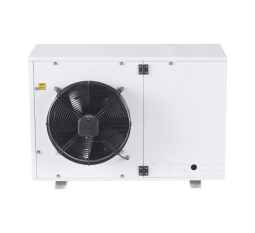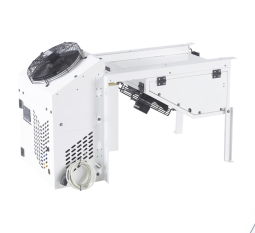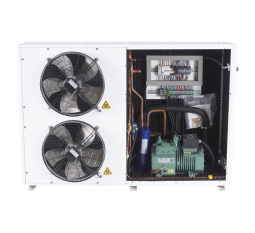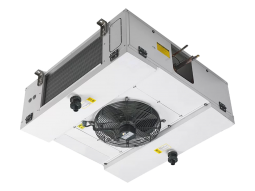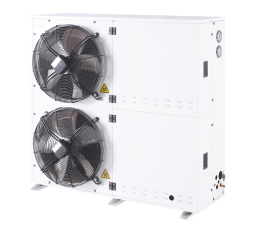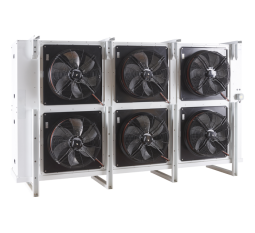





Monoblock Refrigeration Units
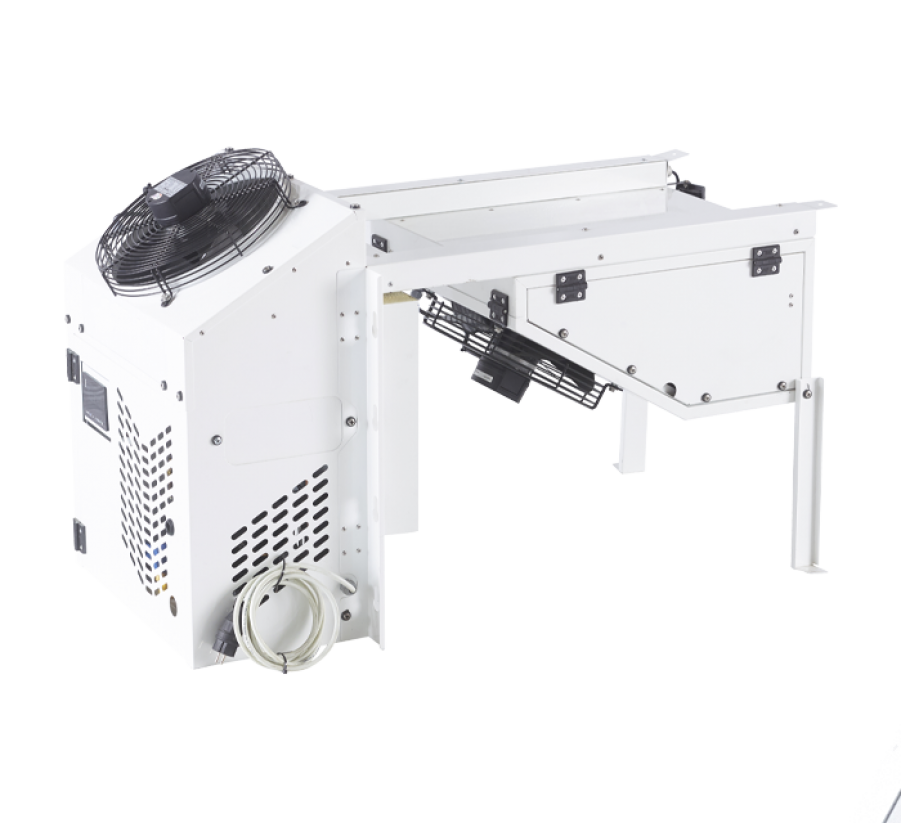
A monoblock refrigeration unit is a compact self-contained refrigeration system that combines compressor, condenser, evaporator, airflow components, plus controls inside one integrated structure. It provides refrigeration without requiring a conventional remote condensing unit and separate evaporator arrangement.
Freezewize Monoblock Refrigeration Units are designed for walk-in coolers, walk-in freezers, cold rooms, restaurants, supermarkets, commercial kitchens, food storage, pharmaceutical cold rooms, plus small and medium-sized cold storage facilities.
Each monoblock refrigeration unit is selected according to room temperature, cooling load, ambient conditions, product load, door traffic, electrical supply, installation position, plus regional refrigerant requirements.
Compact construction reduces installation complexity while keeping major refrigeration components together inside one accessible system.
Monoblock Unit Basics
A conventional split refrigeration system normally separates refrigeration components between two main sections.
An evaporator sits inside cold room.
A condensing unit sits outside refrigerated space.
Refrigerant piping connects both sections.
A monoblock refrigeration unit integrates these major refrigeration functions into one packaged structure.
Typical integrated components include:
- Compressor
- Condenser
- Evaporator
- Fans
- Refrigeration controls
- Electrical control elements
- Expansion components
- Protective devices according to configuration
This creates a compact refrigeration architecture for applications where installation simplicity, equipment footprint, plus service access matter.
Unit Configuration
| Technical Feature | Freezewize Configuration |
|---|---|
| Product Type | Monoblock Refrigeration Unit |
| System Type | Integrated self-contained refrigeration system |
| Primary Applications | Cold Rooms / Walk-In Coolers / Walk-In Freezers |
| Temperature Duty | Medium-temperature plus low-temperature applications |
| Compressor | Integrated refrigeration compressor |
| Condenser | Integrated condenser section |
| Evaporator | Integrated evaporator section |
| Airflow Components | Integrated |
| Controls | Integrated control elements |
| Installation Concept | Compact packaged refrigeration |
| Refrigerant | Region-appropriate refrigerant supply |
| Capacity Selection | Cooling-load based |
| Electrical Supply | Project-specific |
| Installation Position | Selected according to cold room layout |
| Production | Project-specific configuration |
Exact refrigeration capacity, compressor configuration, electrical supply, refrigerant, mounting arrangement, controls, plus accessories need confirmation during technical selection.
Self-Contained Refrigeration
In the U.S. market, self-contained refrigeration unit is an important related term.
A self-contained system integrates refrigeration components inside one packaged unit instead of using a remotely located condensing unit with long refrigerant lines.
This creates a clear semantic relationship:
Monoblock Refrigeration Unit
→ Self-Contained Refrigeration Unit
→ Packaged Refrigeration System
→ Walk-In Cooler / Freezer Refrigeration
For American customers, using both “monoblock” plus “self-contained refrigeration unit” helps explain product function immediately.
Monoblock remains the product-family name.
Self-contained describes refrigeration architecture.
Integrated Refrigeration Design
A monoblock refrigeration unit combines refrigeration components that normally occupy separate locations.
This integrated structure provides several practical advantages.
Compact Equipment Layout
Major refrigeration components remain within one packaged structure.
Simplified Installation
Reduced external refrigeration connections can shorten installation work compared with conventional remote systems.
Reduced Equipment Footprint
No separate remote condensing-unit location is required in many monoblock configurations.
Centralized Service Area
Major components remain grouped together.
Modular Cold Room Compatibility
Monoblock units work particularly well with prefabricated walk-in cooler plus freezer construction.
This combination makes monoblock refrigeration attractive where project simplicity matters.
Monoblock vs Split System
Monoblock and split refrigeration systems use similar refrigeration principles but arrange components differently.
| Project Factor | Monoblock Unit | Split Refrigeration |
|---|---|---|
| Compressor | Integrated | Remote condensing section |
| Condenser | Integrated | Remote |
| Evaporator | Integrated | Separate inside room |
| Refrigerant connections | Reduced | More extensive |
| Equipment layout | Compact | More distributed |
| Installation planning | Simpler | More piping coordination |
| Small cold rooms | Strong application | Suitable |
| Medium cold rooms | Strong application | Strong application |
| Large industrial systems | Capacity dependent | Often stronger |
| Service location | Concentrated | Multiple equipment areas |
| Installation flexibility | Compact | Greater component separation |
Neither architecture is automatically better.
A monoblock unit works well where compact refrigeration plus simplified installation provide value.
A split system becomes attractive where equipment needs greater separation, larger capacity, specialized evaporator placement, or more complex room geometry.
Walk-In Cooler Unit
A walk-in cooler refrigeration unit needs to maintain chilled storage temperature under changing daily loads.
Typical applications include:
- Restaurants
- Hotels
- Supermarkets
- Grocery stores
- Convenience stores
- Commercial kitchens
- Beverage storage
- Dairy storage
- Fresh produce
- Chilled food
A monoblock unit fits many of these projects because walk-in coolers often need compact refrigeration without a large external mechanical installation.
Correct capacity still depends on real operating conditions.
Room dimensions alone are not enough.
Walk-In Freezer Unit
Freezewize also develops Monoblock Refrigeration Units for low-temperature applications.
Walk-in freezer duty creates greater refrigeration demand.
Important factors include:
- Lower room temperature
- Greater heat-transfer difference
- Frost formation
- Defrost requirements
- Door infiltration
- Product load
- Floor insulation
- Freezer door sealing
A walk-in freezer refrigeration unit therefore needs low-temperature configuration rather than simply a larger cooler unit.
Medium-temperature plus low-temperature models should be selected according to actual refrigeration duty.
Medium vs Low Temperature
| Selection Factor | Medium Temperature | Low Temperature |
|---|---|---|
| Main Application | Walk-In Cooler | Walk-In Freezer |
| Product Condition | Chilled | Frozen |
| Evaporating Duty | Higher | Lower |
| Frost Formation | Lower | Greater |
| Defrost Demand | Application dependent | More important |
| Insulation Requirement | Moderate to high | Higher |
| Door Infiltration Effect | Heat plus moisture | Heat, moisture, frost |
Freezewize Monoblock Refrigeration Units support both refrigeration categories according to project configuration.
Selecting correct duty is more important than selecting unit only by nominal horsepower.
Cooling Load Selection
A monoblock refrigeration unit should be selected from a cooling-load calculation.
Important loads include:
Transmission Load
Heat enters through:
- Wall panels
- Ceiling
- Floor
- Doors
- Joints
Panel thickness plus ambient conditions influence this load.
Product Load
Products entering above storage temperature need cooling.
Product type, quantity, incoming temperature, plus target temperature matter.
Door Infiltration
Door opening introduces warmer air.
This increases refrigeration demand.
Internal Loads
Additional heat comes from:
- Lighting
- Personnel
- Fans
- Equipment
Pull-Down Load
Some cold rooms need product temperature reduced within a specified period.
Storage duty plus pull-down duty are not identical.
Correct monoblock capacity needs all relevant loads.
Room Size Is Not Enough
Two cold rooms with identical dimensions can need different refrigeration units.
Consider two 10 × 10 ft walk-in coolers.
One stores beverages already delivered cold.
Another receives warm prepared food several times each day.
Same room size.
Different product load.
Different refrigeration demand.
Other differences might include:
- Outdoor ambient
- Panel thickness
- Door size
- Door traffic
- Product temperature
- Operating schedule
This is why Freezewize selects monoblock refrigeration units from project conditions rather than room volume alone.
Product Load
Product load often becomes one of most underestimated factors.
Required information includes:
- Product type
- Daily quantity
- Incoming temperature
- Required storage temperature
- Loading frequency
- Required cooling time
A storage room receiving pre-chilled product creates relatively small product load.
A cold room receiving warm product creates much greater refrigeration demand.
A monoblock unit needs sufficient capacity for actual operation.
Door Traffic
Door openings introduce heat plus moisture.
A busy commercial kitchen walk-in cooler can receive hundreds of door openings during one working day.
A pharmaceutical storage room might open only several times.
Identical room dimensions therefore do not mean identical refrigeration requirements.
Useful door information includes:
- Door width
- Door height
- Opening frequency
- Opening duration
- Surrounding temperature
- Surrounding humidity
High traffic should be included during monoblock sizing.
Ambient Conditions
The condenser side of a monoblock refrigeration unit rejects heat into surrounding air.
Ambient conditions therefore influence refrigeration performance.
Higher surrounding temperatures make heat rejection more demanding.
Selection needs to consider:
- Maximum ambient temperature
- Installation environment
- Air circulation
- Building conditions
- Nearby heat sources
A unit operating inside a cool warehouse faces different condenser conditions from one exposed to high outdoor summer temperatures.
Freezewize export projects need region-specific ambient design.
Condenser Airflow
Integrated construction does not remove need for condenser airflow.
Condenser needs sufficient access to surrounding air.
Restricted airflow can increase:
- Condensing temperature
- Compressor load
- Energy demand
- Operating pressure
- Run time
Installation should prevent hot discharge air from repeatedly returning toward condenser inlet.
Clearance around equipment matters.
This becomes especially important where monoblock units sit near building ceilings, walls, or adjacent equipment.
Installation Position
Monoblock refrigeration systems are commonly arranged around wall-mounted or top-mounted cold room architecture.
Final mounting method needs to match:
- Cold room height
- Building ceiling
- Available external clearance
- Service access
- Panel construction
- Unit weight
- Condenser airflow
- Drainage
Installation position should therefore be established before final unit configuration.
A mechanically suitable unit can still become difficult to service if installed with insufficient clearance.
Wall-Mounted Architecture
A wall-mounted refrigeration arrangement places monoblock equipment through or adjacent to insulated wall.
This layout can provide:
- Accessible equipment height
- Compact installation
- Simple cold room integration
- Reduced roof clearance demand
Wall installation needs coordination with:
- Panel opening
- Panel reinforcement
- Equipment weight
- Door position
- Shelving
- Internal airflow
Unit placement should not interfere with cold room workflow.
Top-Mounted Architecture
Top-mounted refrigeration places packaged system near cold room ceiling.
This can save wall space.
However, building clearance becomes more important.
Planning should consider:
- Ceiling height
- Building roof clearance
- Service access
- Airflow
- Drainage
- Structural support
A top-mounted system should not be selected before confirming available space above cold room.
Insufficient overhead clearance can create installation or maintenance problems.
Service Clearance
Compact does not mean zero service space.
Technicians still need access to:
- Compressor
- Condenser
- Evaporator
- Fans
- Electrical controls
- Refrigeration components
- Sensors
Poor service access increases maintenance difficulty.
Cold room layout should leave suitable access around refrigeration equipment.
This becomes especially important where monoblock unit sits near walls, ceilings, racks, or other building services.
Monoblock Airflow
Evaporator side distributes cooled air inside cold room.
Airflow influences temperature uniformity.
Poor placement can create:
- Warm areas
- Short air circulation paths
- Uneven product temperatures
- Excessive air hitting one rack
- Restricted return airflow
Unit position needs coordination with:
- Room length
- Room width
- Rack layout
- Product stacking
- Door location
A compact unit still needs enough clear internal airflow space.
Product Placement
Stored products can restrict evaporator airflow.
Common problems include:
- Boxes stacked directly against air outlet
- High pallets blocking return airflow
- Shelving too close to evaporator
- Product packed tightly against ceiling
These restrictions can create temperature differences across room.
When a cold room appears too warm, refrigeration capacity should not be blamed immediately.
Air distribution plus product layout need inspection.
Defrost Configuration
Low-temperature monoblock applications require defrost planning.
Moisture freezes on evaporator surfaces during freezer operation.
Frost reduces:
- Airflow
- Heat transfer
- Cooling capacity
Defrost removes accumulated ice.
Defrost method plus controls depend on unit configuration and temperature duty.
Medium-temperature cooler units may require a different strategy from low-temperature freezer units.
Correct configuration needs to match application.
Defrost Water
Defrost creates water.
That water needs a controlled drainage path.
Poor drainage can create:
- Ice
- Water around cold room
- Hygiene problems
- Equipment damage
Drain routing needs to consider installation position plus room temperature.
Low-temperature installations deserve particular attention because water can refreeze.
Integrated Controls
Monoblock refrigeration keeps control components within packaged system architecture.
Controls can manage functions such as:
- Room temperature
- Compressor operation
- Evaporator fans
- Condenser fans
- Defrost
- Safety protection
- Alarms
Exact control configuration depends on project requirements.
A small commercial walk-in cooler may need simple temperature control.
A pharmaceutical or industrial cold room may require additional monitoring plus alarm functions.
Electrical Requirements
Electrical information should be confirmed before manufacturing.
Required project data includes:
- Voltage
- Phase
- Frequency
- Available electrical capacity
- Control requirements
This is particularly important for export projects.
U.S. electrical configurations often differ from European installations.
Incorrect electrical information can create serious commissioning problems.
U.S. Applications
For U.S. customers, Freezewize should connect Monoblock Refrigeration Units with familiar terminology such as:
- Self-contained refrigeration unit
- Walk-in cooler refrigeration unit
- Walk-in freezer refrigeration unit
- Packaged refrigeration unit
- Top-mount refrigeration
- Wall-mount refrigeration
This helps American buyers understand product even when “monoblock” is less familiar in their market.
However, product page should retain Monoblock Refrigeration Unit as main Freezewize product name to maintain clear global product identity.
Self-Contained vs Remote
A major buyer decision is whether refrigeration should be self-contained or remote.
Self-Contained Monoblock
Strong where priorities include:
- Compact construction
- Simplified installation
- Limited mechanical space
- Small or medium cold rooms
- Modular walk-ins
Remote System
Strong where priorities include:
- Greater equipment separation
- Larger capacities
- Flexible evaporator locations
- Multiple evaporators
- Reduced condenser heat near cold room
- Complex industrial layouts
The right choice depends on project scale.
Monoblock should not be presented as universally superior.
It solves a specific refrigeration architecture problem.
Installation Time
One major advantage of integrated refrigeration is reduced site complexity.
Traditional split systems require greater coordination between:
- Condensing unit
- Evaporator
- Refrigeration piping
- Electrical connections
- Control wiring
A monoblock unit combines several of these functions inside one packaged structure.
This can reduce site work.
Actual installation still requires:
- Correct panel opening
- Electrical connection
- Drainage
- Structural support
- Equipment positioning
- Commissioning
“Easy installation” should therefore mean simplified refrigeration installation, not installation without technical requirements.
Refrigerant Strategy
Freezewize does not use one universal refrigerant across every Monoblock Refrigeration Unit.
Refrigerant choice depends on:
- Destination market
- Room temperature
- Compressor compatibility
- Equipment configuration
- Local regulations
- Service availability
- Safety requirements
Freezewize supplies systems around region-appropriate refrigerant requirements.
This approach protects flexibility across U.S., European, Middle Eastern, African, plus other international projects.
Compressor Selection
Compressor remains central to monoblock refrigeration performance.
Selection depends on:
- Cooling capacity
- Evaporating condition
- Condensing condition
- Refrigerant
- Ambient temperature
- Electrical supply
- Medium or low-temperature duty
Horsepower alone is not enough.
A compressor's cooling capacity changes with refrigeration conditions.
Technical selection should therefore use performance at actual operating conditions.
Condenser Selection
Integrated condenser needs to reject cold room heat plus compressor heat.
Important factors include:
- Refrigeration load
- Ambient temperature
- Coil size
- Airflow
- Installation clearance
A dirty or restricted condenser reduces system performance.
Routine inspection remains important even with compact packaged equipment.
Maintenance Access
One advantage of a monoblock refrigeration unit is centralized component location.
Major refrigeration components remain close together.
This can simplify:
- Inspection
- Electrical service
- Fan replacement
- Control access
- Compressor service
Compact construction still requires suitable physical access.
Installing a unit too close to building ceiling or wall can remove this advantage.
Condenser Cleaning
Condenser surface needs clean airflow.
Dust, grease, debris, plus airborne contaminants reduce heat transfer.
Commercial kitchens deserve extra attention because grease contamination can affect condenser surfaces.
Maintenance plans should include:
- Coil inspection
- Cleaning
- Fan inspection
- Electrical checks
- Temperature review
- Unusual noise inspection
Maintenance frequency depends on operating environment.
Cooler Applications
Freezewize Monoblock Refrigeration Units support chilled applications such as:
Restaurants
Walk-in cooler storage for ingredients, meat, dairy, beverages, plus prepared foods.
Supermarkets
Back-room chilled storage plus retail support areas.
Hotels
Foodservice refrigeration plus kitchen cold rooms.
Commercial Kitchens
Compact refrigeration where mechanical-space availability is limited.
Produce Storage
Fruit plus vegetable cold rooms.
Pharmaceutical Rooms
Temperature-controlled storage with project-specific monitoring requirements.
Freezer Applications
Low-temperature Monoblock Refrigeration Units support:
- Frozen food
- Meat storage
- Poultry
- Seafood
- Frozen bakery products
- Restaurant walk-in freezers
- Supermarket freezer rooms
Final freezer configuration needs to account for defrost, frost, door infiltration, insulation, plus product load.
For larger freezer projects, Freezewize's dedicated Freezer Room Refrigeration Systems may provide a more suitable architecture.
Small vs Large Rooms
Monoblock systems are especially practical in small plus medium cold rooms.
As refrigeration capacity grows, other system architectures can become more suitable.
Large projects may require:
- Remote condensing units
- Multiple evaporators
- Distributed refrigeration
- Central systems
- More complex controls
This creates a clear product-selection hierarchy.
Small / Medium Modular Cold Room
→ Monoblock Refrigeration Unit
Larger Remote Refrigeration Requirement
→ Cold Room Condensing Unit
Large Freezer System
→ Freezer Room Refrigeration System
Rapid Product Freezing
→ Blast Freezer Refrigeration System
This helps customers select correct Freezewize product family.
Retrofit Applications
Monoblock refrigeration can also suit existing cold rooms where refrigeration equipment needs replacement or modernization.
Before retrofit, verify:
- Room dimensions
- Panel thickness
- Existing opening
- Electrical supply
- Drainage
- Available clearance
- Target temperature
- Existing refrigeration load
- Building ceiling
- Service access
A new monoblock unit should not be selected solely from old equipment horsepower.
Actual room conditions may have changed.
Replacement Sizing
Replacing failed refrigeration equipment often creates a temptation to copy old unit size.
That approach can be wrong.
Existing unit may have been:
- Oversized
- Undersized
- Selected for old product loads
- Installed under different ambient conditions
Before replacement, recalculate or verify refrigeration load.
This allows new monoblock refrigeration unit to match current operation.
Temperature Recovery
Cold room temperature rises temporarily after:
- Door openings
- Product loading
- Defrost
- Cleaning
- Extended access
Recovery time provides useful diagnostic information.
Slow recovery can indicate:
- Insufficient capacity
- Warm product load
- Poor airflow
- Dirty condenser
- Iced evaporator
- Door leakage
- Poor insulation
System diagnosis should review complete operating condition before assuming unit is undersized.
Unit Selection
Correct monoblock refrigeration unit selection requires project data.
Room Dimensions
Length, width, height.
Target Temperature
Cooler or freezer setpoint.
Ambient Temperature
Conditions around condenser section.
Product Type
Food, beverage, produce, pharmaceutical, or other product.
Daily Product Load
Maximum quantity entering room.
Incoming Temperature
Product temperature before storage.
Door Traffic
Opening frequency plus duration.
Panel Insulation
Wall, ceiling, plus floor configuration.
Installation Position
Wall, top, or project-specific arrangement.
Available Clearance
Building dimensions around equipment.
Electrical Supply
Voltage, phase, frequency.
Refrigerant Requirement
Selected according to destination market.
These inputs provide a reliable basis for equipment sizing.
Monoblock System Role
Within Freezewize's new category structure:
Cold Room Refrigeration Systems
includes:
- Cold Room Condensing Units
- Low-Temperature Condensing Units
- Monoblock Refrigeration Units
- Freezer Room Refrigeration Systems
- Blast Freezer Refrigeration Systems
- Cold Room Evaporators
Monoblock Refrigeration Unit has one clear role:
Provide compact self-contained refrigeration for cold rooms where integrated equipment plus simplified installation are priorities.
This definition helps both customers and search engines understand why monoblock refrigeration has its own product page.
Turnkey Monoblock Integration
Freezewize Cooling System supplies Monoblock Refrigeration Units individually or integrates them into complete cold room projects.
Turnkey scope includes:
- Project design
- Cooling-load calculation
- Monoblock refrigeration unit selection
- Insulated cold room panels
- Cold room doors
- Floor systems
- Electrical controls
- Automation
- Installation
- Testing
- Commissioning
- Final handover
This integrated approach allows monoblock refrigeration capacity, room temperature, ambient conditions, insulation, product load, door traffic, airflow, installation position, refrigerant strategy, plus electrical requirements to be evaluated as one coordinated cold storage system.
For walk-in coolers, walk-in freezers, restaurants, supermarkets, food storage facilities, commercial kitchens, pharmaceutical rooms, or small and medium-sized cold storage projects, contact Freezewize Cooling System to specify a monoblock refrigeration unit around actual cooling load, operating temperature, installation conditions, and project requirements.