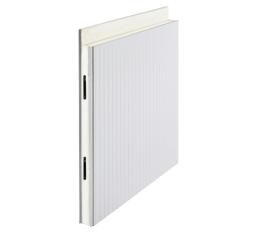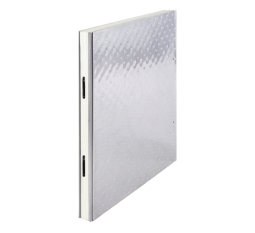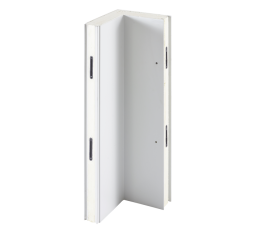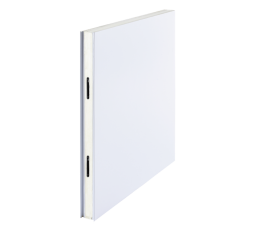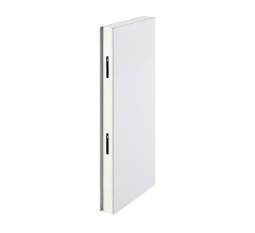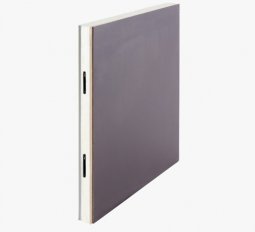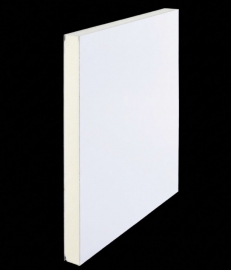





Cam-Lock Cold Room Panel
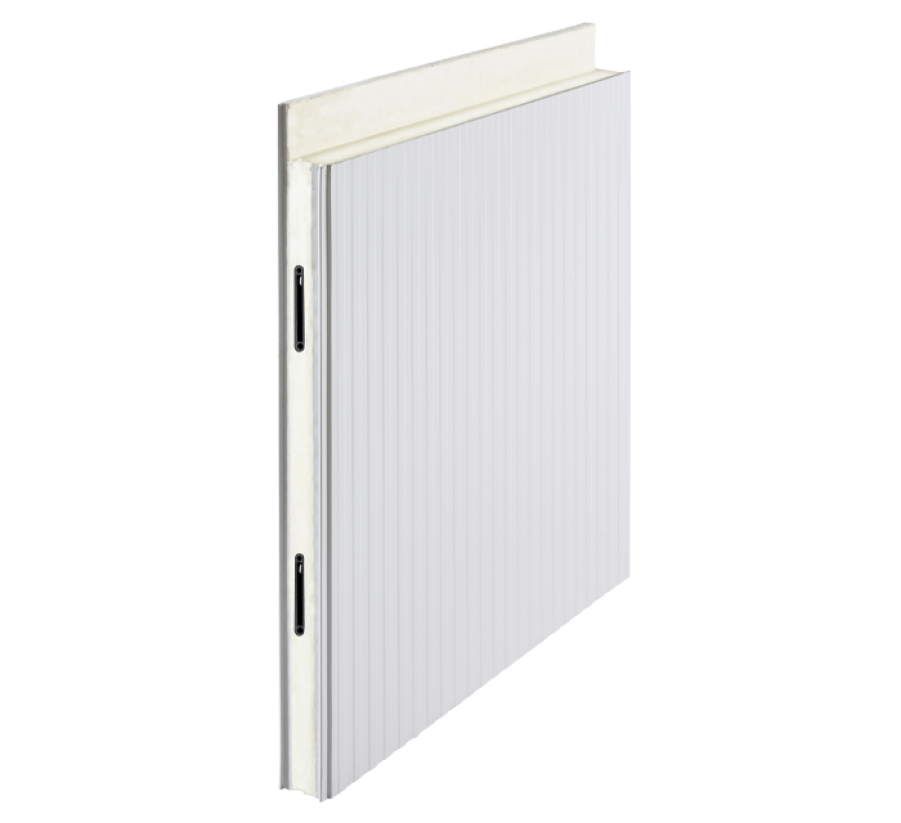
A cold room panel is an insulated building panel used to form walls, ceilings, and other parts of a temperature-controlled cold room. Its primary role is to reduce heat transfer between refrigerated space and surrounding ambient conditions while creating a sealed, structurally stable enclosure.
A cam lock cold room panel adds an internal mechanical locking system to this insulated construction. Integrated cam locks pull adjacent panels together during assembly, helping create accurate alignment, consistent joint pressure, reliable air sealing, plus fast modular installation.
Freezewize Cam-Lock Cold Room Panel combines high-density polyurethane insulation, durable metal surfaces, modular dimensions, plus internal cam-lock connections for walk-in coolers, walk-in freezers, food processing rooms, refrigerated warehouses, cold chain facilities, and industrial cold storage projects.
Cold Room Panel Basics
A cold room does not stay cold because panels actively produce cooling.
Refrigeration equipment removes heat from enclosed space.
Cold room panels slow heat transfer into that space.
This distinction is important.
A complete refrigerated room depends on several systems working together:
- Insulated wall panels
- Ceiling panels
- Floor insulation
- Cold room doors
- Panel joints
- Corners
- Service penetrations
- Refrigeration equipment
- Electrical controls
- Installation quality
Cold room panels create a thermal enclosure around refrigerated volume.
If panel insulation performs well but joints leak air, room performance suffers.
If joints are tight but insulation thickness is inadequate, conductive heat gain increases.
If panel system is correct but door opening, ceiling joint, floor transition, or pipe penetration is poorly sealed, another weak point appears.
For this reason, cold room panel performance is a system property, not only a foam thickness specification.
Cam Lock Panel Specifications
| Technical Feature | Freezewize Specification |
|---|---|
| Product Type | Cam-Lock Cold Room Panel |
| Panel Type | Modular insulated cold room panel |
| Primary Applications | Walk-In Cooler / Walk-In Freezer / Industrial Cold Storage |
| Insulation Core | High-density polyurethane foam |
| PU Density | 40–45 kg/m³ |
| Thermal Conductivity | ≤ 0.022 W/m·K |
| Panel Thicknesses | 50 / 60 / 80 / 100 / 120 / 150 / 200 mm |
| 80 mm | R-20 |
| 100 mm | R-25 |
| 120 mm | R-30 |
| 150 mm | R-38 |
| 200 mm | R-50 |
| U-Value at 200 mm | Approx. 0.11 W/m²K |
| Surface Options | Pre-painted galvanized steel / Stainless steel |
| Connection System | Internal cam-lock fastening |
| Joint Function | Tight insulated panel connection |
| Standard Width | 1110 mm |
| Panel Length | Custom according to project |
| Operating Range | Positive-temperature cooling to low-temperature freezer applications |
| Installation | Modular assembly |
| Production | Project-specific dimensions |
Cam-Lock Connection System
The defining feature of a cam lock cold room panel is its internal mechanical connection.
Cam locks are positioned inside panel edges.
During installation, each locking point engages with the corresponding mechanism inside adjacent panel.
Turning the lock draws both panel edges toward each other.
This produces controlled mechanical pressure along the joint.
The objective is not simply keeping panels physically connected.
A good cam-lock joint supports:
- Panel alignment
- Joint compression
- Insulation continuity
- Air sealing
- Structural stability
- Cleaner modular assembly
- Repeatable installation
Panel connection quality matters because every joint interrupts otherwise continuous insulated surfaces.
A cold room containing many panels also contains many joints.
One weak connection may seem minor.
Repeated weak connections across an entire room create a much larger thermal and air-leakage problem.
Panel Joint Integrity
Panel centers usually receive most attention during specification because insulation thickness and thermal conductivity are easy to compare.
Real cold room performance often depends heavily on panel edges.
A 150 mm insulated panel can provide strong resistance through its central area, yet poorly connected joints can create paths for warm air and moisture.
Joint problems can develop from:
- Incomplete cam-lock engagement
- Damaged panel edges
- Incorrect alignment
- Debris inside joint
- Uneven floor
- Incorrect installation sequence
- Excessive panel movement
- Poor corner coordination
- Improper service penetrations
A camlock cold room panel helps installers apply mechanical closing pressure at connection points.
That pressure needs to remain consistent across complete panel height or length.
Proper joint engagement becomes especially important in freezer construction where temperature difference between room and ambient environment is greater.
Insulation Continuity
Cold room insulation works most effectively when thermal resistance remains continuous.
Every interruption deserves attention:
Panel-to-panel joints
Need accurate engagement and sealing.
Wall-to-ceiling connections
Need continuity between vertical and overhead insulation.
Wall-to-floor transitions
Need correct lower-edge detailing.
Door openings
Need frames designed around panel thickness.
Corners
Need insulation continuity through direction changes.
Pipe penetrations
Need sealing after refrigeration lines pass through panels.
Electrical penetrations
Need controlled openings rather than oversized field cuts.
This is why Freezewize treats Cam-Lock Cold Room Panel as part of a complete enclosure rather than an isolated construction board.
Polyurethane Insulation Core
Freezewize Cam-Lock Cold Room Panel uses high-density polyurethane foam.
Published PU density is 40–45 kg/m³, with thermal conductivity of ≤ 0.022 W/m·K.
Polyurethane creates a rigid insulated core between panel surfaces.
Its role is primarily thermal.
Metal facings protect insulation, create clean surfaces, provide dimensional stability, plus form visible interior and exterior cold room walls.
This sandwich construction combines:
Outer surface
Mechanical protection and finished appearance.
Polyurethane core
Thermal resistance.
Inner surface
Hygienic refrigerated-room finish.
Cam-lock edges
Mechanical panel connection.
A strong insulated cold room panel needs these parts to function together.
Panel Thickness Selection
Panel thickness should follow temperature requirement rather than a simple “thicker is always better” rule.
Freezewize provides multiple thickness options from 50 mm to 200 mm.
Higher thickness generally provides greater thermal resistance, but project selection also depends on:
- Room temperature
- Ambient temperature
- Climate
- Room dimensions
- Product temperature
- Daily door traffic
- Refrigeration load
- Operating schedule
- Ceiling exposure
- Floor construction
- Energy target
Published thermal values include:
| Panel Thickness | Approximate R-Value | Typical Selection Logic |
|---|---|---|
| 80 mm | R-20 | Chilled and selected cooler applications |
| 100 mm | R-25 | Stronger cold room insulation |
| 120 mm | R-30 | Cooler/freezer projects with greater thermal demand |
| 150 mm | R-38 | Low-temperature freezer applications |
| 200 mm | R-50 | High-insulation freezer requirements |
These values should not be used as a temperature-selection chart by themselves.
Cold room design needs actual cooling-load calculation plus project conditions.
Cooler Panel Selection
A walk-in cooler panel typically operates under a smaller temperature difference than a deep freezer panel.
Examples include rooms storing:
- Fresh vegetables
- Fruit
- Dairy products
- Beverages
- Chilled meat
- Fresh seafood
- Prepared foods
- Ingredients
Positive-temperature storage does not eliminate insulation requirements.
Poor panel joints or insufficient thickness still increase refrigeration demand and temperature variation.
However, specifying extreme freezer insulation for every cooler can create unnecessary material cost.
Panel thickness should match actual room duty.
Freezer Panel Selection
A freezer panel operates under more demanding thermal conditions.
Typical applications include:
- Frozen meat
- Frozen poultry
- Frozen seafood
- Frozen food
- Ice cream
- Frozen bakery products
- Cold chain warehouses
- Low-temperature industrial storage
Greater temperature difference increases heat-transfer pressure across cold room envelope.
Freezer construction therefore places more emphasis on:
- Panel thickness
- Joint sealing
- Ceiling continuity
- Floor insulation
- Door configuration
- Penetration sealing
- Vapor control
- Condensation management
Using thick panels while ignoring these connection points does not create a complete freezer envelope.
Cam-Lock vs Standard Sandwich Panel
Cam-lock panels and conventional polyurethane sandwich panels share a similar basic purpose: both create insulated building surfaces.
Main difference lies in connection method.
| Project Factor | Cam-Lock Cold Room Panel | Standard PU Sandwich Panel |
|---|---|---|
| Insulated construction | Yes | Yes |
| Mechanical internal locking | Yes | Not necessarily |
| Modular room assembly | Strong advantage | System dependent |
| Controlled joint compression | Primary feature | Connection dependent |
| Walk-in cooler use | Strong choice | Suitable |
| Freezer use | Strong choice | Suitable when correctly configured |
| Field alignment | Cam locks assist connection | Depends on joint system |
| Modular project format | Especially suitable | Application dependent |
| Large continuous structures | Suitable | Often suitable |
| Disassembly potential | Project dependent | Usually less modular |
Neither system is automatically correct for every cold storage project.
Cam-lock construction becomes particularly attractive where modular assembly, controlled connections, panel alignment, plus repeatable installation are priorities.
Mechanical Locking Advantage
A mechanical connection gives installers a positive indication that panels have engaged.
That matters because panel joints cannot rely on appearance alone.
Two panels may look aligned from several meters away while internal edge contact remains incomplete.
Cam-lock engagement creates physical drawing force across joint.
This helps reduce dependence on external pressure during assembly.
Still, cam locks cannot correct every site problem.
They do not compensate for:
- Severely uneven floors
- Incorrect panel dimensions
- Damaged edges
- Misaligned structural openings
- Incorrect corners
- Poor ceiling support
- Unplanned penetrations
Good hardware improves installation control.
Good project preparation remains essential.
First Panel Alignment
Cold room installation quality often begins with the first wall panel.
If initial panel is not vertical or correctly positioned, error can continue through complete wall run.
Each following panel may technically lock into previous panel while overall geometry gradually moves away from intended layout.
Installation teams should verify:
- Starting position
- Floor level
- Vertical alignment
- Room dimensions
- Corner position
- Door openings
- Ceiling reference level
before continuing long panel runs.
This is especially important with modular construction because accurate repetition can also repeat an initial positioning error.
Floor Flatness
A modular cold room panel depends on its supporting base.
Uneven floors can create several problems:
- Panel edges sitting at different heights
- Vertical joints failing to align
- Door openings becoming non-square
- Ceiling panels requiring correction
- Uneven gasket contact
- Visible wall distortion
Cam locks can draw adjacent panels together, but they cannot level an unsuitable foundation.
Floor flatness should therefore be checked before panel installation starts.
For freezer projects, floor insulation and structural floor design also need coordination with wall panels.
Corner Integration
Cold room walls change direction at corners.
These transitions need both structural and thermal continuity.
Corner design should consider:
- Panel thickness
- Inside dimensions
- Outside dimensions
- Surface finish
- Joint direction
- Hygienic detailing
- Installation sequence
Freezewize Cold Room Corner Panel is a separate product designed for this purpose.
Using dedicated corner components helps maintain cleaner geometry where insulated walls meet.
Cam-Lock Cold Room Panel pages should therefore connect internally with Cold Room Corner Panel information rather than trying to make one product solve every room transition.
Ceiling Integration
Walls are only one part of a refrigerated enclosure.
Warm air exposure above cold rooms can make ceiling insulation a major thermal boundary.
Cam-lock wall panels need accurate integration with Cold Room Ceiling Panels.
Important ceiling considerations include:
- Panel span
- Ceiling support
- Wall-to-ceiling sealing
- Lighting penetrations
- Refrigeration lines
- Sprinklers
- Sensors
- Drain lines
- Maintenance loads
A strong wall system cannot compensate for weak ceiling construction.
Google and buyers should clearly understand that cold room panels form an enclosure system, not simply vertical walls.
Door Opening Coordination
Door openings create some of the most important structural interruptions in panel walls.
Panel layout should be planned around:
- Door width
- Door height
- Frame dimensions
- Panel thickness
- Hinge or sliding direction
- Threshold level
- Header support
- Adjacent joint positions
Cutting an opening after installation without considering structural or sealing requirements can create unnecessary field correction.
Door dimensions should therefore be coordinated before panel production whenever possible.
Freezewize cold room doors can be integrated with panel dimensions during project design.
Refrigeration Penetrations
Refrigeration systems often require pipes, cables, drains, sensors, plus control wiring to pass through insulated panels.
Every penetration interrupts panel integrity.
A hole that is much larger than required creates a difficult sealing condition.
Good penetration planning includes:
- Exact service position
- Required diameter
- Sleeves where appropriate
- Insulation continuity
- Interior sealing
- Exterior sealing
- Condensation risk
- Future service access
Random field drilling after installation creates unnecessary thermal weaknesses.
Service penetrations should be mapped during project design.
Air Leakage vs Heat Transfer
Two different heat-gain mechanisms matter around a cold room panel system.
Conductive Heat Transfer
Heat moves through panel materials.
Panel insulation thickness and thermal conductivity influence this process.
Air Infiltration
Warm ambient air enters through gaps or openings.
Panel joints, door seals, penetrations, corners, plus damaged surfaces influence this process.
These problems require different solutions.
A thicker panel reduces conductive heat transfer.
It does not repair an open joint.
Adding sealant to a leaking connection may reduce air movement.
It does not increase insulation thickness through complete wall area.
Understanding this difference prevents incorrect diagnosis when cold room performance declines.
Joint Condensation Diagnosis
Condensation appearing along panel joints deserves investigation.
Its location often provides useful clues.
One Isolated Joint
Check local cam-lock engagement, sealing, edge damage, plus panel alignment.
Repeated Vertical Lines
Review joint installation quality across wall run.
Ceiling Junction
Inspect wall-to-ceiling insulation continuity plus sealing.
Door Area
Check frame-to-panel transition rather than assuming wall-panel failure.
Penetration Area
Review pipe or cable sealing.
Condensation does not automatically mean polyurethane insulation has failed.
First identify where moisture appears and which construction detail corresponds with that location.
This creates a more technical maintenance process than simply applying additional sealant everywhere.
Surface Material Selection
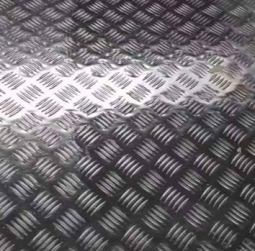
Freezewize Cam-Lock Cold Room Panel supports pre-painted galvanized steel plus stainless steel surface options.
Pre-Painted Galvanized Steel
Suitable for many commercial and industrial refrigerated applications.
Typical benefits include practical durability, clean appearance, plus broad cold storage use.
Stainless Steel
Especially relevant for:
- Food processing
- Meat facilities
- Seafood processing
- Dairy production
- Frequent cleaning
- Humid spaces
- Corrosion-sensitive environments
Surface selection should follow actual operating conditions.
Stainless steel offers valuable advantages in demanding hygiene or moisture environments, but it is not automatically necessary for every storage room.
Hygiene-Oriented Interiors
Cold room panel surfaces influence cleaning workflow.
Food facilities often need wall systems with:
- Smooth accessible surfaces
- Controlled joints
- Clean corner transitions
- Limited unnecessary projections
- Moisture-resistant finishes
- Compatible hygienic profiles
Panel itself forms only part of hygienic construction.
Accessories around floor edges, corners, ceilings, doors, plus penetrations also influence cleanability.
This creates natural internal links between Cam-Lock Cold Room Panel and Freezewize Cold Room Hygienic Profiles.
Panel Damage Zones
Cold room walls can experience impact from:
- Pallet jacks
- Carts
- Mobile racks
- Forklifts
- Product containers
- Cleaning equipment
Lower wall areas usually face greater impact risk.
A damaged metal surface can eventually expose insulation or compromise hygienic finish.
Project planning should therefore consider traffic behavior around panel walls.
High-traffic areas may benefit from additional protective details rather than expecting insulated panels to function as impact barriers.
Panel Width Planning
Standard Freezewize panel width is 1110 mm.
Panel width influences:
- Number of vertical joints
- Wall layout
- Door position
- Corner location
- Cutting requirements
- Installation sequence
- Material planning
A well-planned room uses panel modules efficiently.
Poor dimensional planning can create narrow cut pieces near doors or corners.
Freezewize also offers a dedicated Narrow Cold Room Panel for situations where standard widths do not match project geometry.
This is preferable to creating uncontrolled thin field cuts where a manufactured insulated section provides cleaner integration.
Panel Cutting Strategy
Some field cutting is unavoidable in many cold storage projects.
However, excessive cutting increases:
- Labor
- Waste
- Installation time
- Edge treatment
- Joint complexity
- Potential insulation exposure
Good panel layout aims to solve as much geometry as possible before production.
Door locations, room dimensions, corner positions, penetrations, plus ceiling arrangement should be included during panel planning.
A modular system performs best when design supports modularity.
Installation Sequence
Cam-lock installation speed depends on preparation.
A logical sequence may include:
- Verify floor dimensions and level.
- Establish wall reference lines.
- Position first panel accurately.
- Assemble wall panels.
- Complete corners.
- Coordinate door openings.
- Install ceiling structure according to project design.
- Complete required penetrations.
- Seal transitions.
- Inspect cam-lock engagement and room geometry.
Exact sequence varies by project.
Main principle remains consistent:
Fast installation comes from planned installation, not rushed installation.
Construction Delay Control
Cam-lock panel systems support repeatable assembly, but most cold room delays originate from coordination problems rather than panel connection alone.
Typical causes include:
- Unfinished floor
- Incorrect room dimensions
- Missing door information
- Unresolved ceiling support
- Late refrigeration penetrations
- Electrical conflicts
- Material access problems
- Changes after production
Early coordination protects modular installation advantage.
This is particularly important in turnkey projects where panels, doors, refrigeration, electrical systems, plus installation teams depend on each other.
Cooler vs Freezer Panel Planning
| Project Factor | Walk-In Cooler | Walk-In Freezer |
|---|---|---|
| Temperature difference | Lower | Higher |
| Insulation demand | Moderate to high | Higher |
| Joint sealing | Important | Critical |
| Floor insulation | Project dependent | Usually more important |
| Frost risk | Lower | Higher |
| Door heating | Often unnecessary | Often required by door configuration |
| Vapor control | Important | Greater attention required |
| Panel thickness | Project specific | Generally greater |
This comparison should not replace engineering calculation.
It helps explain why cold room panel selection must follow application rather than using one universal panel specification.
Cam-Lock Panel Applications
Freezewize Cam-Lock Cold Room Panel supports a wide range of refrigerated environments.
Walk-In Coolers
Restaurants, supermarkets, hotels, foodservice, retail storage, plus commercial refrigeration.
Walk-In Freezers
Frozen product storage requiring stronger enclosure insulation.
Food Processing
Meat, poultry, seafood, dairy, prepared food, plus production rooms.
Cold Chain Logistics
Temperature-controlled distribution, temporary storage, picking, plus dispatch areas.
Refrigerated Warehouses
Large-scale chilled or frozen product storage.
Pharmaceutical Storage
Temperature-controlled rooms where stable enclosure performance matters.
Agricultural Cold Storage
Fruit, vegetables, plus fresh produce facilities.
Application type influences panel thickness, surface material, room layout, plus associated refrigeration system.
Modular Room Expansion
One advantage of project-based modular panel construction is dimensional planning around future operational needs.
Where expansion is anticipated, initial design can consider:
- Future wall extension
- Additional cold room
- New doorway
- Refrigeration capacity
- Ceiling structure
- Service routes
- Electrical supply
This does not mean every existing cam-lock room can automatically be enlarged without redesign.
Future changes still require structural and refrigeration evaluation.
Planning them early makes expansion easier than discovering constraints later.
Retrofit Panel Projects
Existing facilities present different challenges from new construction.
Before adding or replacing camlock cold room panels, inspect:
- Existing wall dimensions
- Floor level
- Ceiling height
- Structural support
- Existing insulation
- Door positions
- Refrigeration services
- Electrical penetrations
- Drainage
- Available installation access
Matching a new modular panel to an older cold room system may require transition details.
Do not assume nominal thickness alone guarantees compatibility.
Joint geometry also matters.
Panel Selection Factors
Correct cam lock cold room panel specification starts with operating data.
Room Temperature
Determine chilled, frozen, or deep-freeze conditions.
Ambient Temperature
Higher surrounding temperature increases thermal demand.
Room Dimensions
Wall and ceiling area influence total heat gain plus material quantity.
Panel Thickness
Select according to refrigeration design rather than appearance.
Surface Environment
Cleaning, humidity, corrosion, hygiene, plus traffic influence facing material.
Door Openings
Door positions should be integrated into panel layout.
Ceiling Requirements
Span, support, plus service loads require project review.
Floor Construction
Freezer floor requirements need coordination with wall system.
Penetrations
Refrigeration, drainage, sensors, plus electrical routes should be identified early.
Installation Conditions
Floor flatness, site access, plus surrounding structural geometry influence assembly.
These inputs allow Freezewize Cooling System to specify an insulated cold room panel system around actual project conditions.
Cam-Lock vs Thickness
Cam-lock connection and panel thickness solve different problems.
Cam-lock system addresses panel connection.
Panel thickness addresses thermal resistance.
This distinction matters.
Adding more insulation does not improve a poorly connected joint.
Adding stronger cam-lock pressure does not replace insufficient insulation thickness.
Good cold storage construction requires both:
adequate insulation + reliable connection
This is one of the most important principles behind Cam-Lock Cold Room Panel design.
Complete Panel System
Freezewize Cooling System does not treat cold room panels as isolated wall products.
A complete cold room enclosure may combine:
- Cam-Lock Cold Room Panels
- PU Cold Room Sandwich Panels
- Cold Room Corner Panels
- Cold Room Ceiling Panels
- Narrow Cold Room Panels
- Insulated floor systems
- Cold room doors
- Hygienic profiles
- Ceiling support accessories
These components need compatible dimensions plus installation details.
Panel system selection then connects directly with refrigeration engineering.
Room size, insulation thickness, door traffic, stored product, ambient conditions, plus target temperature all influence cooling load.
Turnkey Cold Room Integration
Freezewize Cooling System supplies Cam-Lock Cold Room Panel systems individually or integrates them into complete cold storage projects.
Turnkey scope includes:
- Project design
- Cooling-load calculation
- Insulated cold room panels
- Cold room doors
- Industrial refrigeration systems
- Electrical control systems
- Automation
- Installation
- Testing
- Commissioning
- Final handover
This approach allows panel thickness, joint system, room geometry, doors, ceiling structure, refrigeration capacity, penetrations, plus installation sequence to be evaluated as one coordinated system.
For walk-in coolers, walk-in freezers, food processing rooms, refrigerated warehouses, cold chain facilities, or industrial cold storage projects, contact Freezewize Cooling System to specify a cam lock cold room panel system around your temperature, room dimensions, insulation requirement, and operating conditions.