




Freezewize | Industrial Cooling Systems & Custom Cold Room Solutions

Durable Access for Demanding Cold Rooms

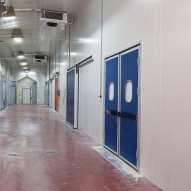
Durable Access for Demanding Cold Rooms | Side-Opening Refrigerated Door
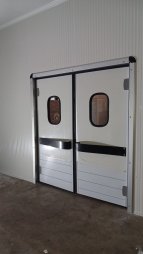
Demanding cold rooms require durable access solutions capable of withstanding traffic, impacts, and the stresses of cleaning. A swing-style refrigerated door helps reduce wear and tear and minimizes disruptions to daily workflow.

Durable access for demanding cold rooms

A swing-style refrigerated door is often the ideal choice when a cold room entrance must withstand repeated traffic, daily contact, and constant operational pressure without becoming a maintenance issue. In demanding cold rooms, durability isn’t just about a sturdy door panel. It’s about whether the access point can continue to function properly and reliably after months of real-world use.

This is important because the entrance is one of the most heavily used parts of the room. Staff are constantly passing through, carts and shelving create repeated contact, and cleaning routines put additional strain on surfaces, hardware, seals, and thresholds. A properly designed door protects traffic flow, reduces preventable wear and tear, and helps the room remain operational over time.

The problem starts at the room’s most heavily used area

In many cold rooms, the entrance experiences more stress than any other part of the enclosure. It sits at the intersection of cold storage and movement, handling, cleaning, and the pressure of time.

That’s why demanding environments quickly reveal unsuitable access choices. A cold room may be well-built overall, but if the door isn’t suited to the way people and equipment pass through it, the entrance begins to age faster than the rest of the facility. The first signs are usually operational rather than dramatic. Staff slow down slightly when opening the door. Contact with carts becomes more frequent. Surfaces begin to show signs of wear. Cleaning requires more effort. Hardware needs more attention than expected.

This phenomenon is common in food processing areas, supermarket backrooms, refrigerated prep zones, cold storage areas, and high-traffic warehousing operations. In these environments, the door is not used occasionally. It is part of a continuous work cycle.

A demanding cold room doesn’t need a door that merely passes inspection. It needs a durable access solution that remains effective despite daily stresses.

Why Durability Is Often Misunderstood

Many buyers view durability as simply a matter of materials. Materials are important, but they are only part of the story.

A door may look sturdy on paper but still be a poor long-term choice if its opening behavior doesn’t match the cold room’s operating mode. True durability comes from a good fit. The door must withstand repeated openings, accidental impacts, exposure to cleaning, and constant use without turning the entrance into a point of friction.

This is where many cold room entrances begin to show signs of failure. The door still opens and closes, so the problem doesn’t seem urgent. But over time, the opening begins to generate small, recurring costs every day:

  • more visible wear around the bottom and edges
  • increased stress on the hinges, seals, and adjacent hardware
  • slower passage through the opening during peak traffic periods
  • more difficult cleaning around thresholds and contact areas
  • more frequent maintenance than expected
  • an early impression that the entrance wasn’t quite right for the space

This is the real challenge when it comes to durability. A technically functional door can still prove to be a poor operational choice if it does not hold up well under daily wear and tear.

The risk of choosing a sturdy but unsuitable door

A door can be physically sturdy yet unsuitable for a demanding cold room.

This usually happens when the choice is based too narrowly on the type of door, insulation, or appearance, without paying enough attention to how the opening is actually used. If the room is subject to rapid movements, repeated two-way traffic, rolling loads, or intensive daily cleaning, the choice of access must take this into account.

Otherwise, the cold room begins to pay the price for this mismatch in more subtle ways. Work slows down at the threshold. Wear and tear appears sooner than expected. Maintenance becomes more frequent. Cleaning crews spend more time at the entrance. The cold room may still function, but the access point no longer meets the standards the facility strives to maintain.

This is particularly important in operations in the United States, where labor efficiency, food safety expectations, visible behind-the-scenes conditions, and the risk of downtime all influence purchasing decisions. In these environments, durable flooring is not a luxury. It is an integral part of maintaining the room’s economic viability.

A comparison to help make the decision

Not all demanding cold rooms require the same access logic. The best choice depends on how the opening is used, the frequency of contact it undergoes, and the type of traffic that characterizes the room.

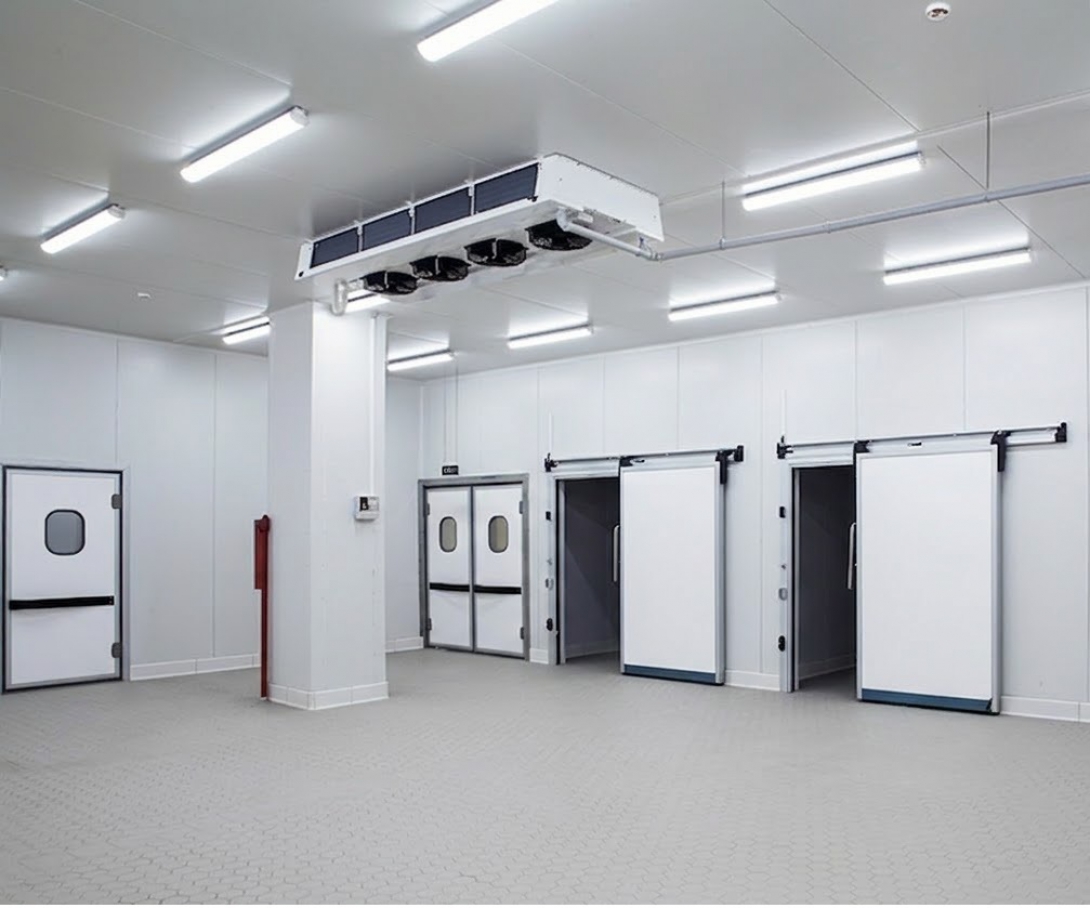
A refrigerated swing door is generally the most effective when daily use involves repeated, short-duration movements, two-way personnel traffic, and the regular passage of carts or shelving. A more conventional hinged option can still work well when traffic is lighter and better controlled. Sliding doors are often preferable when wider openings or greater transfer needs become the primary concern.

Door TypeBest fitMain advantageMain limitation
Refrigerated swing doorDemanding cold rooms with frequent two-way traffic and repeated contactSustainable daily access allowing for rapid flowMust be properly adapted to the characteristics of the opening and the type of traffic
Standard hinged refrigerated doorLow to moderate traffic and better-controlled accessSimple solution for low-intensity useMay lead to premature wear or resistance to sliding in high-pressure environments
Sliding refrigerated doorWider openings and higher product throughputIdeal for controlling clearance and higher traffic requirementsLess suitable for fast, constant foot traffic

This comparison is important because sustainable access is not simply a matter of choosing the door that seems the sturdiest. It is about selecting the type of access that will remain stable given the room’s actual operating conditions.

Why a swing-type refrigerated door is suitable for demanding cold rooms

A refrigerated swing door is often a wise choice in demanding cold rooms because it is well-suited to repeated movements and intensive daily use. In these environments, the entrance must not behave like a fragile or slow-moving component. It must respond naturally to traffic and continue to do so even when repeated contact becomes the norm.

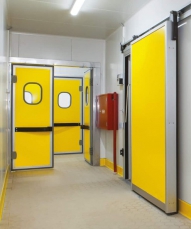
This is the practical advantage of a swing-door configuration. It allows for faster passage, reduces hesitation at the threshold, and is suitable for openings where people and light mobile equipment move in both directions. When access patterns are repetitive, this smoother operation is essential. It helps reduce unnecessary contact, promotes smoother traffic flow, and minimizes the risk of the entrance becoming a bottleneck.

Durability is also improved when the entire opening is properly planned. The most reliable results generally come from taking into account the entire access area, including:

  • the integration of the frame and panels
  • the performance of the seal under repeated cycles
  • the condition of the threshold and the transition to the floor
  • protection against kicking or impact-sensitive areas
  • visibility requirements at active openings
  • layout of hardware and access for maintenance
  • daily cleaning routine for the room

This is where the Freezewize cooling system truly comes into its own in practice. In real-world cold room applications, the durability of the access point generally depends on adapting the door to the actual operating conditions of the opening, rather than simply choosing a product category.

What durability really means in daily use

In a demanding cold room, durability must be evaluated based on daily performance, not on brochure promises.

A durable door is one that continues to perform after repeated opening cycles, repeated contact, repeated cleaning, and repeated stresses associated with actual operation. It must help staff move efficiently. It must not create unnecessary cleaning difficulties. It must not require frequent attention from maintenance crews. It must continue to uphold cold room standards rather than quietly undermining them.

That is the difference between a door that is simply installed and a door that is truly suited to the application.

For facility managers and contractors, the key long-term question is often this: will this access point still be suitable once the room is in full use?

Quick Decision Guide

Choose a swing-type refrigerated door when:

  • the cold room experiences frequent daily traffic
  • staff pass through the opening in both directions
  • carts, bins, or shelving regularly come into contact with the entrance
  • durability under repeated use is as important as closing performance
  • the facility wants to reduce workflow delays and prevent premature wear

Opt for a more traditional hinged solution when:

  • traffic is lighter and better controlled
  • the opening is not subject to constant daily pressure
  • movements are more deliberate and less repetitive
  • impacts and cleaning demands are moderate rather than heavy

Choose a sliding solution when:

  • the opening is wider
  • larger objects need to pass through
  • clearance requirements influence the decision more than the speed of foot traffic
  • the main challenge lies in the size of the opening rather than in repeated, short-cycle use

The most obvious rule is simple: demanding cold rooms require doors selected based on their daily use, not just their appearance at the time of specification.

Related Solutions

If durability of the access point is the priority, these related solutions are often part of the same planning decision:

  • swing doors for low-traffic cold rooms
  • sliding doors for cold rooms, for wide openings and higher transfer requirements
  • cold room panel systems for better integration of openings
  • freezer room door solutions designed for low-temperature environments
  • impact protection elements for high-traffic entry areas
  • Glass panel and hardware options for safer, better-controlled traffic flow

FAQ

What makes a cold room challenging in terms of access?

Generally, it is a combination of frequent traffic, repeated short-cycle use, carts or shelving passing through the opening, regular cleaning pressure, and the need to maintain a reliable daily flow.

Is a refrigerated swing door durable enough for intensive daily use?

In the right context, yes. It is often one of the best choices for repeated traffic and demanding access conditions, as it promotes natural movement and offers durability in daily use.

Why is the entrance usually the first area to show signs of wear?

Because it experiences the highest number of contacts, movements, cleaning cycles, and operational stresses in the room.

Can a standard hinged door still be the right choice?

Yes. In cold rooms with low traffic or better-controlled environments, a standard hinged solution can still be a solid and practical option.

What is the biggest mistake to avoid when choosing a durable cold room door?

Focusing solely on basic strength or insulation while ignoring traffic patterns, impact exposure, and how the opening is actually used.

Should thresholds and hardware be considered when planning for durability?

Absolutely. Long-term performance depends on the entire door system, not just the door panel itself.

Conclusion

For demanding cold rooms, a durable access solution isn’t about choosing the door that looks the heaviest. It’s about choosing the door that will continue to ensure traffic flow, cleanliness, and reliability under the real-world pressures of daily use.

The best cold room door is one that continues to function even when the room is heavily trafficked, not just before.

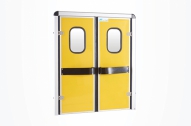
If your facility requires repeated access to the cold room throughout the day, a properly specified double-leaf refrigerated door is often the most sensible long-term solution. A careful analysis of traffic, impact exposure, cleaning routines, and opening details will generally help avoid costs far higher than those incurred by a subsequent correction.


Fill the Form!

Write your needs and fill the form to contact us.

Freezewize | Industrial Cooling Systems & Custom Cold Room Solutions
Merhaba, Size yardımcı olabilir miyiz ?
Whatsapp Destek