




Freezewize | Industrial Cooling Systems & Custom Cold Room Solutions

Long-Term Fit for Refrigerated Access

Long-Term Durability for Cold Storage Rooms | Side-Hinged Door Guide

Side-hinged refrigerated doors help high-traffic cold storage rooms remain efficient over time by reducing traffic friction, wear pressure, and the risk of premature replacement.

Long-Term Durability for Refrigerated Access

By-swing refrigerated doors are often the right choice when refrigerated access needs to remain practical, durable, and trouble-free long after installation. In high-traffic cold rooms, the real test isn’t whether the door works on day one. The real test is whether, after months of actual use, the opening still accommodates traffic flow, cleaning routines, and daily wear and tear.

For this reason, long-term reliability is more important than many buyers initially realize. Even if a door is technically functional, if it slows down traffic, absorbs too much impact, or creates increased maintenance demands at the entrance, it can become the wrong choice over time. The best access decision is one that continues to adapt to the room even after operations reach full speed.

The Point Where Long-Term Compatibility Begins to Break Down

Most issues with refrigerated access systems do not begin with a dramatic failure. They begin with incompatibility.

A room may be well-designed. The panels may be functioning correctly. The cooling system may be stable. However, once the space is fully operational, the access door begins to tell a different story. Staff are constantly passing through the door. Carts and racks are passing through more frequently than expected. Cleaning crews work around thresholds, hardware, and gaskets every day. The door becomes one of the most heavily used points in the room.

This is where long-term wear begins to show.

If the door was chosen to be too narrow based on basic sealing or initial cost considerations, small signs of friction begin to appear. The opening feels slower than the surrounding workflow. Repeated contact becomes the norm. Visible wear appears sooner than expected. Cleaning requires more effort. Maintenance needs increase. The room still functions, but the entrance begins to feel as though it belongs to a different operational model.

This is the core issue with refrigerated access. A door may remain functional, but it can become increasingly unsuitable over time.

Why a Short-Term Decision Becomes a Long-Term Cost

In many facilities across the U.S., door decisions are made quickly because the entrance appears to be a minor component compared to cooling equipment, room size, or layout. In practice, this assumption often leads to avoidable costs.

Refrigerated entrances are used repeatedly every day. Any weakness in the fit compounds with traffic volume. A door that feels only slightly uncomfortable during passage can, over time, become a major obstacle to workflow. A door with low impact resistance may begin to wear out before the rest of the room. A door that makes cleaning difficult can increase labor pressure without even showing up in a major capital review.

The result is a familiar scenario:

  • slower passage through the opening during peak periods
  • more pronounced wear on the bottom panel, edges, and contact areas
  • more frequent attention required for hinges, gaskets, thresholds, and hardware
  • decreased hygiene confidence at the entrance
  • discussions about replacement sooner than expected
  • a lingering sense that the opening was never properly adapted from the start

Therefore, long-term suitability should be addressed as a purchasing priority, not as an issue to be evaluated only after problems arise.

Why Should a Refrigerated Access Point Be Considered a Work Area?

A cold room entrance is not merely a door opening. It is a work area where movement, hygiene, temperature control, and service access converge.

This is important because long-term suitability is not limited to the door panel itself. The opening must support staff’s daily movements, routine passage of carts or shelves, repeated cleaning procedures, and consistent closing behavior. If any of these conditions are overlooked, the access point may begin to compromise the room’s overall performance.

This is particularly true in the following settings:

  • cold rooms at the back of supermarkets
  • food processing and preparation areas
  • refrigerated storage and distribution areas
  • commercial kitchens with frequent traffic
  • cold rooms with visible entrances and high usage

In these environments, the door should not be selected as a static structural element. It should be selected as an integral part of the operational system.

Comparison Illustrating Long-Term Suitability

Long-term suitability depends not only on the door category itself but also on how the opening is used on a daily basis.

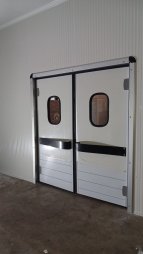
If the room is frequently exposed to short-cycle traffic, repeated two-way movement, and consistent daily usage pressure, a side-opening refrigerated door is generally a more robust option. When access is more controlled and traffic is less intense, a traditional hinged solution can still perform well. When opening width, clearance constraints, or the need for larger equipment passage become the primary requirements, a sliding door may be more suitable.

Door Type Optimal Operating Conditions Long-Term Durability Long-Term Risks in Case of Improper Use
Side-opening refrigerated doorFrequent daily traffic, repeated two-way movement, active refrigerant inletsBetter continuous performance for fast, repeated trafficMay not meet expectations if opening details and traffic patterns are overlooked
Standard hinged refrigerated doorLow to moderate traffic, more controlled accessPractical for simpler, lighter-duty environmentsMay cause earlier wear and flow friction in high-traffic areas
Sliding refrigerated doorWider openings, larger transfers, layout-sensitive designsStrong in terms of passage width and space controlMay feel less natural in areas with heavy pedestrian traffic

Door Type Optimal Operating Conditions Long-Term Durability Long-Term Risk in Case of Improper Application

Side-opening refrigerated door Frequent daily traffic, repeated two-way movement, active refrigerant inlets Better continuous performance for fast, repeated passages May fail to meet expectations if opening details and traffic patterns are overlooked

Standard hinged refrigerated door Low to moderate traffic, more controlled access Practical for simpler, lighter-duty environments May cause earlier wear and flow friction in high-traffic areas

Sliding-cooled door Wider openings, larger transfers, layout-sensitive designs Strong in terms of passage width and space control May feel less natural in areas with heavy pedestrian traffic

This comparison is important because the right long-term choice is rarely the most general one. The right choice is the one that continues to fit the room even after actual usage habits have fully emerged.

Why the By-Swing Refrigerated Door Is Usually the Logical Choice

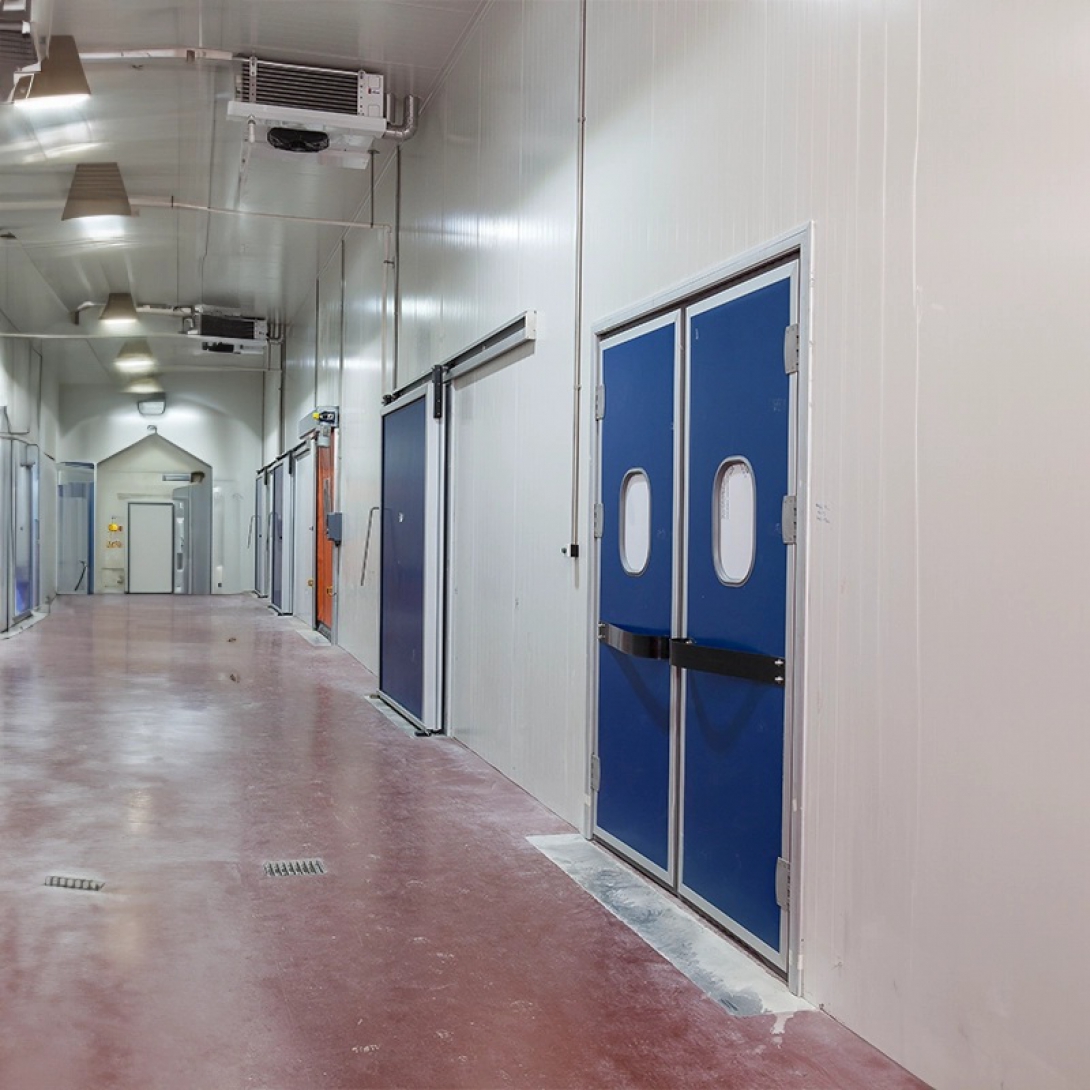
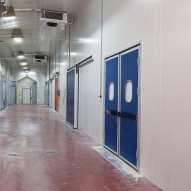
The by-swing refrigerated door is generally a more suitable long-term choice because it aligns with repetitive daily movements. In high-traffic cold rooms, people do not approach this opening as a rarely used entry point. They use it as part of a pathway. They pass through this opening while moving products, maneuvering carts, pushing shelves, and working under time pressure.

When the door naturally supports this workflow, using the entrance becomes easier. Traffic flows more smoothly. Repeated contact causes less disruption. The entrance feels like a functional part of the room, not just a stopping point.

This is where long-term value begins to emerge. A more suitable access method does more than just improve immediate operations. It also reduces the likelihood that the door will later become a maintenance burden, a workflow bottleneck, or a source of concern for premature replacement.

This is where the Freezewize Cooling System truly comes into its own. True long-term compatibility typically stems from evaluating all entry conditions—including frame relationships, panel interfaces, threshold logic, hardware layout, visibility requirements, and the type of traffic passing through the room daily.

What Buyers Should Evaluate Before Making a Choice

The best decisions regarding cooled access are made not just based on the appearance of technical specifications, but by considering how the opening will feel when the room is in use.

The most useful evaluation criteria are typically as follows:

Traffic flow

How often will staff pass through this opening, and will movement occur in both directions?

Mode of transport

Movement patterns within the room

Cleaning frequency

How often will the entrance be washed or wiped down, and how much cleaning pressure will the thresholds and hardware be exposed to?

Exposure to impact

Will accidental contact be occasional or a part of normal daily use?

Visual standards

Is the entrance part of a visible back area where early wear affects the appearance?

Maintenance tolerance

Can the facility easily handle frequent adjustments and service procedures, or does the load on the access point need to be kept low?

These questions reveal long-term suitability far better than a feature list.

Quick Decision Guide

Select a wing-cooled door in the following situations:

  • if the door is used frequently every day
  • if traffic flows in both directions
  • if personnel, vehicles, or shelves regularly pass through the entrance
  • if the room requires a smoother flow during prolonged operation
  • if the facility prioritizes long-term suitability over a short-term compromise

Choose a more traditional hinged solution in the following situations:

  • traffic is less intense and more controlled
  • access is less frequent
  • passage through the door is more deliberate
  • the opening is not under constant daily pressure

Choose a sliding solution in the following situations:

  • the opening is wider
  • larger items or equipment need to pass through
  • space constraints influence your decision more than pedestrian traffic
  • the primary challenge is geometry rather than repeated short-cycle movements

The clearest rule is simple: the best cooled access option is the one that still feels right even after the room is fully operational.

Related Solutions

If long-term suitability is the primary decision factor, these related solutions are generally worth considering alongside double-leaf refrigerated doors:

  • Refrigerated room swing doors for areas with lower traffic
  • Sliding cold room doors for wide openings and larger transfer requirements
  • Cold room panel systems for better opening integration
  • Freezer room door solutions for low-temperature applications
  • Threshold and gasket solutions for high-traffic entry points
  • Impact protection and sight panel options for active back-of-house traffic

FAQ

What does long-term suitability for refrigerated access mean?

This means that the door continues to be suitable for the room’s traffic, cleaning routines, durability needs, and daily workflow even after months or years of actual use.

Can a door be the wrong choice in the long run even if it functions properly?

Yes. A door may function technically, but it can still create flow resistance, increase maintenance demands, or cause premature wear, which over time makes it an operationally unsuitable option.

Is a side-hinged refrigerated door better for long-term use in high-traffic cold rooms?

In many high-traffic applications, yes. It generally supports repetitive movements more naturally and adapts better to daily operational demands.

What is the biggest mistake made in refrigerated door planning?

Making a selection based solely on installation-day requirements rather than how the entrance will perform under actual long-term traffic and cleaning conditions.

Does long-term suitability affect the cost of ownership?

Absolutely. A better-fitting door can reduce labor costs, service requirements, visible wear, and the need for early replacement.

Should the entire opening—not just the door—be evaluated?

Yes. Long-term performance depends on the entire access area, including thresholds, frame alignment, hardware, gaskets, panel integration, and traffic behavior.

Conclusion

Long-term suitability for refrigerated access isn’t just about choosing a functional door. It’s about selecting a door that continues to operate correctly when the room is subjected to real operational stress.

The best door for a refrigerated room is one that remains suitable for operation long after installation is complete.

If your facility relies on daily, repetitive traffic through cold room entrances, a properly matched by-swing refrigerated door is generally a wiser long-term decision. Careful consideration of traffic patterns, usage style, cleaning requirements, and opening details typically prevents greater costs and friction than corrections made later.


Fill the Form!

Write your needs and fill the form to contact us.

Freezewize | Industrial Cooling Systems & Custom Cold Room Solutions
Merhaba, Size yardımcı olabilir miyiz ?
Whatsapp Destek