




Choosing Swing Doors for Daily Impact
Side-opening refrigerated door for heavy daily use | Cold Room Access Guide
The daily impacts endured by doors in high-traffic cold rooms increase wear and tear, slow down traffic flow, and add to the maintenance burden. A suitable side-opening refrigerated door helps maintain access performance.
Choose swing doors for daily impacts
A swing-style refrigerated door is often the ideal choice when a cold room entrance is subject to repeated daily contact with personnel, carts, shelving, and heavy internal traffic. In these environments, the question is not just whether the door opens and closes. The question is whether it can continue to withstand opening after constant impacts have become part of normal use.
This distinction is important because many cold room entrances fail gradually, not suddenly. An unsuitable swing door may continue to function while causing edge wear, excessive strain on hardware, cleaning difficulties, and an increasing slowdown in workflow. The right choice ensures the door remains reliable, practical, and presentable despite daily wear and tear.
When daily impacts start to pose a real problem
In high-volume cold storage operations, impacts on doors are rarely isolated incidents. It is a recurring phenomenon.
The entrance to a cold room can be used dozens, even hundreds of times per shift. Staff move quickly during preparation, restocking, order picking, and internal transfers. Hand trucks bump into the bottom. Shelving brushes against the frame. Handles endure repeated contact from hands and shoulders. In some facilities, light traffic from pallet jacks or the movement of bulk goods adds even more pressure around the door.
At first, this may seem normal. The door still works. The room maintains its temperature. The opening still appears to be in working order. But daily impacts alter the long-term reality of the entrance.
What starts as minor contact often turns into visible wear, alignment issues, seal fatigue, and a growing maintenance burden. In active U.S. facilities, this affects more than just appearance. It influences workflow, cleaning routines, confidence in inspections, and the user’s perception of the room’s overall quality.
That is why choosing a swing door should not be treated as a mere checkbox in a specification sheet. Once daily impacts become part of operating conditions, the entrance must be selected for its durability as much as for its accessibility.
Why a poor door choice creates persistent friction
A swing door may be technically adequate yet unsuitable for the space.
This usually happens when the door is chosen simply to provide a cold-chain barrier without paying enough attention to how the opening is actually used. If the room is subject to frequent contact, rapid movements, and repeated opening and closing cycles, a solution chosen without careful consideration can begin to show weaknesses very early on.
The consequences usually manifest themselves in concrete ways:
- more visible wear on the bottom panel and edges
- increasing stress on the hinges, seals, and surrounding hardware
- more frequent adjustments or maintenance
- reduced mobility during peak traffic periods
- a less polished appearance of visible work areas behind the scenes
- replacement sooner than originally anticipated by the buyer
This is the true cost of a poor decision. The door may never completely break down, but it may no longer be suitable for the room. This creates a daily sense that the door was not chosen with sufficient operational realism.
Impact pressure changes purchasing criteria
Once a door is struck, brushed against, pushed, and opened and closed daily, the purchasing logic must change.
At this stage, the issue is no longer limited to insulation or basic access. The decision now centers on impact resistance, hardware stability, closing behavior, ease of cleaning, and the entrance’s ability to adapt to actual traffic patterns. A door that functions well in a low-traffic cold room can quickly seem inadequate in a busier space.
This is particularly true in food service businesses, prep kitchens, supermarkets, processing facilities, and distribution operations where repeated internal traffic is part of the daily rhythm. In these spaces, the entrance is not just a barrier. It is a workspace.
A comparison that clarifies the decision
When daily wear and tear is at stake, the most useful comparison isn’t about generic product names, but about operating conditions.
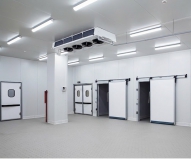
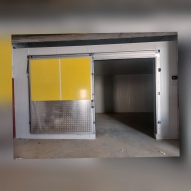
A swing-style refrigerated door is generally the most durable when the opening is subject to fast two-way traffic, repeated short-cycle use, and frequent accidental contact. A standard hinged refrigerated door can still perform well where traffic is less intense and movements are more controlled. Sliding doors are often preferable for wider openings or the passage of larger equipment, but they address a different set of challenges.
| Door Type | Best fit | Main advantage | Main limitation |
|---|---|---|---|
| Refrigerated swing door | Heavy daily traffic, repeated contact, movement of personnel and carts | Best suited for quick passage and continuous exposure to impacts | Must be properly adapted to opening conditions and usage patterns |
| Standard hinged refrigerated door | Low to moderate traffic, more controlled access | Simple and familiar for low-intensity applications | May wear out more quickly as the frequency of impacts and movements increases |
| Sliding refrigerated door | Wider openings, passage of larger equipment, areas with limited headroom | Robust for controlling opening width and space | Less natural for fast, constant foot traffic |
This comparison is important because many door-related problems stem from solving the wrong problem correctly. A door may be good in itself but unsuitable for the opening’s usage pattern.
Factors to consider when expecting daily use
Choosing a swing door for daily use means not limiting yourself to the door leaf alone.
The opening must be evaluated as a work area that absorbs repeated forces, contacts, and movements. This includes the door surface, the hinge system, the relationship with the frame, the behavior of the seals, the condition of the threshold, as well as the potential need for glazed panels, kick protection, or increased durability of the hardware.
The most important evaluation points generally include:
Traffic flow: the frequency of people passing through, their directions of approach, and whether movements are hurried or controlled.
Frequency of impacts: whether contact is occasional or part of daily routine.
Type of traffic: staff only, hand-carried loads, hand trucks, shelving, or movement of light pallets.
Maintenance tolerance: whether the installation can reasonably withstand frequent adjustments and maintenance.
Cleaning routine: How often is the entrance washed or wiped down, and does the layout of the hardware facilitate or complicate this task?
Visual standard: whether the opening is located in a visible service area or a semi-public operational area where wear occurs more rapidly.
These factors determine whether the door will remain suitable after repeated use, and not just whether it looks acceptable on the first day.
Why a swing-style refrigerated door is often the smart choice
A swing-style refrigerated door is often the best choice for daily use because it is designed to withstand the type of movement that results in repeated contact.
In high-traffic cold rooms, staff do not pass through the door as an occasional visitor would. They use it as part of their work routine. This means the door must respond naturally to frequent use, close reliably, and withstand minor daily impacts without turning the entrance into a constant maintenance issue.
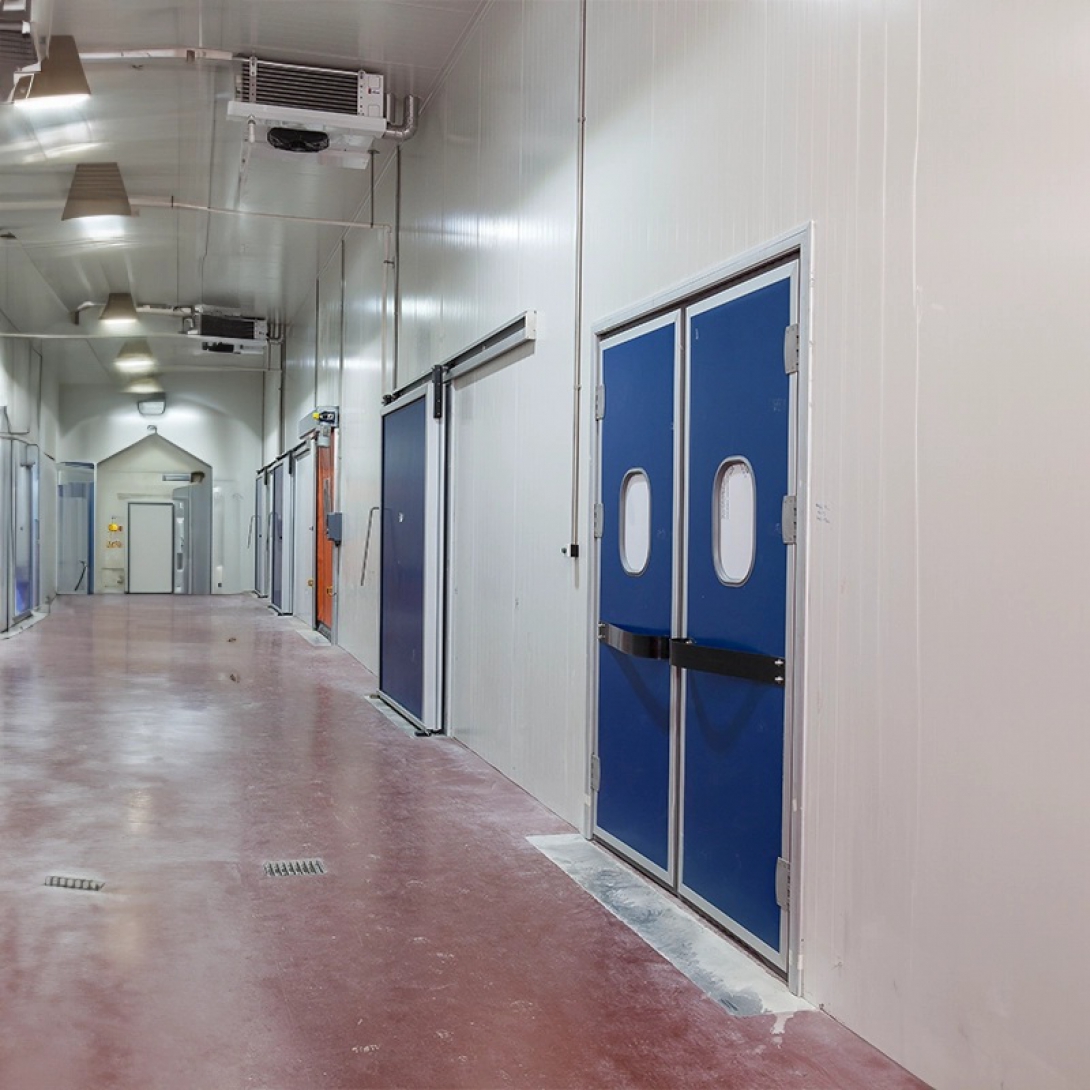
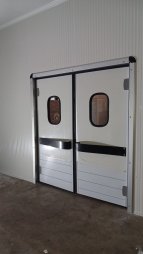
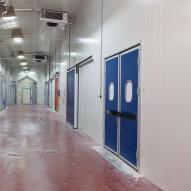
This is where a double-leaf configuration proves practical. It allows the opening to better adapt to actual traffic patterns. This can reduce hesitation, promote smoother traffic flow, and prevent the door from becoming a bottleneck during peak traffic. When properly specified, it also provides a better foundation for durability, as the opening is tailored to actual usage rather than theoretical usage.
It is also at this stage that the Freezewize cooling system truly comes into its own from a practical standpoint. In real-world cold room applications, the best results generally come from evaluating the door while taking into account the frame, the panel interface, the threshold transition, visibility requirements, and daily traffic patterns. The choice of a high-performance swing door rarely depends on the panel alone. It is about the entire opening system and its performance over time.
Quick Decision Guide
Choose a refrigerated swing door when:
- the entrance experiences frequent daily traffic
- carts, bins, or shelving regularly come into contact with the opening
- traffic flows in both directions during the shift
- the room requires rapid movement without constant stopping points
- resistance to repeated contact is as important as thermal insulation
Opt for a more traditional hinged solution when:
- access frequency is moderate
- traffic is more deliberate and less repetitive
- the risk of impact is limited
- the opening does not serve as a constant traffic route
Choose a sliding solution when:
- the opening is wider
- Heavier loads need to pass through
- the surrounding clearance is more important than the smooth flow of pedestrian traffic
- the operational challenge lies more in the geometry than in the frequency of contact
The most obvious rule is simple: if the entrance is likely to be bumped into on a daily basis, choose a door designed to withstand repeated impacts, not just to provide basic closure.
Related Solutions
If you opt for a swing door because daily impacts are becoming an operational issue, these related solutions are often worth evaluating at the same time:
- swing doors for cold rooms intended for moderately used refrigerated spaces
- Sliding cold room doors, for wider openings and higher throughput requirements
- Cold room panel systems for better integration of the opening
- freezer door solutions for low-temperature applications
- baseboards and impact protection elements for high-traffic areas
- Glass panel options for safer traffic flow in active service areas
FAQ
Is a refrigerated swing door better suited for daily impacts?
In many high-traffic cold room environments, yes. It is often better suited to repeated passage and frequent accidental contact than a lighter access solution.
What causes daily impacts on cold room doors?
Generally, it’s a combination of hurried staff movements, carts, shelving, short and repeated trips, and openings that are an integral part of the workflow rather than just occasional access points.
Can a standard hinged door still function in an area subject to frequent impacts?
It is possible, but not always optimal. In high-traffic areas, this can lead to increased wear and tear, more maintenance, and a loss of smooth operation over time.
Should impact protection be part of the initial door design?
Yes. In many applications, protecting the bottom panel, ensuring durable hardware, and carefully designing the opening help extend the door’s lifespan and reduce preventable wear and tear.
Do daily impacts also affect hygiene and appearance?
Yes. Repeated contact can cause the entrance to age more quickly, create hard-to-clean wear areas, and detract from the overall appearance of the refrigerated area.
What is the biggest mistake to make when choosing a swing door?
Assuming that the door simply needs to close properly. In real-world installations, it must also withstand repeated use without becoming a source of friction.
Conclusion
Choosing swing doors for daily use really comes down to deciding whether the entrance will remain suitable once the real pressures of operation begin.
The best swing door is one that remains functional after months of repeated use, not just one that seems suitable on the day of specification.
If your cold room entrance is subject to constant daily traffic, a properly fitted refrigerated swing door is often the wisest choice in the long run. A careful analysis of traffic patterns, impact exposure, and the specifics of the opening can generally prevent costs far higher than those associated with correcting a poor fit later on.