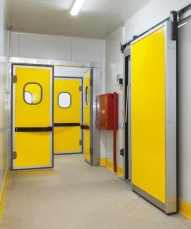





Cleaner Traffic Flow Through Large Openings
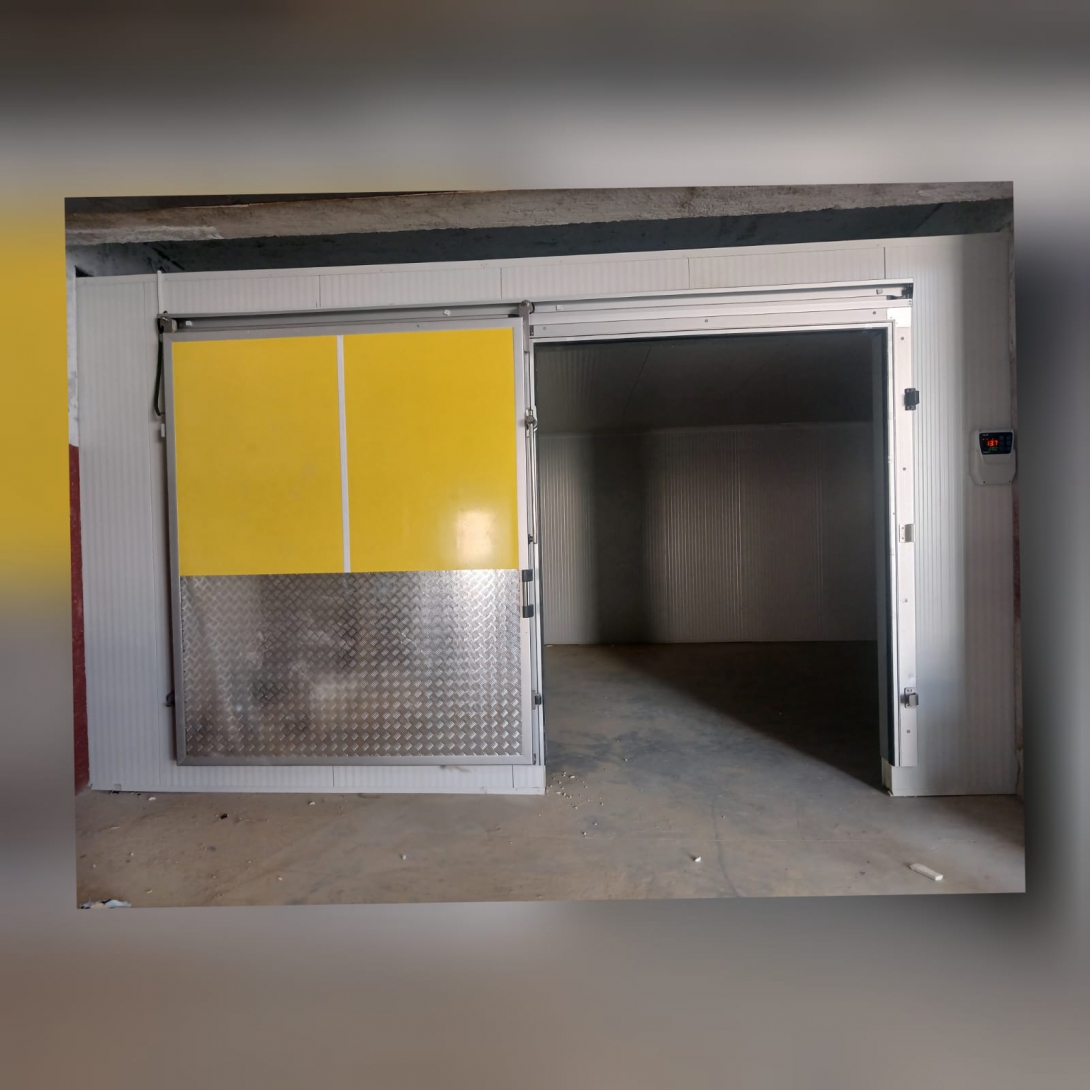
Double-Panel Sliding Door for Smoother Traffic Flow in Wide Cold Room Openings
Ensure smoother traffic flow in wide cold room openings with a double-panel sliding door that reduces congestion, promotes hygiene, and is suitable for daily cold room use.
Smoother Traffic Flow in Wide Openings
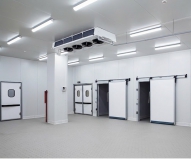
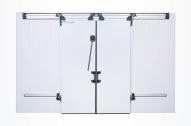
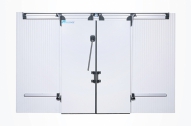
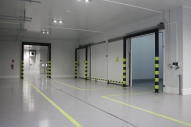
When a large refrigerated opening requires not just a simple closure but smoother traffic flow, a two-panel sliding refrigerated door is often the right solution. In high-traffic cold storage areas, wide access points can turn into chaotic passageways where people, vehicles, shelves, and product movements obstruct one another. The double-door design helps organize this movement thanks to its center-opening feature, ensuring a more balanced, controlled, and efficient passage.
This is important because wide openings affect more than just access. They impact work rhythms, cleaning routines, collision risks, and the overall discipline of the refrigerated area. When an opening is wide but the traffic flow feels disorganized, the room loses efficiency even if the door is technically still functioning.
Wider Openings Can Improve Access, But May Negatively Impact Flow
There is usually a good reason for a wider opening. The room may require easier cart movement, better internal transfers, wider product passage, or more comfortable two-way personnel traffic. On paper, this appears to be a clear improvement.
In practice, however, if the access system isn’t properly directing traffic, a wider opening can create a new problem. Instead of more orderly traffic, the door becomes a loose chokepoint. Staff hesitate. Carts veer off course. Entry and exit patterns become less predictable. The opening begins to feel wide enough for traffic but insufficient in terms of controllability.
This situation is particularly common in supermarket backrooms, warehouse refrigerated aisles, food processing support areas, and commercial kitchens where refrigerated entrances are constantly used. In these environments, a smooth traffic flow does more than just provide convenience. It also affects how professionally the space operates under pressure.
Where Traffic Flow Begins to Break Down
Traffic flow through a large opening rarely breaks down all at once. It usually starts with small signs of irregularity.
A hand truck enters at the wrong angle. A pallet jack passes through the opening but causes a slight stop-and-adjust movement. Two staff members reach the entrance at the same time and hesitate. The entrance becomes a place where people adjust their movements rather than moving naturally. Over time, these small interruptions accumulate, leading to daily inefficiency.
This is why the phrase “more orderly traffic flow” is important here. It is not just about visual order. It concerns whether the movement through the opening is structured, repeatable, and seamless. In refrigerated operations, a more orderly traffic flow typically means:
- less hesitation at the entrance
- easier passage with hand trucks or shelves
- reduced risk of edge contact and impact
- better rhythm during stock replenishment, preparation, or transfer cycles
- a more controlled appearance in the back area
When an opening becomes part of the operational route, traffic quality is just as important as the opening’s width.
The Risk of a Wide Opening with Poor Traffic Discipline
A wide refrigerated entrance can still perform poorly even if the door itself is functional.
This is a risk many buyers underestimate. The opening closes, provides a seal, and appears adequate, but the daily traffic flow around it remains inefficient. The result isn’t always a dramatic failure. More often, it leads to a steady decline in workflow quality.
An inappropriate access system in a wide opening can lead to:
- repeated congestion during peak hours
- more accidental contact with panels, frames, and surrounding surfaces
- higher maintenance demands due to constant minor impacts
- weaker hygiene control around frequently used access points
- less orderly movement between connected work areas
- dissatisfaction with the original door selection sooner than expected
Therefore, a technically functional door can still be the wrong choice. In large refrigeration openings, the key question is whether the door helps regulate traffic flow or leaves the opening too loose during use.
Comparison of Two-Way Sliding Doors vs. One-Way Sliding Doors in Large Refrigerated Entrances
When traffic flow is a priority, the most useful comparison is typically between two-way sliding doors and one-way sliding doors.
Both door types can serve cold room applications, but they handle large openings differently. A single sliding panel may be a viable option where traffic flow is lighter or the opening is more moderate. However, as the opening grows and traffic becomes more frequent, a single large moving panel may feel less controllable in daily use.
The double-panel sliding format helps because the opening is shared between two moving panels. This changes the behavior of the entrance. The passage feels more centered, more balanced, and generally cleaner in use.
| Door Type | Best Fit | Traffic Flow Advantage | Main Limitation |
|---|---|---|---|
| Double-panel sliding door | Wide openings that are frequently opened and closed during daily use | A more balanced and unobstructed passage through the center | The most suitable option in situations where both width and traffic volume are important factors |
| Single sliding door | Mid-sized entrances with a simpler flow | A simple design for less demanding applications | May create a more open, airy impression in wider and busier entrances |
| Swing access | Narrower openings with basic traffic flow | A familiar scenario for simple entry points | Passage distance and flow control are compromised in wide openings |
Door Type Best Application Traffic Flow Advantage Main Limitation
Two-panel sliding door Wide openings with regular daily traffic A more balanced and clean transition from the center Most suitable when both width and traffic are significant factors
Single-panel sliding door Medium-sized openings with simpler traffic flow A simple layout for less demanding use May feel less orderly in larger, more intense openings
Swing entrance Smaller openings with basic traffic Familiar for simple entry points Weak control over opening and flow in wide openings
The decision is not about complexity itself. It is about which entrance style maintains a more orderly flow once the opening becomes a real traffic route.
Why a Two-Way Opening Entrance Provides More Orderly Movement
A better double-sliding door performs well in wide openings because it provides more disciplined movement. Instead of the behavior of a single wide opening—which can feel overly large or loose—the entrance operates with a clearer, center-focused movement.
This can make a noticeable difference in daily use. Staff pass through with less hesitation. Wheeled traffic enters along a more natural path. The opening feels like a managed passageway rather than an excessively wide gap that people must navigate every time.
This is particularly valuable in situations where the entrance serves the following purposes:
- repeated personnel movement
- wheeled racks or material carts
- pallet jack movement
- inter-zone transfer of refrigerated products
- back areas where visual order is important
- operations requiring both traffic efficiency and temperature control
A wide opening should help the facility operate more efficiently. If it merely adds space without improving control, it has not solved the underlying problem.
The Better Solution Depends on How the Opening Is Used
Not every large opening requires a double-leaf refrigerated sliding door. However, many large openings require more traffic discipline than a simpler access format can provide.
The right choice depends on how the opening functions within the room. If it supports frequent passage, repetitive wheeled movement, multi-shift activity, or a visible operational path, the door should be selected based not only on dimensions but also on behavior.
This is where the Freezewize Cooling System comes into play. In actual cooling applications, the door performs best when planned in conjunction with surrounding room conditions—such as panel layout, threshold conditions, sealing requirements, visibility expectations, impact protection, hardware durability, and service access.
A large opening is not automatically a problem. It becomes an issue when the access system cannot provide sufficient order for the traffic passing through it.
Quick Decision Guide
If the goal is not just wide access but also a more orderly flow along that access path, a refrigerated double-sliding door is generally a better choice.
It is generally the right choice in the following situations:
- if the opening is wide and frequently used
- if personnel and wheeled vehicle traffic share the same air-conditioned passage
- if congestion begins to form at the door entrance
- if the facility requires a more controlled traffic flow
- if the risk of impact around the opening becomes a concern
- if the room requires a more orderly working environment in the long term
If traffic volume is low and the opening is not at the center of the workflow, a simpler door may suffice. However, when movement through the entrance must remain orderly under high volume, a double-leaf configuration typically offers a more suitable solution.
A wide opening adds value when it improves movement without creating disorder.
Related Solutions
If a double-leaf sliding door is being considered for a large refrigeration opening, it generally makes sense to review adjacent solutions as part of the same access strategy:
- cold room doors for secondary access points
- freezer sliding doors for colder work areas
- cold room panels for insulated wall continuity
- door thresholds, gaskets, and vision panels for accessibility and control
- impact protection hardware for high-traffic openings
- cold storage solutions for warehouses, supermarkets, and food processing areas
These related pages can help buyers create a cleaner, overall refrigerated workflow rather than addressing a single door in isolation.
FAQ
What is a refrigerated double-leaf sliding door most commonly used for?
It is best suited for refrigerated rooms with wider openings where daily traffic must remain smooth, controlled, and practical under repeated use.
Why is smoother traffic flow important in refrigerated entrances?
Because the door affects workforce movement, cart usage, hygiene routines, and exposure to impact. A smoother flow pattern improves daily operations and reduces preventable friction.
Is double-leaf access better than single-leaf sliding doors for wide openings?
In most high-volume cold-air applications, yes. It generally provides a more balanced transition and helps the opening feel more controlled during daily use.
Does a wide opening always require a double-leaf door?
No. Width alone is not sufficient. A better indicator is whether the opening has heavy traffic and requires more organized movement.
Can this type of door help reduce maintenance burdens?
Generally, yes. A cleaner passage through the opening can reduce unnecessary contact and help limit minor impacts that lead to ongoing maintenance issues.
What should buyers evaluate before selecting a door?
They should review the opening width, traffic frequency, equipment movement, hygiene requirements, surrounding space, impact risk, and how the door fits into the overall layout of the cold room.
Conclusion
Large refrigerated openings do not guarantee efficiency on their own. Efficiency is achieved only when the access system keeps traffic clean, controlled, and repeatable.
When a large opening needs to support smoother movement, better organization, and less daily friction throughout the cold room’s lifespan, a double-leaf sliding door is typically the right solution. If traffic quality at the opening is important, the door should be selected not just to close the opening, but to manage that traffic.
For facilities evaluating a new cold room or improving an existing entrance, the most beneficial next step is to assess how people and equipment move through the opening; this ensures the final specifications support a more orderly flow from day one.