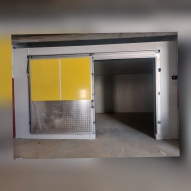





Bi-Parting Access That Keeps Busy Cooler Rooms
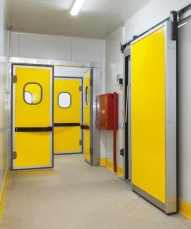
Double-Swing Sliding Doors for High-Traffic Cold Rooms and Easier Access
Improve airflow in high-traffic cold rooms with double-swing access that reduces congestion, supports hygiene, and makes wide openings practical under heavy daily traffic.
Bi-Parting Access That Keeps Busy Cooler Rooms
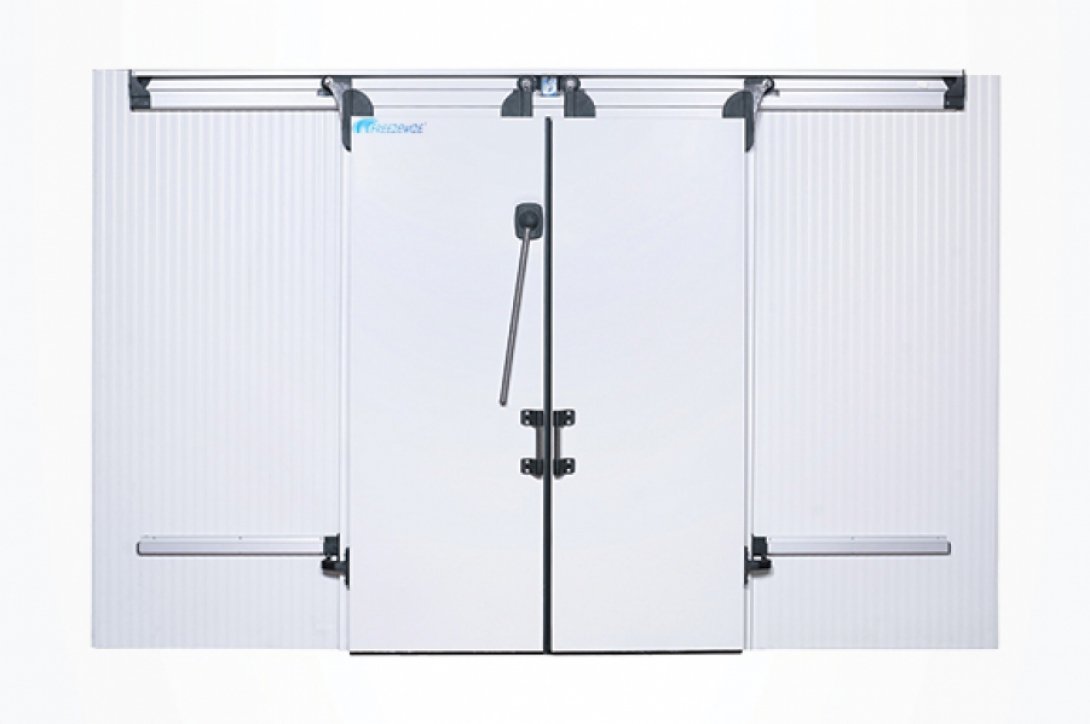
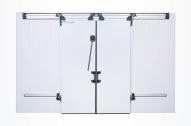
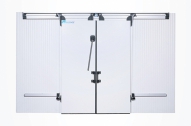
When a high-traffic cold room requires wide and reliable access without turning the entrance into a daily bottleneck, a two-panel sliding cold room door is often the smartest choice. Opening from the center with two coordinated panels, this door provides smoother movement, better traffic control, and a more practical fit in facilities where the flow of personnel, vehicles, racks, and products never stops.
In high-traffic cold rooms, the issue is rarely just the opening. The real challenge is whether the access point can keep up with the demands of labor, cleaning, and temperature control. When the door falls behind the operation, delays in the workflow become part of the room’s routine.
The Pressure Point in High-Traffic Cold Rooms
High-traffic cold rooms place unique demands on door selection. An opening isn’t just there to seal off a temperature-controlled area. It must support repetitive movement, prevent teams from slowing down, and withstand constant use without becoming a maintenance burden.
This is where many facilities run into trouble. A door may seem acceptable during the planning phase, but under real-world operating conditions, it can start causing small delays that accumulate over every shift. Staff pause before entering. Carts need to be realigned. The rhythm of product movement is disrupted. The door begins to hinder the room rather than support it.
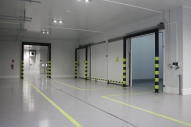
This situation is particularly evident in food processing support areas, supermarket backrooms, commercial kitchens, distribution corridors, and cold storage facilities where stock is frequently replenished. In these environments, a cold room entrance must do more than just provide an airtight seal. It must help the room operate cleanly and consistently.
Where Workflow Friction First Emerges
Workflow friction in a cold room typically begins quietly. It does not always start with a malfunction or a dramatic operational failure. More often, it manifests as repeated friction around the door.
This friction may manifest as a slowing of two-way traffic, entry angles unsuitable for carts, hesitation among staff during peak periods, unnecessary contact with the entrance, or a growing sense that the room was designed for containment but not for actual use. When traffic intensifies, even a few seconds of resistance at the door entrance can lead to a drop in operational efficiency and preventable congestion.
In high-traffic cold rooms, access design is critical because the entrance is under constant pressure. Staff move quickly. Cleaning routines must be practical. Openings should not be excessively large or cumbersome; they should feel controlled. When these needs are overlooked, the door becomes the weak point of an otherwise competent cold room.
The Risk of Choosing the Wrong Access Format
A door may function technically, but it can still be an operational misfit.
This is one of the most common specification errors in active cold room environments. A large opening with frequent traffic can still function with a less suitable door style, but hidden costs often emerge later. Operating the room becomes more difficult. Wear and tear becomes more pronounced. Maintenance calls become more frequent. The entrance can no longer keep pace with the facility’s speed.
Common risks include:
- Delayed movement during peak receiving or restocking periods
- Increased contact damage to panels, frames, hardware, or adjacent wall areas
- Increased maintenance pressure from constant daily use
- Decreased confidence in hygiene and cleaning efficiency around the opening
- A more cluttered or less professional-looking back-of-house area
- pressure to replace sooner due to the feeling that the original choice was inadequate or incompatible
This is important in the U.S. market because professional buyers aren’t just evaluating whether a door closes or not. They’re also assessing labor efficiency, cost of ownership, traffic flow, food safety expectations, and how the room will perform under daily operational stress.
Why Does a Two-Way Sliding Access Solve a Different Problem?
A two-way sliding configuration is not merely a design preference. It addresses a specific operational challenge: how to make a wider refrigeration opening feel controlled, efficient, and usable under repeated traffic.
Instead of a single large panel moving along the opening, two panels split in the middle and move from the center. This changes the behavior of the entrance. The opening motion feels more balanced. The door integrates more easily into active workflows. The access point supports the movement rather than dominating it.
In high-traffic cold storage rooms, this can offer numerous practical advantages. Staff move with less hesitation. Carts and shelves pass through more naturally. In narrow or high-traffic backroom conditions, the opening feels more controlled. Facilities also gain a solution that better aligns with the visual and operational expectations of modern refrigerated work areas.
This is particularly important in situations where wide openings are required but side-opening clearance is undesirable, or where a single sliding panel would feel excessively large for daily use.
Two-Way Sliding Doors and Single Sliding Doors in High-Traffic Cold Storage Rooms
If the cold room opening is wide and heavily used, the most useful comparison is typically between two-way sliding doors and single sliding doors. Both serve refrigerated applications but support different operating conditions.
| Access Type | Most Suitable | Key Strengths | Key Limitations |
|---|---|---|---|
| Double-panel sliding | Wide openings with heavy traffic | Smoother opening motion and a more fluid transition | The best option when width and high traffic volume are required |
| Single-panel sliding | Medium-sized openings with lighter traffic | A simple design and easier path of movement | May not look sufficiently elegant in very wide openings or those with heavy traffic |
Access Type Best Suited ApplicationFunctional Strength Key Advantages and Disadvantages
Two-way sliding doors Wide openings with regular traffic More balanced opening motion and smoother passage Most valuable when width and usage level are appropriate
Single-panel sliding door Medium-sized openings with less traffic Simple design and easier path of movement May appear less elegant in very wide or high-traffic openings
A single-panel sliding solution can still be effective for certain cold rooms where traffic is lighter or the opening is more modest. However, when the room becomes a high-traffic thoroughfare, a single large moving panel may begin to feel less suitable. The travel path is longer, the visual mass is greater, and the opening may no longer feel compatible with rapid operational movement.
When the entrance is at the center of daily operations, a two-panel configuration is generally more suitable. This creates a more consistent relationship between the opening size and the room’s actual usage.
True Value Lies in Functional Suitability
For high-traffic cold rooms, suitability is more important than basic functionality. A door is not a good choice simply because it opens and closes and provides a seal. It must align with the realities of the surrounding space.
This includes:
- traffic frequency
- clear opening width
- staff movement patterns
- pallet jack or hand truck access
- cleaning routines and washing requirements
- visibility of the back area
- maintenance tolerance over time
- surrounding panels, frame conditions, threshold details, and sealing strategy
Therefore, access decisions should not be made in isolation. The opening must be evaluated as part of the cold room system. Door performance is influenced by factors such as room layout, adjacent equipment, exposure to impact, and how the entrance supports or disrupts daily operations.
In practice, the Freezewize Cooling System treats these door selections not merely as a product item but as part of the operational environment. This approach typically yields better long-term results, as performance depends not only on dimensions but also on the room’s behavior.
Quick Decision Guide
If the room is very busy and the opening needs to support traffic with minimal delay, a double-sliding door is generally a better choice.
Choose this option in the following situations:
- if the opening is wide and used repeatedly throughout the day
- if personnel, carts, or shelves regularly pass through the cold room
- if the facility wants smoother circulation in the back area
- if the side-opening obstructs workflow
- the access point should feel clean, controlled, and durable over time
If traffic is limited and the opening is not at the center of operations, a simpler door style may still suffice. However, if the cold room is part of an active workflow, a decision that reduces friction is generally better before it becomes a daily work habit.
In a high-traffic cold room, the right door should not interrupt the workflow; it should be part of it.
Related Solutions
When evaluating this type of opening, it generally makes sense to evaluate related solutions at the same time:
- cold room doors for access points with low traffic
- cold room panels for insulated wall continuity
- freezer sliding doors for colder or more demanding applications
- impact protection hardware for high-traffic openings
- door gaskets, thresholds, and vision panels for improved usability and temperature control
- loading and internal transfer area solutions for connected product flow zones
These related pages can help buyers create a more comprehensive access strategy rather than addressing just a single door entry each time.
FAQ
What is a double-leaf sliding door for cold storage rooms most commonly used for?
It is best suited for cold storage rooms with wide openings and high daily traffic. It performs particularly well in areas where personnel movement, vehicles, and product flow make a standard access format restrictive.
Is double-leaf access better for high-traffic cold storage rooms?
In most cases, yes. It generally provides a smoother opening motion and reduces the friction often experienced in larger, high-traffic entrances.
Can this door type improve operational efficiency?
Yes. When properly aligned with the opening and traffic flow, it can improve movement within the room and reduce repetitive slowdowns that affect daily workflow.
Is it suitable for food facilities?
When the room’s hygiene requirements, traffic level, and cleaning routine are specified, it can be an excellent choice for food-related environments. Suitability depends not only on the opening size but on the entire operational context.
What should buyers consider before selecting a double-leaf access system?
They should review the opening width, traffic frequency, room temperature range, surrounding space, impact risk, cleaning expectations, hardware durability, and how the entrance integrates into the overall cold room layout.
Does a wide opening always require a double-leaf sliding door?
No. Some openings can perform well with other door formats. The key question is whether the opening is sufficiently high-traffic to require a more balanced access solution that enhances workflow and long-term value.
Conclusion
High-traffic cold rooms do not become inefficient simply because they are active. They become inefficient when the opening is not designed for that activity.
When a wide refrigerated opening needs to support continuous traffic, cleaning crew movement, and better daily control without slowing down the workflow, a refrigerated double-sliding door is usually the right answer. When the opening is part of the operation, the access system should be selected not just as a closing mechanism, but as an operational tool.
For teams planning a new cold room or renovating an opening with heavy traffic, the next step is to evaluate the door in terms of traffic, width, hygiene, and long-term use; so that the final specifications support the room from day one.