




Freezewize | Industrial Cooling Systems & Custom Cold Room Solutions

Better Door Control for Pallet Movement

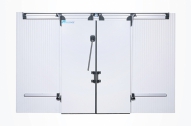
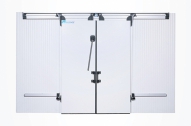
Cooler Bi-Parting Sliding Door for Better Pallet Movement Control

Optimize pallet traffic at cold room entrances with a double-leaf sliding door that reduces the risk of collisions, promotes a smoother flow, and improves day-to-day operations.

Better door control for pallet traffic

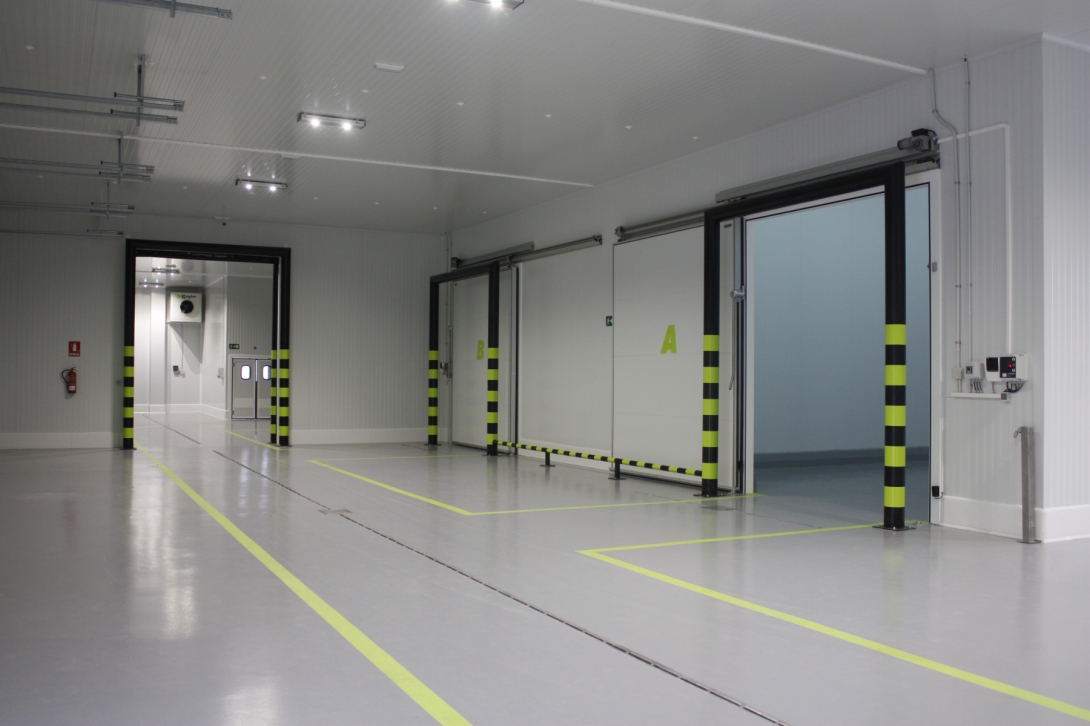
A double-leaf sliding door for cold storage is often the best choice when pallet traffic through a refrigerated opening requires more control, not just more width. In active cold storage rooms, pallets rarely pass through the door under ideal conditions. Operators turn, correct their course, slow down, and enter under time pressure. A double-leaf configuration helps make this movement more predictable by creating a more balanced opening path and a smoother central passage.

This is important because pallet traffic quickly highlights poor door choices. A door that functions technically can still cause snags, hesitations, alignment issues, and slowdowns in daily workflow. Better door control reduces these losses before they become the norm.

When pallet traffic starts to become a problem

Most pallet-related issues at cold room entrances don’t start with a major failure. They start with a door that seems less in control than the traffic passing through it.

An operator approaches with a loaded pallet jack and has to slow down more than expected. A slight angle adjustment is needed before entering. The opening is technically wide enough, but the passage still feels narrow, awkward, or uneven. After enough repetitions, this door starts shaping the way the team moves products—and not in a good way.

This phenomenon is common in food distribution areas, supermarket backrooms, warehouse cold storage rooms, processing facilities, and large kitchen support areas where pallets or heavy wheeled loads enter and exit throughout the day. In these environments, the door is not just a point of closure. It is part of the material handling route.

That’s why control is essential. Pallet traffic requires a door that allows for confident entry, more precise alignment, and reduced exposure to impacts. If the opening looks wide but proves unstable in practice, the room begins to suffer unnecessary wear and tear with every shift.

The Real Risk Behind Poor Door Control

A cold room door may seem adequate on paper but prove to be highly ineffective once pallet movement begins.

This happens when the decision is based primarily on the size of the opening, without considering how it behaves under load. Pallets do not move like people on foot. They require better trajectory control, more consistent clearance, and a door that does not turn slight course corrections into daily impact risks.

When door control is poor, the consequences are usually evident:

  • more contact with the edges as pallets enter and exit
  • slower handling as operators approach the opening cautiously
  • increased wear on frames, panels, seals, and adjacent wall surfaces
  • increased maintenance burden due to repeated minor impacts
  • more chaotic traffic flow during receiving, transfer, and restocking periods
  • early frustration stemming from the fact that the opening was never truly designed for pallet handling

A door may open and close reliably, but it can still be a poor solution if every pallet pass feels like a minor negotiation.

This distinction matters to U.S. buyers because labor efficiency, maintenance burden, and replacement timing are not abstract concerns. They visibly impact daily throughput and cost of ownership.

Why moving pallets requires more than just a wide opening

A wider opening helps, but width alone does not solve the problem of moving pallets.

The real question is whether the door provides operators with a clear, passable path with sufficient control upon entry. This depends on much more than just width. It depends on the configuration of the opening, the door’s balance during operation, how the traffic line is defined, and how the entrance integrates with the surrounding floor, threshold, frame, seals, and impact protection.

For pallet traffic, the doorway must allow for:

  • a more centered approach line
  • reduced visual and physical obstruction upon entry
  • fewer awkward course corrections
  • a smoother passage for manual and motorized pallet jacks
  • a lower risk of contact near the edges of the frame and hardware
  • greater consistency over repeated cycles

This is where the double-leaf sliding configuration begins to stand out from less suitable access formats.

Double-leaf access vs. single-panel access for pallet traffic

When pallet control is the primary concern, the most useful comparison is generally between double-leaf sliding access and single-panel access.

A single-panel sliding door may still suffice for moderately sized openings with lighter traffic or smaller rolling loads. But as soon as pallets become part of the daily routine, a single large moving panel can seem less manageable in practice. The opening may still function, but the approach path often feels less balanced and less forgiving under pressure.

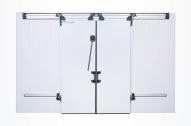
A double-leaf configuration improves this, as both panels open from the center and create a clearer passageway in the middle of the opening. This generally provides operators with a more natural entry line and greater confidence during repeated pallet movements.

Door FormatBest FitPallet Movement AdvantageMain Limitation
Bi-parting slidingWide cooler openings with regular pallet trafficBetter entry control and a cleaner center-led pathBest justified when pallet flow is frequent
Single slidingModerate openings with lighter wheeled useStraightforward solution for simpler trafficCan feel less balanced under repeated pallet movement
Swing accessSmaller openings with basic personnel flowPractical for low-complexity entry pointsLess suitable where pallet handling and clearance control matter

Door Configuration Best Suited For Advantage for Pallet Movement Main Limitation

Double-leaf sliding door Wide cold room openings with regular pallet traffic Better entry control and a clearer path in the center Particularly suitable when pallet flow is frequent

Single-leaf sliding door Medium-sized openings with lighter pallet traffic Simple solution for more moderate traffic May feel less balanced during repeated pallet movements

Swing door Smaller openings with basic personnel flow Practical for simple entry points Less suitable when pallet handling and headroom control are critical

The goal is not to add complexity. The goal is to reduce the number of minor control issues that slow down product movement and cause avoidable wear over time.

Why double-leaf access improves pallet handling

A double-leaf sliding door for cold storage facilitates pallet movement because it gives the entrance a sense of greater order.

This orderliness is essential in cold storage operations. Pallets are often moved in a hurry—during receiving windows, between preparation and storage areas, or along busy internal transfer lanes. Operators need an entrance that feels clear and controlled, not one that causes last-minute hesitation.

A double-leaf opening can improve this experience by creating a smoother opening motion across a wider width. Instead of a single dominant leaf that dictates the access point, the door opens in a more centered manner, better suited to the repeated passage of carts.

In practical terms, this can help reduce:

  • uncomfortable entry angles
  • excessive adjustments at the threshold
  • accidental collisions near the jamb or panel edge
  • congestion when pallet and pedestrian traffic overlap
  • wear caused by constant ground-level handling stresses

This can also improve the overall impression of the room. Pallet traffic is one of the quickest ways to determine whether an opening has truly been designed for real-world operations. If the door handles pallet movement smoothly, the entire room appears more credible.

The best solution takes the entire entrance into account

Door control does not depend solely on the door leaf. It depends on how the entire entrance is designed.

For pallet traffic, buyers must view the door as a complete functional system. Floor levelness, threshold condition, ground clearance, frame durability, seal compression, guide layout, visibility features, impact protection, and protection of adjacent panels all influence how the opening performs in daily use.

This is why the best solution is not simply to “choose a larger door.” Rather, it is about “choosing the access system that matches the behavior of the pallets.”

In field-oriented projects, the Freezewize cooling system is most effective when pallet traffic is considered a true design element rather than an afterthought. This generally leads to a better result, as the opening is defined based on actual traffic patterns, not just nominal size.

Quick Decision Guide

A double-leaf sliding door for cold storage is often the best option when pallet traffic through the opening needs to be smoother, safer, and more consistent.

This is generally the appropriate choice when:

  • pallets or pallet jacks regularly pass through the cold room
  • the opening is wide and part of a daily transfer route
  • operators need better control of the queue at the entrance
  • contact with the frame or edge wear becomes a concern
  • pedestrian and pallet traffic overlap at the same entrance
  • long-term ease of use is as important as the initial fit

A simpler door may still suffice when pallet traffic is infrequent and the opening is primarily used by staff. But when the entrance is part of routine material handling, better control generally pays for itself quickly through smoother flow and reduced workload.

If pallets determine the traffic pattern, the entrance must be chosen based on pallet behavior, not just the width of the opening.

Related Solutions

If this opening is designed for pallet traffic, related solutions that are often worth incorporating internally include:

  • cold room doors for low-traffic access points
  • freezer sliding doors for colder handling areas
  • cold room panels for complete continuity of the insulated envelope
  • impact protection equipment for openings subject to pallet traffic
  • thresholds, seals, and vision panels for cleaner entry control
  • cold storage solutions for warehouses and food processing tailored to specific configurations

These related pages help buyers consider the door as part of a broader refrigerated handling system.

FAQ

Is a double-leaf sliding door suitable for pallet traffic in cold rooms?

Yes, in many applications, it is a wise choice. It often offers a more balanced opening path and better control for repeated pallet traffic through wider refrigerated entrances.

Why is door control important for pallet handling?

Because moving pallets is less forgiving than pedestrian traffic. Small alignment errors can lead to slower passage, more contact damage, and increased maintenance demands around the door.

Does a wide opening automatically solve pallet traffic problems?

No. Width helps, but it does not replace control. The opening must also have a suitable access format, a threshold in good condition, and an overall entrance design that allows for smooth pallet movement.

Is a double-leaf door preferable to a single sliding door for loaded pallet jacks?

In many high-traffic cold storage applications, yes. This often provides operators with a smoother, centered passage and reduces the feeling of obstruction that can occur with a single large moving panel.

What should buyers evaluate before choosing this type of door?

They should consider pallet frequency, opening width, traffic overlap, floor and threshold condition, impact exposure, visibility requirements, seal performance, and protection of surrounding panels.

Can better door control reduce maintenance costs?

Often, yes. Smoother pallet movement generally means fewer contacts at the entrance, less wear on seals and edges, and fewer minor impacts that, when accumulated, can lead to more significant maintenance issues.

Conclusion

Pallet traffic does not tolerate an imprecise door design for long. It quickly reveals whether the opening was chosen for actual use or simply for basic closure.

A double-leaf sliding door for cold storage is often the most sensible solution when pallet traffic requires better control, smoother entry, and less daily strain on the door and the team using it. When pallet handling is part of operations, better door control becomes a performance requirement, not just a nice-to-have.

For facilities planning a new cold room or upgrading an existing entrance, the next step is to assess how pallets approach, enter, and exit the door, so that the final specifications promote proper handling from the start.


Fill the Form!

Write your needs and fill the form to contact us.

Freezewize | Industrial Cooling Systems & Custom Cold Room Solutions
Merhaba, Size yardımcı olabilir miyiz ?
Whatsapp Destek