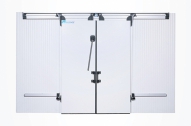





Long-Term Fit for High-Volume Access
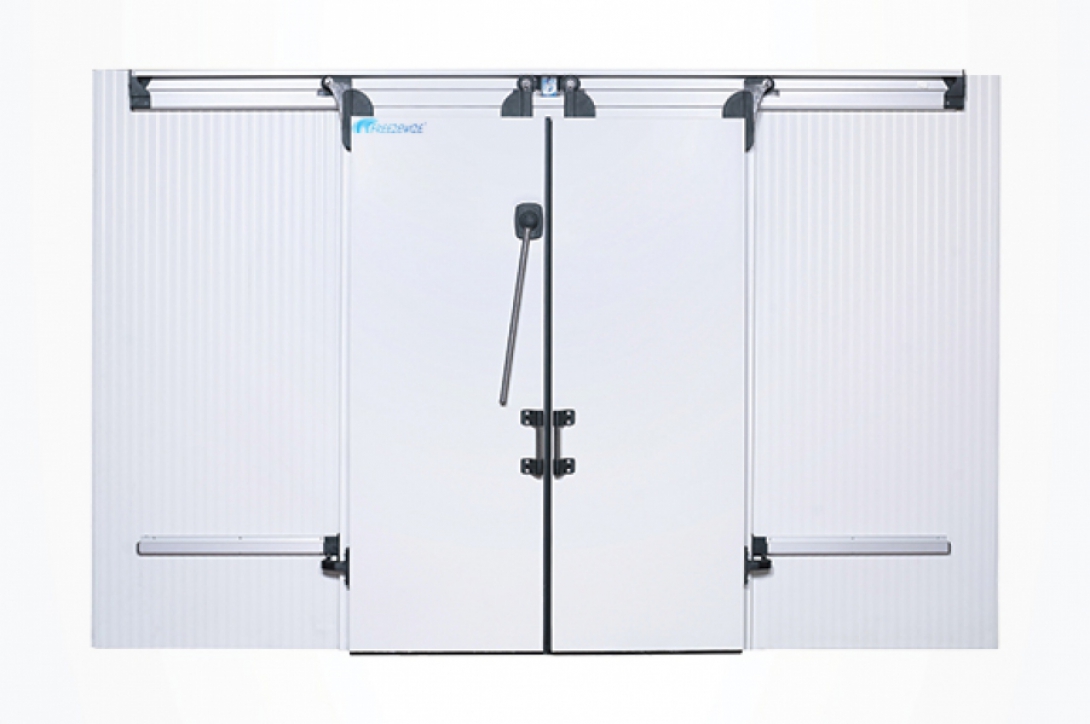
Double-Leaf Sliding Door for Long-Term High-Volume Access Performance
Support high-volume refrigeration access with a double-leaf sliding door designed for smoother traffic flow, reduced long-term wear, and higher utility value.
Long-Term Fit for High-Volume Access
Refrigerated double-leaf sliding door is often the right long-term choice when a refrigerated opening needs to handle high-volume access daily without turning into a maintenance issue or workflow bottleneck. In high-traffic refrigeration rooms, the real issue isn’t just getting through the opening. The real question is whether the entrance can support constant movement of people, hand trucks, shelves, and pallets without feeling inadequate, inconvenient, or wearing out prematurely.
This long-term suitability is crucial because high-volume access changes the meaning of door selection. A door designed for low-frequency use can become the wrong choice when traffic volume increases. The better choice is one that is durable not just in size but also in operation.
High-Volume Traffic Quickly Exposes Weaknesses
A cold storage room door used only a few times an hour can hide many design flaws. A door in constant use cannot.
This is the difference high-volume access makes. When the opening becomes a true work route, every weakness is repeated throughout the day. Hesitations in traffic increase the workload. Small contact points lead to repetitive damage. Minor alignment issues turn into constant maintenance complaints. What seemed acceptable during selection begins to fall short in actual use.
This applies particularly to supermarket backrooms, food distribution areas, processing facilities, warehouse refrigeration zones, central kitchens, and other refrigerated operations where access is an integral part of the workflow. The door is no longer a passive containment component. It becomes part of the room’s rhythm, discipline, and durability.
That is why long-term suitability matters more than first impressions. A refrigerated entrance may look fine during installation, but if its access logic doesn’t match the daily traffic volume it handles, it will still begin to deteriorate prematurely.
The Real Issue Is Repetitive Motion Under Pressure
High-volume access creates a specific type of load. This isn’t just about the number of openings and closings. It’s about repetitive motion under operational pressure.
Personnel are moving quickly. Products are moving between zones. Vehicles are entering at awkward angles. Pallet jacks are approaching under time pressure. Cleaning routines must continue around the opening. Sometimes pedestrian and wheeled traffic overlap at the same access point. Under these conditions, the door must do more than just open and close. Even after months of intense daily use, it must remain easy to use, predictable in movement, and reliable.
When this doesn’t happen, symptoms gradually emerge:
- staff slow down more than necessary at the entrance
- the opening begins to feel narrower than it appears on paper
- minor contact at the edges becomes the norm
- hardware and surrounding surfaces show wear sooner than expected
- the door begins to feel more like a friction point than a smooth passage
This is why long-term suitability becomes a practical purchasing consideration. The door may still function, but the wrong choice begins to take its toll every day.
Why “Still Working” Doesn’t Mean It’s Suitable in the Long Run
One of the most common specification mistakes is viewing basic functionality as proof of a good decision.
A refrigeration door may still provide a seal and move, but it can still be the wrong solution for a high-volume opening in the long run. This is because long-term performance is measured by more than just whether the system technically works. Long-term performance is measured by how well the entrance supports daily traffic over time without creating a building maintenance burden, visible wear and tear, or user frustration.
The wrong choice for high-traffic cooling entrances typically leads to:
- slower movement along the main operational path
- more frequent contact with frame areas, gaskets, and adjacent surfaces
- increased service needs due to accumulated wear
- diminished confidence in the entrance during peak traffic periods
- a room that feels harder to manage than it should be
- pressure to replace or modify sooner
This is where professional buyers in the U.S. market tend to think differently. They don’t just buy access. They buy an entrance that offers durability during use, lower ownership costs, and continues to be suitable for the facility even as traffic volume increases.
Two-Way Sliding Doors vs. Simpler Access Solutions
When long-term suitability is the primary concern, the best comparison is typically between two-way sliding doors and simpler access formats.
A simpler solution may work well in rooms with low or moderate traffic. However, when the entrance functions as a high-volume access point, a door that initially seems practical may begin to feel less suitable over time. The question is less about what works today and more about what will still feel right after long-term use.
A double-panel sliding configuration is generally more sensible in this environment because it manages a wider opening with a more balanced movement pattern. Instead of a single dominant panel or format that causes more disruption around the passageway, two coordinated panels help create a flow that feels more proportionate to the volume of traffic passing through the opening.
| Access Type | Most Suitable | Key Strengths | Key Limitations |
|---|---|---|---|
| Double-bi sliding door | Wide openings with consistently high traffic volume | More traffic-friendly and balanced passage in the long term | The best option for situations with consistently high usage frequency |
| Single-leaf sliding door | Medium-sized openings with controlled traffic | A practical solution for simpler workflows | May appear less elegant as traffic volume increases |
| Swing door | Small openings with lower staff usage | Practical for basic entry requirements | Less suitable for wide, high-traffic, temperature-controlled access points |
Door Approach Best Fit Long-Term Durability Key Pros and Cons
Double-panel sliding door Wide openings with constant high-volume access More suitable for traffic and provides a more balanced passage over the long term The most logical choice in situations where usage frequency remains consistently high
Single-panel sliding door Medium-sized openings with controlled traffic A simple solution for simpler workflows May feel less refined as access volume increases
Swing-door access Smaller openings with lower staff usage Practical for basic entry requirements Less suitable for wide, high-cycle refrigerated access points
The goal here is not to make every opening more complex. It is to recognize when traffic volume reaches a level where the entrance must be selected not only for initial compatibility but also for durability.
Why Does a Double-Panel Access Door Perform Better in High-Traffic Refrigerated Rooms?
A two-panel sliding door for a cooling unit tends to perform well over time because it supports high-volume traffic without making the opening feel excessively large, awkward, or overly reliant on a single large movement path.
This is important in daily operations. The more frequently an entrance is used, the more valuable it becomes to have a controlled and repeatable door. In high-volume rooms, consistency is just as important as durability. Operators and staff perform better with openings that feel predictable and stable every time they’re used.
This type of access is often ideal in situations where the opening must support the following:
- frequent staff movement across multiple shifts
- regular hand truck, shelf, or pallet jack movement
- wide refrigerated openings that remain active throughout the day
- cleaner back-of-house traffic flow
- less long-term wear in high-traffic access areas
- better alignment between the opening size and the room’s actual behavior
A suitable double-leaf configuration also provides a more professional operational impression. This is important in visible refrigerated areas. A door that remains functional under heavy use reinforces the sense that the room was planned according to the facility’s actual needs.
A Better Solution Starts Not with the Door Type, but with Usage Habits
The best long-term solution isn’t chosen solely based on product category. It’s chosen by understanding how the opening behaves over time.
This means looking beyond the opening itself and asking better questions. How many times per hour is the opening used? What kind of traffic passes through it? Does the room serve only staff, or does it also handle shelves, material carts, or pallet movements? Does the opening connect two active work areas? Is the room cleaned intensively? How much maintenance tolerance does the facility actually have?
These questions typically reveal whether the opening needs a basic door or a better long-term access strategy.
In practical applications, the Freezewize Cooling System treats these openings as an integral part of the room’s operational system. Better long-term results usually stem from this approach. Rather than being specified as an isolated component, the door is evaluated alongside the panel line, threshold conditions, gaskets, hardware, guide layout, visibility requirements, impact protection, and service access.
This is the difference between purchasing a door that fits the opening and selecting an access system that matches the opening’s lifespan.
Quick Decision Guide
When the opening is expected to remain high-traffic, wide, and operationally critical year-round, a refrigerated double-sliding door is generally a better long-term choice.
It is typically the right choice in the following situations:
- the door entrance handles a high daily traffic volume
- the opening serves both personnel and wheeled traffic
- the facility aims to reduce long-term wear and daily friction
- simpler door configurations begin to fall short in actual use
- maintenance burden is a significant decision factor
- the opening is central to the operation of the cold room
If usage is lighter and the opening is not part of a continuous workflow route, a simpler access type may still be sufficient. However, if traffic volume defines the room, the door must be selected from the outset to suit this reality.
A high-volume opening requires not just a door that looks good at the time of delivery, but one that remains sturdy after intensive use.
Related Solutions
If the goal is a better long-term solution for high-volume access, the following related internal pages naturally support this topic:
- refrigerated room doors for standard-traffic openings
- freezer sliding doors for colder and harsher environments
- cold room panels for fully insulated room performance
- impact protection hardware for high-traffic openings
- thresholds, gaskets, and vision panels for improved daily usability
- cold storage solutions for warehouses, supermarkets, kitchens, and food processing facilities
These related solutions help buyers plan the opening not as a standalone purchase, but as part of a durable room system.
FAQ
What makes a cold room door suitable for the long term?
Long-term suitability means the door continues to support traffic, durability, and daily usability not just at the time of installation, but even after repeated heavy use.
Is a double-leaf sliding door better for high-volume cold room access?
In most cases, yes. They generally provide a more balanced access pattern and better long-term suitability for wide refrigerated openings with frequent daily traffic.
Can a simpler door still work in a high-volume cold room?
It can still work, but it may not be the best long-term solution. It may reveal limitations regarding repeated use, traffic flow, wear resistance, and overall suitability.
Why is access volume so important when selecting a door?
Because traffic volume affects workforce flow, maintenance requirements, visible wear, and the overall feel of the room. A door that poses no issues at low frequencies can become a source of friction at high frequencies.
What should buyers evaluate before selecting a double-leaf refrigerated door?
They should review the opening width, traffic density, equipment movement, conflicts between pedestrian and wheeled traffic, hygiene expectations, maintenance tolerance, and how the entrance fits into the overall room layout.
Does better long-term compatibility help reduce ownership costs?
Most of the time, yes. A door that better fits the access volume can reduce preventable wear, lower operational friction, and delay the need for corrective upgrades or early replacement.
Conclusion
High-volume access changes the standard for what constitutes a good refrigeration door. The right solution isn’t just one that fits the opening. It is a solution that continues to adapt to the operation over time.
For a cold room, a double-leaf sliding door is often a more robust long-term solution when a refrigerated entrance requires support for heavy daily use, smoother traffic flow, and lower operational load without compromising control or reliability. If the opening is intended to serve the facility for years to come, the door should be selected not just for the initial installation but for years of use.
For facilities planning a new cold storage room or retrofitting an access point that currently appears inadequate, the wisest step is to assess actual traffic volume, movement patterns, and long-term maintenance expectations before finalizing the door solution.