




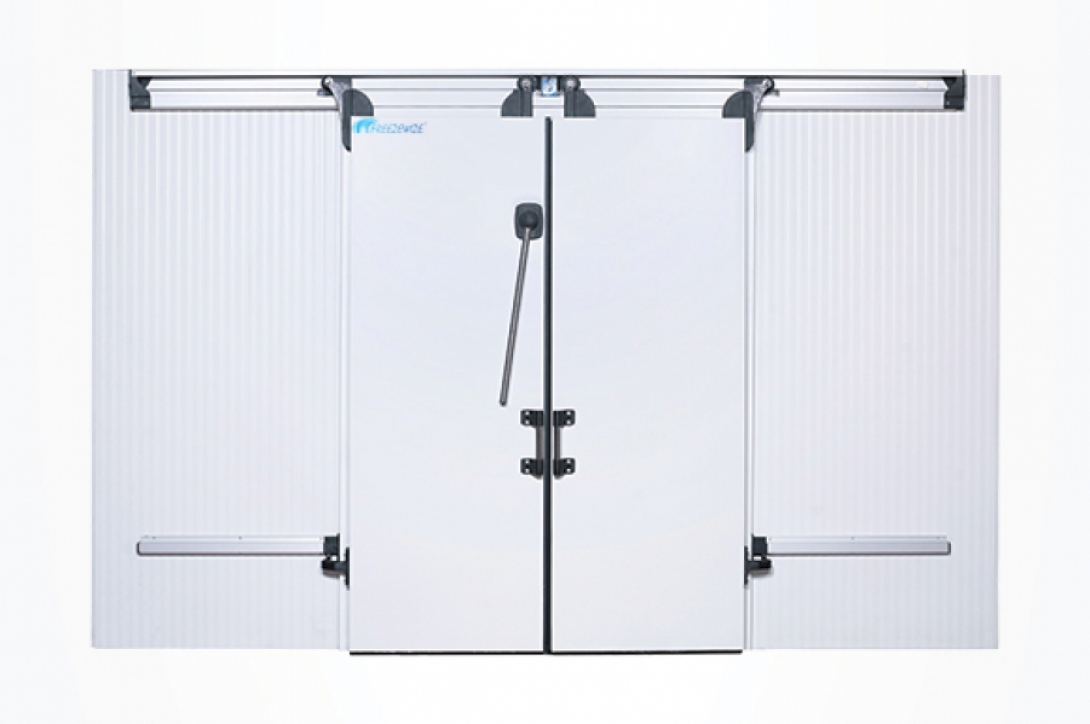
Wide Openings Without Workflow Drag
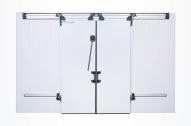
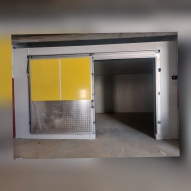
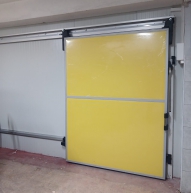
Cooler Bi-Parting Sliding Door for Wide Openings and Faster Cold Room Flow
Keep wide cold room openings efficient with a cooler bi-parting sliding door that reduces workflow drag, supports hygiene, and improves daily access.
Cooler Bi-Parting Sliding Doors for Faster Wide-Opening Access
A cooler bi-parting sliding door is often the right solution when a cold room has a wide opening and daily traffic cannot afford slow, awkward access. By splitting the door leaf into two panels that open from the center, this configuration improves movement, supports cleaner passage for carts and pallet handling, and reduces the feeling of resistance that operators notice with the wrong door setup.
In many facilities, the issue is not whether the opening can be closed. The issue is whether that opening keeps pace with real work. When traffic is constant, the wrong door choice adds hesitation, impacts flow, increases contact damage, and creates a daily drag that becomes more expensive over time.
Wide Openings Create a Different Kind of Pressure
A narrow cooler entrance and a wide one do not create the same operational demands. Once the opening becomes large enough to support cart traffic, rack movement, pallet jack access, or repeated back-of-house circulation, the door stops being a simple closure component. It becomes part of the workflow.
That is where many facilities get stuck. A door may look acceptable on a drawing, and it may technically open and close, but field conditions expose the difference between a workable choice and a well-matched one. Staff do not interact with the opening in theory. They interact with it during rush periods, cleaning cycles, receiving windows, shift changes, and repeated product movement.
For wide cooler openings, friction usually shows up in small but costly ways. The opening path may feel too heavy, too slow, too exposed, or simply out of rhythm with the pace of the room. Over time, those small inefficiencies turn into visible wear, handling mistakes, and growing dissatisfaction with the original specification.
Where Workflow Drag Starts
Workflow drag rarely begins with a single dramatic failure. It usually starts as an accumulation of small operational irritations.
In a cooler room, this often means staff slowing down at the entrance, carts needing extra positioning, door movement feeling larger than necessary, or traffic bunching up because the opening sequence does not match how people actually move through the space. The bigger the opening, the more noticeable that mismatch becomes.
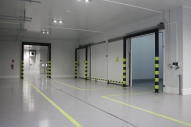
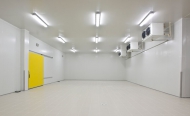
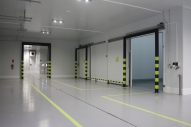
This matters in environments such as food processing areas, supermarket back rooms, commercial kitchens, distribution zones, and cold storage support corridors. In these spaces, the opening has to do more than preserve temperature. It also has to support movement without creating hesitation.
A well-chosen bi-parting sliding configuration helps reduce that drag because the opening action is divided into two shorter moving sections instead of one large panel. That simple shift changes how the entrance behaves in daily use.
The Cost of Getting a Wide Opening Wrong
A door can still function and still be the wrong choice.
That is an important distinction for facility managers and contractors. A wide opening cooler door that technically operates may still create long-term operational penalties if it does not suit the traffic pattern, clearance conditions, and maintenance expectations of the site.
The most common consequences include:
- slower passage during busy operating periods
- increased contact around the opening edges and surrounding hardware
- more visible wear in high-use back-of-house areas
- greater interruption during cleaning and washdown routines
- earlier frustration around alignment, sealing, or day-to-day handling
- a stronger sense that the opening was underplanned from the start
This is why wide-opening decisions should not be made on opening size alone. The real question is how the entrance performs under repetition. If the opening works against the flow of the room, ownership cost rises even when the initial installation appears acceptable.
Bi-Parting vs. Single Sliding for Wide Cooler Openings
When the clear opening is substantial, the main comparison is often not sliding versus hinged. It is bi-parting sliding versus single sliding.
Both can serve refrigerated applications, but they do not behave the same way once width, movement frequency, and operating pressure increase.
| Access Type | Most Suitable | Key Strengths | Key Limitations |
|---|---|---|---|
| Bi-parting sliding door | Wide openings with regular traffic | Balanced opening action and smoother passage | More appropriate when width justifies the configuration |
| Single sliding door | Moderate openings with simpler flow | Straightforward layout for smaller access points | Can feel oversized or less efficient in very wide spans |
Option Best Fit Main Advantage Main Limitation
Bi-parting sliding door Wide openings with regular traffic Balanced opening action and smoother passage More appropriate when width justifies the configuration
Single sliding door Moderate openings with simpler flow Straightforward layout for smaller access points Can feel oversized or less efficient in very wide spans
A single sliding panel may still work in some layouts, especially where traffic is lighter or the opening is not especially wide. But as the span grows, one larger moving leaf can feel less refined in daily use. The door becomes more visually dominant, more demanding in its path, and less aligned with fast back-of-house circulation.
A bi-parting layout often feels more natural because each panel travels a shorter distance. That can improve the user experience without turning the entrance into a mechanical obstacle.
Why Bi-Parting Sliding Doors Work Better in Wider Cooler Areas
The strength of a cooler bi-parting sliding door is not just that it opens wide. It is that it opens wide in a way that supports the room.
That distinction matters. In refrigerated environments, wide openings are usually associated with real operating demands: bulk product movement, wheeled traffic, repeated entry, wider equipment clearance, or the need to reduce bottlenecks between preparation and storage zones. A center-opening sliding format helps address those demands with less visual and physical drag.
This kind of configuration can support:
- smoother movement for carts, racks, and pallet jacks
- better traffic handling when staff enter and exit repeatedly
- more controlled use of wide access points in cooler rooms
- a cleaner overall appearance in visible operational areas
- better suitability where side swing clearance would be disruptive
It can also help the opening feel more intentional. In many facilities, that matters more than people expect. A door that suits the opening properly contributes to a cleaner operational impression, better staff confidence, and less ongoing tension around the entry point.
The Right Solution Is About Suitability, Not Just Size
A wide opening does not automatically require a bi-parting cooler sliding door. But when the opening is tied to repeated movement, high-use circulation, or visible workflow pressure, the case becomes much stronger.
The best solution is the one that matches all of the following at the same time:
- opening width
- traffic type
- daily use frequency
- hygiene expectations
- clearance conditions around the doorway
- tolerance for maintenance burden over time
This is where practical specification matters. The door should be considered as part of the full cold room assembly, not as an isolated item. Track arrangement, frame integration, threshold condition, sealing approach, hardware durability, visibility needs, and surrounding wall or panel construction all affect whether the final result feels durable and easy to operate.
In real applications, The Freezewize Cooling System approaches these openings as operational decision points, not just dimensional gaps. That usually leads to better long-term outcomes because the solution is based on room behavior, not only opening measurements.
Quick Decision Guide
Choose a cooler bi-parting sliding door when the opening is wide enough that a single moving panel starts to feel inefficient or oversized in daily use.
It is usually the better direction when:
- the opening serves frequent staff circulation
- carts, racks, or pallet jacks move through regularly
- swing clearance would interfere with nearby workflow
- the facility wants a cleaner, more controlled access experience
- long-term usability matters as much as initial installation
A simpler door type may still be sufficient when the opening is moderate, traffic is light, and the room does not face repeated movement pressure. But when the opening is central to operations, the better decision is usually the one that reduces friction before that friction becomes normal.
A wide opening should feel productive, not heavy.
Related Solutions
A bi-parting sliding door works best when it is planned alongside the surrounding room conditions. Related solutions often worth reviewing include:
- cold room panels for insulated wall continuity
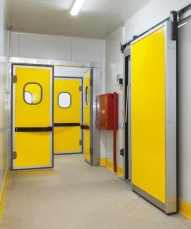
- cooler room doors for lower-traffic access points
- freezer sliding doors for lower-temperature applications
- door protection hardware for impact-prone traffic areas
- vision panels and sealing components for visibility and temperature control
These related elements help turn a door choice into a complete access solution rather than a partial fix.
FAQ
What is a cooler bi-parting sliding door used for?
It is used for refrigerated rooms with wider openings where daily traffic needs a more balanced and efficient access system. It is especially useful when carts, racks, or repeated staff movement are part of normal operations.
Is a bi-parting sliding door better than a single sliding door?
For many wide openings, yes. It often provides smoother daily use because the opening action is split into two shorter moving panels instead of one larger leaf.
Are bi-parting sliding doors suitable for food facilities?
They can be a strong fit for food-related environments when the door is properly specified for hygiene expectations, cleaning routines, and the operating conditions of the room.
Do wide cooler openings always need this door type?
No. The correct choice depends on traffic frequency, opening width, surrounding clearance, and long-term maintenance expectations. Some openings do not need this configuration, but many high-use wide entrances benefit from it.
Does this type of door help workflow?
Yes, when matched correctly. It can reduce congestion, improve passage through the opening, and make a wide cooler entrance feel more responsive to real operational use.
What should buyers evaluate before specifying one?
They should look at traffic type, clear opening width, room temperature range, adjacent wall space, cleaning requirements, impact exposure, sealing expectations, and how the opening fits into the full cold room layout.
Conclusion
Wide openings do not fail because they are large. They fail when the access solution does not match the way the facility actually works.
A cooler bi-parting sliding door is often the right answer when a refrigerated opening must stay wide, efficient, and operationally clean without adding daily workflow drag. If the opening is critical to movement, the door should reduce friction rather than become part of it.
For facilities planning a new cold room or upgrading an existing access point, the best next step is to evaluate the opening in terms of traffic, clearance, and long-term use so the final door choice supports the operation from day one.