




Freezewize | Industrial Cooling Systems & Custom Cold Room Solutions

Better Clearance for Fast Throughput

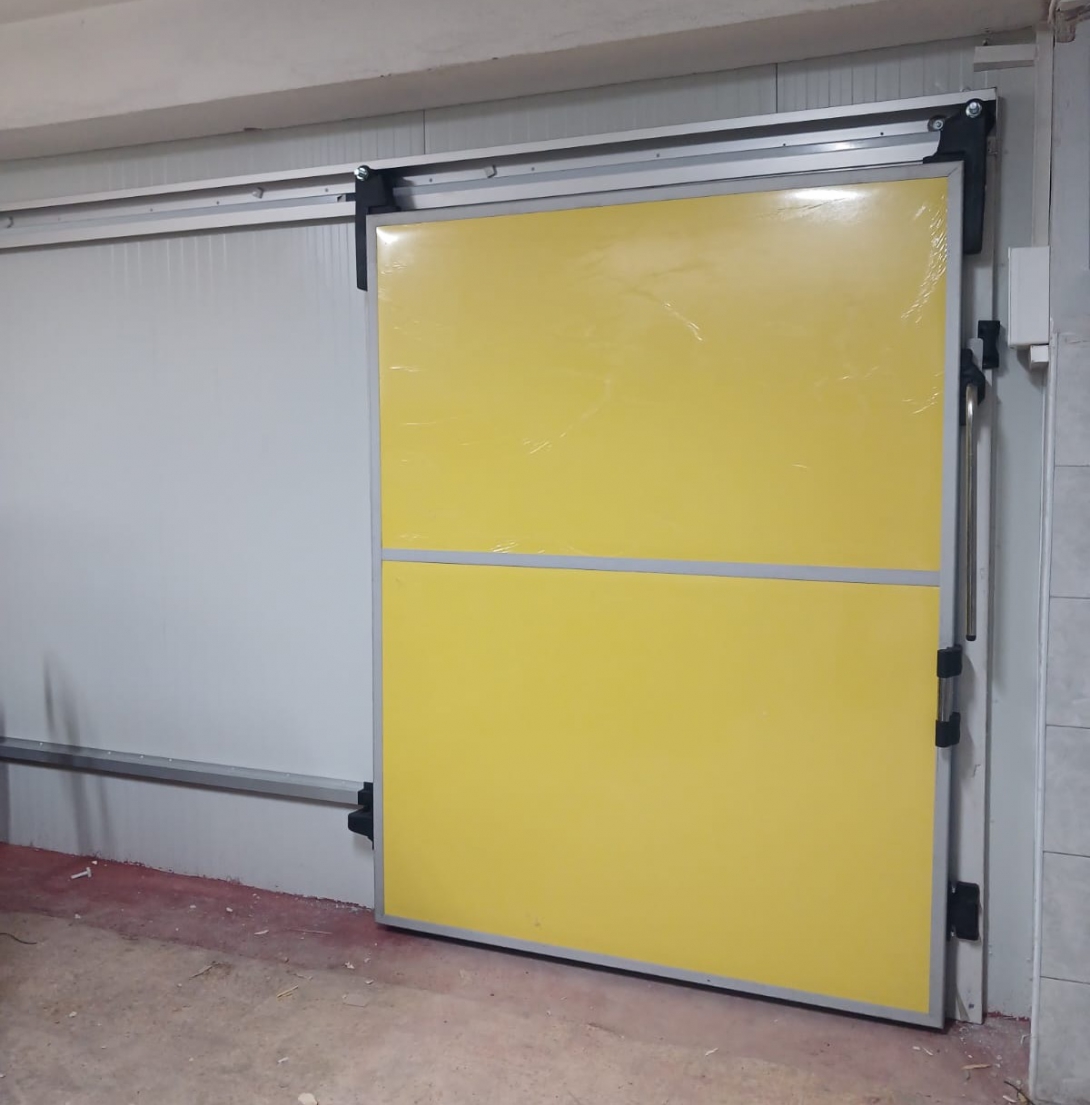
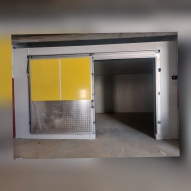
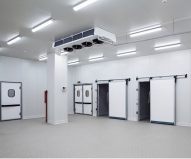
Sliding doors for freezers: improved clearance and faster throughput
Sliding freezer doors improve traffic flow at high-traffic freezer entrances, allowing establishments to move people and products through more quickly while reducing congestion, the risk of collisions, and friction associated with daily access.

Better clearance for fast throughput

A sliding freezer door is often the ideal choice when a freezer entrance must remain clear to allow for rapid, repeated movement. In high-traffic cold storage environments, insufficient clearance does more than just make the entrance inconvenient. It slows product flow, creates hesitation in traffic, increases the risk of contact, and turns the entrance into a daily bottleneck.

That is why clearance is not a minor detail. In freezers where carts, pallet jacks, rolling racks, or constantly moving personnel circulate, the opening must do more than simply close securely. It must maintain temperature while allowing for a smooth, direct, and repeatable flow.

The problem begins when the opening interrupts the flow

Many cold rooms are designed based on storage capacity and temperature goals, but it is at the entrance where the real operational pressure is felt. If the entry point blocks movement, forces a change of direction, or encroaches on aisle space, the cold room begins to lose efficiency precisely where speed is most critical.

This is particularly common in warehouses, food processing areas, supermarket backrooms, kitchens, and distribution operations where the freezer door is part of a workflow rather than a rarely used access point. In these contexts, the question is not merely whether the door insulates well. The question is whether the passage allows for rapid throughput without sacrificing clear space.

When the answer is no, the signs appear quickly. Staff pause before entering. Traffic slows at the threshold. Moving products becomes less direct. The opening begins to negatively impact the workflow.

Restricted clearance leads to more significant operational problems

Restricted clearance is rarely just a minor inconvenience. In high-traffic freezers, it becomes an operational problem.

The first effect is a slowdown in movement. When a door opens into the work path or reduces usable space around the opening, staff and mobile equipment must adjust their approach. This may seem minor for a single trip, but over a full day of operation, these repeated hesitations become a measurable hindrance to work efficiency.

The second effect is increased exposure to impacts. Narrow entrances mean that carts, racks, and pallet jacks are more likely to bump into the opening or put a strain on the surrounding hardware. Over time, this leads to visible wear on the , more frequent adjustments, and a growing sense that the door area is under more strain than it should be.

The third effect is less rigorous temperature control. A door that gets stuck often remains open longer than necessary. The result isn’t always dramatic, but it creates repeated thermal disturbances at the opening and puts additional strain on the freezer environment.

The risk of choosing a door that fits but doesn’t integrate

A freezer door can technically fit the opening while still being a poor solution for operation. This is one of the most common specification errors in high-traffic facilities.

A door may meet basic requirements for dimensions and insulation while creating clearance issues that only become apparent once the chamber is in daily operation. This mismatch often results in:

  • slower throughput
  • increased wear and tear in the entry area
  • greater maintenance demands on hardware and edges
  • longer opening times during peak hours
  • frustration due to premature replacement
  • the impression that the freezer entrance was poorly designed from the start

This is why throughput must be considered a design issue, not merely a consequence of foot traffic. The door’s operating mode directly impacts the room’s performance.

Sliding or swing doors for openings where headroom is critical

For installations focused on traffic efficiency, the most useful comparison is generally between a sliding door and a swing door.

A swing door may still be suitable in smaller rooms where traffic is less intense and surrounding space is ample. But as soon as the freezer opening becomes part of a repeated path, the swing door’s trajectory often becomes a source of friction. A sliding system is generally a better choice because it preserves maneuvering space around the entrance.

Decision factorSliding freezer doorHinged freezer door
Clear space aroundKeeps the approach area more unobstructedUses space when opening
Passage speedIdeal for repeated passageMay slow down intense movements
Access to carts and pallet jacksPromotes a more linear flowOften requires route adjustments
Wider freezer openingsMore convenientBecomes less efficient as size increases
Vulnerable to impactEasier to manage around the entry areaThe door leaf is often subjected to repeated contact
Suitable for high-traffic lanesMore robust optionBetter suited for low-traffic entrances

This comparison is important because high throughput depends on usable space, not just the width of the opening. A wide door does not solve the problem if the type of entrance continues to obstruct traffic.

Why sliding freezer doors improve throughput

A sliding freezer door improves throughput because it eliminates one of the most common restrictions at the entry point: the need to manage a swinging door within an active work area.

When the door opens sideways, the opening becomes more accessible and easier to pass through. Staff can move more directly. Rolling equipment can pass through with fewer maneuvers. Nearby workflow is less likely to be interrupted while the opening is in use. In high-traffic facilities, this smoother entry pattern has a real impact on the room’s performance.

This advantage becomes even more significant in operations where the freezer entrance is in constant use throughout the day. Throughput isn’t just about moving faster. It’s about moving with fewer interruptions, less risk of contact, and less wasted space around the door.

A properly specified freezer sliding door also promotes better long-term utilization when paired with a suitable seal, rails, protective components, threshold, and frame. Under these conditions, the system does more than just provide access. It enables a more efficient workflow within the freezer environment.

Better clearance requires a comprehensive entry strategy

If the goal is to increase throughput, the solution must not be limited to choosing a door type. The entire opening must be designed with movement in mind.

A more robust cold room entry system generally takes the following into account:

  • an insulated construction suited to freezer conditions
  • hardware designed for frequent opening cycles
  • a threshold design suitable for cart traffic or mixed traffic
  • side clearance around the access path
  • protective fittings where contact is likely
  • Frame and seal performance for long-lasting fit
  • optional vision panels to improve visibility and ensure safe passage

These details are important because access issues are rarely caused by a single weakness. They result from small misalignments that accumulate over time. When the opening is designed as an integral part of the path, movement becomes smoother and pressure from property owners generally decreases.

The best choice depends on the opening’s use

Not all cold rooms require the same level of clearance planning. A small room with occasional access may be sufficient with a simpler access system. But as soon as the opening becomes part of a sustained workflow, clearance begins to impact costs, speed, and reliability.

A sliding cold room door is generally the best option when operations include:

  • frequent daily foot traffic
  • pallet jacks, carts, or mobile shelving
  • limited clearance near the entrance
  • wide openings requiring more controlled access
  • pressure to maintain workforce efficiency
  • low tolerance for avoidable impacts or maintenance issues

This is where solution-oriented planning becomes more valuable than simply selecting products. The Freezewize cooling system is most effective when the freezer opening is designed based on actual movements within the facility rather than treated as a mere detail of standard hardware.

Quick Decision Guide

Choose a sliding freezer door when the clearance at the opening directly affects how quickly people and products move through the freezer.

This is generally the best choice when:

  • the opening is located in a high-traffic area
  • carts frequently cross the threshold
  • space in the surrounding aisles is limited
  • the freezer entrance must remain clear during repeated use
  • the site wants a faster flow with less daily friction
  • Long-term suitability takes precedence over the simplicity of minimum specifications

A swing door may still be suitable for smaller, less demanding applications. But when high throughput depends on keeping the entrance area open and usable, a sliding door is generally the most operationally suitable solution.

Related Solutions

Teams evaluating freezer doors for clearance and throughput often benefit from simultaneously reviewing nearby cold storage components. Relevant related solutions typically include:

  • insulation panels for cold rooms
  • threshold solutions for pallet jack traffic
  • heated frame and seal systems
  • impact protection around cold room openings
  • cold room hardware and sealing components
  • Planning the layout of high-traffic cold rooms

These related solutions allow you to turn the choice of a door into a more comprehensive decision regarding cold room performance.

FAQ

Are sliding freezer doors better suited for rapid product handling?

In many high-traffic applications, yes. They generally provide a clearer opening and facilitate the management of repeated comings and goings.

Why is clearance so important at cold room entrances?

Because the opening affects how quickly personnel and equipment can move, how long the door remains open, and the impact the entry area must absorb.

Can a freezer door slow down throughput even if it is functioning properly?

Yes. A door can continue to function mechanically while creating friction from daily traffic that reduces efficiency and increases wear and tear.

Are sliding doors better suited for pallet jacks and mobile shelving?

They are often better suited because they preserve usable space around the opening and facilitate a more straight-line movement when crossing the threshold.

Is a wider opening sufficient on its own?

Not always. The width of the opening is an advantage, but throughput also depends on the type of door movement, the available space nearby, and how traffic approaches the entrance.

When is a swing door still a good option?

It can still be a practical choice for small cold rooms where entries are infrequent, traffic patterns are simple, and there is sufficient surrounding space.

Conclusion

To improve clearance and increase throughput, you must first understand that the cold room entrance is part of the workflow, not just a wall. When the door facilitates passage and preserves usable space, the room becomes easier to manage and protect, and inspires greater confidence.

In a high-traffic cold room, the best door is one that clears the passage as effectively as it seals the opening.

For projects involving heavy daily traffic, a practical assessment of the type of traffic, the entrance width, the surrounding clearance, and long-term usage conditions will generally allow for a more informed decision regarding cold room access.


Fill the Form!

Write your needs and fill the form to contact us.

Freezewize | Industrial Cooling Systems & Custom Cold Room Solutions
Merhaba, Size yardımcı olabilir miyiz ?
Whatsapp Destek