




Freezewize | Industrial Cooling Systems & Custom Cold Room Solutions

Reducing Congestion at Cooler Doorways

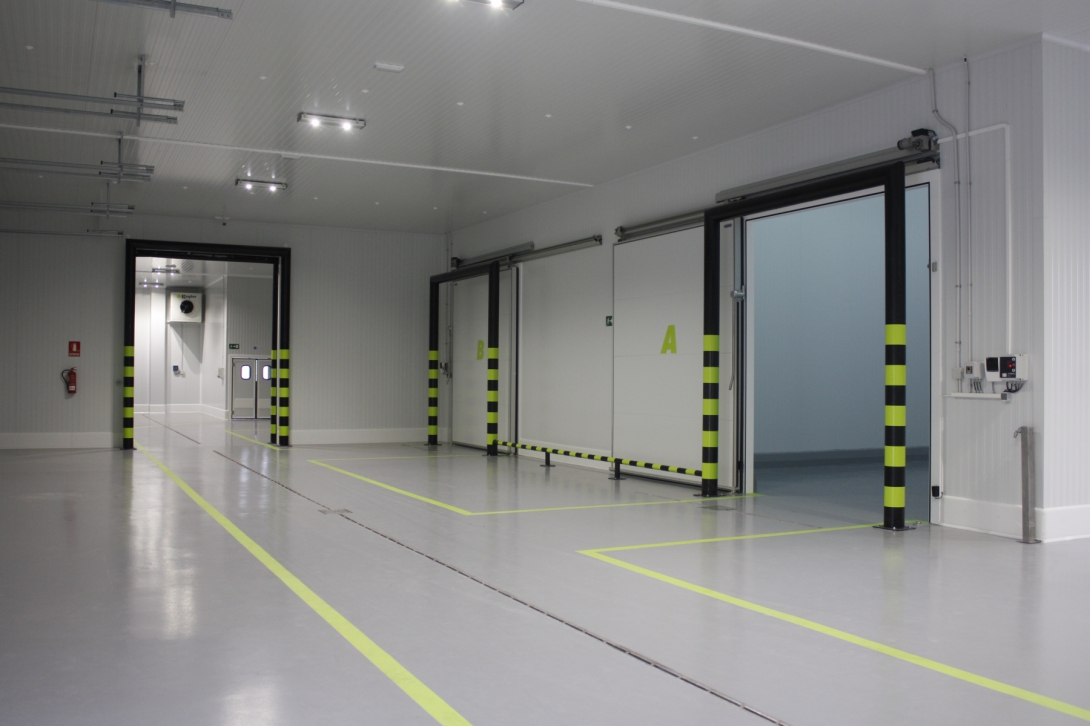
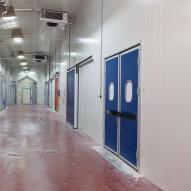
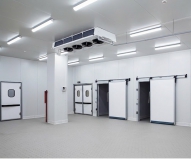
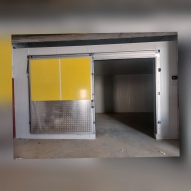
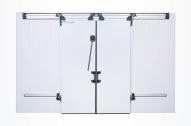
Double-leaf sliding door for cold rooms, designed to reduce congestion at high-traffic entrances
Reduce congestion at cold room entrances with a double-leaf sliding door that improves traffic flow, promotes hygiene, and keeps refrigerated entrances wide and convenient.

Reduce congestion at cold room entrances with a double-leaf access system

A double-leaf sliding door for cold rooms is often the ideal solution when a refrigerated entrance becomes a bottleneck for staff, carts, shelving, and product flow. Instead of forcing a way through an entrance that feels slow or impractical during peak traffic, the double-leaf access opens from the center and allows large cold room entrances to operate more smoothly and predictably.

This is important because congestion at a cold room entrance isn’t limited to the entrance itself. It results in work delays, difficult cart maneuvering, visible wear and tear, and a room that feels harder to manage than it should be. In high-traffic refrigerated environments, better access isn’t just a convenience. It’s a key element of operational control.

Why Cold Room Entrances Become Bottlenecks

Most congestion at cold room doors stems from a layout that seems acceptable until the room is operating at full capacity. On paper, the opening is wide enough. In practice, it becomes the point where traffic slows down, where staff adjust their movements, and where carts no longer move at a steady pace.

This phenomenon is particularly common in supermarket backrooms, cold storage aisles, food processing support areas, commercial kitchens, and distribution zones where refrigerated access points are in constant use throughout the day. The door is not just an opening in the wall. It is a daily meeting point between temperature control and workflow.

As soon as this door has to handle repeated comings and goings, familiar bottlenecks typically arise. Two staff members arrive at the same time and hesitate. A shelf clears the way, but not easily enough to maintain a smooth flow. A pallet jack needs a slight adjustment before entering. These aren’t dramatic failures, but they create repeated interruptions that accumulate with each shift.

The busier the room, the more costly these friction points become.

The Real Cost of Cluttered Cold Room Entrances

A cold room door can remain functional while performing very poorly in daily use.

This is why congestion is often underestimated during design. The door opens. The room maintains its temperature. Nothing seems defective. Yet the entrance continues to hinder staff efficiency because the access method isn’t truly suited to the room’s use.

The operational consequences are easy to recognize once they become commonplace:

  • slower movements during restocking, preparation, and transfer periods
  • bottlenecks where staff and cart traffic intersect at the entrance
  • more contact with frames, panels, hardware, and adjacent wall surfaces
  • additional stopping and corrective movements that interrupt the flow
  • more visible wear in back-of-house areas
  • greater maintenance demands over time

There is also a less obvious cost. A cluttered entrance alters the atmosphere of the room. It gives the impression that the opening was designed to be closed, but not to handle the actual traffic it is meant to accommodate. This typically leads to early dissatisfaction, more frequent complaints about adjustments, and pressure to upgrade sooner than expected.

Why a door’s basic function isn’t enough

Many refrigerated entrances are chosen based on a simple criterion: will the door close, be airtight, and fit the opening?

For low-traffic situations, this may be sufficient. But as soon as the entrance becomes a high-traffic area, the criteria must change. Buyers should ask themselves whether the opening will withstand the traffic without creating resistance, and not just whether the door can cover the width.

This is where many decisions regarding cold room doors go wrong. A technically acceptable door is considered a suitable solution, even if congestion is already part of the operating procedure. This disconnect leads to long-term inefficiency.

At high-traffic refrigerated entrances, access must be evaluated based on its ability to handle:

  • the daily frequency of entries
  • two-way staff traffic
  • the movement of carts, shelving, and pallet jacks
  • cleaning routines around the entrance
  • hygiene requirements in visible work areas
  • impact exposure at the edges of openings
  • long-term maintenance tolerance

If the doorway cannot meet these requirements, the room begins to suffer from unnecessary wear and tear on a daily basis.

Double-panel sliding doors vs. simpler entry solutions

When entrance space is the main concern, the most useful comparison is generally between double-panel sliding doors and simpler entrance configurations.

A single sliding panel may be suitable for moderately sized openings with lower foot traffic. Swing doors may still be suitable for smaller rooms or low-traffic entry points. But as soon as a door serves as a true traffic route, these simpler solutions can begin to show their limitations.

A double-panel sliding configuration alters traffic flow at the entrance, as the opening is shared between two coordinated panels. This generally creates a more centered and better-controlled passageway—exactly what crowded entrances lack.

Type of AccessBest fitOperational advantageMain limitation
Two-panel slidingHigh-traffic cold room entrances with wide openingsSmoother traffic flow and better traffic controlParticularly suitable when traffic volume and opening width are significant
Single-panel sliding doorModerate openings with simpler movementSimple solution for low-intensity daily useMay appear less balanced in larger, busier entrances
Swing doorsSmaller openings with limited trafficFamiliar and practical solution for a basic entranceManaging clear space and congestion becomes more difficult in high-traffic cold rooms

It’s not about adding complexity just for the sake of it. It’s about choosing a door format that reduces congestion rather than normalizing it.

Why double-leaf access reduces congestion

A double-leaf sliding door for cold storage helps reduce congestion by ensuring that the passageway functions more like an organized entry point and less like a bottleneck.

This is particularly important in large or high-traffic openings. Instead of a single dominant traffic lane or a swinging motion that disrupts traffic, two panels open from the center, creating a more controlled transition. Staff pass through without hesitation. Cart traffic follows a smoother path. The entrance seems better suited to the surrounding activity.

In real-world conditions, this can improve:

  • repeated staff traffic during peak periods
  • the transfer of goods through refrigerated areas
  • the movement of carts, shelving, and pallet jacks
  • visual order in back-of-house areas
  • daily traffic through large openings that would otherwise seem impractical
  • overall assurance that the entrance is adequate for the room’s traffic volume

This also helps facility managers view the entrance as an integral part of the room’s overall system. Threshold details, weatherstripping, frame integration, hardware protection, sight panels, adjacent insulation panels, and maintenance access all contribute to ensuring that the final entrance remains effective after installation.

In projects where congestion is a genuine operational issue, the Freezewize cooling system is most effective when access is evaluated within this broader context rather than as a standalone door selection.

The best solution depends on traffic flow, not just the size of the opening

Not all wide cold room entrances require double-leaf access. But many entrances to congested cold rooms require more control than a simpler design can provide.

The right choice depends on how the opening behaves during an actual work shift. If staff are constantly passing through, if the room allows two-way traffic, if carts and shelving move through it throughout the day, or if the door connects active zones, then the entrance must be chosen based on traffic patterns rather than physical dimensions alone.

This is where the true threshold lies at which a double-leaf sliding door for a cold room becomes the best solution. It does not merely solve the problem of width. It resolves congestion by making a wide entrance more manageable during peak traffic.

For professional buyers in the U.S. market, this is often the most important decision. The goal is not simply to install a door that seems appropriate. The goal is to reduce the friction that affects labor, cleanliness, maintenance, and the long-term value of the property.

Quick Decision Guide

A double-leaf sliding door for a cold room is generally the right choice when congestion at the entrance is part of normal operations.

It is often the most suitable solution when:

  • the entrance is wide and used repeatedly throughout the day
  • staff and carts share the same access point
  • congestion occurs during restocking or product transfer periods
  • a single panel or swing-door system seems cumbersome for daily use
  • the room requires smoother traffic flow and better control of the opening
  • Long-term ease of use is more important than simply closing the opening

A simpler door style may still suffice when the entrance is smaller, traffic is lighter, and the passage isn’t central to the workflow. But as soon as bottlenecks start affecting how people move, the entrance becomes an operational choice.

When a cold room door slows down traffic in the room, the type of access is no longer a minor detail.

Related Solutions

If you are considering installing a double-leaf sliding door to reduce congestion, the related internal pages can also help with the purchasing decision:

  • Cold room doors for low-traffic access points
  • sliding cold room doors designed for colder, more demanding openings
  • Cold room panels ensuring complete insulation continuity
  • Door seals, thresholds, and glazed panels for improved access control
  • Impact-resistant hardware for high-traffic refrigerated entrances
  • Cold storage solutions for warehouses, supermarkets, kitchens, and food processing facilities

These related solutions allow you to turn the improvement of a single door into a more comprehensive strategy for managing refrigerated traffic.

FAQ

What causes bottlenecks at cold room entrances?

Congestion typically occurs when traffic volume, opening width, and door size are no longer compatible. Staff, carts, shelving, and pallet jacks then compete for the same entrance in a way the door was not designed to handle efficiently.

Is a double-leaf sliding door better suited for high-traffic cold room entrances?

In many cases, yes. It often creates a more balanced flow and helps large openings handle repeated traffic with less friction.

Can a cold room door still function even if it is obstructed?

Yes, but “functioning” is not the same as “functioning well.” The door may continue to operate while causing daily delays, increased wear and tear, and higher long-term operating costs.

When should buyers consider a double-leaf door?

They should consider it when the door is wide, heavily trafficked, and must accommodate both personnel and cart traffic throughout the day.

Does this type of door facilitate hygiene and cleaning routines?

It can. A more controlled access pattern often promotes cleaner traffic flow through the door and makes it easier to integrate the entrance into rigorous cleaning and inspection routines.

What should be evaluated before choosing one?

Buyers should consider traffic frequency, clear opening width, the use of carts and pallet jacks, side clearance, impact risk, hygiene requirements, sealing details, and how the door integrates into the overall layout of the cold room.

Conclusion

Congestion at the entrance to a cold room is rarely just a door problem. It is a sign that the access design no longer matches operational reality.

A double-leaf sliding door for cold storage is often the best solution when a refrigerated entrance needs to streamline traffic flow, reduce bottlenecks, and withstand long-term daily use without creating resistance. If space constraints are affecting the cold room’s operation, the entrance requires a better traffic flow strategy—not just a door that happens to fit.

For teams planning a new cold room or looking to improve an existing entrance, the next step is to assess how people and equipment actually move through the opening, so that the final access solution promotes a smoother flow from day one.


Fill the Form!

Write your needs and fill the form to contact us.

Freezewize | Industrial Cooling Systems & Custom Cold Room Solutions
Merhaba, Size yardımcı olabilir miyiz ?
Whatsapp Destek