




Back-of-House Openings That Stay Presentable
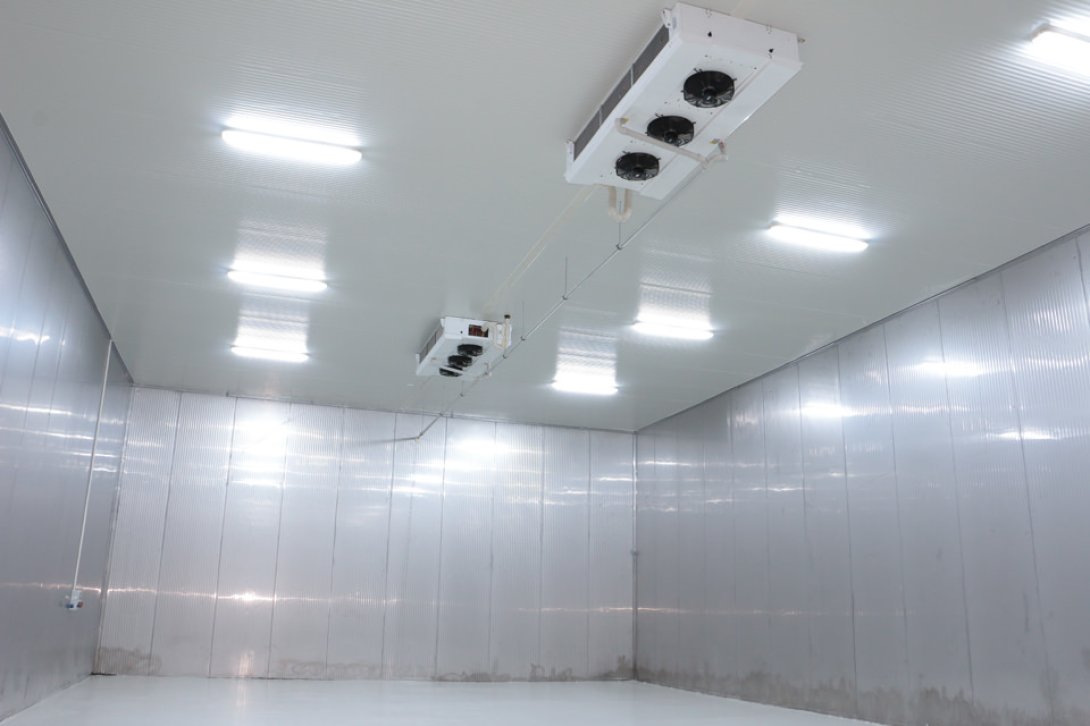
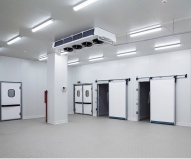
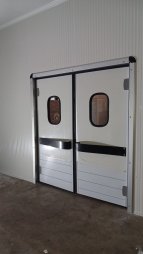
Double-leaf refrigerated door for back-of-house openings used for product display
Backroom openings in high-traffic cold rooms must remain clean, durable, and aesthetically pleasing. A double-leaf refrigerated door helps maintain smooth operations and product presentation.
Backroom openings that remain presentable
A swing-style refrigerated door is often the ideal choice when a back-of-house opening needs to remain visually clean, operate smoothly, and be reliable despite heavy daily traffic. In high-traffic kitchens, supermarkets, prep kitchens, and refrigerated work areas, the opening is subject to scrutiny. It is constantly seen by staff, managers, inspectors, and service teams.
That’s why the appearance of the opening is more important than many buyers realize. If the door area starts to look worn, impractical, or difficult to clean, the unit may continue to function technically while giving the impression that the access point was never a perfect fit for the installation.
The problem begins where traffic flow and visibility intersect
In many cold room projects, sliding door openings are viewed as mere functional details. The reasoning is simple: if the door separates the space and withstands daily use, it has fulfilled its purpose.
But in real-world facilities, openings are not perceived that way.
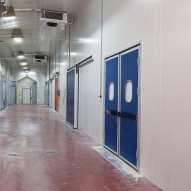
The entrance to a walk-in cold room is at the crossroads of staff movement, the demands of material handling, cleaning routines, and visual standards. Employees pass through it all day long. Carts and shelving regularly come into contact with it. Moisture, marks, and repeated use accumulate around the threshold, edges, and push zones. Supervisors see it. Sanitation crews work around it. In many operations, it becomes one of the most visible work areas in the entire refrigerated zone.
That’s where the problem begins. The opening may still function, but it can start to look worn, overworked, or harder to maintain long before the room itself shows the same wear. In U.S. facilities where food safety expectations, workflow discipline, and inspection readiness are high, this visual deterioration is no minor issue. It often reflects a deeper fit-and-function problem.
Why a Functional Door Can Still Be a Poor Choice
A cold room door can be technically acceptable while still detracting from the space’s appearance.
This happens when the access system is chosen solely to provide basic sealing rather than based on the room’s actual use. In a high-traffic back-of-house environment, the door must do more than simply separate temperature zones. It must remain in good condition despite heavy traffic, resist visible wear and tear, withstand regular cleaning, and continue to meet the facility’s standards over time.
When the door is not suited to this reality, several problems tend to arise:
- visible wear appears too quickly around the bottom edges and sides
- repeated contact makes the door look more worn than the rest of the room
- cleaning becomes more difficult around thresholds, seals, and hardware
- the entrance begins to look heavy, impractical, or of poor quality
- the room loses some of its professional appearance behind the scenes
- the need to replace the door arises sooner than expected
That is the real risk. A door may never completely fail, but it can nonetheless diminish the perceived quality of the refrigerated environment every day.
Why appearance matters in back-of-house areas
Back-of-house areas are not invisible. In many facilities, they are constantly being observed.
Managers notice the condition of the premises. Staff notice how easy it is to use. Sanitation teams notice the buildup of dirt and how difficult it is to clean. Inspectors notice whether the opening looks well-maintained or neglected. In food companies, processing facilities, and supermarkets, the visual order in refrigerated support areas often influences the overall impression of the entire facility.
That is why presentation is not merely a matter of aesthetics. It is part of operational credibility.
A back-of-house opening that remains presentable generally fulfills three functions. It handles traffic without appearing worn out too soon. It facilitates cleaning rather than complicating it. And it continues to blend into the room even after the onset of intensive daily use. When these three factors are lacking, the opening begins to detract from both the appearance and performance of the surrounding area.
A comparison that clarifies the choice
Not all back-of-house refrigerated openings require the same access method. The choice of door depends on the use of the space, the visibility of the opening, and the intensity of daily traffic it experiences.
A hinged refrigerated door is often the best choice when the opening is subject to frequent traffic, repeated bidirectional movement, and regular contact with staff and light mobile equipment. A standard hinged refrigerated door may still be suitable for low-traffic areas where movements are more deliberate. A sliding option may be appropriate when wider openings or heavier loads define the access challenge more than visual flow.
| Door Type | Best fit | Main advantage | Main limitation |
|---|---|---|---|
| Refrigerated swing door | High-traffic openings in the back of the store with repeated, well-organized two-way traffic | Promotes a smoother daily flow and allows the opening to be kept under visual control at all times , even with constant use | Must be carefully adapted to the type of traffic and the characteristics of the opening |
| Standard hinged refrigerated door | Low to moderate traffic, better-controlled entry | Can work well where visual wear and tear is limited | May begin to show signs of wear more quickly in high-traffic environments |
| Sliding refrigerated door | Wider openings, larger transfers, layouts sensitive to clear space | Ideal for higher traffic needs and wider access conditions | Less natural for fast, constant foot traffic |
This comparison is important because many aesthetic issues are not solely material issues. They are issues of suitability. The opening that remains the most aesthetically pleasing over time is generally the one whose access method aligns with the room’s daily use.
What allows a sliding door to remain aesthetically pleasing
A presentable opening is not just about its external appearance. It depends on the overall functionality of the entrance.
In demanding cold rooms, the opening must facilitate natural movements, reduce unnecessary contact, and allow for regular cleaning. If staff have to struggle with the door, maneuver carts awkwardly, or constantly bump into the same areas, the entrance will wear out more quickly, even if it seemed perfect during installation.
That is why the following factors are important:
Traffic flow: Frequent movement in both directions determines the type of door the room requires.
Exposure to impact: Repeated impacts from carts, bins, shelving, and hurried foot traffic affect both long-term appearance and functionality.
Ease of cleaning: The layout of hardware, thresholds, and surface design should facilitate cleaning, not complicate it.
Visual consistency: The opening must continue to harmonize with the surrounding panel system and the room’s standards after months of use.
Maintenance burden: A presentable opening is one that does not require constant touch-ups to maintain an acceptable appearance.
These are practical design considerations, not decorative ones. They determine whether the room maintains a neat and professional appearance despite the real-world demands of operation.
Why a side-opening refrigerated door is often a wise choice
A double-leaf refrigerated door is often an effective solution because it addresses the problem that typically causes visual deterioration of back-of-house openings: repeated traffic under time pressure.
In busy refrigerated work areas, staff do not approach the opening slowly and cautiously each time. They pass through it as part of their work. This means the entrance must facilitate a more natural flow, especially when movement occurs in both directions and continues throughout the day.
A properly selected swing door helps people perceive the opening less as an interruption and more as an integral part of the path. This can reduce disruptive contact, facilitate passage, and help keep the entrance cleaner and looking more controlled over time. The benefit isn’t just about traffic flow. It’s also about visual stability. A door better suited to the flow of traffic generally ages better in plain view.
This is where the Freezewize cooling system really comes into its own from a practical standpoint. In real-world refrigeration projects, a presentable rear opening generally depends on selecting the door based on the frame, panel interface, threshold condition, visibility requirements, impact exposure, and cleaning routine. The best results are achieved by treating the opening as a work area, rather than as an isolated product.
The surrounding details matter too
Many opening issues that appear to be “door problems” are actually system problems.
If the threshold traps debris, the opening will never look consistently clean. If the frame mounting is flimsy, the entrance may appear worn prematurely. If visibility is poor, movements become less controlled and accidental contact increases. If the hardware layout makes cleaning difficult, the door may remain functional while appearing harder to maintain than it should be.
That is why the appearance of a refrigerated door opening does not depend solely on the door leaf itself. It depends on the entire interface between the door, the frame, the panel, the transition to the floor, and daily movements.
The most presentable sliding doors aren’t just aesthetically pleasing when new. They’re easier to keep clean once the establishment is in full swing.
Quick Decision Guide
Choose a side-opening refrigerated door when:
- the sliding door is subject to heavy daily traffic
- staff use the entrance in both directions
- carts, bins, or shelving regularly pass through the door
- appearance and order are important in visible work areas
- the facility wants a door that remains practical and presentable despite repeated use
Opt for a more traditional hinged solution when:
- traffic is lighter and better controlled
- the opening is used less frequently
- Visual impact is moderate rather than constant
- Passage through the door is more deliberate
Choose a sliding solution when:
- the opening is wider
- the transfer of bulky items is the primary requirement
- the surrounding space makes a swing door less suitable
- access poses more of a clearance issue than repeated foot traffic
The most obvious rule is simple: if the opening is heavily trafficked and highly visible, it should be chosen based on its long-term appearance as well as its functionality.
Related Solutions
If maintaining a presentable back-of-house opening is part of the decision, these related solutions are often worth evaluating alongside a refrigerated swing door:
- swing doors for cold rooms, for low-traffic refrigerated entrances
- sliding doors for cold rooms, for wide openings and larger load movements
- cold room panel systems, for better visual continuity and improved integration of the opening
- door solutions for low-temperature cold rooms
- impact protection and baseboard options for high-traffic areas
- Glazed panel and hardware configurations for safer and cleaner traffic flow
FAQ
Why do walk-in cold room openings seem to wear out so quickly?
Because they are subjected to constant foot traffic, impacts from carts, cleaning products, and the pressure of daily handling—often more so than any other visible part of the room.
Is a double-leaf refrigerated door a good choice for visible back-of-house areas?
In many high-traffic operations, yes. It often facilitates passage and helps keep the opening in good condition despite repeated use.
Does aesthetics really matter if the area is restricted to staff?
Yes. The appearance of back-of-house areas influences confidence in hygiene, preparedness for inspections, compliance with internal standards, and the impression that the establishment is well-maintained.
What makes a refrigerated opening easier to keep presentable?
Optimal adaptation to foot traffic, easier cleaning, better impact resistance, and an access method that doesn’t cause unnecessary daily wear and tear.
Can a standard hinged door still be suitable in a space where aesthetics are paramount?
Yes, particularly in low-traffic areas. But in busier entrances, it may show signs of wear more quickly if the frequency of use is higher.
What is the biggest mistake to avoid when designing a sliding door?
Treating it as an invisible utility space rather than a high-traffic operational area that must remain clean, sustainable, and visually controlled.
Conclusion
Back-of-house openings that remain presentable are rarely a matter of chance. They result from choosing an access system that continues to function well and look good once daily traffic has begun.
The best refrigerated opening is one that maintains a professional appearance after repeated use, not just one that looked clean on the day of installation.
If your cold room entrance is part of a visible, high-traffic back-of-house environment, a well-suited double-leaf refrigerated door is often the wisest long-term choice. A careful analysis of foot traffic, cleaning requirements, impact exposure, and opening details generally helps preserve both workflow and presentation.