




Freezewize | Industrial Cooling Systems & Custom Cold Room Solutions

Where Single Doors Start Falling Behind

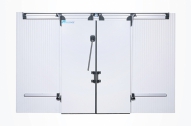
Double-panel sliding doors or single doors for high-traffic cold rooms
Find out why single cold room doors are no longer up to the task and why double-leaf sliding doors are the best solution in terms of traffic flow, control, and long-term use.

Where Single Doors Start Falling Behind

A double-leaf sliding cold room door becomes the best choice when a cold room entrance is no longer used simply for entry, but must handle constant movement, wider loads, and repeated daily traffic. This is when access via a single door may still work, but begins to create bottlenecks, congestion, and wear and tear that operators experience every shift.

In high-traffic cold rooms, the entrance is an integral part of the workflow. As soon as carts, shelving, pallet jacks, and staff share the same opening under time pressure, a single door can become insufficient—not because it has a technical defect, but because it no longer meets the pace and width requirements of the operation.

The problem usually starts with a door that still “works”

Most facilities do not replace or redesign a door because it stops working entirely. They do so because the opening begins to slow down the operation of the room.

This is how single doors become obsolete. The door still opens. The room still maintains its temperature. But traffic no longer flows smoothly at the entrance. Operators hesitate. Staff wait for each other at the threshold. Carts have to make a second adjustment before passing through. The room remains operational, but the entrance begins to act as a minor daily obstacle.

This phenomenon is particularly common in supermarket backrooms, food processing support areas, refrigerated warehouse zones, commercial kitchens, and distribution areas where access is no longer occasional. As soon as the opening becomes part of an active traffic corridor, the criteria for a good door change.

A simple door may be perfectly suitable for a room with low traffic. The problem arises when this same type of access must handle a volume, width, and frequency of traffic greater than what it was ever designed to handle.

When the opening exceeds the door’s capacity

Many door-related issues are not solely about the size of the opening. They concern whether the type of access is still appropriate for what passes through it.

A single door often becomes insufficient when one or more of the following situations occur:

  • the opening is used continuously by staff throughout the day
  • the movement of carts is part of normal use
  • the room must handle a higher volume of products or transfer activities
  • traffic flows in both directions
  • the entrance becomes a visible source of hesitation or minor collisions
  • Operations require smoother access without increasing the maintenance burden

At this point, the problem is not that the door in question is defective. The problem is that the opening has become more operationally demanding than the access format.

This distinction is important for professional buyers. In real-world facilities, doors are judged by their performance under repeated use. If the entrance constantly forces people to slow down, adapt, wait, or go around the obstacle, then the door is already lagging behind operational needs.

The risk of keeping a door that is no longer suitable

A simple door that no longer meets requirements can remain in place for a long time. This is what makes the problem costly.

Since the system still functions technically, facilities often continue to endure daily inconveniences instead of addressing the root cause. Over time, these repeated compromises begin to manifest in workflow disruptions, visible wear and tear, and increased maintenance demands.

The most common signs are:

  • slower passage through the refrigerated entrance
  • more contact near the edges of the frame, seals, and areas adjacent to the panels
  • a more irregular flow for carts, pallet jacks, and racking
  • increased congestion during restocking or transfer periods
  • a door that appears undersized relative to the surrounding room
  • earlier pressure to repair, modify, or replace

That is why a door that still functions may nevertheless be a poor choice in the long term. The cost does not always result in a spectacular failure. More often than not, it is the constant accumulation of friction that insidiously reduces the quality of operations.

Single-door or double-door access

When a cold room entrance starts to feel cramped, slow, or inconvenient, the most useful comparison is often between a single-door access and a double-leaf sliding access.

A single door may still be the right choice for smaller openings or less demanding applications. It is simple, familiar, and often perfectly adequate when traffic is moderate. But as soon as the opening becomes wider and busier, this format can start to feel too limited for the task.

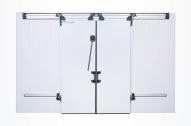
A double-leaf configuration improves this situation by dividing the opening motion into two coordinated panels. Instead of a single dominant door movement controlling the entire passageway, the door opens from the center and feels more balanced in use.

Access FormatBetter fitStrengthLimitations
Single doorEntrances to cold rooms with low traffic or narrower openingsSimple and convenient access for infrequent useBegins to show its limitations as traffic volume and intensity increase
Double-leaf sliding doorWider openings with heavy daily trafficBetter balance, smoother traffic flow, and more controlled accessParticularly justified when the opening is of operational importance

This is not to say that single doors are obsolete. It is about recognizing when operating conditions have changed enough that a more efficient access format is now more appropriate.

Why double-leaf sliding doors are taking over at the right time

A double-leaf sliding door for a cold room does not solve all access-related problems. It solves one in particular: when the opening has become too large to be managed by a simpler design.

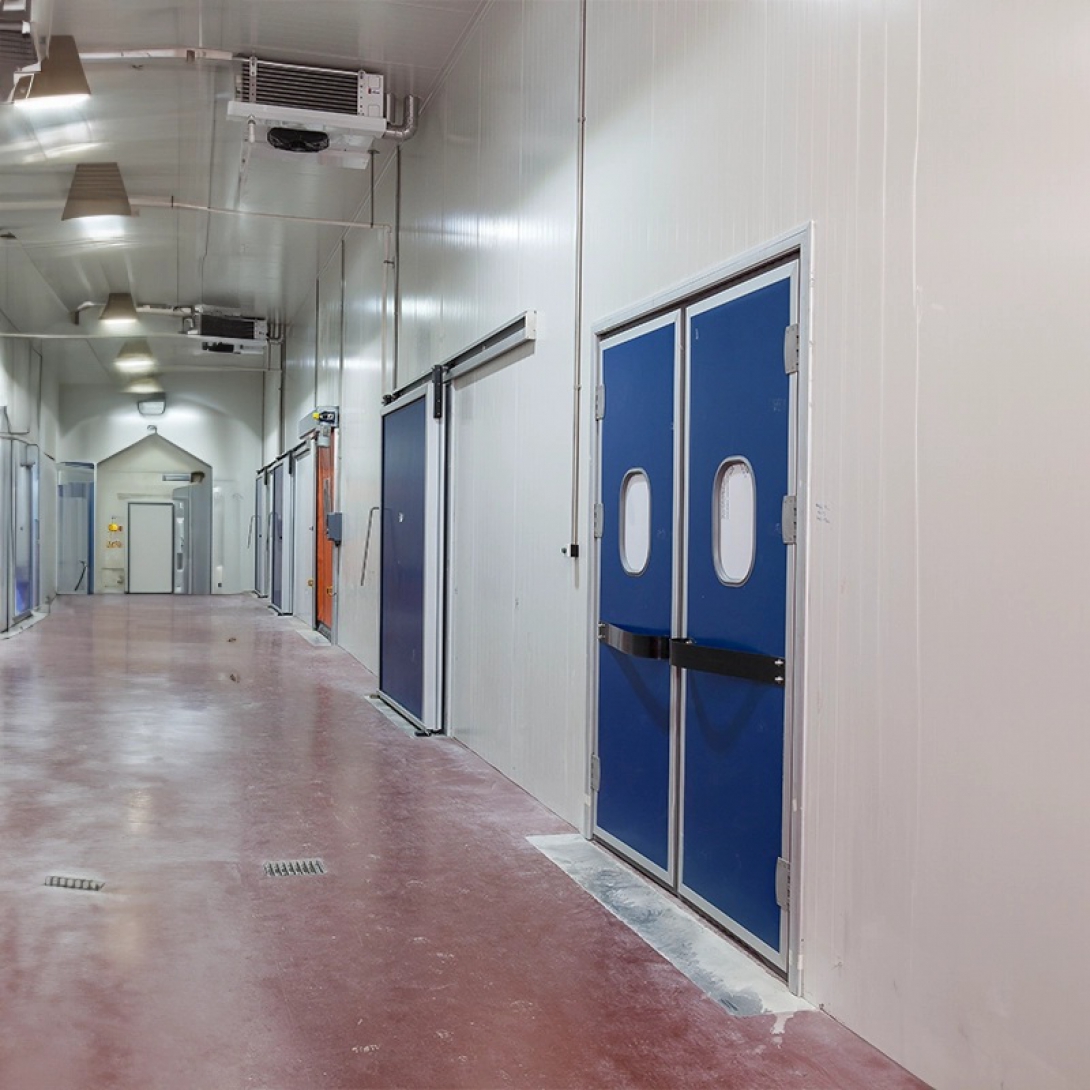
This is often the case in cold rooms where the entrance must accommodate the repeated comings and goings of employees, internal product transfers, wheeled carts, pallet handling, and stricter workflow requirements. Under these conditions, a double-leaf configuration is useful because the entrance seems better suited to the work taking place there.

This can improve:

  • traffic flow through wider refrigerated openings
  • operator confidence during repeated passages
  • the alignment of carts, shelving, and pallet jacks
  • traffic control at the busy entrances to the cold storage rooms
  • visual order in back-of-house areas
  • long-term adaptability as usage intensity increases

The benefit is not just mechanical. It is operational. The door begins to integrate more fully into the room’s workflow and less as a barrier that the workflow must manage.

In practice, the Freezewize cooling system is most effective when this transition is identified early, before traffic friction is considered normal.

The best solution depends on what the room has become

Many openings were designed to meet the needs of the room as it originally was, but not those of the room it has since become.

This is a common pattern in rapidly expanding operations. A cold room that once handled only moderate traffic may now face faster restocking, increased staff traffic, wider traffic lanes, or more intensive backstage use. The door that once seemed sufficient is starting to look increasingly inadequate.

This is where buyers need to look beyond the door itself and assess the overall condition of the entrance. The details of the threshold, the exposure of the hardware, the sealing performance, the panel layout, impact protection, visibility requirements, and cleaning routines all affect whether the next access choice will truly improve the space.

The goal is not to default to the most advanced option. The goal is to choose the option that matches how the opening is actually used today.

Quick Decision Guide

A single-leaf cold room door is often the right choice when the opening is narrow to moderate, traffic is controlled, and cart traffic is limited.

A double-leaf sliding door for a cold room is generally the best option when:

  • the opening is wide and part of a daily traffic route
  • staff and carts constantly use the entrance
  • traffic frequently overlaps at the door
  • product traffic exceeds basic entry patterns
  • traffic jams, hesitation, or minor contact become commonplace
  • Long-term suitability matters more than minimal acceptable functionality

The ideal time to move beyond a simple door is when the opening begins to direct the workflow in the wrong direction.

Related Solutions

If a cold room entrance reaches the point where access through a single door is no longer adequate, related internal connection options may include:

  • cold room doors for standard-traffic openings
  • freezer sliding doors for low-temperature access areas
  • cold room panels for an integrated design of insulated rooms
  • impact-resistant hardware for high-traffic entrances
  • thresholds, seals, and vision panels for improved entrance control
  • refrigerated storage solutions for warehouses, food processing facilities, supermarkets, and commercial kitchens

These related solutions help define the entrance as part of a comprehensive strategy for access to refrigerated areas.

FAQ

When does a cold room door begin to show signs of failure?

It generally begins to fall short when the opening is subjected to heavy daily traffic, requires wider passageways, or experiences a buildup of personnel and carts that cause delays and bottlenecks.

Is a single door still suitable for certain cold rooms?

Yes. Single doors can be an excellent choice for smaller openings, low-traffic access points, and rooms where traffic is predictable and limited.

Why is a double-leaf sliding door better suited for high-traffic openings?

Because it allows for managing wider, busier openings with a more balanced flow of traffic. This generally improves circulation and reduces the feeling of congestion at the door.

Can a single-panel door still function even if it is no longer the most suitable solution?

Yes. That is often exactly the problem. It still works, but it generates daily friction, visible wear, and long-term inefficiency that the system continues to absorb.

What should buyers consider before upgrading the entrance?

They should consider the width of the opening, traffic frequency, the movement of carts or pallets, congestion points, surrounding clearance, maintenance requirements, and how the entrance fits into the overall layout of the cold room.

Does changing the access format contribute to the long-term value of the property?

Often, yes. A better-suited access configuration can reduce workflow bottlenecks, minimize wear and tear at the opening, and contribute to smoother cold room operation over time.

Conclusion

Single doors are not obsolete because they are inherently unsuitable. They become obsolete when the cold room environment becomes more demanding than the door format can comfortably handle.

A double-leaf sliding door for a cold room is often the most sensible solution when a refrigerated entrance has outgrown the need for simple access and now requires better flow, better control, and a more robust long-term solution. When the entrance begins to limit the cold room, the access strategy must change before friction becomes a permanent issue.

For facilities considering a high-traffic cold room entrance, the best next step is to assess how the opening is actually used today, so that the choice of the next door reflects real traffic conditions, not outdated assumptions.


Gallery

Fill the Form!

Write your needs and fill the form to contact us.

Freezewize | Industrial Cooling Systems & Custom Cold Room Solutions
Merhaba, Size yardımcı olabilir miyiz ?
Whatsapp Destek