




Freezewize | Industrial Cooling Systems & Custom Cold Room Solutions

Smoother Entry Design for Cold Storage

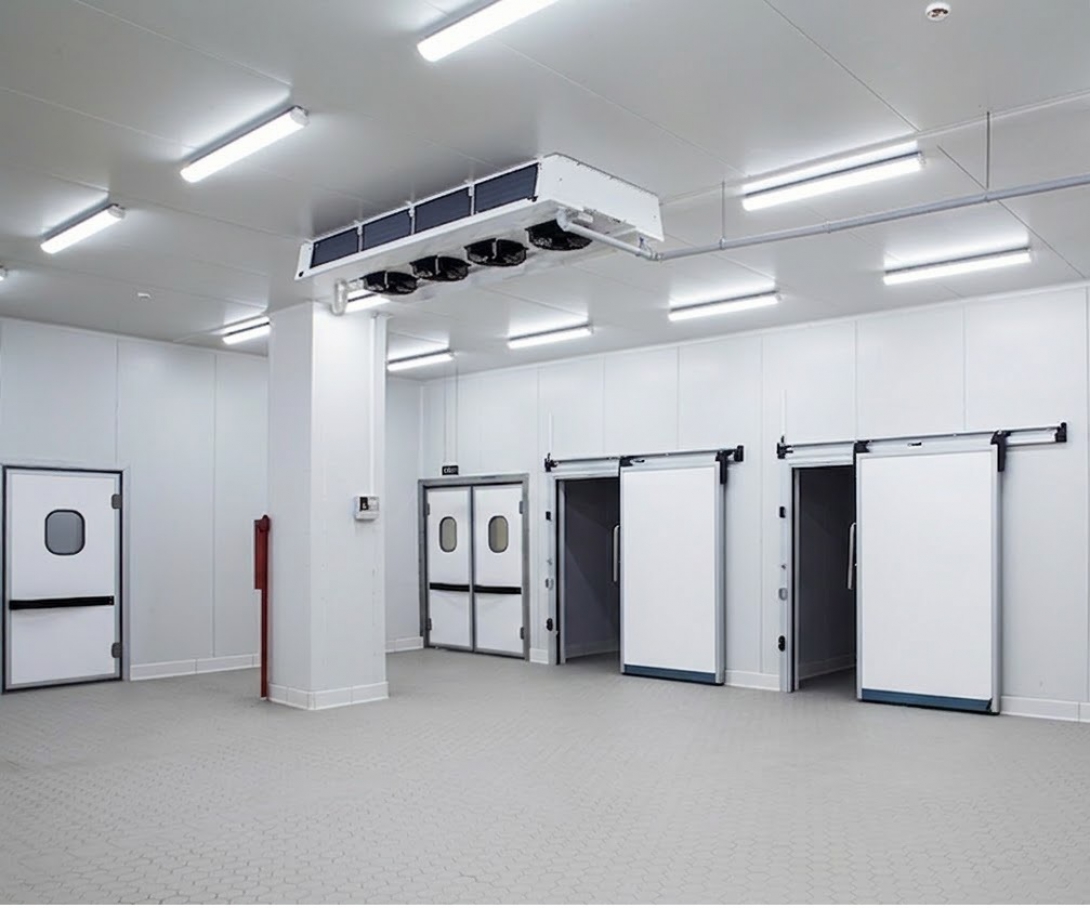
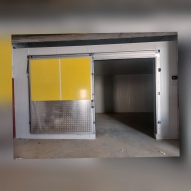
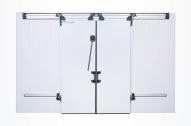
Double-panel sliding door for smoother entry into cold rooms
Optimize traffic flow at the cold room entrance with a double-leaf sliding door that provides wide access, smoother movement, and better long-term control.

Smoother entry design for cold rooms

A double-leaf sliding door for cold rooms is often the ideal choice when the room requires an entrance design that offers increased fluidity in daily use, not just theoretical width. In operational facilities, the quality of traffic flow hinges on the door. If the entrance feels impractical, slow, or too exposed, the room begins to create friction long before anyone mentions a door problem.

That is why entrance design is crucial in cold rooms. The goal is not merely to seal an isolated opening. It is to create a passageway that facilitates staff movement, cart traffic, cleaning routines, and temperature-sensitive operations without adding unnecessary constraints to the workflow.

The real problem starts at the opening

Most cold storage access issues don’t start with a malfunction. They start with awkward movements.

A staff member slows down at the entrance. A cart pulls in slightly askew. A rack clears the opening, but not cleanly enough to maintain a smooth flow. During peak periods, the entrance begins to resemble less a transition point than a place where movement breaks the rhythm. This is usually the first sign that the entrance design is not suited to the space.

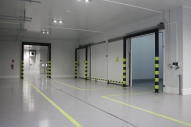
This phenomenon is particularly common in supermarket backrooms, food processing support areas, commercial kitchens, distribution centers, and refrigerated warehouse zones, where the entrance is used repeatedly throughout the day. In these spaces, the entrance is an integral part of the activity itself. If it feels clunky, the entire room suffers.

A more fluid entrance design solves this problem by treating the door as a functional element of the cold storage environment rather than simply as a barrier.

Why is entrance design more important in cold storage warehouses?

Cold storage facilities place greater demands on an entrance than many standard commercial spaces. The entrance must contribute to temperature control, but it must also withstand repeated traffic, resist the risk of impact, adapt to cleaning routines, and avoid becoming a maintenance burden.

That is why a cold room entrance cannot be evaluated solely based on the size of the opening. It must also be evaluated based on the ease of passage through that opening under real-world conditions. If people and equipment have to hesitate, adjust their path, or go around the door, the entrance is already underperforming.

Inadequate design of a cold room entrance often leads to:

  • a slowdown in daily traffic through the opening
  • increased congestion during restocking or transfer periods
  • increased contact around frames, hardware, and surrounding panels
  • more visible wear in back-of-house areas
  • increased pressure on maintenance and adjustment schedules
  • a general feeling that the room’s entrance has never been fully resolved

In other words, the opening may still function, but it no longer seems adequate. This is where many facilities management teams begin to realize that entrance design is not a matter of aesthetics. It is an operational issue.

The risk of choosing a door that solves the width problem but not the traffic flow problem

A wide opening can be a good starting point while still leading to a poor result.

This is what happens when the design solves the clearance issue but not the issue of smooth movement. The door may span the width, maintain the building envelope, and look acceptable upon installation. But if the opening remains impractical to use, the real problem persists.

This is one of the most common mistakes regarding access in cold storage projects. A door is chosen because it technically fits the opening, while the deeper question remains unanswered: will this entrance remain smooth after months of repeated traffic, cleaning, and product handling?

If the answer is no, risks accumulate insidiously:

  • workflow delays become part of daily operations
  • staff efficiency drops to a critical level
  • moving carts seems more difficult than it should be
  • the door sustains more accidental impacts over time
  • the cost of ownership rises due to wear and tear, maintenance, and frustration
  • Users begin to feel that the room was not designed well enough at the entrance

A product can function while still being a poor access solution. In cold rooms, this discrepancy is costly.

Double-leaf sliding doors vs. simpler entry formats

When aiming for a more fluid entry design, the most useful comparison is often between double-panel sliding doors and simpler door formats.

A standard swing door or a single sliding panel may still be suitable for smaller or low-traffic applications. But as soon as the opening becomes wider, busier, or more central to the room’s workflow, these simpler designs can start to feel less refined in daily use.

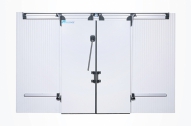
A double-panel sliding configuration changes the character of the entrance. With the opening divided into two movable panels, the passageway feels more centered and balanced. This generally creates a smoother entry experience in large cold room openings.

Entrance FormatBest fitMain advantageMain limitation
Double-panel sliding doorWider openings for regular trafficSmoother entry flow and better balance across the entire width of the openingParticularly suitable when both traffic volume and opening width are significant
Single-panel sliding doorModerate openings with lighter trafficSimple configuration for low-intensity useMay seem less controllable as the opening size and traffic increase
Swing doorSmaller openings with basic foot trafficFamiliar design for limited access needsLess suitable when a wide passage and smooth traffic flow are needed

The point is not to say that one format is always better. The point is to show that once the quality of the entrance becomes a daily concern, the door often requires a more suitable design approach.

What makes an entrance more fluid in practice

A smoother cold room entrance is not the result of a single feature. It depends on how the entrance functions as a system.

For many cold room applications, a double-leaf sliding door improves the quality of the entrance because it promotes a more natural passage through the opening. Instead of constraining movement around a dominant leaf or a pivot arc, it creates a centered passage that feels more intuitive and easier to use.

This smoother result is enhanced when the entrance is designed with surrounding details in mind:

  • a clear opening width suited to the actual traffic flow
  • a threshold and floor transition suitable for carts and pallet jacks
  • reliable seals that do not make daily use cumbersome or awkward
  • protective hardware in areas exposed to impact
  • considerations regarding sight lines and visibility at crossing points
  • integration of panels and frames that ensures a clean and stable opening

This is where the Freezewize cooling system naturally comes into play. In actual cold storage projects, the best results for air intake are generally achieved by treating the door opening as an integral part of the room’s overall environment, rather than as an isolated element.

The best solution depends on how people use the space

The appropriate design of the entrance is determined by how the opening is actually used.

If the room experiences frequent personnel movement, regular forklift traffic, shelving transfers, or the passage of pallet jacks, the entrance must be selected based on these realities. If the opening is simply sized correctly but still causes hesitation, the design is not complete.

A double-leaf sliding door for a cold room is often the best solution when the goal is to ensure smoother entry in the long term. This is particularly true in cold storage environments where the opening must fulfill several functions at once: withstand traffic, protect ambient conditions, minimize clutter, and remain durable despite repeated use.

This is also why the decision should not be limited to the door leaf itself. Buyers must consider the entire entry system, including thresholds, seals, guide systems, impact exposure, adjacent insulation panels, and access for maintenance. A smooth entry is rarely the result of a single isolated component. It is the result of better planning around the opening.

Quick Decision Guide

A double-leaf sliding door for a cold room is generally the ideal choice when the cold storage facility needs an entrance that offers better control, better balance, and easier passage on a daily basis.

It is often the best choice when:

  • the opening is wide and operationally significant
  • staff and wheeled vehicles repeatedly use the same entrance
  • smooth traffic flow is just as important as closing performance
  • traffic jams or hesitation are already occurring at the door
  • the opening width would interfere with nearby workflow
  • The facility wants a more robust solution suited for long-term daily use

A simpler door may still suffice for smaller, less-trafficked access points. But when the opening dictates the rhythm of the room, the entrance design must be considered an integral part of the workflow.

The opening of a cold room should guide movement smoothly, rather than forcing staff to adapt to it.

Related Solutions

If you are considering a more fluid entrance design, these related internal pages are generally relevant to this topic:

  • Cold room doors for standard traffic openings
  • Freezer sliding doors for low-temperature applications
  • Cold room panels for a complete insulated room design
  • Impact-resistant hardware for high-traffic entrances
  • Thresholds, seals, and vision panels for improved ergonomics at entry points
  • Refrigerated storage solutions for supermarkets, warehouses, the food industry, and kitchens

These related pages help you turn a simple door selection into a more comprehensive cold room access strategy.

FAQ

What makes a cold room entrance design more fluid?

A smoother entrance design promotes a natural passage through the opening, with fewer hesitations, fewer course corrections, and better adaptation to daily traffic. The type of door, the condition of the threshold, visibility, and clearance all play a role.

Is a double-leaf sliding door better suited for wider cold room openings?

In many cases, yes. It often creates a more balanced passage and a smoother user experience in wider openings subject to repeated traffic.

Can a cold room door function even if its entry design isn’t optimal?

Yes. A door can function even if it’s a poor choice for the workflow. This is often when facilities begin to notice daily friction, additional wear and tear, and growing dissatisfaction with the entrance.

Why is the entrance design important for carts and pallet jacks?

Because rolling traffic is less forgiving than foot traffic. If the passageway seems impractical or poorly controlled, forklifts and pallet jacks quickly expose its weaknesses by slowing down movement and increasing the risk of collisions.

What should buyers evaluate before choosing a double-leaf cold room door?

They should consider the opening width, traffic frequency, equipment movements, threshold requirements, hygiene expectations, impact risk, visibility, and how the entrance fits into the overall layout of the cold room.

Does a more fluid entrance design contribute to the long-term value of the investment?

Often, yes. A better-suited entrance generally reduces friction in the workflow, minimizes wear and tear at the opening, and delays the need for corrective modifications or premature replacement.

Conclusion

Cold room entrances are not effective simply because they are insulated and wide enough. They become effective when their design facilitates actual movement without creating resistance in daily use.

A double-leaf sliding door for a cold room is often the ideal solution when a cold room opening requires smoother entry, a more orderly flow, and better long-term adaptability under intensive daily use. If the entrance affects the room’s operation, then a smoother entrance design is not an optional feature. It is an integral part of the room’s performance.

For installations planning a new cold room or the upgrade of an existing access point, the next most sensible step is to evaluate the opening based on actual traffic patterns, so that the final entry solution supports operations from day one.


Fill the Form!

Write your needs and fill the form to contact us.

Freezewize | Industrial Cooling Systems & Custom Cold Room Solutions
Merhaba, Size yardımcı olabilir miyiz ?
Whatsapp Destek