




When door traffic begins to build up in cold rooms
Double-leaf refrigerated door for cold rooms | Reduce traffic congestion
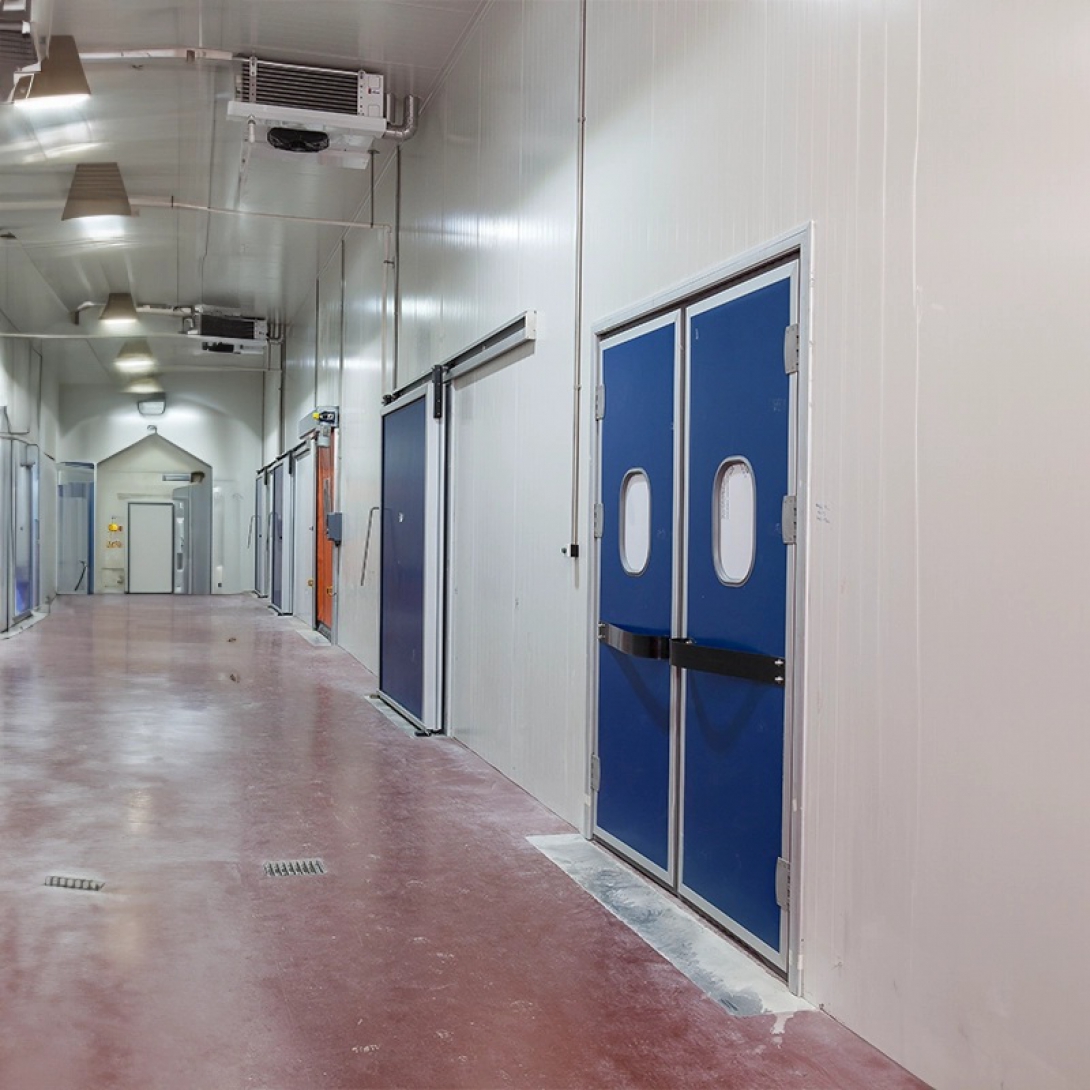
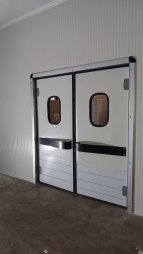
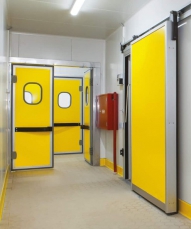
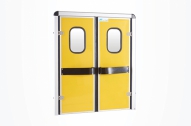
When traffic at cold room doors begins to intensify, a refrigerated swing door helps reduce workflow friction, impact wear, and access delays in high-volume operations.
When door traffic begins to build up in cold rooms
A double-leaf refrigerated door becomes an effective solution when traffic in cold rooms ceases to be occasional and begins to build up, becoming a daily operational issue. In high-traffic food facilities, supermarkets, prep areas, and backroom refrigerated spaces, the problem is rarely just about opening and closing a door. The issue lies in the impact of these repeated movements on workflow, impact zones, cleaning routines, and the room’s long-term performance.
Once traffic starts to pick up, small delays are no longer so insignificant. The wrong door choice can slow down staff movement, increase contact damage, and turn a simple entrance into a constant source of friction. The right door keeps the cold room practical under pressure—not just functional on installation day.
The real problem begins before the breakdown
Most cold room access issues don’t start with a faulty component. They start with repetition.
A single staff member passing through a door isn’t a problem. A few carts entering and exiting per hour may not seem like a big deal either. But in reality, traffic builds up in layers. Prep staff come in to retrieve products. Kitchen crews move trays. Store employees restock shelves. Warehouse or processing teams pass through with hand trucks, bins, or light pallet traffic. Sanitation crews add their own routines. Over time, a door becomes one of the most heavily used points in the cold room.
That’s where traffic begins to intensify. The opening no longer serves merely as an access point. It begins to absorb the accumulated pressure of the entire operation.
In many U.S. facilities, this is where the first signs of imbalance appear. Staff hesitate at the threshold. The door seems to move more slowly than the room around it. Contact with the door becomes more frequent. Cleaning becomes less practical. Wear and tear begins to show, not because the room is poorly built, but because the access system is no longer suited to the pace of use.
That is why the choice of doors should never be considered a minor, incidental decision in cold rooms. As soon as traffic intensity increases, the entrance affects staff efficiency, the room’s appearance, maintenance planning, and user confidence in the entire facility.
The True Cost of Increased Traffic
When foot traffic intensifies, the cost is rarely dramatic at any given moment. It manifests as repeated slowdowns throughout the day.
This slowdown often results in slower passage, more physical contact with the door, more collisions with the edges caused by carts, more interruptions during peak hours, and more frequent intervention by maintenance teams. None of these problems seems serious on its own. But together, they create different operating conditions.
A technically acceptable door may still prove to be a poor choice because it no longer matches the pace of the room. This mismatch often leads to:
- reduced traffic efficiency during peak periods
- more visible wear on hinges, edges, seals, and lower contact areas
- greater difficulty cleaning around hardware and thresholds
- increased maintenance due to repeated daily stresses
- a less polished appearance of visible work areas behind the scenes
- the need for replacement sooner than originally anticipated
This is what many buyers discover too late: a door may still function, but it may no longer function well for the establishment.
In refrigerated rooms, particularly those involving food handling, rapid restocking, repeated access for preparation, or continuous internal traffic, the true standard is not mere functionality. The true standard is resilience in the face of repetition.
Why a poor choice of access worsens over time
One reason why issues related to foot traffic are easy to underestimate is that they don’t always manifest during installation or early use. The opening may seem acceptable in a low-pressure test environment. The true verdict comes later, under normal operating conditions.
Repeated comings and goings change the way staff use the door. People stop viewing the opening as a static object and start treating it as part of their path. If the door interferes with this pattern, friction sets in. Not catastrophic friction. Everyday friction.
This is what makes high-traffic areas so costly. It transforms a door—which is a supporting element—into a recurring interruption. Teams begin to adapt to the door instead of the door supporting the workflow.
In U.S. operations where workforce efficiency and uptime matter, this type of misalignment is costly even if it doesn’t trigger an immediate replacement. It affects the rhythm, consistency, and long-term impression of the facility. The room may remain cold, but the entrance no longer feels right.
A comparison of access points that clarifies the decision
When traffic pressure increases, the most important question isn’t which type of door feels familiar to you. The real question is what kind of traffic the opening must handle every day.
A swing-style refrigerated door is generally most effective when the room experiences repeated, short-cycle traffic and the opening must accommodate natural movement in both directions. A standard hinged door can still work well in low-traffic environments where entry is more controlled. A sliding door may be more appropriate when the opening width, clearance, or passage of larger equipment becomes the top priority.
| Door Type | Best operational fit | Main advantage | Main trade-off |
|---|---|---|---|
| Double-leaf refrigerated door | Frequent two-way traffic, staff movement, carts, repeated passage | Faster flow and more natural access behavior | Must be properly adapted to the type of traffic and opening conditions |
| Standard hinged refrigerated door | Low to moderate traffic, controlled access, simpler usage patterns | Simple operation and familiar layout | May create friction as traffic frequency increases |
| Sliding refrigerated door | Wider openings, heavier loads, reduced headroom | Excellent choice for large openings | Less suitable for fast, constant foot traffic |
This comparison is important because many door-related issues stem from misclassification. The opening is viewed solely as a thermal barrier, whereas in reality, it is also a tool for managing traffic flow.
Why a side-hinged refrigerated door solves the right problem
A swing-style refrigerated door is valuable because it addresses the real consequence of heavy traffic: pressure caused by movement.
In a busy cold room, staff shouldn’t have to struggle to open the door every time they pass through. They need an access point that responds quickly, withstands repeated use, and minimizes the feeling of interruption at the threshold. This is particularly important in spaces where carts, shelving, hand-carried loads, and short, frequent trips set the pace of the day.
The strength of this type of door lies not only in the fact that it opens. It lies in the fact that it accommodates continuous movement more naturally than slower, more deliberate access approaches. This can reduce hesitation, streamline the flow, and help ensure the room is perfectly suited to how people actually use it.
A good side-hinged solution also contributes to durability. Since heavy traffic generally leads to more accidental impacts, the door system must be evaluated with regard to frame alignment, panel interfaces, edge protection, seal performance, visibility options, and hardware strength. The goal is not just to let people through. The goal is to maintain the stability of the opening despite repetitive movements.
This is where the Freezewize cooling system truly comes into its own in practice. In actual cold storage facility projects, the choice of a suitable access system generally depends on how the door integrates with the opening, the structure of the surrounding panels, traffic flow, cleaning procedures, and the expected service life. A double-leaf door offers the best performance when selected as part of a comprehensive solution for the workroom rather than as a standalone product.
Factors to Consider Around the Door
As traffic begins to increase, the door itself is just one factor among many in the decision-making process. Buyers must also evaluate the opening as an operational area.
This includes the behavior of the threshold, the performance of the seal, the integrity of the frame, the accessibility of the hardware, exposure to impacts, and the type of traffic in the room. A cold room door that seems suitable on paper may nevertheless pose long-term problems if the surrounding conditions are ignored.
This is important because heavy traffic rarely affects the door leaf alone. It concerns the entire access point and its ability to withstand wear and tear.
The most important evaluation points are generally:
- the frequency of comings and goings
- the daily passage of carts or rolling racks
- the number of accidental impacts the door absorbs
- how often the area is washed or deep-cleaned
- whether visibility at the opening affects safety
- the actual maintainability of the installation
These are practical questions to ask when making a purchase, not questions taken from a brochure. They determine whether the solution will remain suitable after months of repeated use.
Quick Decision Guide
A swing-type refrigerated door is generally the best choice when:
- the cold room experiences frequent daily traffic
- traffic comes from both directions throughout the workday
- carts, bins, or shelving regularly pass through the opening
- work speed is important and the door opening must not cause a bottleneck
- the facility wishes to reduce cumulative wear caused by awkward movements
A more traditional hinged door is generally more suitable when:
- Access is less frequent
- entry is more deliberate and controlled
- the room is not subject to constant traffic
- the opening does not have to withstand repeated short-duration movements
A sliding solution is generally more suitable when:
- the opening is wider
- bulky objects or equipment require more clearance
- the conditions of the adjacent space favor a different opening method
- the operational issue relates more to the geometry of the opening than to the frequency of traffic
The clearest rule of thumb is this: when movements are repeated throughout the day, the door should be chosen based on traffic flow, not just on closing.
Related Solutions
If you are considering a refrigerated swing door due to traffic congestion at the opening, these related solutions are often part of the same planning process:
- swing doors for cold rooms intended for access points with moderate traffic
- Refrigerated sliding doors for wider openings and higher traffic requirements
- Cold room panels for proper integration of the opening and structural compatibility
- door systems for low-temperature cold rooms
- glazed panel options for safer traffic flow in active work areas
- Impact protection, baseboards, and hardware upgrades for high-traffic environments
FAQ
Are double-leaf refrigerated doors suitable for high-traffic cold rooms?
Yes. This is often one of the most practical solutions when repeated daily movements cause delays, wear from contact, or friction in the workflow at the opening.
What does high traffic at cold room doors mean?
It means that traffic is no longer occasional. The repeated movements of personnel, carts, shelving, and operational cycles accumulate and turn the entrance into a pressure point.
Does a standard hinged door always work in a high-traffic cold room?
It’s possible, but not always optimal. In rooms with constant short-cycle access, a standard hinged configuration can create more friction than a double-leaf solution.
Do side-hinged doors help reduce maintenance demands?
In the right context, yes. A door adapted to the actual traffic pattern often reduces avoidable stress, impact wear, and operational misuse.
Should cleaning and hygiene factors be considered when choosing a cold room door?
Absolutely. Cleaning frequency, washing conditions, hardware placement, and threshold design all impact long-term suitability in food and refrigeration operations.
What is the biggest mistake made when designing cold room doors?
Treating the door as a mere accessory rather than a functional element used daily. Most long-term problems stem from this assumption.
Conclusion
When foot traffic begins to increase, the access point ceases to be a minor detail and becomes an integral part of the operating system.
The right door is one that continues to facilitate traffic flow even as the frequency of openings begins to increase.
If the entrance to a cold room generates more traffic than initially anticipated, a double-leaf refrigerated door is often the most practical and durable solution. A careful analysis of traffic patterns, opening conditions, and maintenance requirements can prevent a minor access issue from becoming a permanent operational bottleneck.