




Freezewize | Industrial Cooling Systems & Custom Cold Room Solutions

Swing Access for Busy Cooler Rooms

Side-Opening Refrigerated Doors for High-Traffic Cold Storage Rooms | Access Guide

Side-opening refrigerated doors help ensure faster daily workflow, cleaner pathways, and more reliable access in high-traffic cold storage rooms where hand trucks, shelving, and personnel traffic create constant pressure.

Side-Opening Refrigerated Door Solutions for High-Traffic Cold Storage Rooms

Side-opening refrigerated doors are often the right access choice for high-traffic cold storage rooms when the opening needs to support frequent personnel movement, hand truck traffic, and fast re-closing performance without slowing down workflow. In high-traffic cold zones, the entrance must do more than just maintain temperature separation. It must keep pace with operations.

This is important because many cold room access issues do not stem from refrigeration failures. Problems start at the door: repeated contact, hesitation during passage, cleaning pressure, visible wear, and the daily friction that gradually turns an opening into a point requiring maintenance.

The Point Where High-Traffic Cold Rooms Start to Lose Efficiency

In many facilities, the cold room performs well enough on paper. The temperature remains stable. The product is preserved. The room appears functional. However, the entrance tells a different story after weeks of actual use.

High-traffic cold rooms accommodate constant movement. Staff come and go throughout the day. Carts and wheeled racks cross the threshold. Kitchen crews move quickly during prep hours. Supermarket back-office teams work under time pressure. Distribution and processing operations require openings that don’t interrupt the flow every few minutes.

When access doesn’t align with this reality, the room begins to lose efficiency in small but repeated ways. People slow down in the opening. The door becomes stiffer in high-impact areas. Traffic flow becomes less smooth. Cleaning routines become more labor-intensive. The access point begins to feel like a weak link rather than a functional part of the room.

For this reason, swing-style access is more important in cold rooms than many buyers initially realize. A door may still open and close, but this does not automatically mean it is operationally suitable.

The Operational Cost of Choosing the Wrong Door

The wrong cold room door rarely fails all at once. More often, it creates a cycle of friction that manifests daily.

An unsuitable access door can lead to:

  • slower traffic during peak hours
  • more frequent contact damage from carts, shelves, or pallet jacks
  • premature wear on hinges, edges, gaskets, and impact points
  • more difficult cleaning around hardware and threshold areas
  • a weaker impression of hygiene in visible work areas
  • increased maintenance needs for what should be a simple access point

This is a real risk in a high-traffic cold room. Even if a door is technically functional, it may still be the wrong choice. It may provide sufficient separation, but it can still create a growing sense that the design was inadequate from the start—due to the workload, visual wear, and the opening’s inherent limitations.

This distinction is important for facility managers and contractors. The real issue isn’t whether the door will work. The issue is whether it will remain suitable after months of repeated daily use.

Why Is the By-Swing Access Suitable for High-Traffic Cold Storage Environments?

High-traffic cold storage rooms require an entrance that supports movement in both directions, resets quickly, and can withstand repeated use without feeling heavy or sluggish.

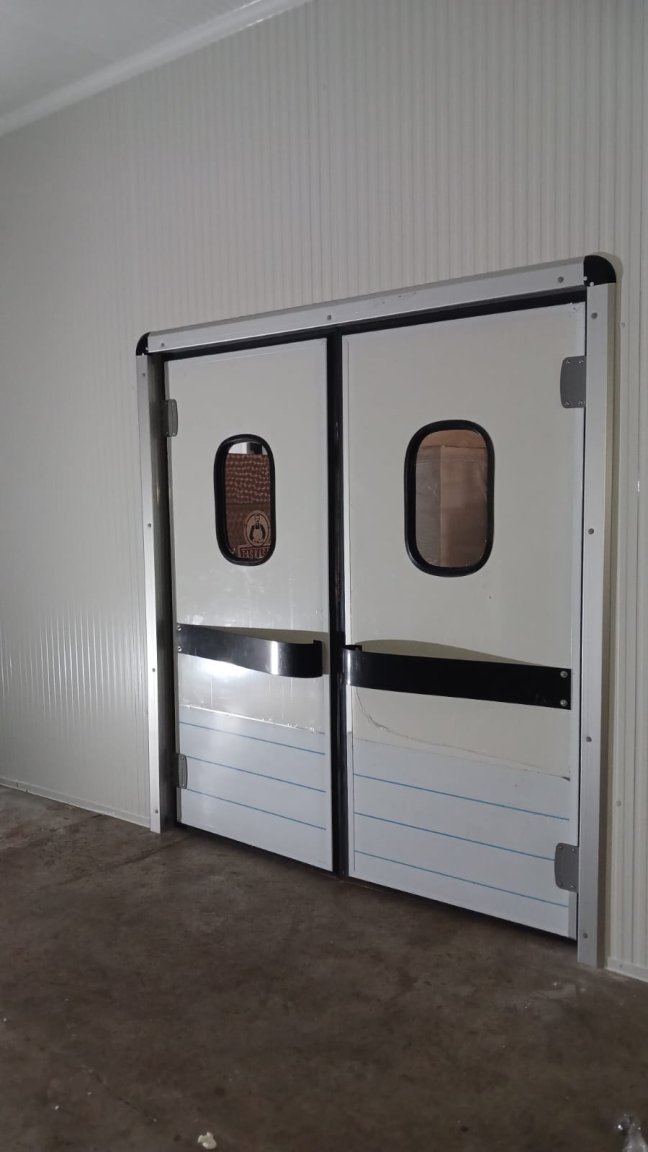
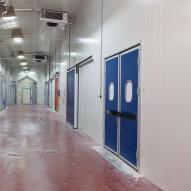
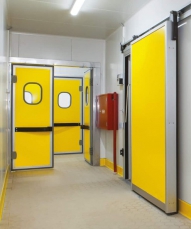
This is where the side-swing refrigerated door comes into play. When properly installed, it allows personnel to pass through the opening naturally, rather than constantly having to adjust their movement around the door. This can improve workflow in food preparation areas, supermarket backrooms, processing zones, and fast-paced storage areas where speed and repeated access are critical.

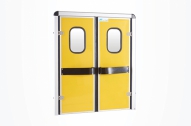
The advantage isn’t just about movement; it’s also about consistency. A well-chosen double-leaf access door helps ensure the opening behaves the same way throughout the day, even as traffic volume increases. This reduces hesitation, supports a smoother workflow, and helps the cold room feel more in line with its actual operating pressure.

In most cases, this type of door is particularly useful when the priority is not a long open duration, but rather fast, repeated, and practical access.

An Access Comparison That Really Helps You Decide

Not every cold room requires the same door logic. For some openings, a standard hinged solution is more suitable. Others, however, benefit from sliding access because the opening size, conditions, or thermal priorities point in a different direction.

For high-traffic cold storage rooms, the key is understanding not just how wide the opening is, but how it is used.

Access TypeMost SuitableKey StrengthsKey Limitations
Side-opening refrigerated doorHeavy foot traffic, hand carts, mobile shelving, frequent and short-duration accessSmooth transition and natural two-way movementIt is not ideal for every situation where heavy-duty thermal insulation is a priority
Standard hinged refrigerated doorControlled access, reduced traffic, more careful entrySimple, familiar operationMay slow down movement in high-traffic environments
Sliding refrigerated doorWider openings facilitate the passage of large equipment; more robust closing mechanismIdeal for space management and wider clear openingsMaybe less suitable for continuous and heavy foot traffic

Access Type Best Application Main Advantage Main Limitation

Side-hinged refrigerated door Heavy personnel traffic, hand trucks, wheeled racks, frequent and short-duration access Smooth passage and natural two-way movement Not ideal for all types of heavy-duty thermal separation priorities

Standard hinged refrigerated door Controlled access, lower traffic, more planned entry Simple, familiar operation May slow movement in high-frequency use environments

Sliding refrigerated door Wider openings, larger equipment passage, stronger closing mechanism Good for area control and wider clear openings May feel less natural for continuous, fast pedestrian traffic

This comparison is important because buyers often make their choice based on product type rather than traffic patterns. This is where mistakes begin. The right door is usually not the one that looks most familiar, but the one that matches the daily behavior of the opening.

What to look for in a side-opening refrigerated door

For a side-opening door to perform well in a high-traffic cold room, the focus should be on suitability rather than just standout features.

The most important considerations are typically:

Traffic flow: Repeated foot and light equipment movement changes what the opening must do. If the door is in use all day, flow behavior is just as important as the insulation logic.

Impact resistance: Accidental contact occurs in high-traffic areas. Edge areas, lower sections, and regions adjacent to hardware must be selected with durability in mind.

Sealing performance: The door must still maintain cold room conditions. Smooth operation should not come at the expense of poor sealing performance.

Ease of cleaning: Surfaces, hardware layout, and threshold details should support hygiene routines rather than create areas that are difficult to clean.

Visibility and safety: In high-traffic back-of-house areas, sight panels and traffic awareness features can support safer movement and reduce collisions.

Long-term maintenance burden: The right system isn’t just one that works on installation day. It’s a system that still feels right after repeated opening cycles, routine washings, and months of traffic.

These are the details that distinguish a well-designed specification from a truly durable access solution.

Creating the Right Solution Around the Opening

A heavy-duty cold room door should never be selected in isolation. The best results are achieved when the opening is evaluated as part of a functional access system.

This includes the surrounding cold room panel interface, frame compatibility, threshold condition, gasket alignment, visibility options, kick or impact protection, and the expected daily traffic pattern. In many facilities, issues attributed to the door are actually opening system problems stemming from poor coordination.

When cold room access is designed according to actual workflow, the result is more stable. Staff move more naturally. Cleaning management becomes easier. The room presents a better appearance in visible work areas. Maintenance teams deal with fewer preventable issues.

This is where experienced solution planning becomes crucial. The Freezewize Cooling System approaches cold room access not as an isolated product decision, but as an integral part of the entire operational environment. This is important because the correct direction of the cooling door depends on how the room is actually used, what passes through it, and the level of daily wear and tear the opening will endure.

Quick Decision Guide

Select a side-opening refrigerated door in the following situations:

  • there are frequent daily entries and exits to the cold room
  • staff need quick and natural passage in both directions
  • vehicles or light wheeled equipment regularly pass through the opening
  • workflow speed is more important than slow, deliberate door movement
  • the opening needs to be practical for repeated use

Choose a more traditional hinged option in the following situations:

  • access frequency is moderate or controlled
  • the opening is used more selectively
  • traffic is lighter and less repetitive
  • operational speed at the door entrance is not a major concern

Choose a sliding solution in the following situations:

  • if the opening is wider
  • if larger loads or equipment require a clear passage
  • if space management is a priority
  • if the application requires a different closing and opening logic

Here, a simple rule helps: if the cold room entrance behaves like a traffic point, treat it as such.

Related Solutions

If you are evaluating side-opening access for a high-traffic cold room, these related solutions are typically part of the same decision:

  • cold room hinged doors: for areas with less traffic or where entry is controlled
  • cold room sliding doors: for wider openings and larger passage requirements
  • cold room panels: for full opening and exterior facade compatibility
  • freezer room door systems: for lower-temperature applications with varying performance requirements
  • impact protection and hardware upgrades: for environments with frequent contact
  • viewing panels and visibility options: for safer movement in active work areas

FAQ

Do swing-type refrigerated doors work well in cold rooms with heavy traffic?

Yes. They are generally a strong choice in areas where personnel frequently enter and exit, and where the opening must support fast, repeated passages without slowing down workflow.

Is side-opening access suitable for vehicles and wheeled racks?

In many cold room applications, yes. Suitability depends on the opening size, traffic frequency, and the type of equipment passing through the door.

Is a side-opening door better than a standard hinged cold room door?

Not in every case. It’s better when the room has faster, more frequent access demands. For less-used openings, a standard hinged door may still be a more practical choice.

What is the biggest mistake made when selecting cold room access?

Making a selection based solely on product category rather than actual traffic behavior. Many access issues stem from a mismatch between the door and the room’s daily usage patterns.

Do high-traffic cold rooms require special protection around the door?

Generally, yes. Impact zones, hardware protection, threshold details, and visibility features can enhance durability in active environments and reduce preventable wear and tear.

Can a door be the wrong choice even if it maintains temperature?

Yes. A door may provide the necessary separation, but if it slows down traffic, increases maintenance burdens, or creates friction in daily workflows, it may be the wrong choice from an operational standpoint.

Conclusion

High-traffic cold rooms don’t just need a door that closes properly. They require an access system that maintains the room’s operation without creating new issues at the opening.

The right decision is simple: choose a door type suited to daily traffic patterns, not just the opening itself.

If you’re planning a cold room where speed, repetitive motion, and durability are critical, a properly specified double-leaf refrigerated door may be a more practical long-term solution. Carefully reviewing the access system during the design phase typically prevents far more costs and friction than any subsequent correction could avoid.


Fill the Form!

Write your needs and fill the form to contact us.

Freezewize | Industrial Cooling Systems & Custom Cold Room Solutions
Merhaba, Size yardımcı olabilir miyiz ?
Whatsapp Destek