




When Fast Access Needs Swing Clearance
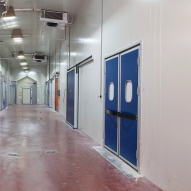
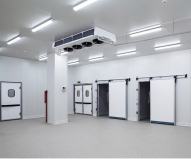
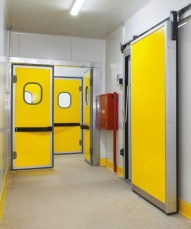
Traffic Swinging Cooler Door for Fast Access and Swing Clearance
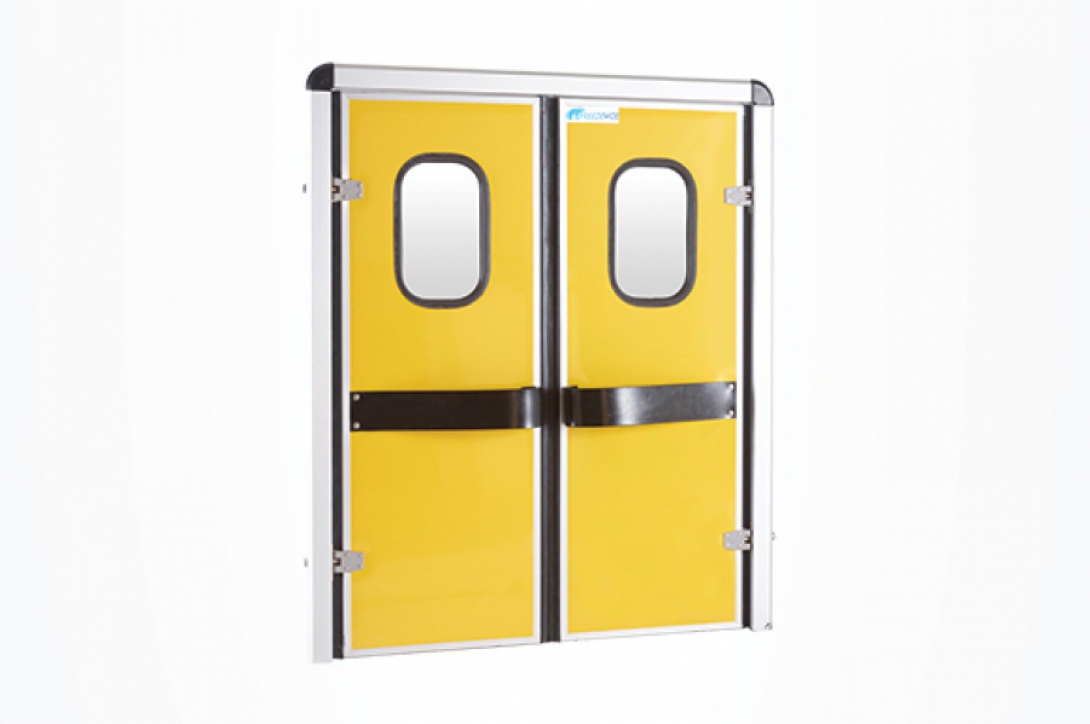
Choose a traffic swinging cooler door when fast cooler access matters and swing clearance supports safer flow, lower friction, and better daily durability.
When Fast Access Needs Swing Clearance
In situations where teams require quick and repeated access and the opening has sufficient clearance to support smooth movement, a traffic-oriented cooler door is typically the right solution. In high-traffic refrigeration environments, this clearance is not wasted space. This opening ensures the door operates naturally under the daily pressure caused by personnel, vehicles, and constant background traffic.
This is important because quick access is only helpful if the entry door still feels controlled, safe, and efficient during actual use. If the opening is too narrow for the swing path, traffic slows down. If the layout can accommodate this angle, a traffic-oriented refrigeration door can maintain the flow with less hesitation, less handling friction, and better long-term suitability.
Quick Access Begins to Break Down at the Opening
Most cold storage access issues start with good intentions. Teams want faster entry, faster movement, and fewer delays between the refrigerated storage area and the surrounding work area. On paper, this seems simple. In real facilities, however, the pressure becomes evident at the door.
Personnel pass through the entrance during preparation, stocking, replenishment, staging, and order picking. Carts, racks, and pallet jacks may approach from one or several directions. In some rooms, workers must constantly rush through a slow or impractical access point. This is where the entrance ceases to be a mere structural detail and becomes an integral part of the workflow.
The challenge here is that physical space is still required for quick access to function properly. If the door swing radius is overlooked, the door may begin to obstruct nearby corridors, equipment pathways, or workstations. If the clearance is properly planned, the door swing access can feel faster, cleaner, and more intuitive than many alternatives.
This is the crux of the matter. The issue isn’t merely selecting a passage door. The issue is determining whether the layout truly supports the operation of a swinging refrigeration door as it should.
The Risk of Forcing Speed into a Tight Layout
A door may be durable, insulated, and technically functional, yet it may still be ill-suited for the surrounding space.
This typically happens when buyers focus on access speed and fail to give sufficient consideration to the door opening. The result is not always an immediate failure. More often, it is a friction that repeats daily. Staff begin to alter their entry patterns. Vehicles slow down near the opening. The door path conflicts with nearby storage, equipment, or wall protection zones. Contact frequency increases. The entrance begins to feel more crowded and less controlled than it should.
This mismatch leads to operational costs such as:
- slower traffic during peak activity periods
- more impacts around the door panel or adjacent wall area
- additional wear caused by recurring clearance conflicts
- poorer flow around carts, shelves, and hand trucks
- more hesitation at the threshold in fast-paced environments
- early frustration resulting from the entrance not being properly planned
This is why the door opening is so critical in commercial and industrial facilities in the U.S. Quick access is valuable only when the surrounding layout allows the door to move without creating new bottlenecks.
An improper design can also affect hygiene and appearance. If the opening becomes a high-traffic contact point, cleaning routines become more difficult, visible wear appears sooner, and the door may begin to look worn out long before the rest of the facility.
The Comparison That Actually Matters
For projects of this type, the key comparison isn’t abstractly between a high-traffic door and a low-traffic door. The real comparison is between access speed and spatial logic.
In situations where operations require fast, repeated passages and the layout can support a clear path for opening, a swing-type refrigeration door is generally a better choice. When floor space is more limited and maintaining a side opening is more important than the instantaneous swing motion, a sliding access door may be more appropriate. A standard, lighter-duty swing door may be suitable for infrequently used rooms, but it may prove inadequate when rapid access is a part of daily operations.
Here is a practical decision table:
| Access Option | Best Fit | Main Advantage | Main Limitation |
|---|---|---|---|
| Standard swing cooler door | Lower-frequency access | Simple for lighter daily use | Less suitable for repeated fast traffic |
| Traffic swinging cooler door | Fast repeated access with adequate swing clearance | Natural pass-through flow and better traffic suitability | Needs real space for door arc and safe movement |
| Sliding cooler door | Tighter layouts with limited swing room | Preserves surrounding clearance | Can feel less direct in high-frequency pass-through use |
Access Option Best Suited For Main Advantage Main Limitation
Standard hinged refrigeration door Lower frequency of access Simple for light daily use Less suitable for repeated high-traffic use
Swing-type refrigeration door Fast and repeated access with sufficient swing clearance Better suited to natural traffic flow and movement Requires actual space for door swing and safe movement
Sliding refrigeration door Fits into tighter layouts with limited swing space Preserves surrounding clearance Less directly noticeable during high-frequency traffic
Therefore, it is important to review the layout before specifying requirements. The best solution depends not only on which door type appears correct on its own, but also on what the opening is expected to do at all times.
Why Clearance Might Be a Better Compromise
In the right configuration, clearance is not a compromise. It is what enables quick access to function.
A traffic-opening refrigerated door performs well when it has enough space to operate without obstructing movement near the door spring. This allows teams to move through more naturally, especially in environments where repeated entry is part of the job. Staff do not have to treat the opening like a delicate maneuver. The access point feels direct, responsive, and easier to use during peak periods.
This can be particularly useful in the following situations:
- refrigerated rooms at the back of supermarkets
- food preparation and kitchen support areas
- refrigerated holding areas
- processing support areas
- beverage and supply storage rooms
- refrigerated warehouse entrances with frequent internal traffic
In these environments, the value of the opening width is simple: it provides enough workspace to support the flow rather than fight against it.
Creating Solutions Around Actual Movement
The best solution starts with the movement pattern around the opening.
If the room requires quick access, planners should not evaluate only the door size. They must examine the corridor width, the layout of nearby equipment, the approach angles of carts, threshold conditions, and whether personnel need to pass in both directions simultaneously. A swinging refrigerated door operates best when the full access zone supports this movement.
This typically requires considering the following:
- how frequently the opening is opened and closed during a normal shift
- whether the door serves only pedestrian traffic or mixed traffic
- how much clearance exists on either side of the opening
- whether a sight panel improves safer two-way movement
- how the threshold supports the passage of hand trucks or pallet jacks
- where impact protection may be required
- how cleaning crews access and maintain the door
- whether adjacent panel, wall, and hardware details support durability
At this point, better technical specifications become more than just a product selection. The Freezewize Cooling System typically addresses refrigeration access as a room performance issue, because the right door depends on how the opening interacts with traffic, layout, visibility, and maintenance expectations over time.
Clearance, Hygiene, and Daily Inspection
The opening distance of the door leaf also affects how controlled the room feels.
In high-traffic food environments, the door entry must remain practical without becoming cluttered or prone to collisions. If the door panel constantly strikes active work areas or narrow storage edges, the opening begins to accumulate preventable damage and loses some of its operational discipline. This situation can affect both cleaning routines and the visible kitchen backdrop presentation.
A better entry layout helps the door move smoothly, close reliably, and be easier to maintain. It also creates a more professional daily atmosphere around the refrigerated opening; this is important in areas where readiness for inspection and staff efficiency are equally critical.
Quick Decision Guide
If quick access is critical and the layout can truly support the door’s opening path, choose a traffic-friendly refrigerated door.
It is generally a better choice in the following situations:
- when staff need to make quick entries repeatedly throughout the day
- when the opening is part of a preparation, organization, or restocking workflow
- when there is sufficient clearance in the room for a safe and practical door swing angle
- when vehicles or shelves regularly approach the opening
- when immediate access is more valuable than preserving every centimeter of adjacent space
- when the facility requires smoother movement with fewer daily hesitations
Choose a sliding alternative in the following situations:
- if the opening is located in a narrow corridor or a confined space
- if the swing clearance obstructs equipment, shelves, or adjacent work areas
- if preserving floor space is more important than swing speed
The basic rule is simple: If the goal is quick access, make sure the layout truly supports the swing clearance before selecting a swing door.
Related Solutions
Other internal page opportunities related to this topic may include:
- insulated panel systems for cold rooms
- sliding cold room door solutions
- freezer door systems for colder applications
- refrigerated door hardware and protection options
- hygienic cold room wall and ceiling panels
- commercial kitchen cold storage layouts
- warehouse and distribution cold room entrance planning
These are natural complements because access speed, clearance, panel integration, and long-term wear are typically addressed together.
FAQ
When is a swing-type cold room door the right choice?
It is the right choice when the clearance can accommodate repeated rapid access and the surrounding area provides sufficient swing clearance for safe, natural movement.
Why is swing clearance so important?
Swing clearance determines whether the door can operate smoothly without interfering with nearby corridors, carts, shelves, or workstations.
Is a sliding door better in tight cold room layouts?
Generally, yes. When surrounding space is limited, a sliding door can reduce obstructions and more effectively preserve usable floor space.
Can a swing-type cold room door operate in harmony with cart traffic?
Yes, provided the opening width, threshold condition, approach angle, and opening area are properly planned for cart movement.
What happens when a swing-type access is specified without sufficient space?
The result is typically friction in the workflow, increased contact around the opening, reduced confidence in movement, and greater wear over time.
Should the swing clearance be reviewed during cold room planning?
Yes. Since the door’s success depends entirely on the access area, it should be reviewed early on alongside panel layout, floor conditions, traffic patterns, and the placement of nearby equipment.
Quick Access Yields the Best Results When the Layout Allows It
A swing-type refrigeration door can be an excellent choice, but only if the opening has sufficient space to allow the door to function as intended.
If quick access is critical and the layout supports the swing opening, a swing-type refrigeration door is generally a smarter long-term solution.
For facilities planning a new cooler or retrofitting an existing entrance, the most helpful next step is to evaluate the opening based on traffic speed, opening feasibility, cart movement, and daily usage conditions before determining the final access strategy.