




Freezewize | Industrial Cooling Systems & Custom Cold Room Solutions

Long-Term Fit for Swing Traffic Doors

Traffic-Grade Swing Refrigeration Doors for Long-Term Performance and Daily Use

Choose a traffic-grade swing refrigeration door with long-term durability in mind. The right door supports daily workflow, reduces maintenance burdens, and remains suitable as operations grow.

Long-Term Fit for Swing Traffic Doors

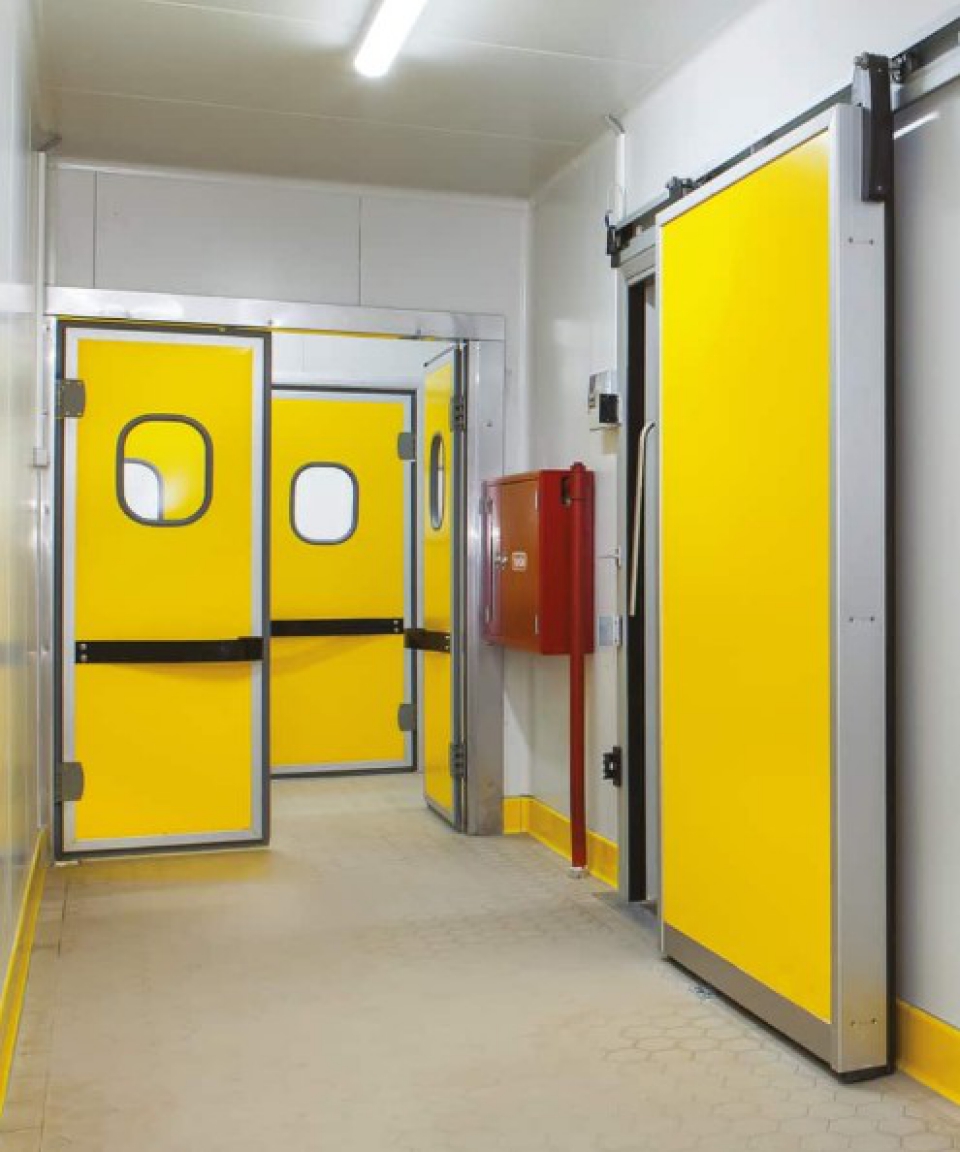
A traffic swing refrigeration door is a robust long-term solution for situations where the refrigeration opening experiences frequent daily movement and must remain reliable under repeated use. In high-traffic facilities, the right choice isn’t just a door that works on day one. It’s a door that remains operational after months and years of foot traffic, vehicle movement, cleaning cycles, and constant wear and tear.

This is the true meaning of long-term reliability. A properly selected swing traffic door maintains workflow, reduces preventable maintenance needs, and helps ensure the entrance remains functional as the room ages. An unsuitable door may seem acceptable at first, but it often becomes the first sign that the opening was inadequately designed for its actual operating conditions.

The Real Issue Isn’t Initial Use

Many refrigerated doors look good when the room is first set up. The opening is clean, traffic is still light, and the system hasn’t yet been tested by repeated use. The real issue emerges later.

As operations settle into a daily rhythm, the refrigerated entrance begins to face the same stresses every shift. Personnel enter and exit during preparation, restocking, order picking, packing, and routine storage tasks. Carts, shelves, and pallet jacks repeatedly approach the opening. Cleaning crews work around the threshold, hardware, and gaskets. The door ceases to be a simple access point and becomes an integral part of the operational system.

This is where long-term suitability begins to distinguish the right decisions from short-term ones. A door that seemed adequate during installation may start causing problems once actual operational volume kicks in. The door may still function, but it becomes slower, stiffer, requires more maintenance, or is less suitable compared to the rest of the room.

For contractors and facility managers, this is a familiar problem. The issue is rarely that the door completely breaks down. The issue is that the door no longer feels like the right choice.

Why Does the Wrong Door Become Expensive Over Time?

Even if a refrigeration door is technically operational, it may still be the wrong choice in the long run.

This typically happens when the selection is based solely on immediate needs. The size of the opening may be correct, but daily traffic patterns, exposure to impact, cleaning requirements, and property owners’ expectations may not have been adequately considered. Once the room begins operating at full capacity, these overlooked factors start to shape the true cost of the decision.

Long-term incompatibility typically manifests as follows:

  • greater-than-expected wear and tear on the opening
  • increased service needs for hinges, gaskets, or hardware
  • slower movement during daily high-volume activity
  • a threshold that becomes harder to keep clean and controlled
  • the need to plan for replacement sooner than initially anticipated
  • a growing sense that the room entrance no longer meets facility standards

This is important because the cost of ownership is not limited to the purchase price. This cost includes lost workflow, maintenance downtime, accelerated wear and tear, and how often the door diverts attention from the rest of the operation.

In high-traffic U.S. commercial environments, this can become a significant issue. A door that saves on upfront costs but creates more problems over time is generally not a cheaper choice.

The Best Comparison Is About Long-Term Suitability

The most useful comparison for long-term planning isn’t just between door styles. It’s between short-term adequacy and long-term suitability.

A standard swing-style refrigeration door may perform acceptably in a room with lighter traffic and limited daily wear and tear. However, in a high-traffic environment where the opening is a constant part of operations and is expected to remain reliable under repeated use, a swing-style refrigeration door is generally a better option. In certain layouts where swing clearance is limited, a sliding door may be more suitable; however, this is not automatically the best solution when continuous passage movement is a priority.

Here’s a practical comparison:

Door TypeBest FitLong-Term StrengthMain Limitation
Standard swing cooler doorLight to moderate daily useLower-complexity access in lighter-duty roomsMay lose suitability faster in high-traffic openings
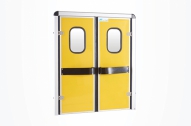
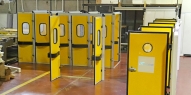
Traffic swinging cooler doorRepeated daily movement and active cooler accessBetter long-term fit for busy entries and repeated useMust be planned around traffic, clearance, and impact conditions
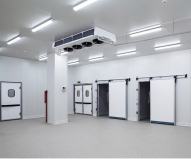
Sliding cooler doorSpace-sensitive openings with limited swing roomUseful where layout restricts swing pathNot always the most natural fit for constant fast passage

Door Type Best Suited For Long-Term DurabilityMain Limitation

Standard hinged refrigeration door Light to moderate daily use Less complex access in less busy rooms May lose suitability more quickly in high-traffic openings

High-Traffic Swing Refrigeration Door Repeated daily movement and active refrigeration access Better long-term suitability for high-traffic entrances and repeated use Must be planned considering traffic, opening space, and impact conditions

Sliding refrigeration door Entrances with limited opening space and space-sensitive layouts Useful when the layout restricts the opening path May not always be the most natural choice for continuous, rapid passage

This comparison is important because long-term suitability isn’t about choosing the product that looks the sturdiest. It’s about selecting an access strategy that maintains its suitability as the space matures.

What Long-Term Suitability Actually Looks Like

A traffic-swinging cooler door provides long-term suitability when it continues to support operations without becoming a recurring source of obstruction.

This implies more than just basic durability. It means that entry still feels natural during peak hours. It means the door can handle daily cycles without becoming a maintenance issue. It means the access point remains consistent with hygiene routines, movement patterns, and the facility’s visual standards.

In practice, long-term suitability often depends on whether the opening is planned around the following:

  • actual daily traffic volume
  • mixed pedestrian and vehicle traffic
  • potential exposure to contact and impact
  • threshold conditions and floor transition details
  • cleaning frequency and washing requirements
  • visibility needs for safer two-way movement
  • service accessibility for hardware and gaskets
  • integration with surrounding panels and room layout

Therefore, good long-term decisions are typically operational, not cosmetic. The opening should not only conform to the opening dimensions but also harmonize with the room.

Where Traffic Swing Doors Prove Their Worth

Traffic swing refrigeration doors demonstrate their value most clearly in facilities where the opening is in constant use and the pace of work leaves little room for friction.

These typically include:

  • refrigerated rooms at the back of supermarkets
  • restaurant and institutional kitchen support areas
  • refrigerated preparation areas
  • food processing support zones
  • warehouse and distribution refrigerated entrances
  • beverage and supply storage rooms

In these environments, long-term suitability is crucial because the door is used so frequently that it cannot be dismissed as a minor detail. If the opening is part of the daily routine, it will either support the room for years or gradually damage it.

For this reason, buyers who look beyond installation day typically choose a traffic-ready solution. They aren’t just buying movement; they’re also reducing the likelihood of future regret.

A Better Solution Starts with the Entrance’s Overall Condition

The strongest solution is rarely just a door selection. It is an entrance strategy.

For a refrigerated door exposed to traffic flow to remain suitable in the long term, the surrounding conditions must support it. This includes how staff approach the door, how wheeled vehicles pass through it, the design of the threshold, and how easy it is to clean and maintain the entire entrance. If these conditions are overlooked, even a good door can become less effective over time.

A better long-term specification typically considers the following:

  • clearance for movement and surrounding workflow
  • threshold durability for repeated passage
  • hardware suitability for daily cycles
  • seal performance under frequent use
  • visibility panel requirements for safer traffic flow
  • frame and edge protection in areas prone to repeated contact
  • compatibility with insulated wall panels and floor coverings
  • service access that does not unnecessarily interrupt operations

This is where the application perspective becomes crucial. The Freezewize Cooling System generally considers the selection of a traffic door within the context of the entire work environment; because long-term suitability is determined not by how the door appears in the product catalog, but by how the opening behaves during use.

Quick Decision Guide

A traffic-opening cooling door is generally the right long-term choice when the entrance is part of daily production, storage, or supply flows and will be under regular stress over time.

This door is particularly suitable in the following situations:

  • if personnel use the entrance throughout the day
  • if hand trucks, shelves, or pallet jacks regularly pass through the threshold
  • if the room supports repetitive operational movements
  • if the facility wants to experience fewer maintenance issues over the years
  • if visible wear and premature replacement would cause problems
  • if the entrance must remain suitable while traffic demands continue

If the room is used less frequently and long-term traffic pressure is limited, a standard swing door may be sufficient.

If the surrounding area does not allow for a practical swing clearance, a sliding door may be a better choice.

The basic rule is simple: make your selection not just for the easiest installation today, but for the coming years of peak normal traffic.

Related Solutions

Other page opportunities related to this topic may include:

  • insulated panel systems for cold rooms
  • sliding cold room door solutions
  • freezer door systems for low-temperature environments
  • refrigerated door hardware and protection options
  • threshold and floor transition solutions
  • hygienic wall and ceiling panels for cold rooms
  • warehouse and distribution cold storage layouts
  • commercial kitchen refrigeration access systems

These are important because long-term suitability depends not only on the door but on the entire entry area.

FAQ

What does long-term suitability mean for a cold room door exposed to traffic flow?

This means the door remains suitable for the opening over time, even as traffic, wear, cleaning, and daily operational pressures continue.

Is a traffic-rated refrigeration door better for long-term use than a standard swing door?

In many high-traffic entrances, yes. It is generally a better choice where daily movement within the room is repetitive and the entrance must remain reliable for years.

A refrigeration door might look good at first, but could it turn out to be unsuitable later on?

Yes. This is common when the selection is based solely on basic access needs without fully considering traffic intensity, exposure to impact, and the expectations of the facility owners.

What factors most influence long-term performance?

Traffic frequency, threshold conditions, hardware quality, sealing performance, clearance, cleaning routines, and overall compatibility with the room layout all play a significant role.

Should long-term maintenance be part of the purchasing decision?

Absolutely. A door that reduces service interruptions and workflow disruptions typically offers better long-term value, even if the initial comparison seems close.

When should a facility upgrade to a traffic-rated refrigeration door?

When early wear is observed in the current opening, there are recurring maintenance needs, daily operations slow down, or there is a clear mismatch with the pace of operations, an upgrade is generally worth considering.

Long-Term Value Starts at the Entrance

The best choice for a cooling door isn’t the one that seems acceptable at installation. It’s the door that still feels right even after the room has been in heavy use for a long time.

If the entrance will be used intensively for years, a traffic-rated swing cooling door is usually the wisest choice in the long run.

For new projects and renovations, the most helpful step is to evaluate the entrance in terms of actual traffic patterns, threshold usage, maintenance tolerance, and room layout; this ensures the final choice supports long-term operation.


Fill the Form!

Write your needs and fill the form to contact us.

Freezewize | Industrial Cooling Systems & Custom Cold Room Solutions
Merhaba, Size yardımcı olabilir miyiz ?
Whatsapp Destek