




Where Hinged Doors Still Fit Best
Hinged Cold Room Door Applications That Still Make the Most Sense
See where a hinged cold room door still fits best for daily access, cleaner operation, lower maintenance friction, and better long-term room suitability.
Where Hinged Doors Still Fit Best
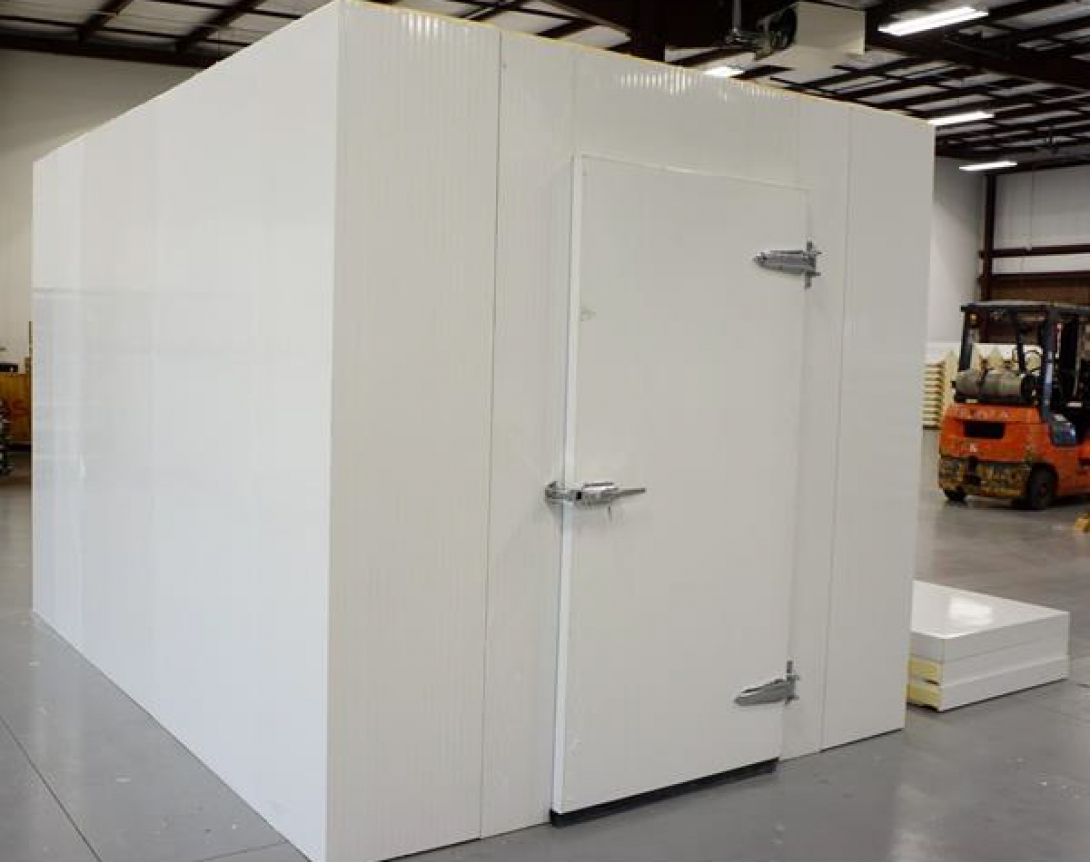
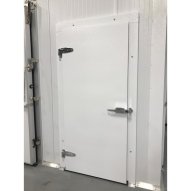
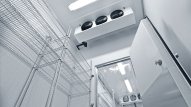
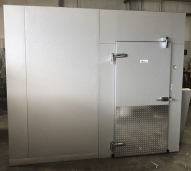
A hinged cold room door still fits best in cold room applications where daily access is frequent, manual use is practical, and the opening serves people more than heavy rolling traffic. In cooler rooms, prep areas, back-of-house storage, and many refrigerated workspaces, hinged access remains one of the most effective solutions because it is direct, familiar, and easy to manage in routine operation.
That matters because not every cold room needs a more complex access system. In many U.S. facilities, the better choice is not the one that looks more specialized on paper. It is the one that matches the room’s traffic pattern, cleaning routine, space conditions, and long-term ownership logic without creating unnecessary friction.
The Real Problem Is Not Choosing an Old-Fashioned Door
The real problem is choosing a door that does not match how the opening is actually used.
That mismatch happens often in cold room planning. A team focuses on temperature range, panel thickness, refrigeration load, and opening size, then treats the door as a secondary decision. The result is an entrance that technically functions but does not fit the daily movement around it. Staff begin to work around the door. Carts clip the lower edge. Cleaning becomes less convenient. Hardware ages faster than expected. The doorway starts feeling like a compromise inside an otherwise well-planned room.
This is why the question “Where do hinged doors still fit best?” matters. The answer is not everywhere, but it is also not limited to niche projects. Hinged access still performs extremely well when the opening supports regular personnel movement, controlled workflow, and a layout that benefits from simple, direct operation.
Hinged Doors Still Solve Several Daily Use Problems Well
In the right application, a hinged cold room door solves practical operating problems better than people sometimes assume.
It works especially well when teams need quick in-and-out movement during prep, restocking, picking, or short-duration storage access. It is effective when the room is used frequently but the opening does not need to accommodate constant pallet movement or oversized rolling equipment. It is also a strong fit when the facility values straightforward cleaning access, easy visual control of the doorway, and simpler long-term maintenance logic.
In these environments, the door does not need to be more complicated. It needs to be more suitable.
That is where hinged access continues to make sense. It gives operators a clear, dependable door line without forcing them into added system complexity that the room may not actually require.
The Risk of a Wrong Choice Is Operational, Not Theoretical
A cold room door can be technically acceptable and still be the wrong choice for the opening.
That risk appears when a facility selects a door based only on general product category instead of the room’s daily operating reality. If the opening needs fast, repetitive personnel access, a more complex system may add unnecessary maintenance or slow the workflow. If the opening sits in a tight traffic zone with repeated rolling loads, a standard hinged solution may take more abuse than it should. If the room has inspection pressure and strict cleaning routines, awkward hardware placement or hard-to-clean threshold conditions can quietly become a recurring burden.
The operational cost of the wrong fit often shows up as:
Slower movement at the opening
More lower-edge and frame wear
Increased maintenance attention
Harder cleaning at the threshold and hardware line
Premature replacement pressure
A lingering sense that the room was not fully matched to its use case
That is why the best door is not the one with the broadest claims. It is the one that keeps daily operation clean, efficient, and predictable.
Where Hinged Doors Still Fit Best
Hinged cold room doors still make the most sense in environments where the opening is active but controlled.
They are typically a strong fit for:
Cooler rooms with repeated staff entry throughout the day
Commercial kitchens and food prep support areas
Supermarket back-of-house cold rooms
Processing support spaces with moderate access demand
Refrigerated storage rooms serving short, frequent entry cycles
Openings where manual access speed matters more than large-clearance movement
Facilities that want simpler hardware logic and easier day-to-day use
In these applications, the door often becomes part of a repeated labor pattern. Staff step in, retrieve, return, close, and move on. That kind of routine favors a door that feels natural to use and does not create extra operational steps.
Where Hinged Doors Usually Fit Less Well
A good decision also requires clarity about where hinged access is not the strongest answer.
A hinged cold room door becomes less ideal when the opening handles repeated large rolling traffic, when swing clearance creates layout conflict, or when the doorway is positioned in a way that invites constant side impact. It may also be a weaker choice when the operation depends on wider openings, tighter traffic coordination, or movement patterns that would benefit from a different opening logic.
This does not make hinged doors outdated. It simply means their best use remains tied to suitability, not habit.
Hinged Access vs. Heavier-Traffic Door Logic
The most helpful comparison is not about which door type is more advanced. It is about which one fits the use pattern more honestly.
| Decision Factor | Hinged Cold Room Door | Heavier-Traffic Alternative |
|---|---|---|
| Frequent staff entry | Strong fit | Can be more than needed |
| Moderate opening sizes | Strong fit | Strong fit |
| Manual simplicity | Strong fit | Varies |
| Cleaning access | Often straightforward | Depends on configuration |
| Tight swing space | Can create conflict | Often better |
| Large rolling traffic | Limited fit | Usually better |
| Lower maintenance complexity | Often better | Can be higher |
| Best use case | Daily personnel access | Wider or traffic-intensive openings |
This is why hinged doors still fit best in many daily-use refrigerated environments. They are not the answer for every opening, but they remain one of the best answers for rooms centered around people movement, not equipment-driven passage.
The Better Solution Is Usually the More Honest One
The best cold room door decision usually comes from being honest about how the room will be used after installation.
If the opening mainly serves staff and the room needs fast, dependable daily access, a hinged cold room door is often the more practical solution. It supports a natural operating rhythm, reduces unnecessary complexity, and makes it easier to keep the access point aligned with routine cleaning and maintenance.
That decision becomes even stronger when the door is planned with the surrounding opening conditions in mind. Swing direction, threshold treatment, edge protection, view panel needs, nearby equipment, wall conditions, and cart adjacency all matter. A well-specified hinged solution works best when the doorway is treated as part of the room environment rather than a standalone item.
This is where The Freezewize Cooling System becomes relevant in a practical way. The most successful projects usually come from looking at the door together with the panels, hardware, floor transition, visibility, hygiene routine, and service demands that shape the opening every day.
Hinged Doors Still Fit Best When Simplicity Has Real Value
Simplicity is often underestimated in cold room design. In real facilities, simple access can mean faster movement, less staff hesitation, easier cleaning, and fewer hardware-related disruptions.
That matters in environments where labor efficiency is under pressure and downtime is costly. A door that is easy to understand, easy to operate, and easy to keep in good condition often delivers more long-term value than a solution chosen mainly because it seems more specialized.
That is why hinged doors still fit best where the operation values clean manual access, manageable maintenance, and a room entrance that performs without constantly demanding attention.
Quick Decision Guide
A hinged cold room door is usually the right choice when:
The opening serves frequent daily staff access
Traffic is mostly personnel, light carts, or controlled back-of-house movement
The room is a cooler room, prep room, or refrigerated support space
The layout allows a clean swing path
The facility values simple operation and predictable upkeep
Cleaning and inspection routines benefit from straightforward access hardware
Consider a different door logic or a heavier-duty configuration when:
The opening handles repeated large rolling loads
Swing clearance is limited
The doorway faces constant impact pressure
The opening width is too large for efficient hinged use
The room’s workflow depends on uninterrupted equipment movement
The key decision is simple: choose hinged access when the room needs repeated, practical entry more than it needs a traffic-specific opening system.
Related Solutions
Projects evaluating where hinged doors still fit best often benefit from reviewing these related solution pages as well:
Cooler room doors for daily-use refrigerated spaces
Freezer room door options for lower-temperature operations
Cold room wall panels for clean doorway integration
View panel configurations for safer traffic awareness
Kick plates and protective hardware for impact-prone openings
Threshold and floor transition details for smoother daily access
FAQ
Are hinged cold room doors still a good choice for modern facilities?
Yes. They remain a very strong choice for many modern cooler and refrigerated room applications, especially where daily personnel access is frequent and the opening does not need to support heavy rolling traffic.
Where do hinged cold room doors perform best?
They perform best in cooler rooms, prep areas, supermarket back-of-house spaces, refrigerated support rooms, and other environments where quick manual access matters more than wide-clearance movement.
When is a hinged door the wrong fit?
It is usually the wrong fit when the opening faces constant large-cart or pallet traffic, has limited swing clearance, or needs a traffic-specific solution built around heavier movement patterns.
Are hinged doors easier to maintain?
In many applications, yes. Their simpler operating logic often makes them easier to inspect, use, and maintain, provided they are correctly specified for the workload.
Do hinged doors support cleaning routines well?
They can support cleaning very well, especially when the threshold, hardware placement, seals, and surrounding panel conditions are planned properly from the start.
Should a contractor choose hinged access only based on opening size?
No. Opening size matters, but traffic pattern, swing space, cleaning expectations, hardware exposure, and long-term use pressure matter just as much.
Conclusion
Hinged doors still fit best where cold room access needs to be frequent, practical, and operationally simple.
A hinged cold room door is the right choice when the opening serves people-driven daily use better than traffic-driven complexity. If your facility is evaluating a cooler or refrigerated room entrance, reviewing the true access pattern early is the best way to decide whether hinged access will deliver the cleanest long-term fit.