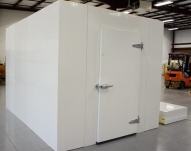





Swing Access for Constant Cooler Traffic
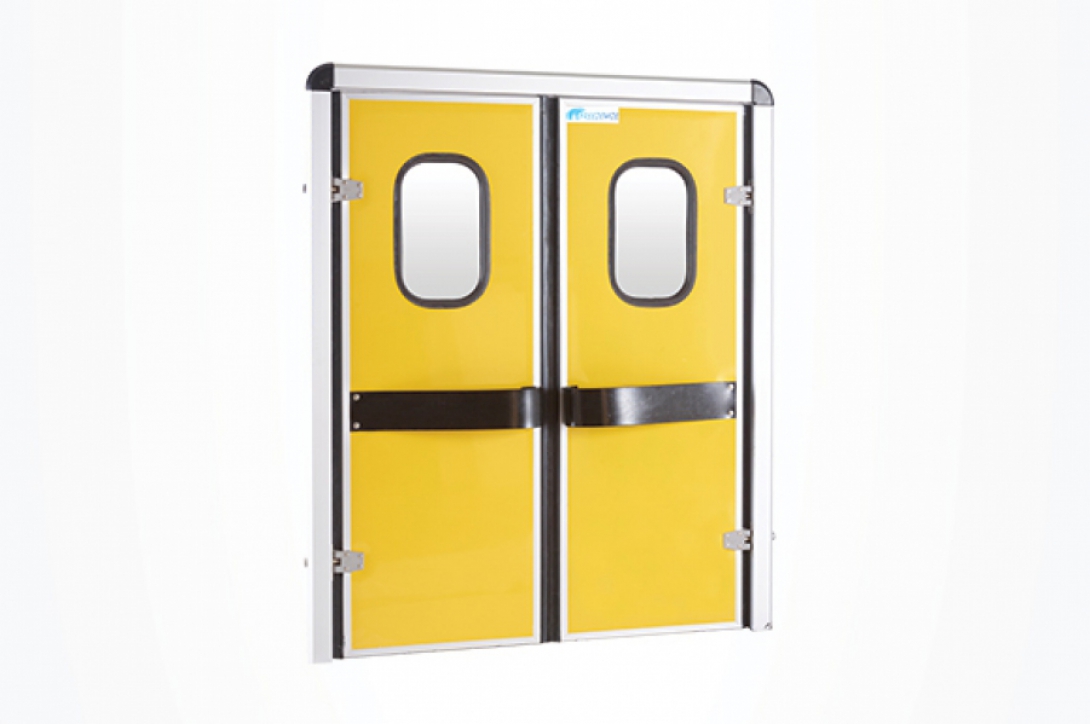
Traffic Swinging Cooler Door for Constant Traffic Flow
Constant cooler traffic creates delays, impact damage, and maintenance pressure. A traffic swinging cooler door supports faster movement, cleaner access, and better long-term workflow.
Swing Access for Constant Cooler Traffic
When the refrigerator opening is exposed to repeated daily movements caused by personnel, vehicles, and fast-paced backroom activities, the swing-style refrigerator door is the right choice. In high-volume food service, storage, and processing environments, the door is more than just an opening. It is an integral part of the workflow, and the wrong access style can silently slow down operations, increase wear and tear, and create preventable maintenance pressure.
When refrigeration traffic is constant, access performance is just as critical as temperature performance. The right swing-style access solution helps teams pass through the opening cleanly and safely while maintaining daily flow, reducing impact stress, and supporting a more reliable working environment over time.
Where Continuous Refrigerator Traffic Causes Friction
Many facilities do not face challenges due to an undersized refrigerator or a weak cooling system. They face challenges because the access point can no longer keep pace with the speed of operations.
This problem typically first manifests in practical ways. Staff move in and out quickly during preparation, restocking, organizing, or order picking. Carts pass through the opening throughout the day. The door is constantly touched, pushed, bumped, and reopened. Things that seemed acceptable during specifications begin to cause minor disruptions once actual traffic starts.
In areas with lower traffic volume, these issues may remain manageable. In a refrigerated room with constant movement, however, they turn into workflow friction. The door may feel too slow, too sensitive, too cumbersome, or simply wrong relative to the team’s actual use of the room.
For this reason, winged access becomes a critical decision in commercial refrigeration design. The real question isn’t whether the door opens and closes. The real question is whether it still feels right after daily, repetitive use under operational pressure.
The Hidden Cost of the Wrong Access Choice
A refrigeration door may function technically, yet it can still be the wrong choice for the facility.
This mismatch typically manifests in five ways:
- movement slows during door opening in high-traffic periods
- impact wear appears sooner than expected
- hardware and alignment issues lead to increased service needs
- cleaning routines around the door become more difficult
- the opening begins to feel like a weak point in an otherwise professional environment
This is important because heavy traffic magnifies every small weakness. A door that seems acceptable in a light-duty environment can become frustrating in a warehouse staging area, supermarket backroom, commercial kitchen, or distribution cooler where there are repeated entry cycles.
Over time, the result is not just inconvenience. It becomes an increased maintenance burden, premature visual aging, and a growing sense that the access system was poorly designed from the start. This situation often leads operators to start considering reinforcement, replacement, or a solution better suited to the traffic much sooner than planned.
Why Are Swing-Style Refrigeration Doors Better Suited for High-Traffic Areas?
A swing-style refrigeration door is designed not just for insulation, but for movement. Its value lies in how it supports repeated passage under real-world operating conditions.
In a cooler with constant traffic, teams need an opening that feels direct and reliable. They shouldn’t have to struggle with the door, stop unnecessarily, or worry that normal daily contact will quickly degrade performance. A properly designed traffic-swinging door helps facilitate a smoother flow between the climate-controlled storage area and the surrounding work areas.
This is important in environments such as:
- food preparation and production support areas
- refrigerated rooms in the back of supermarkets
- distribution and preparation areas
- restaurant and commercial kitchen refrigerators
- high-traffic beverage and supply storage rooms
- processing facilities with frequent internal movement
In these environments, hinged access typically performs well because it supports rapid transit and the natural movement of personnel. When the opening is in constant use, the access system must keep pace with the room’s activity; it must not slow it down.
Risk Is Not Theoretical—It Becomes Operational
The risk of selecting the wrong door is rarely dramatic on the first day. This risk increases with repeated use.
Repeated traffic can expose weaknesses in the door panel’s stability, hinge performance, surface durability, edge protection, seal consistency, and overall alignment tolerance. When this happens, the problem spreads beyond the door. Personnel begin to alter their movement patterns. Equipment routes are changed. Openings are approached with greater caution. Service calls become more frequent. Cleaning becomes less efficient. The room begins to lose some of its operational sharpness.
That is why traffic suitability is so important. The right door is not just one that fits the opening size. It is a door that aligns with the facility’s traffic flow, contact risks, cleaning routines, and long-term ownership expectations.
A refrigeration door in constant use should feel durable, practical, and easy to use. Otherwise, the cost manifests as labor time, user frustration, and pressure to replace it early.
A Truly Useful Access Comparison
For buyers comparing refrigeration access options, the most important distinction is not a matter of style preference. It is traffic suitability.
A heavy-duty refrigeration door is typically a strong option in high-traffic areas where personnel movement is frequent and regular vehicle activity occurs, especially where rapid entry and exit are critical. A lighter-duty manual access door may still work in less-used rooms, but it may struggle with high-frequency openings. Sliding access may be better suited for certain layouts where width is a concern, but it is not automatically the best choice for every refrigeration traffic pattern.
Here is a practical decision table:
| Access Type | Best Fit | Main Advantage | Main Limitation |
|---|---|---|---|
| Light-duty swing cooler door | Low to moderate staff use | Simple access for lighter operations | Can feel underbuilt for constant traffic |
| Traffic swinging cooler door | Repeated daily movement and faster pass-through | Better suited to active openings and frequent use | Must be specified correctly for impact level and clearance |
| Sliding cooler door | Space-sensitive or wider controlled openings | Useful where swing arc is restricted | Not always the most natural choice for constant quick pass-through |
Access Type Best Suited Location Main Advantage Main Limitation
Light-duty swing-type refrigeration door Low to moderate personnel usage Simple access for lighter operations May be insufficient for continuous traffic
Traffic-swing refrigeration door Daily repetitive movement and faster passage More suitable for active openings and frequent use Must be properly specified for impact level and clearance
Sliding refrigeration door Space-sensitive or wider controlled openings Useful where swing angle is limited May not always be the most natural choice for continuous rapid transit
This is not about declaring one format universally superior. It is about selecting the door type that matches how the opening is actually used.
What Does the Right Solution Look Like?
The right solution starts with traffic realities, not catalog language.
If the refrigeration opening manages constant daily traffic, the door should be selected by considering usage intensity, user behavior, and potential contact conditions. This means thinking beyond insulation and asking practical questions. How often is the door used per hour? Will staff be passing through with carts or shelves? Is the opening part of a preparation line, a replenishment cycle, or a staging sequence? How intensive is the cleaning routine? Is appearance important in a visible kitchen-back environment?
A robust solution suitable for heavy traffic typically involves coordinated consideration of the following:
- door panel durability
- hinge and hardware strength
- impact tolerance
- seal performance under repeated use
- viewing panel requirements for safer movement
- edge and frame protection
- threshold and floor transition compatibility
- compatibility with surrounding refrigeration panels and layout
This is where application experience becomes crucial. The Freezewize Refrigeration System typically treats access to the refrigeration unit not as an independent component, but as an integral part of the working environment. This is important because the best decision for a high-traffic sliding door usually stems from understanding how the room is used every day, rather than how the opening is drawn on paper.
Details That Shape Long-Term Performance
In intensive refrigeration applications, the door entrance is under the most strain at the point where traffic, cleaning, and temperature control intersect. Therefore, small technical details have significant long-term impacts.
A door suited to the opening should provide smooth, unobstructed movement. It should feel sturdy with repeated use. Even if the surrounding operations are fast-paced and demanding, it must close reliably and maintain a professional appearance.
Depending on the application, buyers may also need to consider adjacent elements such as:
- protective hardware for exposure to repeated impacts
- viewing panels for safer two-way movement
- seal performance under frequent cycles
- frame integration with insulated panel systems
- threshold details for pallet jack or hand truck movement
- cleanable surfaces for stricter hygiene routines
- service access that does not unnecessarily disrupt the room
These are not merely aesthetic decisions. In high-traffic cold rooms, they directly impact usability, cleaning efficiency, wear patterns, and replacement schedules.
Quick Decision Guide
If the opening is part of an active daily route rather than an occasional access point, choose a cold room door that opens in the direction of traffic.
This is generally a better choice in the following situations:
- if staff pass through the cold room repeatedly throughout the day
- if the opening supports quick preparation, stock replenishment, or internal distribution
- if hand carts or similar mobile equipment are part of the traffic flow
- if exposure to impact is a normal part of operations
- if the facility seeks not only a lower initial specification level but also less friction in the long term
- if visible wear and maintenance downtime compromise the room’s standard
If usage is limited and the opening is not part of a continuous traffic route, a lighter alternative may still be suitable.
If swing clearance is limited or the layout prioritizes protecting the floor area around the opening, sliding access may be more sensible.
The key decision is simple: determine it based on how the opening will be used on its busiest normal day, not its quietest.
Related Solutions
For projects where a swinging refrigeration door is part of a larger cold room solution, relevant interior solutions may include:
- insulated panel systems for cold rooms
- freezer room door solutions
- cold storage door hardware and protection options
- hygienic cold room wall and ceiling panels
- commercial kitchen refrigeration access systems
- warehouse and distribution cold storage layouts
Since door performance is rarely independent of panel construction, room airflow, floor conditions, and maintenance expectations, these factors are generally directly interrelated.
FAQ
For which types of facilities are swing-type refrigerated doors most suitable?
These doors are best suited for refrigerated rooms where personnel pass through frequently and where the opening supports active operations rather than occasional access, with daily traffic recurring.
Are traffic swing doors suitable for cart traffic?
Yes, in many applications, they provide a practical solution for cart traffic as long as the opening width, hardware strength, threshold configuration, and protection details are properly specified.
Is a swing-type refrigeration door always better than a sliding door?
No. It is generally better for high-traffic operations, but sliding access may be more suitable in cases where the swing clearance is limited or the opening size and layout require a different access model.
What causes premature wear in high-traffic refrigerated doors?
Premature wear is typically caused by repeated impacts, inadequate hardware, a design unsuitable for traffic conditions, insufficient protection, and selecting a door style that does not match the actual speed of the room.
Are vision panels important in areas with constant traffic?
Generally, yes. In higher-traffic areas, a vision panel can enhance safety by improving visibility and, particularly in two-way personnel circulation zones, can reduce preventable contact at the door.
When should a facility upgrade to a traffic-rated refrigeration door?
If the current opening leads to repeated delays, visible wear and tear, increased maintenance demands, or a daily sense that the access point no longer meets operational needs, an upgrade makes sense.
Better Access Leads to Better Refrigeration Performance
When traffic is constant, the refrigeration door ceases to be a simple component and becomes part of the operational system.
If the opening handles constant movement, a traffic-rated swing refrigeration door is generally a wiser choice in the long run.
For facilities planning a new cooler or upgrading an existing one, the best approach is to review the opening in the context of actual traffic, cleaning demands, and daily workflow to ensure the access solution supports the room just as much as the cooling system.