




Freezewize | Industrial Cooling Systems & Custom Cold Room Solutions

When Swing Clearance Starts Driving Cold Room Performance

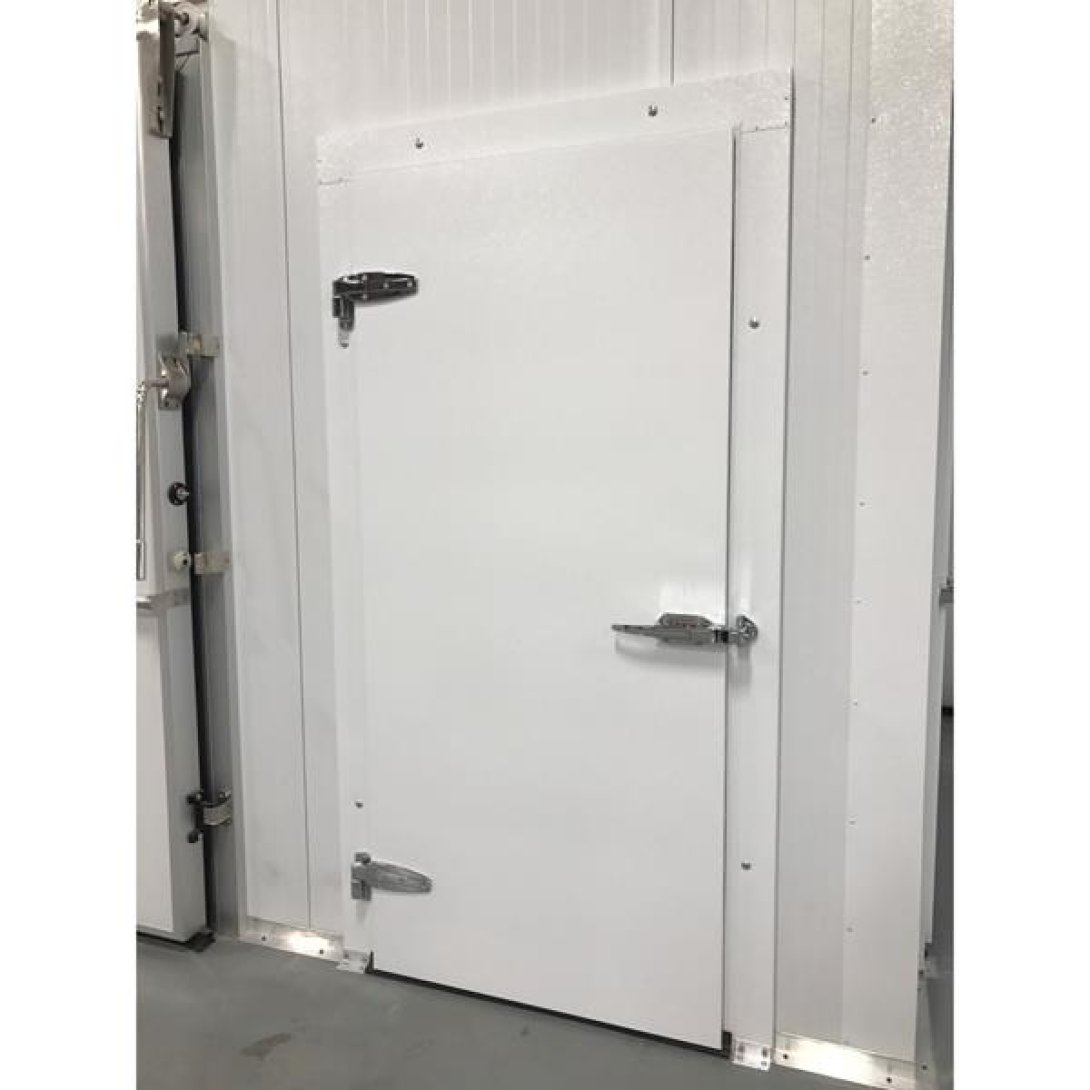
Hinged Cold Room Door Swing Clearance Guide for Daily Use

Poor swing clearance can slow traffic, increase door impact, and create layout friction. See when hinged cold room door clearance starts affecting workflow.

When Swing Clearance Starts Driving Cold Room Performance

Swing clearance starts mattering the moment a hinged cold room door becomes part of a real daily workflow rather than a simple opening on a drawing. If staff, carts, racks, or prep activity regularly move near the entrance, poor clearance can quickly turn the doorway into a bottleneck that creates impact, delay, and avoidable wear.

In daily-use cooler and refrigerated room environments, clearance affects more than convenience. It influences labor flow, cleaning access, equipment placement, visible back-of-house order, and how long the door continues to feel like the right fit for the room.

Clearance Problems Usually Appear After the Room Goes Live

On paper, a hinged cold room door can look completely acceptable. The opening size is right, the door seals, and the hardware meets the basic requirement. The real test begins after installation, when the room enters daily use and the surrounding space starts doing what operations always do: filling up.

That is when swing clearance becomes operational instead of theoretical. A nearby prep table, rolling rack, wall corner, shelving run, pallet staging point, or service access route can turn a standard swing path into a repeated source of friction. Staff start adjusting how they move. Carts wait or angle awkwardly. The door leaf gets pushed harder than intended. The opening still works, but the room stops feeling cleanly planned.

This issue shows up often in supermarkets, food production support rooms, commercial kitchens, back-of-house cooler rooms, and refrigerated prep areas where usable space is already under pressure. The problem is not that the door fails. The problem is that the entrance begins to interfere with the room’s rhythm.

A Tight Swing Path Creates More Than Minor Inconvenience

When swing clearance is undersized or poorly coordinated, the cost is rarely dramatic at first. It builds through repetition.

A door with limited clearance can lead to:

Slower staff movement during busy periods

More contact between the door leaf and carts, racks, or adjacent surfaces

Awkward entry angles that reduce labor efficiency

Layout compromises around tables, shelving, or staging zones

Harder cleaning along edges, corners, and threshold areas

Faster visual wear at impact-prone points

A growing sense that the room was not fully planned around real use

This is why clearance should never be treated as a minor detail. In a daily-use environment, the swing path is part of the workflow design.

The Risk Is Operational, Not Just Dimensional

A hinged cold room door can be technically correct and still operationally wrong. That usually happens when the opening was sized properly, but the clearance around the opening was not evaluated with actual room behavior in mind.

The risk becomes visible in three areas.

First, workflow friction. Staff hesitate, redirect, or wait because the swing path conflicts with movement. In fast-paced environments, even small interruptions multiply across the day.

Second, maintenance pressure. Repeated side contact, forced opening, edge strikes, and stressed hardware shorten the period before the entrance starts looking tired or needing attention.

Third, facility standard mismatch. In foodservice and cold storage operations, the cold room entrance is part of the room’s credibility. If the door always feels cramped, obstructed, or visibly stressed, the room may still function, but it no longer feels properly resolved.

A bad clearance decision often creates the exact kind of issue that users struggle to explain in technical terms but immediately recognize in daily use: the room works, yet the doorway never feels right.

Where Swing Clearance Matters Most

Clearance matters most when the cold room entrance sits inside an active operating envelope rather than along a quiet wall.

That includes situations such as:

Staff moving in and out repeatedly during prep, picking, or restocking

Rolling carts or light rack movement near the doorway

Narrow back-of-house aisles

Adjacent equipment, sinks, prep stations, or shelving

Openings close to wall returns or corners

Rooms that require frequent cleaning and unobstructed access

Facilities with visible workflow discipline and inspection expectations

In these cases, the question is not simply whether the door can open. The question is whether it can open without forcing the room to work around it.

Hinged Access vs Layout Pressure

When swing clearance becomes a concern, the real decision is often about suitability rather than product category alone. A hinged cold room door remains a strong solution in many facilities, but only when the surrounding layout supports the movement pattern.

Decision FactorHinged Cold Room DoorAlternate Access Direction
Fast manual entryStrong fitVaries by configuration
Daily staff trafficStrong fit when clearance is cleanBetter if swing conflict is severe
Tight surrounding layoutCan create frictionMay reduce interference
Cleaning simplicityStrong fitDepends on system design
Light cart activityWorks if swing path stays clearBetter when clearance is restricted
Hardware simplicityStrong fitMay involve more system complexity
Best use caseDirect daily access with usable swing spaceLayouts where door swing disrupts operations

The important point is not that hinged access is limited. It is that hinged access performs best when the room gives it enough space to behave naturally.

Clearance Should Be Planned With the Whole Opening

A better decision starts by treating the doorway as part of the room layout rather than as a separate component. That means evaluating more than the opening width and door leaf size.

In practice, clearance planning should consider:

Staff movement direction through the opening

Left-hand or right-hand swing logic

Nearby walls, corners, shelving, and equipment

Cart, rack, or pallet jack approach patterns

Threshold condition and floor transition

Handle clearance and hardware exposure

Visibility needs near blind approach zones

Seal protection and edge impact risk

This is where project teams often avoid future regret. The right door is not only the one that fits the opening. It is the one that fits the behavior around the opening.

When projects are reviewed through that lens, The Freezewize Cooling System approach becomes more practical because the door is considered with the surrounding panel system, movement pattern, hygiene routine, and service reality instead of being treated as an isolated line item.

What Good Swing Clearance Actually Feels Like

Well-resolved swing clearance usually does not draw attention to itself. That is the point.

The door opens without forcing staff to pause or change direction. Nearby equipment does not need to be awkwardly offset. Cleaning crews can reach surrounding surfaces without obstruction. Carts are not constantly clipping edges or waiting for space to clear. The entrance feels like part of the workflow, not an obstacle inside it.

That kind of outcome often comes from relatively simple decisions made early: correcting swing direction, preserving wall-side space, protecting impact zones, adjusting adjacent layout, or rethinking whether the opening sits too close to a working surface.

In daily operations, those choices matter more than many buyers expect.

Quick Decision Guide

Choose a hinged cold room door with confidence when:

The opening has a clean swing zone

Daily traffic is mostly personnel and light cart movement

The room benefits from simple, direct manual access

Cleaning and inspection routines require straightforward hardware and access points

Nearby layout elements do not compete with the door leaf movement

Take a closer look before finalizing when:

The doorway sits next to shelving, prep stations, or wall returns

Staff regularly stage products near the entrance

Rolling equipment approaches the opening from an angle

The room has narrow aisle pressure

Repeated impact or forced opening already seems likely

The best clearance decision is usually the one that prevents the room from having to adapt to the door later.

Related Solutions

Projects evaluating swing clearance often benefit from reviewing nearby related solutions at the same time:

Cold room wall panel systems for cleaner doorway integration

Freezer door configurations for lower-temperature applications

Vision panel options where traffic visibility matters

Protective kick plates and hardware guards for impact-prone openings

Threshold and floor transition details for smoother cart movement

Sliding cold room door options where swing conflict is difficult to solve

FAQ

How much swing clearance does a hinged cold room door usually need?

The required clearance depends on door size, handle projection, wall proximity, cart traffic, and nearby equipment. The correct answer comes from the room layout, not from a generic dimension alone.

When does swing clearance become a real problem?

It becomes a real problem when staff or equipment regularly pass near the entrance and the door leaf starts interfering with movement, cleaning, or adjacent work zones.

Can a hinged cold room door still be the right choice in a tight room?

Yes, if the swing direction, surrounding layout, and traffic pattern are planned correctly. A tight room does not automatically rule out hinged access, but it raises the importance of proper clearance review.

Does poor clearance increase maintenance burden?

Yes. Repeated impact, forced opening, stressed hardware, and edge contact often show up sooner when the swing path is too tight for the way the room is actually used.

Should clearance be reviewed together with carts and rack movement?

Absolutely. A doorway that works for foot traffic alone may still create friction once rolling movement becomes part of daily use.

Is swing clearance only about convenience?

No. It also affects workflow speed, cleaning access, visible wear, hardware life, and whether the room continues to feel operationally well designed.

Conclusion

When swing clearance starts affecting movement, cleaning, and layout decisions, it is no longer a detail. It is part of cold room performance.

A hinged cold room door is the right choice only when the swing path works as naturally as the room itself. If you are evaluating a daily-use cold room entrance, reviewing clearance early can prevent workflow friction, premature wear, and costly correction later.


Fill the Form!

Write your needs and fill the form to contact us.

Freezewize | Industrial Cooling Systems & Custom Cold Room Solutions
Merhaba, Size yardımcı olabilir miyiz ?
Whatsapp Destek