




Daily Impact at the Cooler Threshold
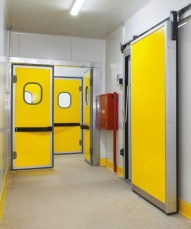
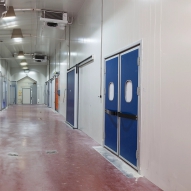
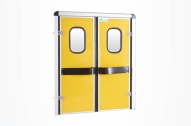
Swing-Style Refrigeration Door Designed for Daily Impacts at Thresholds and Optimized for Traffic Flow
Repeated impacts on thresholds quickly wear down refrigeration entrances. A swing-style refrigeration door optimized for traffic flow helps maintain traffic flow, reduce damage, and support a cleaner daily operation.
Daily Impact at the Cooler Threshold
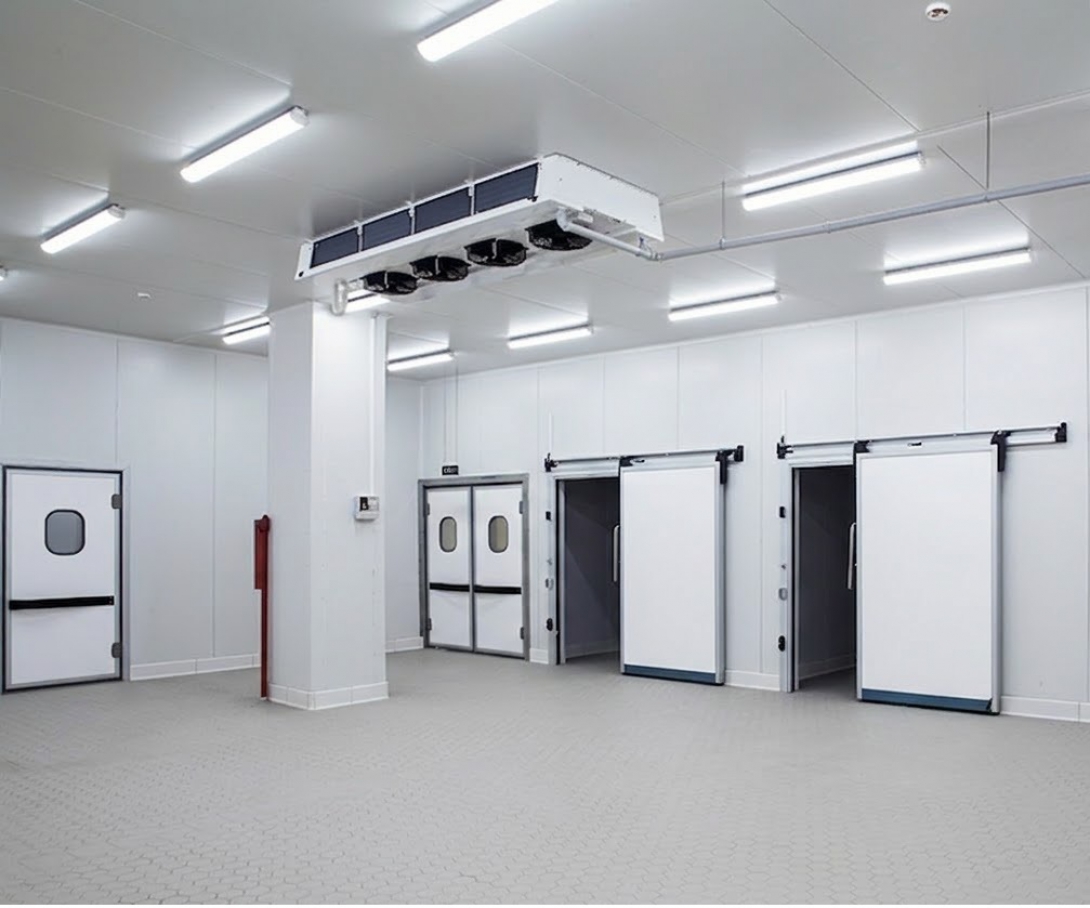
When a refrigerator threshold is subjected to daily, repeated impacts from personnel, vehicles, shelves, and fast-moving activity behind the kitchen, a traffic-rated swing refrigerator door is often the right solution. In these environments, the problem isn’t just the door’s frequent use. The problem is that the threshold becomes the point where workflow, impact, cleaning demands, and long-term wear converge.
Therefore, threshold performance is critical. A cooler may maintain temperature, but if the opening is constantly exposed to impacts, slows down movement, or begins to wear out faster than the rest of the room, it can still create daily operational issues. The right traffic door helps ensure the threshold remains functional, controlled, and easier to manage under real-world operating conditions.
The Threshold Endures More Wear and Tear Than Most Teams Expect
Many issues related to access to the cooler do not originate in the panel system or the cooling equipment. These problems begin at the bottom of the opening where daily traffic repeatedly crosses the room boundary.
In active facilities, the threshold becomes a workspace rather than a simple passageway. Personnel cross the threshold during preparation, stocking, replenishment, and collection. Carts pass through the threshold throughout the day. Pallet jacks approach the threshold under pressure. Cleaning crews wash around the threshold. Door panels swing over the threshold. Seals make contact with the threshold thousands of times over the life of the room.
This repeated contact creates a different kind of stress than buyers typically expect. It doesn’t take a single major incident for the opening to become a problem. Daily impacts are sufficient to hinder movement, increase surface wear, and make the entire entry point less reliable.
This is important for high-volume U.S. operations because the threshold affects more than just durability. It affects workforce flow, cleaning efficiency, visual condition, and the overall sense that the room was built to be operational.
The Risk of Ignoring Daily Threshold Wear
A refrigeration door may be technically functional, but it could still be the wrong choice for a threshold subjected to constant daily wear and tear.
This mismatch typically emerges gradually. The threshold begins to look more worn than the surrounding floor and wall areas. The entrance becomes less smooth for wheeled traffic. The door contact feels stiffer. Cleaning around the threshold becomes more difficult. The opening begins to feel like a maintenance point rather than a functional asset.
Operational risks are practical:
- Repeated impact accelerates visible wear at the entrance
- Wheeled traffic causes the opening to feel rougher over time
- Seals and hardware are subjected to greater stress due to constant opening and closing
- It becomes harder to keep the threshold clean and under control
- Staff begin to adjust their movements around the opening
- Discussions about repairs or replacements begin to surface
The fundamental issue here is this: a threshold can still be “functional” while silently increasing the room’s operating costs. It can slow down daily traffic, increase maintenance requirements, and give the impression that the access point was not designed for the actual operational demands.
The Comparison Buyers Really Need
When daily threshold impact is part of the problem, the most useful comparison isn’t just between door style and door style. The real issue is whether the opening is designed for repetitive traffic conditions.
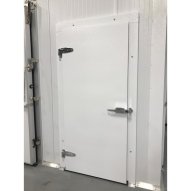
A standard swing-style refrigeration door may be suitable in a less-used room where threshold impact is limited. A swing-type refrigeration door is generally a better choice when there is constant foot and wheeled traffic at the threshold. A sliding door can be helpful in some narrow layouts where swing clearance is limited, but it is not always the strongest solution when fast and repeated traffic is a normal part of operations.
Here’s a practical perspective:
| Access Type | Best Fit | Threshold Advantage | Main Limitation |
|---|---|---|---|
| Standard swing cooler door | Lower-frequency access | Acceptable where impact and crossing volume stay light | Can wear faster at busy thresholds |
| Traffic swinging cooler door | Repeated daily staff and cart traffic | Better suited to high-use threshold conditions and active passage | Needs correct threshold detail and traffic-based planning |
| Sliding cooler door | Tight layouts with restricted swing room | Helps reduce swing-path conflicts | Not always the most natural choice for constant fast crossing |
Access Type Best Option Threshold Advantage Main Limitation
Standard swing-type refrigeration door Low-frequency access Acceptable in areas with low impact and low traffic volume May wear out faster in high-traffic thresholds
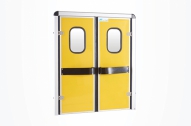
Traffic-duty swing-style refrigeration door Areas with repeated daily personnel and hand-cart traffic Better suited for high-traffic threshold conditions and active traffic Requires proper threshold details and traffic-based planning
Sliding refrigeration door Confined, narrow layouts where swing space is limited Helps reduce swing path conflicts Not always the most natural choice for continuous, high-speed traffic
The key point is not that a single option is universally the best. The key point is that threshold conditions influence the decision at least as much as the door style does.
Why Do Traffic Swing Refrigerator Doors Work Better in High-Traffic Thresholds?
The traffic swing refrigerator door is valuable because it adapts better to repetitive passage behavior. In high-traffic environments, this is far more important than a simple product description implies.
When people and equipment cross the threshold all day long, the opening must remain predictable. Staff should not have to slow down unnecessarily. The movement of vehicles should not feel like a risk of repeated collisions. The threshold should not become the part of the room that visually starts to wear out first or constantly demands attention.
This is where a traffic-friendly swing door truly earns its place. In constantly used openings, it supports a more natural flow of movement and helps the room function as a working system rather than a collection of separate components.
This applies particularly to the following:
- refrigerated rooms at the back of supermarkets
- restaurant and commercial kitchen support areas
- refrigerated preparation and holding areas
- food processing support zones
- refrigerated warehouse openings
- beverage and supply storage rooms
- refrigerated entrances on the distribution side
In these areas, the threshold is under real operational pressure every day. A door selected with this reality in mind typically performs better over time than a door chosen solely for basic sealing purposes.
A Better Solution Starts with the Entry Details
The daily impact on the threshold isn’t solved by the door leaf alone. This issue is resolved by addressing the opening’s full usage conditions.
This means examining how the space is actually used. Is traffic predominantly pedestrian, or does it involve a mix of hand trucks and pallet jacks? How frequently is the opening opened and closed during a typical shift? Is the threshold detail suitable for wheeled traffic? Are cleaning routines aggressive? Does the opening require a sight panel to support safer two-way movement? Are the seals, hardware, and adjacent floor conditions properly coordinated?
A more robust solution typically involves considering the following:
- threshold suitability for repeated wheeled traffic
- smoother transition conditions at the opening
- door and hardware durability under frequent cycling
- seal performance where repeated closing is critical
- Use of a sight panel for safer movement in high-traffic areas
- Coordination of surrounding flooring and panels
- Edge and frame protection in impact-prone areas
- Easier access for service and cleaning routines
This is where experience matters. The Freezewize Cooling System approaches the cooling threshold as an integral part of the room’s daily workflow, rather than as a minor detail to be addressed in the final stages. This approach typically yields better long-term results because the access point is planned around actual usage rather than theoretical usage.
Threshold Impact Also Affects Hygiene and Presentation
In food and cold storage environments, a worn-out threshold is not just a durability issue. It is also a hygiene and presentation issue.
When repeated impacts cause rougher edges around the entrance, deeper scratches, harder-to-clean transition points, or premature deterioration, this can weaken the perceived standard of the entire room. Even if temperature control remains constant, the threshold begins to show signs of stress.
This is particularly important in facilities where inspection readiness, cleaning routines, and the visible organization of the back-of-house area are critical. A better traffic door helps the threshold remain more stable under pressure and makes maintenance easier as part of a professional refrigerated environment.
Quick Decision Guide
A swing-type refrigerated door is generally a better choice when the threshold is part of the daily workflow and is subjected to repeated contact within the scope of normal use.
It is particularly suitable in the following situations:
- if personnel pass through the opening throughout the day
- if vehicles, racks, or pallet jacks regularly use the threshold
- if the refrigeration system supports preparation, restocking, organization, or collection operations
- if impact in the lower entry area is already visible or expected
- if cleaning and maintenance crews need a more manageable opening
- if the facility wants less friction in the long term at a high-traffic entry point
If the room is used infrequently and contact with the threshold is limited, a standard swing door may still be suitable.
If the swing clearance is limited and the layout itself is the main issue, a sliding option may be more practical.
The simplest rule is this: If daily impact is concentrated on the threshold, the entrance must be specified not only for basic door functionality but also for threshold performance.
Related Solutions
Other page opportunities related to this topic may include:
- insulated panel systems for cold rooms
- freezer door solutions for low-temperature applications
- refrigerated door hardware and protection options
- threshold and floor transition details
- hygienic cold room wall and ceiling panels
- warehouse and distribution cold storage layouts
- commercial kitchen cold room access systems
These are important because threshold wear is typically linked to the entire access area, including flooring, panels, hardware, and traffic patterns.
FAQ
Why does a cold room threshold wear out so quickly?
Because it absorbs the repeated daily contact caused by foot traffic, wheeled traffic, cleaning routines, and constant door opening and closing. It is usually the hardest-working part of the opening.
For thresholds exposed to high impact, is a swing-type cold room door better?
In many active operations, yes. It is generally better suited for the repetitive passage conditions and daily stress seen in high-traffic cold room entrances.
Can threshold wear affect workflow?
Yes. When the threshold becomes rough, difficult to clean, or less predictable in movement, it can slow down personnel, make cart passage difficult, and introduce friction into the operation.
Should threshold conditions be considered during door selection?
Absolutely. Before making the final door selection, threshold details, floor transitions, hand truck traffic, clearance, and cleaning routines should be reviewed.
Do pallet jacks and hand trucks alter technical specifications?
Yes. Wheeled traffic increases the importance of threshold durability, smoother transitions, hardware strength, and overall clearance suitability.
When should the cold room entrance be replaced?
Replacement should generally be considered when the threshold shows signs of repeated impact damage, when clearance movement slows down, when cleaning becomes difficult, or when maintenance requirements begin to increase.
The Threshold Determines More Than Most People Realize
In a high-traffic cooling room, the threshold is not a passive detail. It is where daily wear and tear first manifests.
If the cooling threshold is subject to repeated impacts, a cooling door that opens in the direction of traffic is generally the most sensible approach to maintain airflow, reduce wear, and improve long-term inlet performance.
For new construction and renovation projects, the most beneficial step is to review the opening based on traffic type, threshold usage, cleaning requirements, and exposure to impact before finalizing the access strategy.