




Reducing Wear at Busy Cooler Openings
Swing Doors That Reduce Wear in High-Traffic Refrigerated Entrances
Reduce wear in high-traffic refrigerated entrances with the right swing door. Improve traffic flow, limit impact damage, and reduce long-term maintenance costs.
Reducing Wear at Busy Cooler Openings
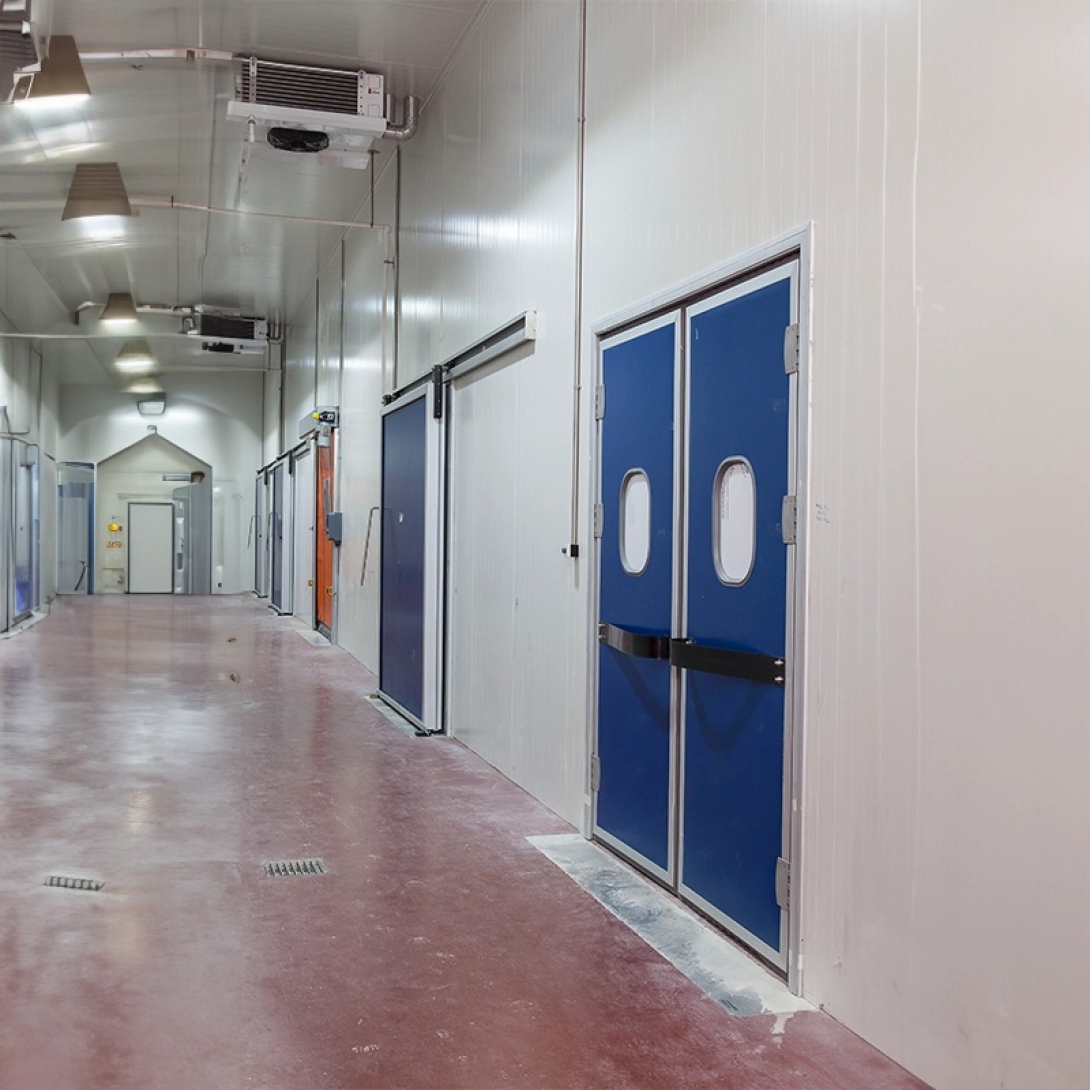
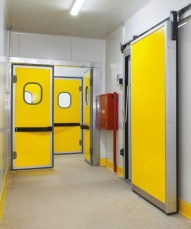
If a refrigeration entrance is subjected to repeated impacts daily due to constant use from personnel movement, vehicles, shelves, and the kitchen back-of-house area, a traffic swing refrigeration door is typically the best choice. In these environments, wear does not begin as a sudden failure. It starts with small damages, harsh movements, loose hardware, worn edges, and a door that begins to age faster than the rest of the room.
That’s why wear control is crucial in cooler design. A high-traffic entrance must do more than just maintain temperature. It must manage movement, absorb impact, support cleaning routines, and remain reliable under daily pressure. The right door helps minimize damage before it leads to service calls, slowed workflow, and premature replacement.
Wear Typically Starts at the Most Active Point
High-traffic cold rooms rarely fail due to a single major incident. They wear out as a result of repeated use.
The entrance is exposed to more contact than nearly any other part of the room. Personnel pass through here during preparation, stocking, picking, replenishment, and internal product movement. Carts bump into the frame. Shelves scrape against the door surface. During peak periods, pallet jacks approach very quickly. Cleaning crews work around thresholds, gaskets, and hardware every day. Over time, the entrance is subjected to wear and tear that the rest of the cold room avoids.
For this reason, high-traffic entrances deserve special attention. A refrigeration unit may still maintain temperature and appear acceptable from a distance, but the entrance door may already be showing signs of wear. This wear is not merely a cosmetic issue. It typically indicates increasing impact wear, rising maintenance costs, and a mismatch between the entrance system and the operations it serves.
This is the real challenge for facility managers and contractors. The question is not whether the door will open. The question is whether the door can withstand daily use without becoming the first component to wear out, become misaligned, or require maintenance.
The Risk of Underestimating Opening Wear
A door may seem adequate during installation, but as traffic increases, it can become a poor choice in the long run.
The risk lies in buyers sometimes viewing the entrance as a simple passageway rather than a high-traffic work area. In this case, technical specifications may prove insufficient for the room’s actual demands. The result is gradual deterioration that emerges during operation before it is noted in product brochures.
This deterioration typically manifests as follows:
- edges and surfaces begin to wear out prematurely
- hinges, gaskets, or hardware require maintenance sooner than expected
- it becomes difficult to keep threshold areas clean and under control
- during peak periods, the door begins to slow down staff workflow
- the appearance of the door begins to deteriorate
- discussions about replacement begin sooner than planned
This is particularly important in U.S. food, retail, and distribution environments, where durability is evaluated not only by installation quality but also by operating hours. A refrigeration door that wears out too quickly creates a silent but costly problem. It disrupts the workflow, increases service interruptions, and leaves the impression that the door was not designed to suit the room’s actual usage.
The Key Comparison Isn’t Just About Style
When the goal is to reduce wear, a better comparison isn’t simply pitting one door type against another. It’s about which access style better manages repeated contact within a specific setup.
A standard swing door may work well in a less-used room, but it can begin to wear out quickly in a high-traffic opening. When repeated passage and accidental impacts are part of daily operations, a traffic swing door is generally a more suitable choice. A sliding door can reduce certain types of wear when swing space is limited, but it is not always the most natural choice in areas where personnel need to move quickly and continuously.
Here is a practical wear-based comparison:
| Door Type | Best Fit | Wear Advantage | Main Limitation |
|---|---|---|---|
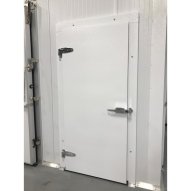
| Standard swing cooler door | Lower-frequency access | Suitable where contact exposure is limited | Can show wear faster in busy openings |
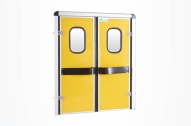
| Traffic swinging cooler door | Repeated daily movement and active back-of-house use | Better suited to ongoing contact and heavier daily use | Needs proper clearance and traffic-based specification |
| Sliding cooler door | Tighter layouts with limited swing area | Can reduce swing-path interference | Not always ideal for fast repetitive pass-through |
Door Type Best Use Wear Advantage Main Limitation
Standard swing-type refrigeration door Less frequent access Suitable for areas with limited contact May show faster wear in high-traffic areas
Traffic swing-type refrigeration door Repeated daily movement and active back-of-house use More suitable for constant contact and heavier daily use Requires adequate clearance and traffic-based features
Sliding Refrigerator Door Narrower layouts with limited swing space Can reduce obstacles in the swing path Not always ideal for fast and repeated traffic
This table is important because wear isn’t just about the material. It’s about suitability. The right door handles normal use. The wrong door is constantly exposed to wear.
Why Do Traffic-Swing Refrigerator Doors Help Reduce Wear?
A traffic-swing refrigerator door is valuable because it is designed around repetitive motion. In high-traffic areas, this makes a real difference.
If people are passing through the door all day long, the door must withstand constant contact without feeling fragile or requiring maintenance. It should support natural movement, reduce forced use, and better withstand the daily realities of a working refrigeration system. This is where the value of a traffic-focused access system begins to shine.
These doors are typically well-suited for the following:
- supermarket backroom refrigeration entrances
- commercial kitchen support areas
- chilled food preparation zones
- beverage and supply rooms
- warehouse refrigeration preparation entrances
- processing support areas with high employee traffic
In these environments, the goal is not to eliminate all contact. That is unrealistic. The goal is to select a door system that manages contact more effectively and slows the rate at which that contact translates into visible wear, adjustment needs, and replacement pressure.
A Better Solution Is Often a Better Entry Strategy
Reducing wear begins not just with the door panel, but with the entry strategy.
This means examining the entire usage pattern around the entrance. How frequently is the door used? What kind of traffic passes through it? Is the opening primarily open to foot traffic, or do hand trucks, shelves, and pallet jacks regularly pass through? Is there sufficient clearance for natural movement? Does the team need visibility through the opening? How intensive is the cleaning routine? Is the room part of a visible kitchen-back area where early wear and tear affects the presentation?
A more robust solution typically involves considering the following:
- door surface durability
- hardware strength and service accessibility
- seal performance under repeated cycles
- viewing panel placement for safer two-way movement
- threshold suitability for wheeled traffic
- frame protection and edge durability
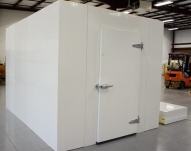
- compatibility with surrounding insulated panels
- easier cleaning around seals, hardware, and floor transitions
This is where a practical supplier mindset comes into play. The Freezewize Cooling System treats high-traffic cooling openings not merely as door cutouts, but as high-usage work areas. This approach helps reduce long-term wear by ensuring the door selection aligns with actual traffic conditions, rather than just appearance or initial simplicity.
Wear Control Also Supports Hygiene and Presentation
In many facilities, wear is not just a maintenance issue. It is also a hygiene and image issue.
A door that deteriorates quickly becomes harder to keep clean, maintain a good appearance, and inspire confidence during inspections or routine visits. When edges crack, surfaces become excessively worn, and gaskets or hardware begin to look worn out, this opening can make the entire room appear older than it actually is.
This is important in food establishments, supermarkets, processing plants, and commercial kitchens where the refrigeration entrance is part of the daily visual standard. A better traffic door helps the entrance maintain a more controlled, professional appearance and makes it easier to manage under constant use.
Quick Decision Guide
If reducing wear in a high-traffic opening is a priority, a swinging traffic cooler door is generally a better choice.
It is particularly suitable in the following situations:
- if there is constant personnel traffic through the door
- if vehicles, shelves, or pallet jacks regularly approach the entrance
- if the room supports preparation, restocking, organization, or assembly operations
- if visible wear becomes a maintenance or presentation issue
- if cleaning routines are frequent and demanding
- if the facility wants to experience fewer maintenance issues over time
If usage is low and the risk of contact is limited, a standard swing door may still be sufficient.
If the swing clearance is limited and the layout itself poses a risk of wear and tear, a sliding alternative may be more sensible.
The simplest rule is this: if the entrance is exposed to daily, repeated contact, prioritize durability and suitability over simplicity in the first instance.
Related Solutions
Other relevant page opportunities related to this topic may include:
- insulated panel systems for cold rooms
- freezer door solutions for low-temperature rooms
- refrigerated door hardware and protection options
- hygienic wall and ceiling panels for cold rooms
- cold storage layouts for warehouse and distribution use
- commercial kitchen refrigeration access solutions
- threshold and floor transition details for refrigerated entrances
These are natural extensions because wear at the opening is typically affected not just by the door but by the entire entry area.
FAQ
What causes wear in high-traffic refrigeration openings?
Repeated daily contact from personnel, vehicles, shelves, pallet jacks, cleaning routines, and constant opening cycles typically causes wear in active refrigeration entrances.
Are swing doors better for high-traffic refrigeration doors?
Yes, this is often a more suitable option in many high-traffic applications because it is better suited to repeated daily movements and constant operational pressure.
Can improper refrigeration door maintenance increase costs?
Yes. A door that is technically functional but not suited to the traffic level typically results in more service calls, faster visible wear, and the need for earlier replacement.
Do thresholds and surrounding hardware affect wear and tear?
Yes. Wear and tear is influenced by full-opening conditions, including threshold design, frame protection, hardware durability, and how wheeled traffic passes through the entrance.
Should high-traffic refrigerated entrances be planned differently from low-traffic entrances?
Yes. High-traffic entrances should be treated as separate operational zones with higher demands regarding durability, traffic control, cleaning compatibility, and long-term suitability.
When should a worn-out refrigerated entrance be replaced?
Renovation should generally be considered when the entrance begins to slow down traffic, shows signs of repeated impact damage, requires frequent servicing, or causes the room to appear substandard.
A High-Traffic Entrance Requires More Than Just a Simple Door
The hardest-working part of a refrigeration unit is usually not the cooling system. It is the entrance that people use all day long.
If wear is increasing at a high-traffic refrigeration entrance, the real solution is usually not to tolerate more damage, but to implement a door strategy better suited to the traffic.
For both new projects and renovation work, the best approach is to evaluate the entrance in terms of traffic flow, contact risk, cleaning requirements, and long-term ownership expectations before selecting the final access solution.