




Freezewize | Industrial Cooling Systems & Custom Cold Room Solutions

Better Control in Tight Access Areas

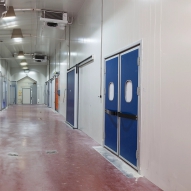
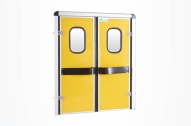
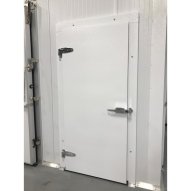
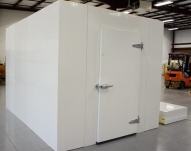
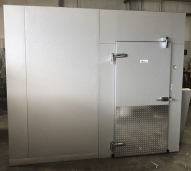
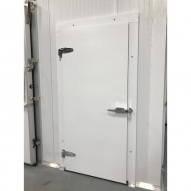
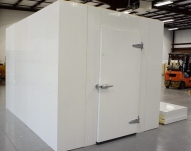
Hinged Cold Room Door for Narrow Passageways and Better Control

Improve control in narrow passageways: With a hinged cold room door designed for safer movement, cleaner workflow, and less wear and tear in narrow, high-traffic areas.

Better Control in Tight Access Areas

Hinged cold room doors can be the right solution in narrow access areas where controlled, predictable movement is required instead of a larger opening or a more complex access system. In narrow back corridors, preparation areas, compact cold rooms, and restricted service areas, the right door helps staff move more safely, reduces avoidable contact, and makes entry easier to manage every day.

This is important because limited space alters a door’s performance. In tight layouts, the issue isn’t merely whether the door opens or closes. The problem is whether the door opening remains usable under daily stress—without causing swaying conflicts, equipment obstructions, cleaning difficulties, or the feeling that the opening has been forced into a space where it never quite fits.

Tight Access Changes the Real Door Problem

In a larger room, a door may not cause problems even if it’s only marginally acceptable. In a tighter layout, however, small flaws almost instantly turn into daily issues.

This is particularly true for commercial kitchens, supermarket backrooms, refrigerated prep areas, compact cold storage units, and support rooms built around narrow corridor traffic. Staff carry products, turn quickly, move between stations, and work around shelves, wall corners, carts, or nearby equipment. Under these conditions, the door line is not merely a part of the enclosure. It becomes an integral part of the room’s movement logic.

This is where many cold room entrances begin to cause problems. The opening may be technically correct, but it can still feel too aggressive for the available space. The door’s swing path may conflict with personnel movement. The handle area may be too close to the work area. The threshold may obstruct turning movements. The result is not a faulty door. It is an entrance that does not feel fully under control.

Tight Spaces Expose Poor Door Decisions Faster

In a tight space, an ill-suited entrance tends to reveal itself through repeated minor issues rather than a single major failure.

Common issues include:

Staff having to slow down or adjust their body position to enter the room

Increased contact with the door edge, frame, or adjacent wall surfaces

Reduced control when carrying trays, boxes, or materials

More difficult movement around nearby shelves, carts, or prep equipment

Increased wear in lower sections exposed to impact

Cleaning routines becoming more difficult around the threshold or the door’s swing area

A kitchen back-of-house layout that feels cramped even if the room is functional

These are not merely cosmetic issues. They affect workflow, comfort, and consistency. In an already tight space, the wrong door choice amplifies all other operational pressures around it.

The Risk Is Losing Control at the Entry Point

A cold room door in a tight space can still be functional, but it can still be the wrong choice. That is the real risk.

The problem isn’t just wear and tear. It’s the loss of control. When the door feels too large for the corridor, too prone to side contact, or too difficult to maneuver smoothly, staff stop trusting the entrance. They rush through the door. They leave less clearance around the opening. They bump into nearby surfaces. The room becomes usable, but it’s not comfortable.

In U.S. commercial environments where workforce efficiency, speed, hygiene, and order discipline are all critical, this loss of control becomes costly over time. It increases wear and tear, heightens maintenance demands, complicates cleaning, and constantly gives the team the sense that the room entrance is not in harmony with the space—but working against it.

Even if a product is structurally sound, it fails the suitability test if it does not help the room remain organized during daily operations.

Control Matters More Than Door Size

In tight access areas, buyers sometimes assume that a solution that feels larger or heavier is the better answer. In reality, control is often more important than the perception of scale.

When the space requires the following, a hinged cold room door is generally a more suitable choice:

Direct manual access

Predictable opening behavior

Quick entry and exit within a compact layout

Easier cleaning around the opening

A simpler door system that staff can use intuitively

Better suitability for repeated personnel movement in a confined space

The decision should be based not on whether the door looks sturdier on paper, but on how it behaves in the actual environment around it.

Hinged Access and Confined Space Friction

The most useful comparison is between a door that provides the operator with control and a door that creates movement conflicts within an already restricted space.

Decision FactorHinged Cold Room DoorLess Suitable Tight-Area Option
Manual control in compact spacesStrong fitCan feel less predictable
Daily personnel accessStrong fitMay add extra movement steps
Cleaning around the openingOften easierCan become more complicated
Narrow aisle suitabilityStrong when swing is planned wellVaries by layout
Traffic clarityStrong with proper swing directionCan create more confusion
Maintenance simplicityOften betterMay involve more system complexity
Best use caseTight areas needing controlled daily accessOpenings where another access logic is clearly required

The key point is not that hinged access automatically solves every narrow-space problem. The key point is that when the opening is planned with control, clearance, and daily operations in mind, hinged access still performs exceptionally well.

A Better Solution Starts with Opening Discipline

Tight access areas do not forgive careless designs. Better results are achieved through disciplined decisions made early on.

This includes reviewing the opening direction, handle position, threshold behavior, the location of nearby equipment, wall-side clearance, edge protection, and how personnel approach the door while carrying products or moving quickly. In most cases, the difference between a frustrating door and a controlled door is not a dramatic redesign. It is a better alignment between the opening and the room’s actual flow.

This is where the Freezewize Cooling System becomes practically significant. The best-performing narrow-entry solutions are typically achieved by evaluating the door not as an isolated component, but in conjunction with the surrounding panels, floor transitions, traffic patterns, visibility requirements, equipment exposure, and hygiene routines.

A controlled opening generally feels simple to use. This simplicity is not a matter of chance but the result of good planning.

Better Control Also Supports Cleaner Operations

Narrow access areas are often the first places where cleaning and movement begin to compete with each other. If the door opening is poorly designed, cleaning crews have less space to work, and staff are more likely to repeatedly come into contact with the dirtiest and most worn-out parts of the opening.

A properly hinged cold room door helps alleviate this pressure. It simplifies managing wiping routines, protects gaskets and edges, and prevents the entrance from becoming the first part of the room to wear out. In compact cold room layouts, better control often directly leads to cleaner work.

This is important because compliance readiness and visible backroom standards are typically won or lost at access points, not in the center of the room.

Quick Decision Guide

A hinged cold room door is generally the right choice in tight access areas under the following conditions:

If the opening serves the staff’s daily frequent movement

If the layout, though compact, allows for a properly planned access path

If quick manual access is more important than wider equipment passage

If the facility prefers simpler and more controlled door behavior

If cleaning and inspection routines benefit from direct access and manageable hardware

If the room is driven by personnel traffic rather than constant heavy rolling loads

Examine the following situations more closely before finalizing your decision:

If the swing clearance is too limited to remain reliable during daily use

If wide carts, shelves, or pallet movements dominate the clearance

If nearby equipment constantly causes door collisions

If the approach angle to the door is awkward or obstructed

If the likelihood of repeated side impacts is already high

The right choice is not just a door that technically fits the opening, but the option that provides greater control over the room.

Related Solutions

If the project focuses on improving control in narrow access areas, it is often helpful to review these related solution pages together:

Cold room door options for compact, daily-use refrigerated areas

Cold room wall panels for cleaner integration around limited openings

View panel configurations for safer movement in narrow traffic zones

Kick plates and edge protection for narrow layouts prone to impact

Threshold and floor transition details for smoother turning motion

Freezer room door solutions for lower-temperature areas with similar access constraints

FAQ

Are hinged cold room doors suitable for narrow spaces?

Yes, they are suitable when the opening direction, clearance, and surrounding layout are properly planned. In many compact refrigerated rooms, hinged access offers better results for daily operations compared to more complex alternatives.

What causes loss of control with a narrow door?

Common causes include inadequate swing planning, interference with nearby equipment, poor threshold coordination, limited approach space, and repeated contact by personnel.

Can a narrow door still function well with frequent daily use?

Absolutely. Many compact cold room openings perform very well when designed based on actual personnel movement rather than being treated as a general access opening.

Is a hinged door in a narrow room better than a larger access system?

Generally yes, especially if the opening primarily serves people rather than large wheeled loads. A hinged door’s simpler and more predictable movement can be a significant advantage in a confined space.

Does a narrower access point increase the risk of wear and tear?

Yes. If the door opening does not align with the room’s actual usage pattern, narrow spaces typically increase the likelihood of edge contact, bottom panel impact, and hardware strain.

Should contractors assess nearby equipment before finalizing the door?

They should. Shelves, prep stations, wall corners, carts, and floor transitions all affect whether the opening will feel controlled or obstructed after installation.

Conclusion

Better control in tight access areas comes from selecting a door that adapts to the room’s movement constraints rather than fighting against them.

When tight spaces require controlled and repeatable daily access rather than increasing the complexity of the door entry, a hinged cold room door is the right choice. If your project includes a compact cooler or a refrigerated work area, reviewing the opening based on actual movement patterns can prevent years of friction, wear, and settling issues.


Fill the Form!

Write your needs and fill the form to contact us.

Freezewize | Industrial Cooling Systems & Custom Cold Room Solutions
Merhaba, Size yardımcı olabilir miyiz ?
Whatsapp Destek