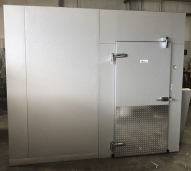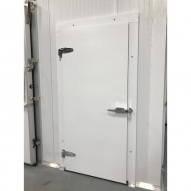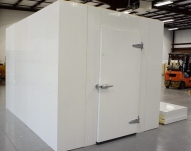





Hinged Access That Fits Daily Cold Room Use
Hinged Cold Room Door for Daily Access and Workflow
Choose a hinged cold room door that supports daily traffic, cleanability, and long-term reliability while reducing workflow friction and maintenance pressure.
Hinged Access That Fits Daily Cold Room Use
A hinged cold room door is often the right choice when a cooler or refrigerated room needs fast, practical daily entry without adding unnecessary complexity. In operations where staff move in and out constantly, the right hinged access supports smoother workflow, easier cleaning routines, and more predictable long-term use.
The key is not simply choosing a door that closes. It is choosing one that matches how the room is actually used every day. In many facilities, that means balancing traffic frequency, hygiene expectations, opening clearance, hardware durability, and the cost of keeping the entrance reliable over time.
Daily Access Becomes a Real Operational Issue Fast
Most cold room problems do not begin with catastrophic failure. They begin with small, repeated friction points that build up across the day. A door that feels acceptable during installation can become a source of slowdown once the room is in regular use.
That usually happens when the entrance is asked to do more than it was selected for. Staff are moving in and out during prep, picking, restocking, staging, or back-of-house transfers. Carts pass through. Cleaning happens on a schedule. Supervisors expect the room to stay orderly, functional, and presentable. Under those conditions, the door is not a minor accessory. It becomes part of the operating rhythm.
For many facilities, hinged access works well because it is simple, direct, and easy to use in repeated daily cycles. But that only holds true when the door leaf, frame, hardware, seal, threshold condition, and swing pattern are aligned with the room’s actual traffic and layout.
The Wrong Door Can Still Function and Still Be the Wrong Choice
A cold room entrance can technically work while still creating avoidable pressure on the operation. That is why door selection should not be reduced to basic opening and closing.
A mismatched hinged door often creates problems such as:
Slower staff movement during busy periods
Interference with carts, racks, or pallet jack access
More visible wear around edges, hardware, and impact zones
Harder cleaning around thresholds, seals, or surrounding wall areas
A weaker impression of back-of-house order and facility standard
Earlier maintenance calls and premature replacement planning
This is where many buyers feel the cost of a weak early decision. The door may not have failed, but it starts to feel like it was never fully right for the room.
Risk Shows Up in Workflow, Hygiene, and Ownership Cost
In daily-use refrigerated spaces, risk is rarely theoretical. It shows up as lost motion, repeated adjustments, preventable impact, and avoidable maintenance burden.
If the swing path does not suit the room, staff begin to compensate for the door instead of moving naturally through the opening. If the hardware is under-specified, repeated use starts to show quickly. If the seal and closure quality are inconsistent, the entrance becomes a weak point in a room that depends on temperature stability and disciplined operation.
There is also a presentation issue. In supermarkets, food prep areas, distribution support zones, and professional kitchens, visible back-of-house quality matters. A cold room entrance that looks worn too early can weaken confidence in the overall facility standard, even when the room still runs.
The long-term problem is simple: a door that creates daily friction usually becomes a cost center long before it becomes a failure event.
Where Hinged Access Makes the Most Sense
Hinged access is usually a strong fit when the room needs dependable, straightforward entry without the heavier footprint or movement pattern of other door types.
It often suits:
Cooler rooms with regular staff entry throughout the day
Refrigerated prep and storage rooms in foodservice operations
Back-of-house supermarket cold rooms
Processing support rooms with controlled but frequent movement
Facilities where simple operation and fast access matter more than large clear openings
This type of door is especially practical when the opening size is moderate, the traffic is mostly personnel or light cart movement, and the layout benefits from direct manual access.
Hinged Access vs. Sliding Access
The most useful comparison is usually not about which option is better in general. It is about which one fits the opening, traffic pattern, and daily use more naturally.
| Decision Factor | Hinged Cold Room Door | Sliding Cold Room Door |
|---|---|---|
| Daily staff entry | Strong fit | Can be more than needed |
| Moderate opening sizes | Strong fit | Strong fit |
| Space needed for swing path | Required | Minimal at opening front |
| Large cart or rack movement | Depends on clearance | Often better |
| Simplicity of daily use | High | Moderate |
| Heavy-use impact zones | Needs proper protection | Depends on track system |
| Cleaning and routine inspection | Straightforward | Depends on hardware layout |
| Best use case | Frequent practical entry | Wider openings or traffic-specific layouts |
For many daily-use cooler rooms, hinged access is the better operational match because it supports quick movement with less system complexity. Sliding access becomes more attractive when the opening is wider, the swing area is limited, or the traffic profile demands a different movement pattern.
What a Better Hinged Solution Looks Like
A better hinged cold room door is not defined by one feature. It is defined by how well the full assembly supports the room’s real use conditions.
That usually includes:
A door leaf built for repeated commercial use
Reliable sealing that supports temperature control
Hardware selected for frequent cycles, not occasional access
A frame and surrounding panel condition that stay stable over time
Vision panel options where traffic visibility matters
Impact protection where carts and hurried movement are common
Threshold and floor coordination that reduce interference and wear
The Freezewize Cooling System approach is most effective when door selection is treated as part of the full room environment, not as a standalone item. In practice, that means thinking about the opening together with panels, hardware, gasket performance, access flow, hygiene needs, and serviceability.
Suitability Matters More Than Specifications Alone
Many buyers focus first on visible specifications, but daily success usually depends more on suitability than on headline numbers.
A door can look strong on paper and still create problems if it does not match:
The direction and frequency of staff movement
Whether carts or rolling racks pass through regularly
Cleaning intensity and washdown expectations
The need for visibility at the opening
Impact exposure near handles, edges, and lower sections
The expected service life before replacement becomes likely
This is especially important in the U.S. market, where labor efficiency, downtime avoidance, inspection readiness, and ownership cost often matter as much as initial purchase price.
Quick Decision Guide
Choose a hinged cold room door when the room needs direct, repeated daily access and the opening is primarily used by staff, light carts, or controlled back-of-house movement.
It is usually the right direction when:
The room has frequent entry and exit throughout the day
Fast manual access matters
The opening width does not demand a larger traffic solution
Cleaning access and routine inspection need to stay simple
The facility wants a practical, durable entrance without unnecessary complexity
Reconsider the choice when:
The opening handles larger rolling loads regularly
Swing clearance creates layout conflict
Traffic intensity is high enough to justify another access format
The doorway is exposed to repeated heavy impact without proper protection
Related Solutions
A hinged cold room door performs best when it is planned with the surrounding room system in mind. Related solution pages that naturally support this topic include:
Cold room panels for hygienic wall integration
Freezer room door solutions for lower-temperature applications
Vision panel door options for safer internal traffic visibility
Protective hardware and impact-resistant accessories
Threshold and floor transition details for cart-friendly access
FAQ
Hinged cold room doors work well in freezer rooms?
They can, but the suitability depends on temperature range, sealing requirements, hardware selection, and the intensity of use. A daily-use cooler application is often the most natural fit, while freezer rooms may require a more specialized configuration.
How much traffic can a hinged cold room door handle?
That depends on build quality, hardware strength, door size, and impact conditions. For regular personnel traffic and light rolling movement, a well-specified hinged solution can perform very well.
When should a facility choose hinged access instead of sliding access?
Hinged access is usually better when the room needs fast, straightforward daily entry and the layout allows a clean swing path. Sliding access becomes more attractive when the opening is wider or space in front of the door is limited.
Do hinged cold room doors create cleaning issues?
Not when the door, frame, seals, and threshold are selected correctly. In many applications, hinged access is easier to inspect and clean than more complex opening systems.
What shortens the life of a hinged cold room door?
Repeated impact, under-specified hardware, poor seal maintenance, layout mismatch, and unprotected cart contact are some of the most common causes of early wear.
Should the door be selected separately from the rest of the room?
No. The best results come when the door is chosen as part of the full cold room system, including panels, hardware, floor condition, traffic pattern, hygiene routine, and maintenance expectations.
Conclusion
A hinged cold room door is the right choice when daily access must stay simple, durable, and operationally efficient.
The strongest decision is the one that matches the room’s real traffic, cleaning routine, and long-term use pressure from the start. If your facility is evaluating hinged access for a cooler or refrigerated room, a practical specification review can help align the opening with the way the space actually performs every day.