




Cold Room Entries Built for Repetition
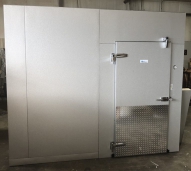
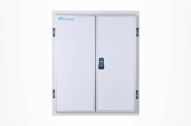
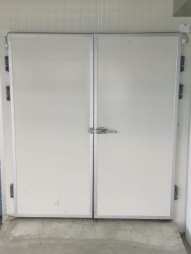
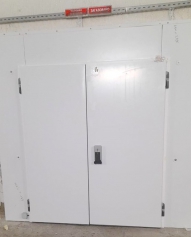
Hinged Cold Room Door for Repetitive Daily Entry Performance
Frequent cold room entry demands more than basic door function. The right hinged cold room door reduces wear, supports workflow, and holds up under daily repetition.
Cold Room Entries Built for Repetition
If staff are passing through the door all day long and the entrance needs to remain reliable without hindering operations, a hinged cold room door designed for repeated use is the right choice. In cold rooms, refrigerated prep areas, and storage areas in the kitchen back-of-house, repeated use quickly exposes doors with weak hardware, poor fit, and those selected based on opening dimensions rather than actual operating pressure.
This is important because repetition changes what “good performance” means. The door is no longer evaluated solely on insulation or appearance. It is evaluated based on how well it handles constant movement, cleaning routines, consistent sealing, exposure to impact, and the room’s daily pace.
Repetition Transforms the Door from a Component into a Workload
Many cold room entrances appear acceptable during the planning phase because they meet obvious requirements. The opening size is appropriate, the room closes properly, and the door appears suitable for the application. The problem arises when the room begins actual daily use.
In facilities with repeated entry cycles, the door entry becomes part of the workflow. Team members enter and exit during preparation, restocking, collection, organization, and cleaning. The handles are used constantly. The door panel opens and closes far more frequently than expected. Carts pass by. The threshold is subjected to repeated contact. Cleaning crews work around the gaskets, frames, and hardware. At this point, the entrance is not merely a part of the room’s outer shell. It is a part of the room’s workload.
Therefore, entrances designed for repeated use are crucial. A door selected based solely on basic suitability criteria may still function, but the daily usage cycle causes every poor decision to surface much faster than most buyers expect.
Poor Repeatability Performance Leads to Silent Operational Losses
In commercial and industrial settings in the U.S., the greatest cost of a poor entrance selection is rarely a dramatic failure. It is the accumulation of small losses that begin to surface every day.
A cold room entrance not designed for repeated use can cause the following:
Slower entry and exit movement during peak periods
More pronounced wear on arms, edges, and bottom sections
Increased maintenance requirements on hinges, locks, and gaskets
More impacts caused by hurried staff movements or nearby vehicles
Inconsistent closing behavior that weakens temperature control
Additional friction during cleaning and inspection routines
Discussions about replacement sooner than initially expected
These issues can easily be overlooked because each one seems manageable on its own. However, when they come together, a different story emerges. The entrance begins to consume the attention, time, and maintenance tolerance that should be allocated elsewhere.
The Risk Isn’t That the Door Stops Working
The real risk is that the door loses its suitability over the long term while continuing to operate.
This is a common issue in cold rooms during daily use. The entrance still opens and closes, but it starts to become strained. Staff pull the door harder. The hardware wears out faster than expected. The threshold area begins to wear down. The room remains operational, but the door ceases to be a reliable element everyone trusts and becomes just another detail to work around.
This is where the cost of ownership begins to shift. The reason is not that the door suddenly breaks down, but that repeated use reveals whether the door was selected for continuous use or merely for the initial installation. This distinction is critical in operations conducted under labor pressures, food safety expectations, and visible kitchen standards.
Even if a product is technically acceptable, it may be operationally unsuitable if it cannot withstand repeated daily cycles with sufficient consistency.
Repetition Has a Clear Threshold
Not every cold room entrance is subjected to the same level of stress. Some openings are used only a few times per shift. Others become part of a nearly continuous workflow. Buyers who treat both situations the same way often equip the entrance with insufficient features.
Frequency becomes a decisive factor when the door serves in the following situations:
Personnel making frequent short trips during preparation or restocking
Cold rooms supporting active kitchen or processing operations
Supermarket backrooms where product movement is constant
Facilities where rapid entry is critical rather than occasional access
Operations where the entrance is opened dozens or hundreds of times during routine use
When an entrance fits this model, the door should be evaluated not as a passive room component but as an operational element in daily use.
Basic Access Concept vs. Repeat-Use-Ready Entrance
The most important distinction is not cosmetic. It is functional. There is a real difference between a door capable of serving a cold room and a door manufactured to remain reliable under continuous use.
| Decision Factor | Basic Cold Room Entry | Repetition-Built Hinged Entry |
|---|---|---|
| Daily cycle tolerance | Limited in demanding use | Better suited to frequent opening |
| Hardware durability | Varies widely | Selected for sustained use |
| Seal performance over time | More likely to drift under stress | Better aligned with daily cycling |
| Workflow support | Acceptable in lighter traffic | Stronger for repeated staff movement |
| Maintenance burden | Often rises sooner | More predictable long-term behavior |
| Ownership logic | Lower initial focus | Better life-cycle fit |
| Best use case | Lower-frequency access | Daily-use cold room traffic |
Therefore, the issue is not merely “hinged or hingeless.” It is whether the hinged solution is designed for repeated use or merely for closing.
What a Repetitive-Use Entrance Truly Requires
A cold room entrance built for repetitive use typically depends on the meticulousness of the selection rather than a single standout feature. The correct result stems from several components working in harmony with the room’s operational speed.
This typically includes a stronger hinge and hardware package, reliable seal performance, a door panel suitable for commercial use, a threshold design that tolerates repeated movement, and protection at potential impact points. In some rooms, visibility through a viewing panel is also important because repeated entries highlight the importance of a safer approach.
How the surrounding environment is managed is equally important. If nearby wall panels, floor transitions, kick plates, hardware exposure, and swing motion are not properly planned, even a better door may lose its performance sooner than expected.
This is where the Freezewize Cooling System comes into play. A cold room entrance designed for repeated use delivers the best results when planned in conjunction with the room’s traffic flow, hygiene protocols, the condition of surrounding panels, and service expectations—rather than being evaluated as a standalone purchase.
A Better Solution Is Often Simpler Than a Cheaper One
When repeated use is a fundamental requirement, the best solution is usually to avoid adding temporary fixes later on and to choose the right access logic from the start.
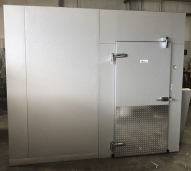
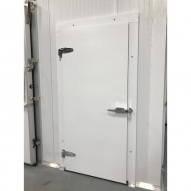
For many cold rooms and refrigerated work areas, a properly designed hinged cold room door is the best solution, as it supports fast and direct movement without unnecessary complexity. This is particularly true when the entrance serves personnel traffic, light cart movement, and repeated short-term access throughout the day.
The key is to match the door to the frequency of use. A door that sees occasional access cannot withstand the demands of high-frequency daily use. As usage frequency increases, hardware quality, closing consistency, seal durability, and impact resistance cease to be secondary details and become the determining factors in whether the entrance succeeds or becomes a maintenance issue.
Quick Decision Guide
A hinged cold room door designed for repeated use is generally the right choice in the following situations:
If personnel are constantly passing through the door during normal operations
If the room supports preparation, collection, stock replenishment, or daily production flow
If quick manual entry is critical
If the operation prefers predictable maintenance over reactive repairs
If hygiene and inspection routines require a clean, reliable entry point
Carefully reconsider the selection in the following situations:
If the entry point is exposed to traffic flow heavier than personnel movement
If the entry point is exposed to repeated heavy impacts without protection
If the layout creates an obstruction to the door opening or a clearance conflict
If the room is used so infrequently that a high-cycle design would offer limited benefit
The simplest decision rule is this: the more the room relies on repeated access, the less room there is for a lightweight entrance.
Related Solutions
If the project is evaluating entrances designed for repeated use, it is generally beneficial to review the following related solution areas at the same time:
Cold room door options, for daily use in moderate-temperature environments
Freezer room doors, for low-temperature operations with stricter sealing requirements
Cold room wall panels, for a cleaner entry integration
Viewing panel configurations, for safer repeated access
Kick plates and protective hardware for openings exposed to impact
Threshold and floor transition details to ensure smoother traffic flow alongside vehicles
FAQ
How do I determine if my cold room requires a door designed for repeated use?
If the opening is used continuously throughout the day by personnel during preparation, storage, or restocking, frequent use is already a selection factor. The more daily cycles the door is subjected to, the more important hardware durability and consistent closing become.
Are hinged cold room doors suitable for daily repeated use?
Yes, provided they are properly designed for this workload. A hinged design is generally an excellent solution for staff’s repeated access, provided the hardware, gaskets, and overall construction are selected for continuous commercial use.
What fails first in a daily-use door with inadequate hardware?
In most cases, the first warning signs appear as hardware fatigue, misalignment, inconsistent sealing, and visible wear on the edges or bottom. The door may still function, but it begins to require more attention.
Does repeated use affect temperature performance?
Yes. Repeated use emphasizes the importance of reliable closing, seal integrity, and consistent seating. If these elements fail, maintaining temperature control becomes difficult.
Should entrances with high frequency of use be planned differently from low-traffic openings?
Absolutely. A storage room used infrequently should not be treated the same as a high-traffic backroom cooler. Frequency of use changes the load the door must withstand daily.
What related details should be reviewed along with the door itself?
Frame condition, surrounding panels, threshold design, kick plate protection, visibility requirements, nearby traffic flow, and cleaning access all affect whether the entrance will perform well over time.
Conclusion
A cold room entrance designed for repeated use maintains workflow, reduces preventable maintenance needs, and maintains reliability under daily real-world conditions.
If repeated opening operations are part of the workflow, the correct hinged cold room door must be selected not only for proper initial installation but also for long-term performance. If you are planning a cooler or cold room for daily use at your facility, evaluating the entrance door as a high-cycle access point can prevent issues that would otherwise persist for years to come.