




Long-Term Fit for Wide Access
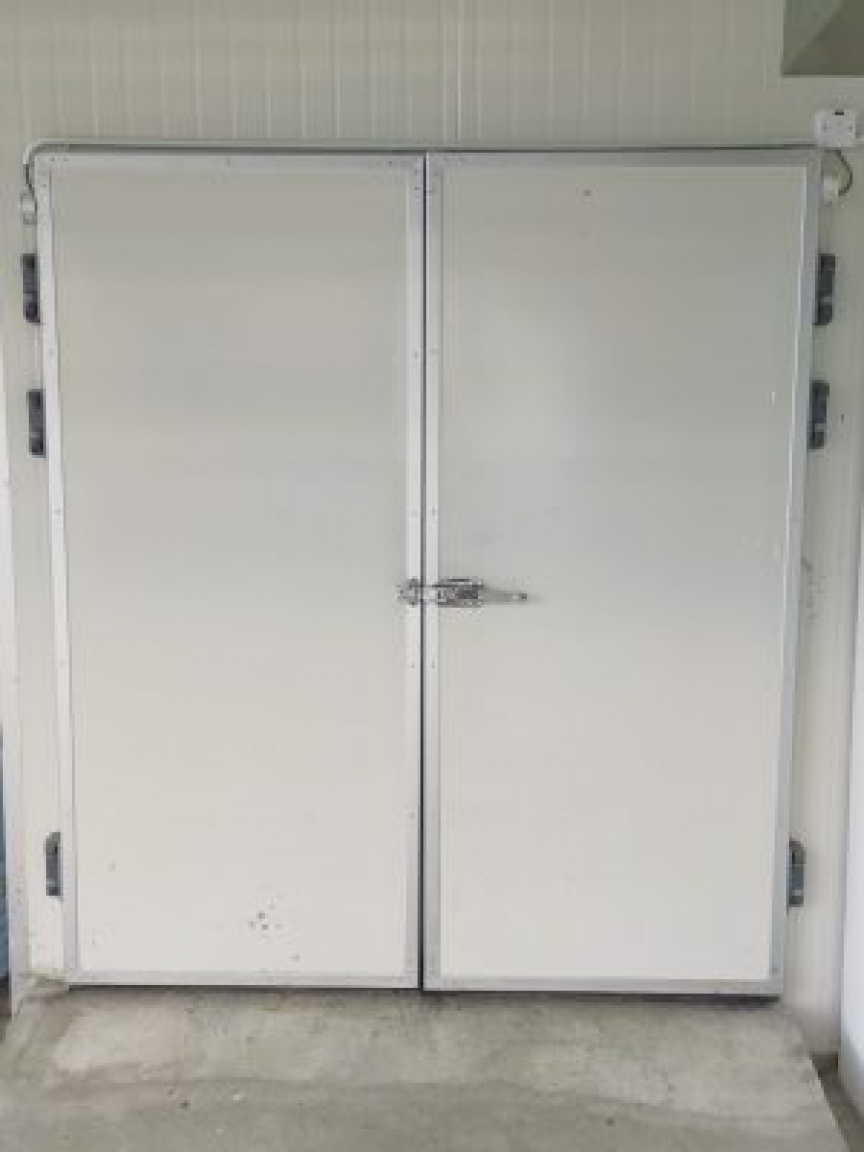
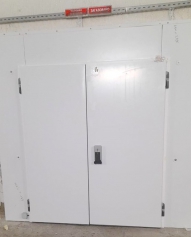
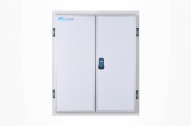
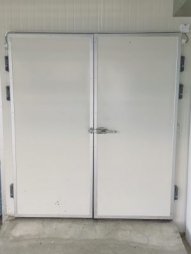
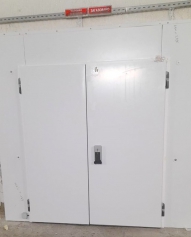
Double Hinged Cold Room Door for Long-Term Wide Access Performance
Choose a double hinged cold room door when wide openings need durable daily access, smoother flow, and a better long-term fit for busy facilities.
Long-Term Fit for Wide Access
Double-hinged cold room doors are typically the right long-term choice when a refrigerated opening is too wide to remain efficient with a standard single-leaf configuration. In high-traffic facilities, the issue isn’t whether the opening works today. The issue is whether that access point will remain practical, durable, and functional after years of cart traffic, personnel traffic, cleaning routines, and repeated daily use.
This distinction is important because wide access changes the load on the entire opening. A door may seem acceptable during installation, but it can later become an obstacle. When the wrong format is used for a wider entrance, the room begins to feel the impact through slower movement, increased wear, and rising maintenance demands.
Wide Access Requires a Different Decision
Many cold room openings are not sized solely for pedestrians. These openings are expected to accommodate wheeled racks, hand carts, material carts, pallet jacks, cleaning access, and occasional movement of larger products. On paper, this often appears to be a sizing issue. In practice, it becomes a long-term suitability issue.
A wider opening alters the door’s daily behavior. It affects how much force is required to operate the door, how traffic moves around the door, the load placed on the hardware, and how often the door entry becomes a point of hesitation rather than a smooth passage. Therefore, a technically functional wide opening may still feel wrong in actual use.
This is particularly true in U.S. food processing facilities, supermarket backrooms, refrigerated prep areas, warehouse cold storage, and distribution areas—where speed, hygiene, and long-term ownership costs are all critical factors. In these environments, a wide opening must do more than just provide access; it must remain functional even under pressure.
The First Signs of Poor Long-Term Fit
Poor long-term fit usually becomes apparent before anything actually breaks.
The opening begins to feel less functional than the rest of the room. Staff adjust their movements around the door. Carts require more clearance than they should. One person holds the door while another tries to pass through with a product. The hardware begins to appear under more strain than the surrounding panel system. Cleaning around the threshold feels less practical than expected.
These are not isolated inconveniences. They are early indicators that the access configuration does not fully align with the width of the opening and the level of usage.
Common warning signs in wider cold room entrances include:
slower passage during routine entry and exit movements
increased contact with the door edge, frame, or nearby wall area
heavier daily use than the traffic pattern requires
repeated strain on hinges, closers, or locking points
an entrance that feels poorly constructed compared to the rest of the installation
an increased need for maintenance to keep operations running smoothly
This is the hidden issue with wide access. The room may still be cold, airtight, and functional, but the entrance door may already have become the weak link.
Why Does Choosing the Wrong Wide Access Option Cost So Much?
A door doesn’t have to fail to create costs.
If a wide opening is paired with the wrong access logic, the facility pays the price for this mismatch in the form of daily small losses. These losses are often unnoticed at first because they are spread across labor, handling, wear and tear, and downtime risks rather than appearing as a single, clear expense.
Over time, the wrong long-term choice can lead to:
workflow friction during shift changes, stock replenishment periods, or preparation windows
increased contact damage from carts, shelves, and rolling products
faster wear and tear on equipment due to a single door bearing too much load
slower hygiene access and more difficult cleaning routes
pressure to replace the door sooner than the rest of the room requires
a persistent feeling that while the setup is acceptable on installation day, it is not suitable for actual operation
Therefore, decisions regarding wide-access doors should not be based solely on initial use. The real question is whether the opening will still feel right after months and years of daily use.
Where Single-Hinge Logic Falls Short
Single-hinged cold room doors still make sense in many applications. For standard openings and lighter traffic, they are simple, effective, and often the most cost-effective option.
The problem begins when the same logic is applied to a wider opening with frequent activity. In this scenario, a single door must handle the full width of the opening, the full opening load, and the full traffic demand. That’s when the entrance begins to feel less balanced.
The issue isn’t just physical. It’s behavioral. Wider openings typically involve more complex traffic patterns, more wheeled traffic, and more situations where the entrance must operate under time pressure. A single large gate can technically serve that area, but it typically does so with more effort, more wear and tear, and more workflow interruptions compared to a more suitable system.
A wide opening requires an access format that not only covers the dimensions but also maintains its practicality under repeated use.
A Comparison Explaining Long-Term Suitability
When evaluating a wider opening, the most useful comparison is not just appearance. It is long-term usability under real-world conditions.
| Access Format | Best Fit | Main Strength | Long-Term Concern |
|---|---|---|---|
| Single hinged cold room door | Standard openings with lighter traffic | Simplicity and straightforward operation | One leaf can become overburdened as width and activity increase |
| Double hinged cold room door | Wider openings with regular mixed traffic | Better balance of width, control, and daily usability | Requires proper meeting-edge sealing and hardware coordination |
| Sliding cold room door | Openings with limited swing clearance | Preserves nearby floor space | May not be the best fit for every repeated back-and-forth traffic pattern |
| Light traffic pass-through format | Select high-frequency internal movements | Easy passage | Not always suitable where insulated containment remains the priority |
The best choice for wide access is usually not just the option that is easier to install, but the one that makes living with the opening easier over time.
Why Do Double-Hinged Doors Typically Provide Better Long-Term Suitability?
Double-hinged cold room doors generally perform better in wider openings because they distribute the load more intelligently.
Instead of requiring a single large panel to support the entire opening, the width is divided into two manageable sections. This changes the feel of the door’s operation. It improves control, makes routine access more practical, and allows for full-width use when needed for larger loads, carts, cleaning tasks, or service access.
This is where long-term suitability comes into play. A double-hinged design generally feels more proportionate to the opening. The likelihood of the room having to wait due to a single large swinging motion is lower. It tends to support a wider range of motion without making the doorway feel like a part of the room everyone has to work around.
Practically speaking, better long-term suitability for wide access generally means:
smoother daily passage through the opening
easier use of wheeled equipment
a better balance between routine entry and full-width access
less stress concentration on a single leaf and a single hardware set
a door that remains aligned with the room as operations become more demanding
increased confidence that the opening is designed not just for initial installation but for real-world conditions
Therefore, when the opening is as wide as future use is as important as current use, such doors are generally a stronger solution.
Supporting Details That Ensure Strong Alignment
A double-hinged configuration is not, by default, the correct long-term solution. The value comes from how well the opening is planned.
Wide access performs best when surrounding details support the same logic. Threshold transitions must be compatible with wheeled traffic. Seal design must maintain thermal performance without hindering the opening’s usability. Hardware must reflect not only the opening’s dimensions but also the cycle demand. Viewing panels, protective plates, and surrounding details may be more critical in a high-traffic facility than customers might expect.
Several factors must be considered together:
Traffic Type
An opening primarily used by pedestrian staff behaves differently from one regularly traversed by hand trucks, shelves, and pallet jacks. The most demanding usage condition should guide the decision-making process.
Access Area
If the approach angle is poor or nearby corridors hinder movement, even a wide access point may still feel inefficient. The opening should complement, not conflict with, the layout plan.
Cleaning Routine
Food-focused operations require access that supports hygiene and readiness for inspections. A wide opening that makes cleaning difficult is not a suitable choice in the long term.
Hardware Load
As width increases, hinge and latch requirements become more critical. Long-term reliability depends on how well the hardware is suited for repeated daily use.
Maintenance Tolerance
Some facilities may require more maintenance than others. Generally, the best solution is one that reduces the long-term pressure for adjustments, repairs, and premature replacements.
When these details are considered together, the opening goes beyond simply being a door selection. It becomes a durable and functional part of the facility. This is where the Freezewize Cooling System truly shines: not merely as an independent access component, but as a comprehensive cold room functionality approach.
Quick Decision Guide
Double-hinged cold room doors are generally more suitable in the following situations:
if the opening is wide enough that a single-leaf door would feel overly large or inefficient
if hand trucks, shelves, or pallet jacks are part of normal daily use
if the room requires both routine access and occasional full-width entry
if traffic volume is high enough to create a repetitive opening-closing load
if the facility seeks a stronger long-term ownership outcome
if maintenance tolerance is limited and the opening must remain practical over time
A single-hinged solution may still be a better option in the following situations:
if the opening width is moderate
if traffic is light and mostly pedestrian
if full-width access is rarely required
if the entrance does not currently create hesitation in the workflow
if long-term wear and tear at the door entrance is expected to remain low
Related Solutions
If long-term suitability for wide access is a priority, it generally makes sense to also review adjacent solution areas at the same time:
insulated panels for cold rooms
refrigerated room door solutions for standard openings
freezer room access doors for low-temperature rooms
threshold and floor transition details for wheeled traffic
viewing panels for safer passage through wider entrances
kick plates and impact protection hardware
gaskets, sealing elements, and perimeter sealing systems
cold storage layout planning for high-traffic areas
These related solutions are important because wide-access performance is typically shaped not just by the door leaf, but by the entire entry environment.
FAQ
Are double-hinged cold room doors better for wide openings?
In many applications with heavy or mixed traffic, yes. Generally, they provide a better balance of access width, control, and long-term usability compared to a single large-sized panel.
What does long-term suitability really mean when selecting a cold room door?
It means the opening continues to feel practical, durable, and functionally sound not just immediately after installation, but also after daily, repeated use.
Can a single door still work in a wide opening?
Yes, but if the traffic, rolling motion, or hardware load exceeds what a single panel can comfortably handle, it may still become the wrong choice in the long run.
Why do wide openings create more pressure to make the right decision?
Because they typically involve more complex movements, greater swing loads, and higher demands for both daily comfort and full access capacity. This increases the cost of an inappropriate choice.
What should buyers evaluate before selecting a door for wide access?
They should review the opening width, traffic type, wheeled traffic, approach area, threshold condition, hygiene requirements, and expected maintenance tolerance.
Does better long-term fit help reduce ownership costs?
Generally, yes. When the opening better aligns with actual usage, there is typically less contact damage, less hardware strain, less adjustment work, and less pressure for early replacement.
Wide Access Should Still Feel Right Years Later
A wide opening is a robust solution if it continues to support operations even after the room is fully operational on a daily basis.
When long-term performance is as important as the clear opening size, a double-hinged cold room door is often the smartest way to create a wide access point that maintains its practicality over time.
For facilities evaluating a new or existing wide opening, the best approach is to assess how traffic, equipment, hygiene, and long-term wear and tear will interact at the door entry; this ensures the final choice remains suitable long after installation day.