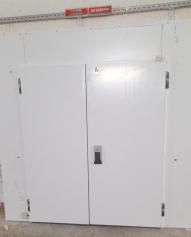





Better Clearance for Cart Movement
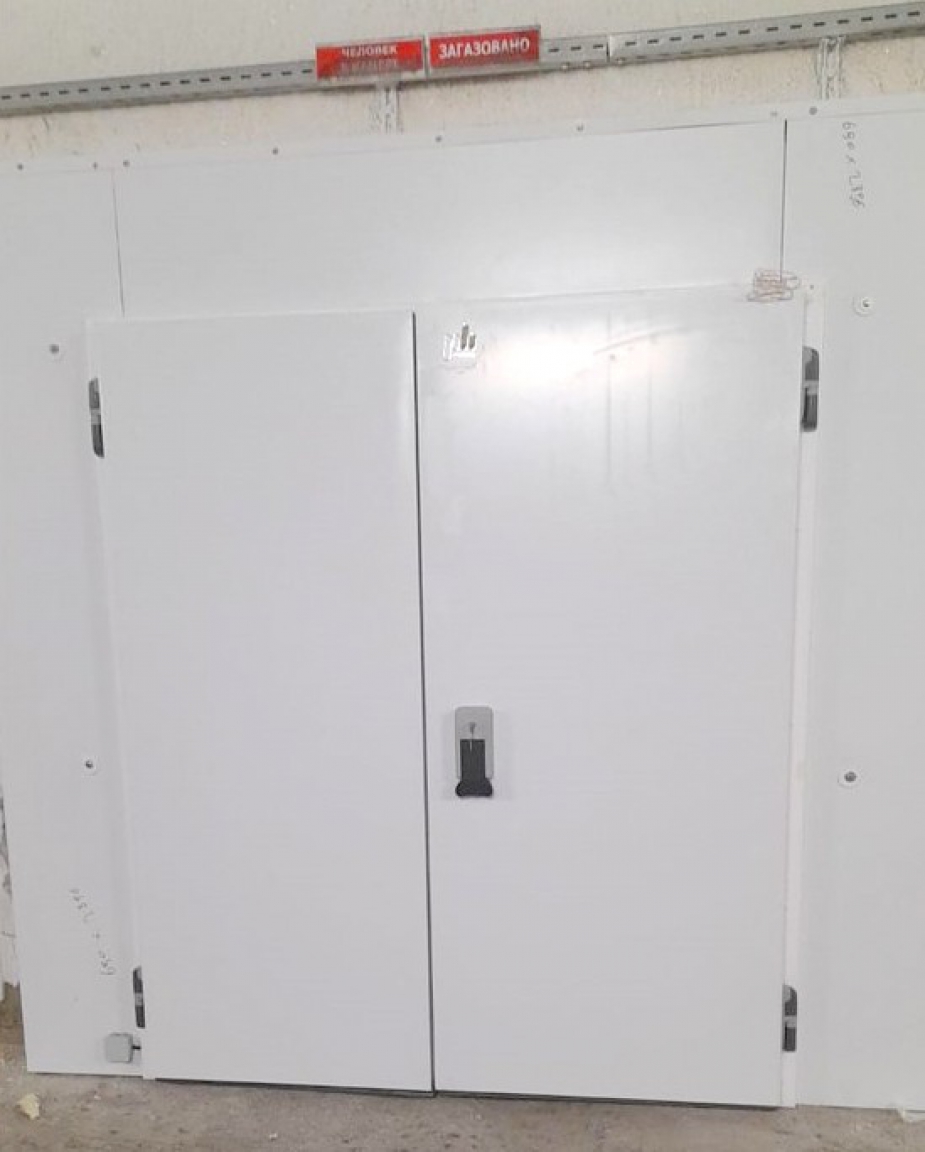
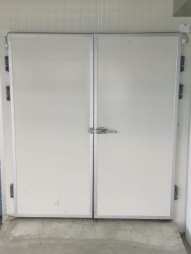
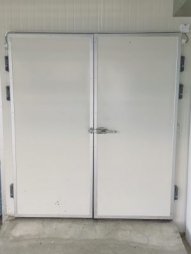
Double Hinged Cold Room Door for Better Cart Clearance
Improve cart movement through cold room entries with double hinged doors that create better clearance, reduce contact risk, and support smoother daily flow.
Better Clearance for Cart Movement
When vehicle traffic begins to strain the limits of a standard entrance, a double-hinged cold room door is often the right solution. In high-traffic cold rooms, the problem rarely stems solely from the vehicle. The issue is that the opening no longer provides sufficient practical clearance for daily movement without hesitation, angle adjustments, or repeated contact.
This is important because vehicle clearance affects more than just convenience. It shapes labor efficiency, product handling, collision risk, hygiene access, and how well the room performs under repeated use. When carts pass through the entrance smoothly, the entire cold room operates with less friction.
The Problem Emerges During Movement Before It Becomes Apparent in Maintenance
Many facilities first notice the problem during small, everyday moments.
A hand truck approaches the opening and slows down. The operator slightly adjusts direction to avoid hitting the frame. Another worker holds the door to create a bit more space. A wheeled shelf passes through the opening, but only with care. A pallet jack fits, but it’s not comfortable. None of these moments seem serious on their own. But when they come together, they reveal that the doorway no longer fits the room’s actual usage.
This situation is common in food preparation areas, refrigerated holding zones, supermarket backrooms, processing areas, cold storage warehouses, and commercial kitchens where carts move through the room all day. When wheeled traffic becomes routine, the opening ceases to be a simple passageway. It becomes part of the workflow.
This is where the opening begins to become a real purchasing issue.
Why Is Vehicle Clearance More Important Than the Width on Paper?
Even if a door is wide enough on paper, it may still perform inadequately for vehicles.
The reason is that the usable passage width is not the same as the nominal opening size. Actual vehicle movement depends on the door’s opening behavior, sash control, threshold condition, swing angle, the adjacent corridor space, and whether the user can pass through naturally without struggling with the opening. In daily operations, these details are more important than the theoretical width.
When the opening is too narrow for repeated cart use, facilities typically face the same types of challenges:
slower entry and exit during peak periods
repeated contact with the frame, edges, or surrounding wall areas
more difficult handling of loaded carts or wheeled bins
less predictable movement when personnel intersect near the door
greater wear at the entrance because carts rarely pass straight through
more frustration during stock replenishment, picking, or preparation flows
Therefore, the cart clearance must be considered in the same context as door durability, hygiene, and long-term ownership costs. If the rolling motion doesn’t feel smooth, the clearance is performing inadequately.
The Cost of Incorrect Clearance
Insufficient clearance creates operational costs long before anyone identifies it as a door issue.
The first cost is time. Staff slow down at the entrance, especially with loaded carts or when traffic is moving in both directions. The second cost is transport quality. Goods are pushed through less smoothly, increasing the likelihood of harsh movement, impact, or load imbalance. The third cost is wear and tear. Repeated near-misses eventually turn into actual contact, affecting the door panels, frame, hardware, and surrounding trim.
Over time, this can lead to:
more noticeable damage around the entrance
extra stress on hinges and closing hardware
earlier deterioration of seals and surrounding components
slower cleaning routines because carts and cleaning tools cannot pass through easily
a growing sense that the door was not designed for actual daily use
pressure to replace the door sooner, even if it still functions technically
A cold room entrance doesn’t have to fail to become costly. It’s enough for the wheeled traffic to obstruct it frequently enough.
The Point Where Single-Door Access Begins to Fall Behind
Single-hinged cold room doors still make sense in many applications. They are practical for standard openings, lighter use, and primarily pedestrian traffic.
The problem begins when the room relies on repeated vehicle traffic and the opening needs to do more than just accommodate pedestrian traffic. A single door must provide sufficient access width, manage the full opening path, and remain easy to operate under repeated use. As vehicles get wider, loads become bulkier, and the number of daily cycles increases, this becomes even more challenging.
In such an environment, a single-leaf door typically creates three specific issues. It can reduce the ease of straight-through movement, require more precise positioning from the vehicle operator, and create a greater opening load around the opening. Even if the door still functions, the entrance begins to feel less cooperative.
This is often the point where buyers start looking for a better opening solution rather than just a replacement door.
A Comparative Analysis to Aid Decision-Making
The most useful comparison isn’t about which door is larger. It’s about which access format allows vehicles to pass through the opening more smoothly and with less daily strain.
| Access Format | Best Fit | Main Advantage | Main Limitation |
|---|---|---|---|
| Single hinged cold room door | Standard openings with lighter rolling traffic | Simple operation | Clearance becomes less practical as cart movement increases |
| Double hinged cold room door | Wider openings with repeated cart and mixed staff traffic | Better usable clearance and more flexible access | Needs proper sealing, alignment, and hardware coordination |
| Sliding cold room door | Openings with limited swing space | No swing arc into the aisle | Not always the best match for every repeated cart flow pattern |
| Internal traffic-style door | Fast pass-through zones | Quick movement | Not always appropriate where insulated containment remains critical |
For facilities focused on vehicle traffic, the fundamental question is simple: Which option creates the cleanest path through the opening with the least disruption every day?
Why Do Double-Hinged Doors Improve Vehicle Access?
Double-hinged cold room doors improve vehicle movement by transforming a wider opening into a more practical access point.
Instead of having a single large panel manage the entire access area, the opening is divided into two controlled sections. This provides a more flexible workflow within the room. While a single panel may suffice for light daily traffic, both panels can be opened when loaded vehicles, wheeled racks, boxes, or service equipment require more space.
This difference matters in real-world operating conditions. Carts pass through with less angle adjustment. Operators need to make fewer maneuvers. The opening feels more proportionate to the load passing through it. Since entry isn’t dependent on a single large movement handling the entire task, traffic timing becomes easier during peak periods.
Practically, better clearance can support:
smoother vehicle entry and exit
less edge contact during loaded movement
smoother flow during preparation, staging, or replenishment
easier passage for wider or longer wheeled equipment
better access during sanitation and deep cleaning
less daily wear and tear on the clearance as a whole
Improvement isn’t just about more space. It’s about a more functional space.
Clearance Depends on the Overall Condition of the Entrance
Here, sound decisions regarding the door translate into sounder decisions regarding the system.
Better vehicle passage isn’t achieved solely through wing adjustment. Threshold design is crucial because wheels require a clean passage. Since even a good entrance will slow down if vehicles get stuck or bounce at the entrance, the floor condition is important. In high-traffic areas where operators need better situational awareness, sight panels can be helpful. Protective equipment is essential when wheeled traffic is frequent enough to cause repeated contact over time.
Several details should be reviewed together:
Vehicle Type and Load Configuration
Material carts, oven racks, service carts, hand trucks, and pallet jacks do not move in the same way. The clearance should be suitable not for the easiest movement, but for the largest or most demanding routine movement.
Threshold Behavior
A wide door can still disrupt cart traffic if the threshold obstructs wheel movement. Smooth floor transitions are part of the actual clearance.
Corridor and Approach Angle
Cart movement depends on how the operator approaches the opening. The opening must be evaluated not only by frame dimensions but also by the approach path.
Closure and Sealing Reliability
In cold rooms, improved access cannot come at the expense of consistent sealing. Better clearance functions as a true solution only when the door still provides reliable sealing after daily, repeated use.
Hygiene Routine
Food-related environments require access that supports cleaning—not access that creates awkward corners and extra obstacles for washing and daily hygiene tasks.
The Best Solution Is One That Allows Carts to Move Naturally
When wheeled traffic is part of daily operations, the best door isn’t just one that fits the opening. It’s the door that allows carts to pass through without making the opening a constant point of concern.
This is where a double-hinged cold room door typically becomes a stronger solution. It provides a more balanced access format for wider entrances, improves practical clearance, and reduces the feeling that every loaded cart must struggle over the door threshold. In many facilities, this results in better traffic flow, fewer contact-related damages, and more durable long-term outcomes.
Therefore, the opening should be evaluated not just as a door component but as a functioning system. Panel condition, threshold design, opening behavior, hardware durability, and daily hand-cart traffic all shape the actual outcome. In this context, the Freezewize Cooling System is the most logical choice when the entrance is planned around actual operational movements rather than just nominal dimensions.
Quick Decision Guide
Double-hinged cold room doors are generally a better choice in the following situations:
if carts or wheeled racks pass through the opening many times a day
if the existing entrance angle requires adjustment or additional work
if the opening is wide enough that a single-leaf door would be insufficient
if personnel and wheeled traffic generally share the same entrance
if contact damage around the frame or door leaf is becoming common
if cleaning crews require wider and easier access through the entrance
if long-term usability is more important than maintaining the simplest possible design
A single-hinged solution may still yield better results in the following situations:
if wheeled traffic is light or occasional
if the opening is relatively narrow
if movement is primarily pedestrian
if full-width access is rarely required
if the existing door does not cause friction with hand carts
Related Solutions
If the goal is better handcart passage, the relevant cold room components should generally be reviewed at the same time:
cold room insulated panel systems
refrigerated room doors for standard access conditions
freezer room doors for operation at low temperatures
threshold and floor transition details for wheeled traffic
viewing panels for safer two-way movement
kick plates and impact protection hardware
gaskets, sealing elements, and perimeter sealing components
cold storage layout planning for workflow areas with heavy hand truck traffic
These related solutions are important because the opening is typically shaped not just by the door leaf itself, but by the entire entry environment.
FAQ
Are double-hinged cold room doors better for hand truck traffic?
In many applications, yes. Generally, especially in wider openings where a single leaf might feel restrictive, they provide a more usable opening for repeated hand truck traffic.
What are the causes of insufficient cart clearance at a cold room entrance?
The most common causes include limited usable width, improper opening behavior, poor threshold clearance, approach angle restrictions, and a clearance configuration that does not accommodate daily wheeled traffic.
If carts can pass through the door, can a single door still be effective?
Yes, but being able to pass through is not the same as moving efficiently. If carts slow down, scrape, enter at an angle, or require assistance, the entrance may still be the wrong choice in the long run.
Do double-hinged doors reduce damage around the opening?
Generally, yes. When cars pass through more naturally, there is typically less repeated contact with the frame, wing edge, and surrounding wall areas.
What should buyers consider before selecting this door style?
They should review the type of cart, the opening width, the threshold details, the corridor layout, traffic frequency, cleaning routines, and long-term maintenance expectations.
Are these doors only useful in warehouses?
No. They can also be highly suitable in supermarkets, processing rooms, commercial kitchens, preparation areas, and other refrigerated spaces where wheeled carts are a daily part of operations.
Better Cart Passage Ensures Better Daily Flow
In high-traffic cold rooms, wheeled traffic should pass through the opening not cautiously, but with confidence.
When carts constantly push the limits of a standard entrance, a double-hinged cold room door is often the clearest solution for providing better clearance and more efficient daily operations.
For facilities evaluating a high-traffic refrigerated entrance, the best approach is to analyze what types of vehicles use the area, how they approach the entrance, and how frequently they pass through. This ensures that the final door selection supports traffic flow without compromise.