




Freezewize | Industrial Cooling Systems & Custom Cold Room Solutions

Reducing Bottlenecks at Cold Room Entries

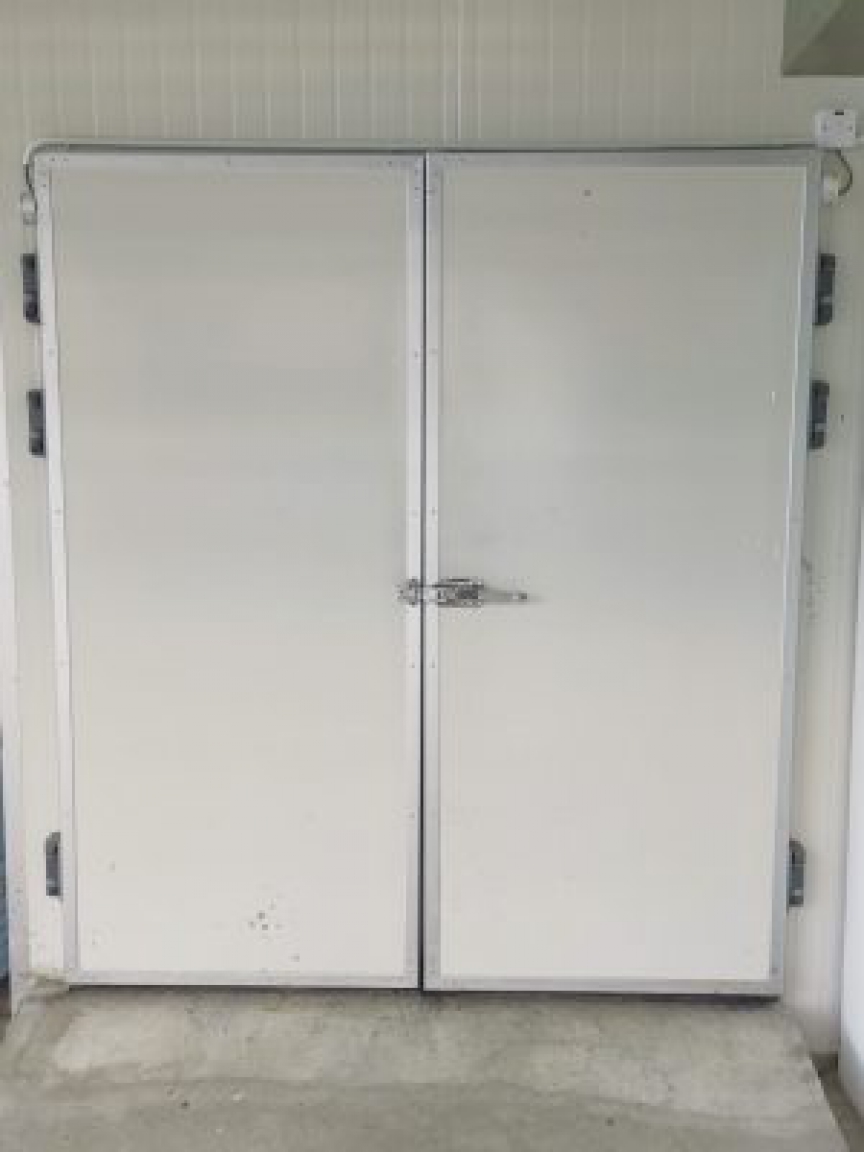
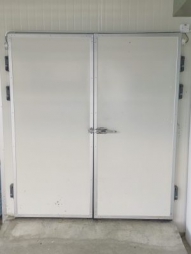
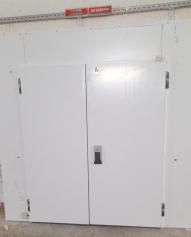
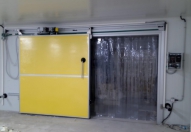
Double Hinged Cold Room Door for Reducing Bottlenecks at Entries

Reduce cold room entry bottlenecks with double hinged doors that improve traffic flow, support carts and racks, and ease daily pressure on busy openings.

Reducing Bottlenecks at Cold Room Entries

When entrance traffic begins to slow down the room’s operations, a double-hinged cold room door is often the right solution. In high-traffic cold storage facilities, refrigeration rooms, and refrigerated work areas, bottlenecks typically arise when a single door panel can no longer support the volume, width, or speed of daily traffic.

This is important because an entry bottleneck is not just a door problem. It affects workforce flow, cart movement, hygiene access, collision risk, and how efficiently the room operates during peak hours. When entry traffic cannot be managed properly, the entire operation begins to suffer delays.

The Real Problem Starts Before the Door Breaks

Most entry bottlenecks don’t start with a broken hinge or a visible hardware issue. It begins when the opening no longer aligns with the facility’s actual movement patterns.

This situation is common in food production rooms, cold storage warehouses, supermarket backrooms, distribution areas, and commercial kitchens where people, wheeled racks, carts, and pallet jacks pass through the same opening all day long. A door may still open and close properly, yet it may no longer be suitable for the room.

The first signs are usually operational, not mechanical. Staff pause to coordinate their movements. Carts approach the opening at an angle. One worker holds the door open while another pushes the load inside. Traffic backs up during receiving, prep, storage, or restocking. The opening begins to act like a checkpoint rather than a passageway.

That is when the entrance begins to create friction rather than supporting the flow.

Why Do Bottlenecks Cost More Than Expected?

Bottlenecks at cold room entrances are rarely dramatic, but they are costly because they occur repeatedly.

Each delay may last only a few seconds. Each difficult passage may cause only a minor interruption. However, in a facility where the opening is used dozens or hundreds of times a day, these small losses accumulate as lost labor, rougher handling, more contact damage, and increased strain on the room itself.

In practice, bottlenecks at cold room entrances can lead to:

slower personnel movement during peak periods

reduced efficiency for carts, racks, and wheeled products

more impact on the frame, door edge, or surrounding wall area

extra stress on hinges, gaskets, and locking points

slower cleaning routines and more difficult hygiene access

a more cluttered back-of-house appearance

pressure to replace components prematurely due to daily misuse rather than a specific defect

In U.S. facilities where labor efficiency and uptime are critical, this is more than just an inconvenience. It becomes a recurring ownership cost.

The Risk of Leaving the Wrong Entry Format in Place

A technically functional door can still be the wrong decision because it forces the operation to work around it.

This is the real risk. Facilities often postpone changes because the door isn’t malfunctioning. But the real issue isn’t the malfunction. The issue is suitability. If the current entry configuration continues to create stop-and-go movements, repeated contact, or traffic hesitation, the area is already underperforming.

This usually manifests in familiar ways. Teams lose their rhythm around the threshold. Larger loads cannot pass through smoothly. One wing begins to carry more than its daily load. Hardware fatigue sets in earlier than expected. Staff adapts to temporary solutions that silently normalize inefficiency.

Over time, the entrance leaves a clear impression: it may have been acceptable during installation, but it no longer fits the operation.

The Point Where Single-Door Access Begins to Create a Bottleneck

Single-hinged doors still make sense in many cold room applications. They are generally simple, efficient, and easy to manage for modest openings and lighter traffic.

The problem begins when traffic volume increases or the opening needs to accommodate wider movements. At this point, the single door typically starts to take on too much. It must provide sufficient access width, maintain temperature containment, swing through a wider arc, and remain manageable for repeated daily use. This is where entry speed begins to slow down.

A larger single-leaf gate can create various types of strain simultaneously:

it occupies more opening space during each cycle

it requires more control from the operator

it creates more challenging timing for two-way movement

it places more repetitive stress on the hardware

it turns wide access into a single-moving load

The opening may still appear sufficient in terms of technical specifications, but the daily experience tells a different story.

A Comparison Explaining the Better Choice

When congestion is the main issue, the most important comparison isn’t just about insulation or appearance. It’s about how the entrance behaves under real daily traffic.

Access FormatBest FitMain AdvantageMain Limitation
Single hinged cold room doorStandard openings with lighter trafficSimple daily operationMore likely to create congestion as width and traffic increase
Double hinged cold room doorWider openings with mixed pedestrian and wheeled movementBetter traffic distribution and more usable access widthRequires correct alignment, sealing, and coordinated hardware
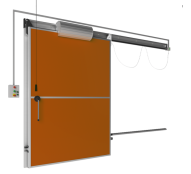
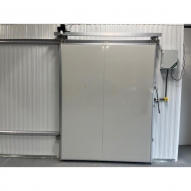
Sliding cold room doorOpenings where swing clearance is limitedPreserves surrounding floor areaNot always the best answer for every repeated fast-entry pattern
Internal traffic door formatHigh-frequency pass-through areasFast movementNot a direct substitute for insulated cold room containment in every case

If the opening is wide, active, and repeatedly used by both people and wheeled loads, a double-hinged configuration typically provides the cleanest path to alleviate congestion.

Why Do Double-Hinged Doors Reduce Entryway Congestion?

A double-hinged cold room door helps reduce bottlenecks by altering the distribution of traffic through the opening.

Instead of expecting a single panel to handle everything, the opening is divided into two manageable sections. This creates a more balanced access pattern. When full width isn’t required, a single panel can handle routine movements. When more clearance is needed for larger product loads, wheeled racks, service equipment, or deeper cleaning access, both panels can be opened.

This change is significant because the entrance becomes more flexible under pressure. Traffic no longer has to wait for a single large opening movement. The opening becomes easier to use and time, and passing through without hesitation becomes easier.

In many facilities, this means:

smoother hand truck and shelf movement

less waiting at the threshold

better management during peak traffic hours

less contact with the frame or wing edges

more practical access for cleaning and maintenance crews

a more proportionate solution for wider daily-use openings

The advantage isn’t just a wider opening. It’s a more practical opening.

The Best Solution Involves the Entire Entry Area

Reducing bottlenecks isn’t just about changing the door panel layout. The entire entry area must support traffic flow.

Threshold design affects wheeled traffic. Seals ensure consistent closure after repeated cycles. View panels can enhance safety in areas where two-way traffic is common. Kick plates and impact-resistant hardware help the opening withstand daily real-world contact. The condition of surrounding panels, wall protection, and floor transition details influence whether the bottleneck is truly eliminated or merely reshaped.

Therefore, the most robust cold room solutions evaluate the opening as an integral part of the room’s overall operation. In practical project work, the Freezewize Cooling System delivers the most effective results when the door, panel interface, threshold condition, and expected traffic flow are evaluated as a whole rather than as separate components.

A bottleneck is an operational issue. The solution must also be operational.

Quick Decision Guide

Double-hinged cold room doors are generally a better choice in the following situations:

if the entrance opening is wide enough that a single-leaf door would slow down traffic

if hand trucks, wheeled racks, or pallet jacks are used in daily operations

if staff regularly cross paths at the door

the room experiences congestion during preparation, picking, or restocking

cleaning crews require wider and easier access

repeated impact or hardware stress is already evident

the facility seeks not just a short-term solution, but better long-term ownership results

A single-hinged solution may still be more suitable in the following situations:

the opening is relatively narrow

traffic is light and primarily pedestrian

full-width access is rarely required

the surrounding area comfortably accommodates a single opening path

the entrance does not currently create a barrier in the workflow

Related Solutions

If bottlenecks at the entrance are an issue, other aspects of the cold room should generally be considered at the same time:

cold room insulated panel systems

refrigerated room door options for standard daily access

freezer room door solutions designed for low-temperature operation

threshold and floor transition details for wheeled traffic

viewing panels for safer traffic coordination

kick plates and impact protection hardware

gaskets, sealing elements, and perimeter sealing components

cold storage layout planning for high-traffic areas

These related solutions are important because entry performance is typically affected not just by the door itself, but by the entire opening system.

FAQ

When do bottlenecks typically start at a cold room entrance?

They usually begin when traffic volume, clearance width, or wheeled traffic exceeds the capacity of the existing door configuration. The door may still function, but the flow through the entrance becomes slower and less natural.

Is a double-hinged cold room door better for vehicles and racks?

In most cases, yes. It generally provides more practical access for wider or repeated wheeled traffic and reduces the need to force products through a single-leaf opening.

Can a single door be the wrong choice, even if it works?

Yes. Even if a door is fully functional, if it no longer fits the opening, it can cause daily delays, traffic congestion, increased impact, and premature wear.

Do bottlenecks only cause problems in large warehouse rooms?

No. They also occur in supermarkets, food preparation areas, commercial kitchens, processing rooms, and other refrigerated areas where traffic is constant and time is of the essence.

What should buyers consider before changing the door configuration?

They should review the type of traffic, the opening width, the clearance, the threshold condition, cleaning routines, exposure to impact, and long-term maintenance expectations.

Does reducing entry bottlenecks help lower long-term ownership costs?

Generally, yes. If traffic flows more smoothly, there is typically less misuse, less strain, less impact damage, and less pressure to replace doors prematurely.

A Better Entry Should Eliminate Friction, Not Increase It

Cold room entrances should ensure operations continue without causing traffic to slow down around them.

When daily traffic begins to back up at the door, a double-hinged cold room door is usually the clearest way to reduce bottlenecks and restore a more efficient flow.

For facilities reviewing a low-performing entrance, the right next step is to assess how people, vehicles, shelves, and cleaning routines use the entrance; this ensures the final door selection provides less friction and better long-term compatibility with the room.


Fill the Form!

Write your needs and fill the form to contact us.

Freezewize | Industrial Cooling Systems & Custom Cold Room Solutions
Merhaba, Size yardımcı olabilir miyiz ?
Whatsapp Destek