




Freezewize | Industrial Cooling Systems & Custom Cold Room Solutions

Cleaner Control at Busy Doorways

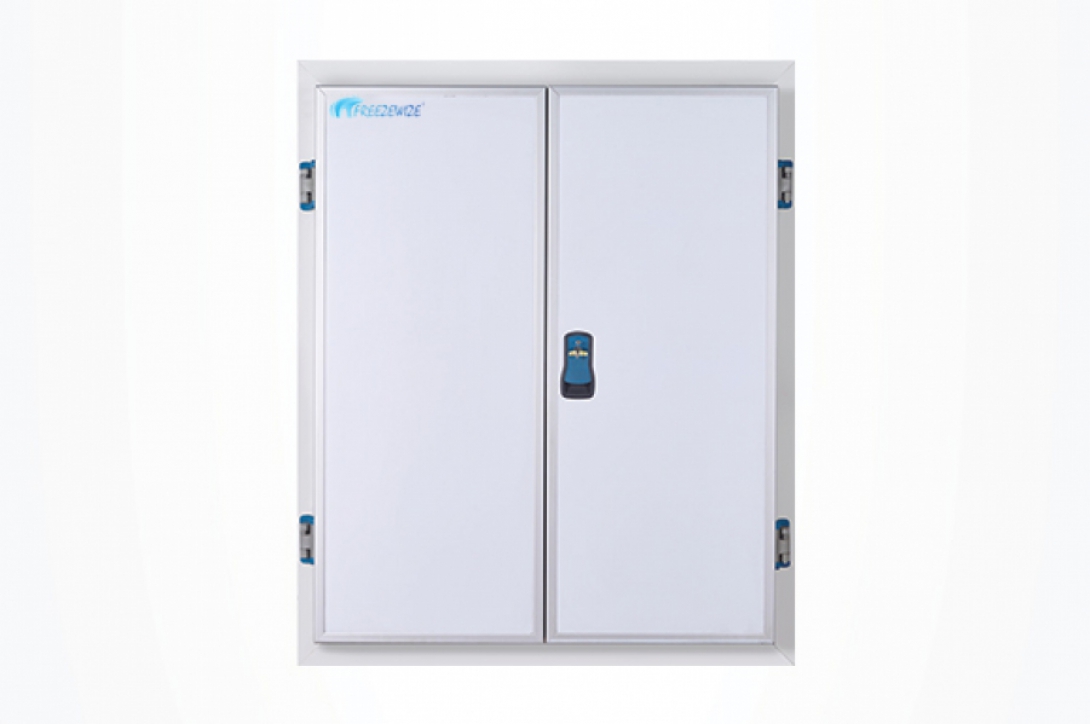
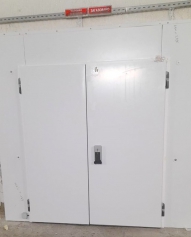
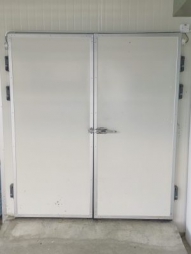
Double Hinged Cold Room Door for Cleaner Control at Busy Doorways

Keep busy cold room doorways cleaner, more controlled, and easier to manage with double hinged access built for daily traffic, hygiene pressure, and wider openings.

Cleaner Control at Busy Doorways

When a high-traffic entrance requires more than just simple access, a double-hinged cold room door is often a better choice. In heavily used refrigerated areas, the opening must remain clean, controlled, and functional under constant personnel movement, cart traffic, and hygiene demands. When a single-door configuration can no longer manage this traffic cleanly, it begins to create disorder instead of providing access control.

This is important because high-traffic entrances do more than just shape movement. They impact hygiene routines, temperature discipline, product handling, visual order, and long-term wear and tear. A better door system helps the entrance remain more predictable under pressure—exactly what fast-paced cold room environments need.

The Problem Begins When Traffic Control Is Overwhelmed

Most high-traffic cold room entrances don’t become problematic because they lose their function. They become problematic because they lose the sense of controllability.

This situation is commonly seen in food processing areas, supermarket backrooms, refrigerated preparation areas, warehouse cold storage zones, and commercial kitchens where the entrance is in constant use throughout the day. Staff move quickly. Wheeled carts pass through repeatedly. Cleaning crews need access. Product transfers occur under time pressure. The door opening becomes one of the busiest points in the room.

When this door is not suited to the speed and volume of daily use, control begins to slip in small but significant ways. The door panel feels too restrictive for the traffic. One person holds it while another pushes through. Carts scrape against the sides. Keeping the threshold clean becomes difficult. The entrance begins to look more chaotic than the rest of the room.

This is the core issue. In high-traffic cold-room environments, cleanliness and control are closely intertwined. If the door feels unbalanced, disorganized, odd, or overloaded, the operation feels the same way.

Why Do High-Traffic Doors Place Greater Pressure on Cleanliness?

A high-traffic door is not just a traffic point. It is also one of the first places where hygiene discipline can break down.

Repeated entries and exits create opportunities for moisture, contact, wheel movement, hand contact, and increased wear on the threshold, frame, seals, and nearby wall surfaces. If passing through the opening cleanly isn’t easy, keeping it clean is rarely easy either. Staff begin working around the door instead of passing through it. Cleaning becomes more difficult. Contact marks accumulate more quickly. The area begins to look more worn than the rest of the room.

In practical applications, this situation can lead to:

more scratches and visible wear around the door

greater difficulty managing cleanliness at the threshold and door edge

slower hygiene routines during busy schedules

repeated traffic conflicts that reduce smooth movement

a door that feels cluttered even if the room itself is well-maintained

increased pressure during inspections or routine facility tours

For this reason, a door often deserves more attention than it receives. In high-traffic environments, it is one of the clearest indicators of whether the room was truly designed for real-world working conditions.

The Risk of an Opening That Works but Feels Uncontrolled

A door may maintain temperature, yet it can still be the wrong choice.

This typically occurs when the opening, while technically functional, no longer supports smooth movement, controlled traffic, or efficient daily maintenance. In high-traffic facilities, this mismatch creates risks in ways that aren’t always immediately apparent.

The wrong door format can lead to:

slowing down movement during peak traffic hours

increasing the risk of impact from carts, shelves, and wheeled bins

making it difficult to consistently clean threshold areas

placing additional strain on hinges, latches, and gaskets

create a more noticeably worn appearance on the back side

give teams the impression that the clearance was inadequately planned from the start

These types of risks are significant because they accumulate over time. A door that looks misaligned usually stays that way. A door that is difficult to clean rarely becomes easier on its own. A door that requires frequent intervention under heavy use usually becomes a larger maintenance issue later on.

Situations Where Single-Leaf Access Loses Its Advantage

Single-hinged cold room doors still make sense in many standard applications. They are generally simple, practical, and efficient for medium-sized openings and lighter traffic.

The problem begins when a single panel must manage excessive activity at the door entrance. In a high-traffic area, the same panel must simultaneously handle pedestrian traffic, wheeled equipment, hygiene requirements, and full access needs. This can make the entrance feel less controlled with every use.

Under these conditions, a single large panel often creates multiple issues simultaneously. It can disrupt nearby movement, require more careful use, increase the load on the same hardware points, and make the entrance feel less disciplined under constant traffic. Even if the door fulfills its basic function, the surrounding area begins to show signs of overuse.

This is often the point where buyers stop looking for a simple door and start searching for a better entry system.

A Comparison Explaining the Better Choice

When the goal is cleaner control, the most useful comparison isn’t just about insulation or the number of panels. What matters is which access format helps the entry remain orderly, manageable, and easier to maintain under daily pressure.


The fundamental decision point is simple: If the entrance needs to remain cleaner and more controlled while handling wider and more intense daily use, a double-hinged installation generally yields stronger long-term results.

Why Do Double-Hinged Doors Support Better Control?

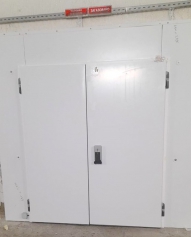
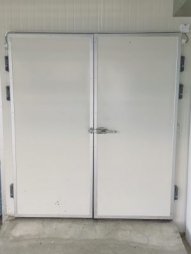
A double-hinged cold room door improves control by simplifying the management of a high-traffic opening.

Instead of loading the entire width of the door and the traffic load onto a single panel, the opening is divided into two more functional sections. This provides a more balanced access pattern to the area. Routine traffic can pass through without being forced into a single large swinging motion that would dominate the entire space. When full width is required for vehicles, shelves, cleaning access, or service entry, both panels can be utilized more effectively.

This modification helps keep high-traffic doorways cleaner and more orderly in several ways:

traffic flows through the opening more naturally

fewer awkward movements reduce repeated impacts and friction

the doorway becomes more proportionate to wider daily use

cleaning crews gain better access to the entry area

the opening remains more orderly during peak operating periods

Long-term wear and tear does not concentrate on a single, overloaded wing path

The result is not just better access. It is a door that operates more consistently.

Cleaner Control Depends on the Entire Entrance Area

A double-hinged configuration can improve the opening, but the real result depends on how the entire entrance area is planned.

Threshold design is crucial, as wheeled traffic must pass cleanly without dragging debris or getting caught during transit. Sealing quality is critical, as a door that closes unevenly never feels fully under control. Viewing panels can enhance traffic awareness in areas where staff frequently pass through. Kick plates and protective hardware are essential, as high-traffic environments inevitably lead to repeated contact, even when operations are well-managed.

There are a few supporting details to consider:

Traffic Mix

A door used exclusively by pedestrian staff does not function the same way as a door shared with hand trucks, wheeled racks, and pallet jacks. The opening must be designed to withstand the toughest daily conditions.

Cleaning Routine

If the area requires frequent washing, disinfection, or inspection, the door should support this routine without creating extra edges, obstacles, or wear points.

Threshold Conditions

A cleaner door depends on wheels moving more smoothly. Rough transitions make it difficult to keep the area organized and clean.

Visibility and Control

When the opening promotes awareness rather than surprises, managing heavy two-way traffic is easier. Control is not just mechanical. It also concerns how the entrance door behaves in heavy traffic.

Long-Term Ownership Logic

The right solution isn’t just one that works during installation. It’s a solution that remains manageable, clean, and well-designed even as daily use is repeated.

In this context, the Freezewize Cooling System is the most logical choice when the entrance is considered not as an independent door component but as part of the room’s overall operation.

Quick Decision Guide

Double-hinged cold room doors are generally a better choice in the following situations:

if the door is subject to frequent movement by personnel and vehicles

if the opening is so wide that a single-leaf door feels overloaded

if hygiene and inspection readiness are critical on a daily basis

if maintaining the threshold area in good order is difficult with the current layout

if traffic frequently causes hesitation, friction, or stop-and-go movement

if the room requires both routine access and occasional full-width opening

if long-term control is more important than basic functionality

A single-hinged option may still be more suitable in the following situations:

if the opening size is moderate

if traffic is light and mostly pedestrian

if the cleaning pressure at the entrance is relatively low

if full-width access is only required occasionally

if managing and cleaning the existing opening is easy

Related Solutions

If cleaning control is the primary concern at a high-traffic entrance, it is generally beneficial to review these related solution areas simultaneously:

cold room insulated panels

refrigerated room door systems for standard access points

freezer room doors designed for low-temperature operation

threshold and floor transition details for wheeled traffic

viewing panels for safer traffic coordination

kick plates and impact protection hardware

gaskets, sealing elements, and perimeter sealing components

cold storage layout planning for high-traffic areas

These related solutions are important because access control typically stems not just from the door configuration but from the entire opening environment.

FAQ

Are double-hinged cold room doors better for high-traffic areas?

In many applications with wider openings and heavy traffic, yes. They generally provide better movement control, more convenient access, and a cleaner working environment in the long run compared to a single large-leaf door.

Why is door control important in a cold room?

Because the door affects traffic flow, cleanliness, equipment wear, hygiene access, and how well the room performs during daily use. A poorly controlled entrance causes friction throughout the entire operation.

Can a door still be the wrong choice even if it works?

Yes. A door may still open, close, and maintain temperature, but it can lead to daily traffic conflicts, more difficult cleaning, increased exposure to impact, and a visibly overloaded entrance area.

Do double-hinged doors help keep the threshold area cleaner?

Generally, yes. Better movement in the opening typically means less forceful use, less contact, and easier access for cleaning and hygiene tasks.

What should buyers consider before selecting this format?

They should review the opening width, traffic type, wheeled traffic, cleaning routines, threshold condition, visibility requirements, and long-term maintenance tolerance.

Are these doors suitable only for large warehouse cold rooms?

No. They can also be highly suitable for supermarkets, processing rooms, commercial kitchens, preparation areas, and other refrigerated spaces where the entrance is active all day.

A High-Traffic Entrance Should Be Managed, Not Just Constantly Improved

In a high-traffic cold room, a clean and controlled entrance is not a minor detail. It is part of the room’s overall performance.

When traffic, hygiene demands, and the need for wider access converge at a single opening, a double-hinged cold room door is often the clearest path to cleaner control and more stable daily operations.

For facilities reviewing an entrance exposed to heavy traffic, the best approach is to assess how people, vehicles, cleaning routines, and the width of the opening interact at that entrance. This ensures that the final door selection supports both movement and order in the long term.


Fill the Form!

Write your needs and fill the form to contact us.

Freezewize | Industrial Cooling Systems & Custom Cold Room Solutions
Merhaba, Size yardımcı olabilir miyiz ?
Whatsapp Destek