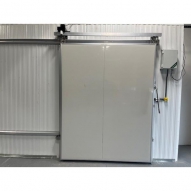





When Manual Doors Start Slowing Throughput
When Manual Doors Start Slowing Throughput | Automatic Sliding Freezer Door
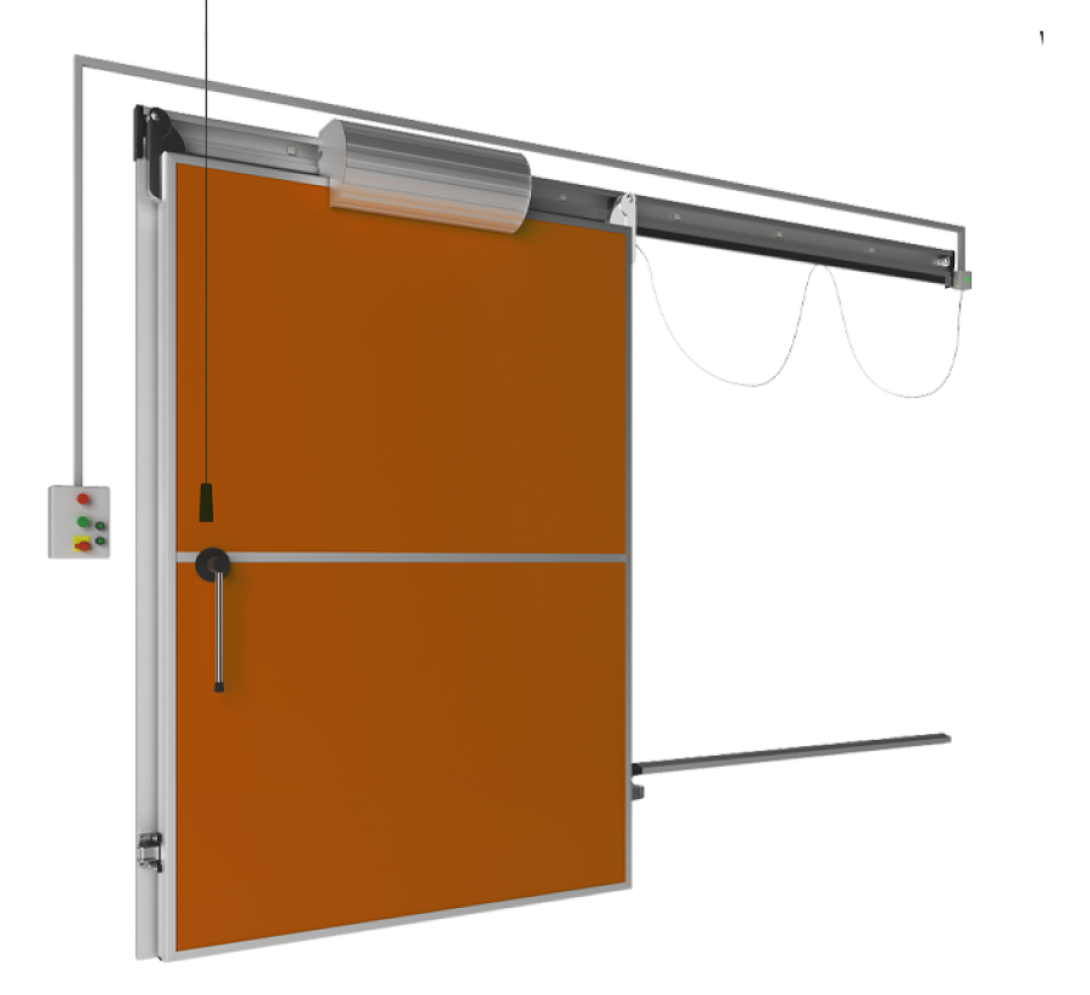
An automatic sliding freezer door reduces delay at busy freezer openings by improving traffic flow, lowering manual strain, and supporting cleaner, faster access.
When Manual Doors Start Slowing Throughput
When manual access begins to disrupt workflow speed, consistency, and daily freezer operations, the automatic sliding freezer door becomes the right solution. In high-volume operations, even a door that is technically still functioning can be a source of delays, congestion, collision risks, and unnecessary labor friction.
This is important because freezer efficiency isn’t just about room capacity. It also depends on how quickly people, vehicles, and products can pass through the opening without slowing down shifts or placing extra strain on temperature control, equipment, and cleaning routines.
The Problem Starts Before a Breakdown
Most facilities don’t replace the freezer door because it has completely stopped working. They replace it because daily use has become more difficult than it should be.
At first, the delay seems minor. Staff stop to pull the door open. Carts lose momentum. Pallet jack traffic backs up at the opening. Workers exert more effort when their hands are full, during busy shifts, or when visibility is limited. What was once a simple manual motion turns into a recurring disruption.
In a freezer environment, this kind of friction isn’t limited to the door entry point. It affects the work rhythm, transit time, door usage, and the strain placed on the cold environment. A manual door may still open and close, but it may no longer align with the room’s actual workflow.
This is the point many buyers reach: the door isn’t broken, but it has started to slow down operations.
Why Does Workflow Loss Become an Operational Issue?
Workflow issues at freezer entrances are rarely dramatic. They manifest as accumulated inefficiency.
A few extra seconds per access cycle can add up to a significant amount over a full shift. Repeated manual effort can lead to harsher usage. Hesitations in traffic can lead to impact marks, seal strain, and inconsistent closing behavior. In higher-traffic environments, the entrance becomes a place where labor efficiency quietly declines.
- This situation applies particularly to U.S. facilities managing the following:
- Frequent backroom freezer movements
- Repeated personnel entries during preparation or production
- Inter-zone pallet jack and hand truck traffic
- Freezer preparation related to shipping or restocking
- Cleaning routines requiring predictable door behavior
- Inspection pressure regarding condition, hygiene, and wear visibility
When the door begins to dictate the pace rather than support it, it has become an operational bottleneck.
The Risk of Using the Wrong Door for Too Long
A manual door can continue to function long after it has ceased to be a good operational choice. This is where the logic of ownership begins to shift.
The risk isn’t just that access slows down. The risk lies in the situation created by the slowdown in access. An unsuitable door can contribute to:
Workflow bottlenecks during peak periods
- More aggressive use by rushed staff
- Premature wear on seals, rollers, hardware, and contact points
- Temperature loss resulting from longer or less controlled openings
- A more worn-out-looking back-of-house environment
- Increasing maintenance calls without resolving the underlying issue
- A growing sense that the entrance was poorly designed from the start
For this reason, some doors become costly without causing an apparent disaster. Rather than a single obvious failure event, they continuously degrade daily performance.
Manual and Automatic Doors in Freezer Environments
The fundamental comparison isn’t just about features. It’s about whether the opening speed is appropriate for the facility’s pace and physical reality.
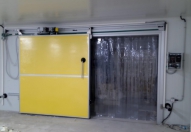
A manual sliding freezer door may still be a reasonable choice in lower-frequency applications where traffic is controlled, personnel movement is limited, and the opening process does not create a recurring bottleneck. It keeps the system simpler and may be entirely sufficient when operational demands are modest.
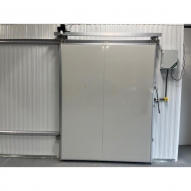
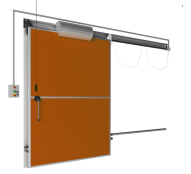
An automatic sliding freezer door makes more sense when the opening needs to keep pace with repetitive traffic and minimize preventable human intervention. Under these conditions, automation supports consistency. Rather than depending on how each operator uses the door, it helps ensure the door responds the same way throughout all shifts.
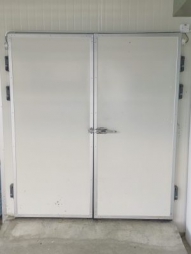
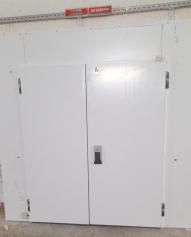
A swing door may be suitable for some freezer entrances, but it becomes less appealing in situations where directional traffic, frequent passage, and equipment movement are part of daily operations. In these areas, the door’s opening angle and interruptions to movement become part of the problem.
Quick Comparison
| Door Type | Best For | Main Strength | Main Limitation |
|---|---|---|---|
| Automatic sliding freezer door | Frequent traffic, repeated pass-through, cart or pallet jack movement | Faster and more consistent access with less manual effort | More system integration than basic manual setups |
| Manual sliding freezer door | Moderate traffic, predictable usage, simpler operations | Straightforward operation and lower complexity | Can slow throughput when usage frequency rises |
| Swing freezer door | Smaller openings, lighter traffic, basic personnel entry | Familiar access style | Can interrupt movement and require more clearance |
The Right Solution When Flow Matters
If the opening actively slows down daily traffic, the solution isn’t just to choose a heavier door. It’s to choose a better access method.
An automatic sliding freezer door solves a different problem than a standard manual door. It is designed for rooms where access speed, repeatability, and reduced handling are as important as insulation and basic sealing. This distinction is crucial in distribution operations where entry is part of the workflow, in food processing areas, supermarket backrooms, commercial kitchens, and industrial freezer rooms.
The right system must do more than just open quickly. It must also support a cleaner sealing mechanism, consistent airtightness, reliable operation, and a layout suitable for the surrounding room.
This is where the Freezewize Cooling System naturally comes into play. In practice, its strong freezer access performance stems from viewing the opening not as an independent door panel, but as an integral part of the entire cold room environment. Frame condition, threshold detail, panel interface, sealing strategy, traffic flow, and equipment protection all influence whether the solution will withstand actual operating pressure.
What Should Buyers Consider Before Making a Change?
The decision to switch from a manual system to an automatic one should be based on operational evidence rather than simply following trends.
The most important questions are practical:
How many times is the entrance used per shift?
Is personnel movement interrupted during peak hours?
Do vehicles, racks, or pallet jacks regularly pass through the opening?
Is rough handling becoming more common?
Does the opening cause visible congestion or delays?
Are cleaning and maintenance crews dealing with recurring door issues?
Is temperature control affected by slowed-down traffic?
If your answer is yes to several of these questions, the door has likely outgrown the manual operation model.
Quick Decision Guide
Select an automatic sliding freezer door in the following situations:
- If traffic is frequent and repetitive
- If staff typically pass through with products or equipment
- If manual opening slows down the shift rhythm
- If the opening serves as a daily transit point
- If hardware stress from rushed use is increasing
- If operational consistency is more important than basic simplicity
The manual sliding option still works well in the following situations:
- If access frequency is moderate
- If the opening is not a traffic bottleneck
- If personnel movement is lighter and more controlled
- If the facility prefers a simpler operating system
A swing door may still be appropriate in the following situations:
- If the opening is smaller
- If traffic consists mostly of personnel only
- If the passage speed is lower
- If there is no clearance issue
Related Solutions
An automatic freezer access strategy is most effective when planned in conjunction with the relevant room components and adjacent access requirements. Depending on the project, beneficial internal connection opportunities may include:
- Automatic sliding cold room doors
- Manual sliding freezer doors
- Hinged freezer room doors
- Insulated freezer panels
- Heated thresholds and anti-icing details
- Cold room equipment and sealing systems
- Cold storage solutions for warehouses and food facilities
These related solutions are important because efficiency issues are often linked not only to the operator mechanism but also to the full-opening condition.
FAQ
When should a facility switch from manual freezer doors to automatic doors?
This change typically makes sense when personnel traffic becomes so repetitive that manual operation begins to slow down movement, increase wear and tear, or cause daily congestion.
Does an automatic sliding freezer door improve labor efficiency?
Yes. In high-traffic environments, it can reduce repetitive manual effort and make the flow more consistent, helping the workforce operate with fewer interruptions.
Is automation only necessary for very large freezer rooms?
No. A better criterion is not room size, but traffic volume. A smaller freezer opening used continuously may benefit more from automation than a larger room accessed infrequently.
Does an automated system help reduce misuse of the door?
Generally, yes. When the opening responds consistently and is not dependent on repeated pulling or pushing, rushed use typically decreases, and preventable stress on the door is reduced.
What types of operations benefit most from this upgrade?
Food processing facilities, warehouse freezer zones, distribution areas, supermarket backrooms, and commercial kitchens with repetitive freezer traffic are strong candidates.
Could a manual door still be the right choice?
Yes. If door usage is moderate, equipment traffic is limited, and there is no real volume pressure, a manual sliding freezer door may be more suitable.
Operational Challenges Often Start at the Entry Point
When manual freezer doors begin to slow down traffic, the issue is no longer just a matter of convenience. It becomes a performance issue tied to labor efficiency, temperature control, wear and tear, and daily operational flow.
If the entrance is slowing down the shift, the access method is already part of the bottleneck.
For facilities evaluating a freezer upgrade, the best approach is to assess the entrance based on actual traffic behavior, room pressure, and long-term operational suitability, rather than waiting for a glaring failure that forces a decision.