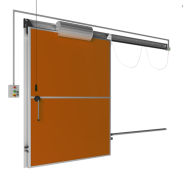





Better Traffic Control in Freezer Rooms
Better Traffic Control in Freezer Rooms | Automatic Sliding Freezer Door
Improve traffic control in freezer rooms with an automatic sliding freezer door that supports smoother flow, fewer delays, better temperature discipline, and lower daily strain.
Better Traffic Control in Freezer Rooms
Automatic sliding freezer doors are one of the most practical ways to improve traffic control in freezer rooms where daily movements are frequent, fast-paced, and difficult to manage manually. When an opening is part of a high-traffic route, better traffic control means fewer slowdowns, more predictable movement, and less strain on both personnel and door hardware.
This is important because freezer traffic is rarely limited to just people passing through an opening. It typically involves vehicles, pallet jacks, restocking tasks, picking activities, and staff repeatedly entering and exiting throughout shifts. If the door cannot properly control this flow, the room begins to lose time, order, and long-term reliability at the very point where movement needs to be most disciplined.
The Point Where Freezer Traffic Begins to Break Down
Traffic control issues in freezer rooms usually emerge long before anyone labels them as door problems.
A facility may have sufficient storage capacity, a robust cooling system, and a well-constructed, insulated exterior, yet still struggle with congestion at the entrance. Staff wait for each other at the threshold. A hand truck stops because the opening sequence isn’t right. A pallet jack loses momentum. An employee manually operates the door while trying to manage product movement. Over the course of a full day, the door opening becomes a bottleneck.
This is the real issue. In many freezer rooms, the problem isn’t access in theory. The problem is whether the door can support organized movement under actual operational pressure. When it cannot, traffic control weakens, and managing the room efficiently becomes difficult.
Why Does Poor Traffic Control Create Greater Operational Risk?
In a freezer room, traffic disruption is never limited to just the flow. It affects the broader operation.
When the entrance does not support controlled movement, the consequences may include:
- Slower transit during busy shifts.
- Stop-and-go movements at the threshold.
- More aggressive handling when personnel are in a hurry.
- Longer exposure to the opening during repeated access.
- Extra strain on seals, guides, rollers, and surrounding hardware.
- Increased likelihood of impact from carts or pallet jacks.
- A generally less disciplined backroom environment.
A manual door can still function in this environment, but it may still be the wrong choice. This distinction is important. A product may work mechanically, but it may still perform poorly operationally. In high-traffic freezer rooms, this difference typically manifests first as traffic friction, then as increased maintenance burden, visible wear, and pressure for early replacement.
Why Is Traffic Control More Important in Freezer Rooms?
Freezer rooms have less tolerance than general storage areas because the space doesn’t just affect movement. It also affects temperature maintenance, the consistency of workflow, and how safely staff can move within the room.
In many U.S. facilities, freezer entrances are tied to fast-paced daily routines. Products move according to a schedule. Teams work under time pressure. Cleaning routines require predictable access. Inspection standards demand order and visible control in back areas. If traffic at the freezer entrance becomes disorganized, the impact spreads rapidly.
Therefore, better traffic control is not merely a comfort enhancement. It is necessary to maintain workforce efficiency, reduce preventable door misuse, and preserve the overall speed of operations.
Comparison of Manual Flow vs. Controlled Automatic Access
The most important comparison is not merely between automatic and manual. It is the difference between unmanaged movement and controlled movement.
A manual sliding freezer door may still be a suitable choice under low-traffic conditions where access is predictable and the entrance is not part of a high-traffic route. In such areas, a simpler operation may suffice.
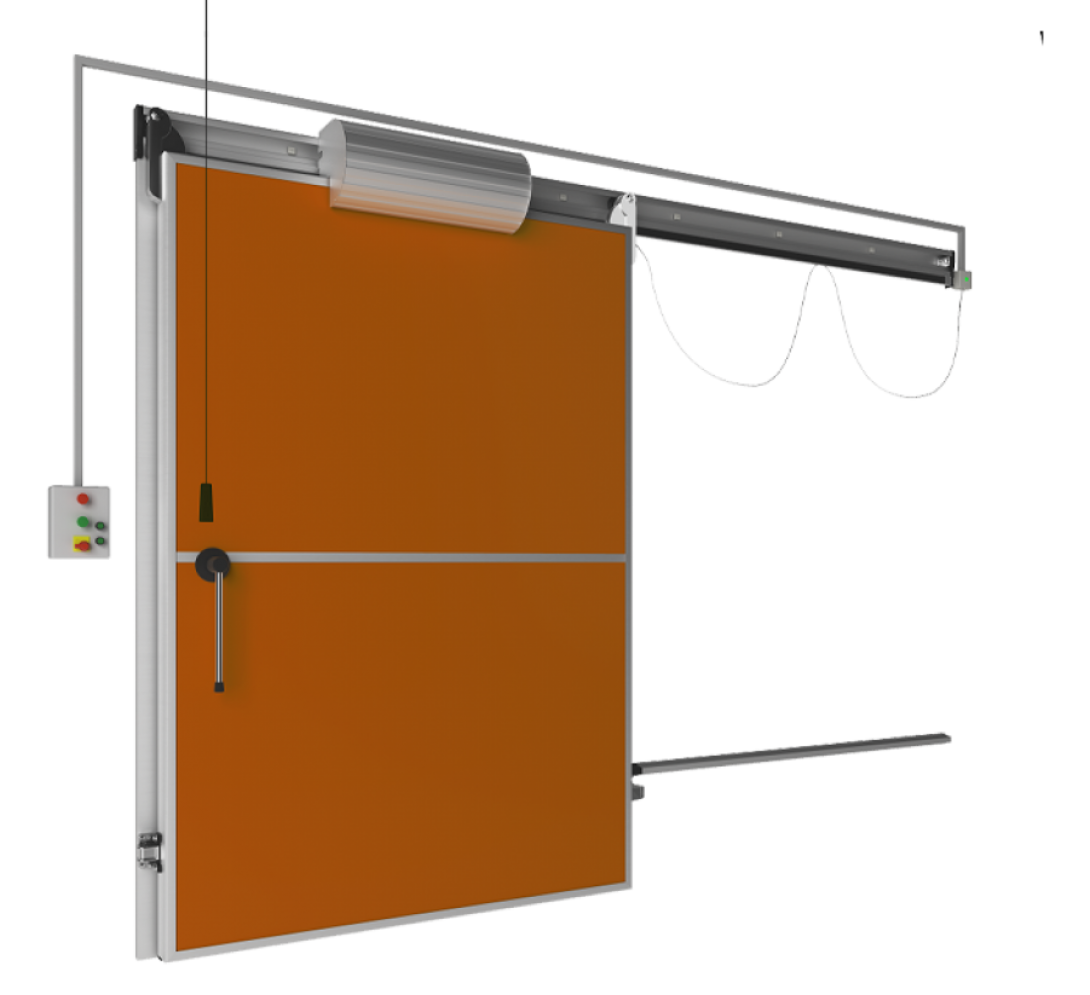
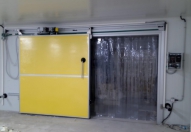
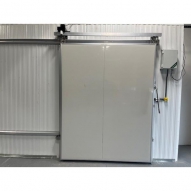
However, in areas where the entrance functions as a repeated traffic point, automation becomes more valuable. An automatic sliding freezer door helps regulate traffic by reducing hesitations and repetitive manual operations. It creates a more consistent access rhythm; this is particularly beneficial in areas where multiple staff members, carts, or material movements converge at the same opening throughout the day.
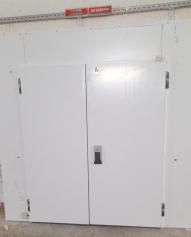
Swing doors may be suitable for certain smaller freezer applications, but in high-traffic rooms, they typically result in more interruptions, greater reliance on the opening, and more physical obstacles in the path. When a smooth flow is critical, justifying their use becomes more challenging.
Quick Comparison
| Door Type | Best Fit | Main Advantage | Main Limitation |
|---|---|---|---|
| Automatic sliding freezer door | High-traffic freezer rooms, repeated daily movement, equipment-assisted flow | Better traffic control and more consistent access | Requires stronger system planning than basic manual options |
| Manual sliding freezer door | Moderate traffic, simpler workflows, more predictable access | Straightforward and practical in lighter-use rooms | Can create congestion as traffic intensity rises |
| Swing freezer door | Smaller openings, light personnel traffic, simpler entry patterns | Familiar access method | Less efficient where traffic flow and clearance matter |
Door Type Best Fit Key Advantage Key Limitation
Automatic sliding freezer door Freezer rooms with heavy traffic, daily repetitive movements, equipment-assisted flow Better traffic control and more consistent access Requires more comprehensive system planning compared to basic manual options
Manual sliding freezer door Moderate traffic, simpler workflows, more predictable access Simple and practical for rooms with low usage intensity May cause congestion as traffic density increases
Swing freezer door Smaller openings, low personnel traffic, simpler entry arrangements A familiar access method Less efficient in situations where traffic flow and passage distance are critical
A Better Solution for Freezer Room Traffic
When traffic control becomes a daily problem, the solution isn’t to tell staff to handle it better. The solution is to ensure the opening functions more effectively.
When the room relies on faster passage, cleaner opening behavior, and more predictable movement across shifts, an automatic sliding freezer door is typically a stronger choice. This reduces the need for manual intervention at the threshold and facilitates the entrance functioning as part of the workflow rather than a bottleneck.
This benefit becomes even more valuable when the opening is subject to the following:
- Repeated personnel movement.
- Pallet jack or hand truck traffic.
- Inter-zone product transfer.
- Restocking or picking activities.
- Hygiene-sensitive operations.
- Visible back-of-house standards.
- Constant maintenance pressure resulting from heavy use.
This is where the Freezewize Cooling System naturally comes into the discussion. In actual freezer room planning, better traffic control doesn’t stem solely from the door panel. It stems from selecting an opening system that aligns with the room layout, threshold conditions, traffic flow, sealing requirements, protective equipment, and the facility’s actual needs.
What Buyers Should Consider Before Making a Selection
Traffic control should be evaluated practically, not abstractly.
Before selecting a door system, buyers should observe how the opening behaves during a typical workday. The most useful decision points are:
- How frequently the opening is used per shift.
- Whether traffic consists solely of personnel or is mixed with hand trucks and pallet jacks.
- Whether congestion occurs during peak traffic periods.
- How often personnel must stop, adjust, or wait at the threshold.
- Whether repeated manual use leads to harsher wear and tear.
- How critical temperature control is at the entry point.
- Whether the room requires a cleaner and more organized traffic flow.
- How much downtime the facility can tolerate over time.
These factors typically determine whether the room needs a basic access point or a better traffic control solution.
Quick Decision Guide
Select an automatic sliding freezer door in the following situations:
- Daily traffic in the freezer room is heavy.
- The opening is part of a work route, not just for occasional access.
- Carts, shelves, or pallet jacks pass through regularly.
- Staff are wasting time at the threshold.
- The room requires a more organized and repeatable movement pattern.
- The operation prioritizes minimizing friction in the workflow over basic simplicity.
A manual sliding option may still be suitable in the following situations:
- Traffic volume is moderate.
- The entrance is not a bottleneck.
- Equipment movement is limited.
- The facility prefers a simpler operating system.
A swing-style door may still be suitable in the following situations:
- The entrance is smaller.
- Access is limited and primarily staff-based.
- Space is available.
- Flow interruptions are not a major issue.
Related Solutions
Depending on the project, better traffic control in freezer rooms is often linked to other related solutions such as:
- Automatic sliding freezer room doors.
- Manual sliding freezer doors for areas with lower traffic.
- Hinged freezer room doors for secondary access.
- Insulated freezer panels.
- Heated thresholds and frost-prevention details.
- Cold room airtightness systems.
- Impact protection around high-traffic openings.
- Warehouse and food processing cold storage solutions.
Traffic control is most effective when the entire opening environment supports the same operational goal, making these related solutions crucial.
FAQ
Why is traffic control so important in freezer rooms?
Because the opening affects both movement and room discipline. Inadequate traffic control slows down personnel, increases handling stress, and can create preventable pressure on temperature maintenance and upkeep.
Does an automatic sliding freezer door really improve traffic flow?
Yes. In high-volume operations, it can make passage faster and more predictable by reducing hesitations and repetitive manual door operations.
Is this only beneficial for large cold storage facilities?
No. The need depends more on traffic density than the facility’s size. A smaller freezer room with constant movement may benefit more than a larger room with infrequent access.
Can a manual sliding freezer door still be the right choice?
Yes. If traffic is moderate and the opening does not cause congestion, a manual sliding door can still be a practical solution.
What types of operations benefit most from improved traffic control?
Warehouses, food processing areas, supermarket backrooms, commercial kitchens, and distribution operations typically benefit the most because they rely on repeated, organized movement through freezer openings.
What else should be considered besides the door itself?
Threshold conditions, frame details, perimeter panels, sealing performance, exposure to impact, visibility requirements, and service access should be reviewed before making a selection.
Better Traffic Control Creates a Better Freezer Room
When traffic control at the opening fails, the entire freezer room begins to work harder than necessary. A better access system does more than just move the door. It helps regulate the flow of personnel, reduce friction, and ensure the room operates more efficiently every day.
If the entrance cannot control traffic, it cannot fully support the room.
For facilities reviewing their freezer room entrance, the smartest step is to evaluate how the entrance manages daily actual traffic and select a system designed for controlled flow, long-term suitability, and fewer operational compromises.