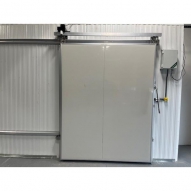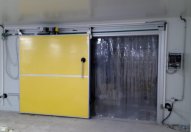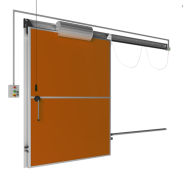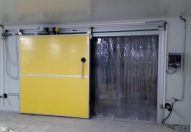





Faster Openings for Frozen Workflows
Faster Openings for Frozen Workflows | Automatic Sliding Freezer Door
Improve frozen workflow speed with an automatic sliding freezer door built for faster access, lower delay, cleaner movement, and better daily operational control.
Faster Openings for Frozen Workflows
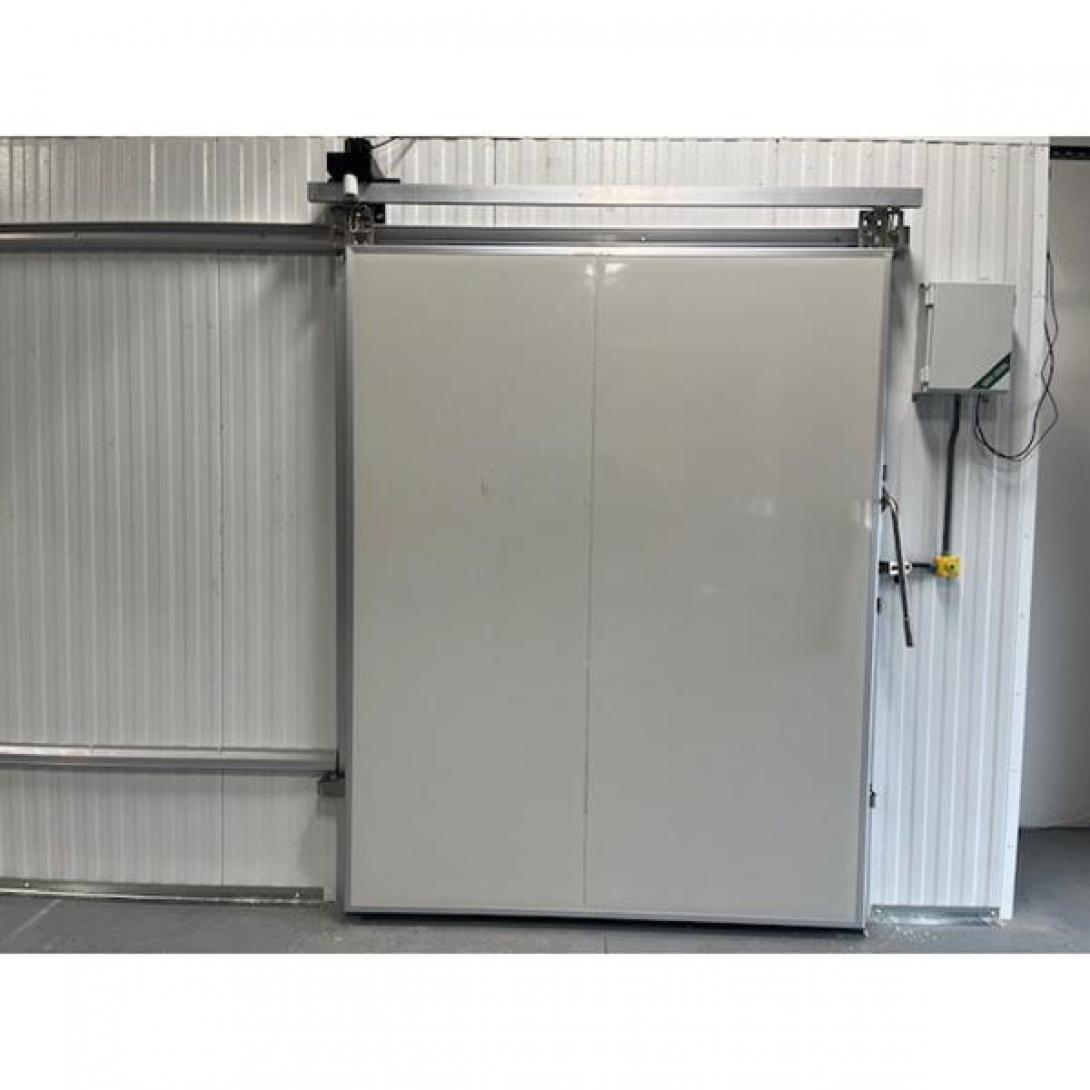
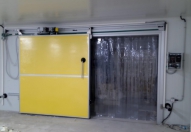
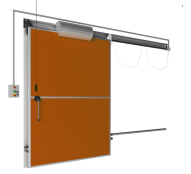
In situations where the speed, repeatability, and smooth movement of frozen workflows depend on a high-traffic opening, the automatic sliding freezer door is the right choice. In high-traffic freezer environments, slow access isn’t just a matter of wasting a few seconds. It disrupts workflow, increases handling stress, and places extra pressure on temperature control at one of the room’s most active points.
That’s why faster opening is crucial in real-world operations. As personnel, carts, shelves, and pallet jacks move in and out throughout the day, the door should support—not slow down—workflow. The best solution isn’t just a door that opens. It’s a door that keeps the frozen area moving without creating new friction.
Frozen Workflows Get Stuck at the Opening
Most inefficiencies in freezers don’t start with a cooling failure. They start at the threshold.
A room may maintain temperature well, the panels may be sound, and the cooling system may be working exactly as expected. But if entry slows down movement, operations still lose time. Staff stop at the entrance. Loaded carts hesitate. Pallet jack traffic gets backed up. During busy shifts, repeated manual handling starts to feel more burdensome. What should be a seamless transition turns into a stop-and-go routine.
In frozen environments, this is even more critical, because the entrance is not just a door. This is where traffic flow, thermal insulation, and daily operational efficiency intersect. When access slows down, the entire workflow begins to bear this cost.
The True Cost of Delayed Openings
The slow opening of a freezer door can easily be overlooked because it rarely leads to a dramatic failure. Instead, it causes small, repeated interruptions that accumulate over time.
These interruptions can manifest as follows:
- Reduced movement efficiency during busy shifts.
- Extra physical fatigue due to repeated manual door operation.
- Longer dwell time at the entrance.
- Additional wear on seals, hardware, rollers, and contact points.
- Increased risk of impact, rushed use, or alignment issues.
- Greater pressure on the threshold during hand truck and pallet jack movements.
- A freezer access point that staff bypass rather than rely on.
This is where the cost of ownership begins to shift. An incorrect access method may still function, but it can quietly create a more expensive operating model through increased labor burden, maintenance pressure, and earlier replacement schedules.
Why Is Speed More Important in Freezer Applications?
An inefficient opening in a cold room is annoying. In a freezer room, however, this becomes a much larger operational issue.
Frozen workflows have less tolerance for delays. Traffic must generally move purposefully. Teams may be working within tight time windows. Surfaces and equipment are exposed to harsher conditions. Cleaning routines require predictable access. Back-of-house areas must remain organized even when activity is high. In this environment, a slow door affects not only comfort but also functionality.
For warehouses, food processing areas, distribution zones, supermarket backrooms, and commercial kitchens, a freezer door often becomes an integral part of the production rhythm. When this point begins to slow down, labor productivity drops in ways that are easily noticeable and difficult to compensate for elsewhere.
Manual Access vs. Automatic Flow
The most useful comparison is not between manual and automatic in terms of a feature list. It is between resistance and flow.
A manual sliding freezer door may still be suitable in lower-frequency applications where traffic is controlled, access events are limited, and labor pressure does not concentrate on the door. In these environments, simplicity may be the better choice.
However, the logic changes when the workflow becomes repetitive, timed, or equipment-driven. An automatic sliding freezer door is better suited for openings that must respond consistently without relying on repeated user effort. It eliminates some of the friction that manual systems naturally introduce during heavy daily use.
A swing door may work in some freezer applications, but it becomes less appealing in situations where the door opening, directional movement, exposure to impact, and traffic continuity are critical. In faster-paced operations, the swinging motion can disrupt the flow rather than support it.
Quick Comparison
| Door Type | Best Fit | Main Advantage | Main Limitation |
|---|---|---|---|
| Automatic sliding freezer door | High-use frozen workflows, staff and cart traffic, repeated daily access | Faster, more consistent pass-through with less manual strain | More integrated system planning required |
| Manual sliding freezer door | Moderate traffic, simpler access points, more predictable use | Straightforward operation and lower system complexity | Can slow throughput as usage increases |
| Swing freezer door | Smaller openings, light personnel traffic, basic access needs | Familiar operation | Can disrupt flow and require more clearance |
A Better Solution for Faster Freezer Workflows
If the opening has become a noticeable bottleneck, the solution is typically not to tolerate it further. The solution is to adapt the access method to the actual usage pattern.
When the room relies on frequent movement, controlled access, and reduced manual interruptions, an automatic sliding freezer door is a stronger choice. This helps the opening behave as part of the workflow—not as an obstacle within it. This is crucial in facilities where staff approach the entrance not just occasionally, but repeatedly and under pressure.
A good solution should not merely open faster. It must also support reliable closing, consistent sealing, smoother traffic management, and easier integration with the surrounding freezer environment. This includes frame conditions, panel interfaces, threshold details, visibility requirements, protective hardware, and the reality of daily equipment movements.
This is where the Freezewize Cooling System naturally comes into play. In real-world projects, better freezer access is rarely achieved simply by replacing the door panel. It requires understanding how full clearance works within the room, how traffic behaves, and where workflow actually loses time.
What Buyers Should Consider Before Making a Choice
The decision should be based not on the general assumption that “faster is always better,” but on the actual operating demands of the opening.
A buyer should closely examine the following:
- Traffic frequency during a typical shift.
- Is it just personnel movement, or a mix of personnel and equipment?
- Pallet jack, hand truck, or rack access requirements.
- How often the opening becomes a bottleneck.
- Whether material handling operations have become more demanding over time.
- Cleaning expectations around the threshold and equipment.
- The cost of delays during production, preparation, or stock replenishment.
- Maintenance tolerance and service access requirements.
If several of these factors point to repeated friction, an automatic sliding solution is generally a more suitable option in the long term.
Quick Decision Guide
Choose an automatic sliding freezer door in the following situations:
- The opening is used intensively throughout the day.
- Faster movement directly supports labor efficiency.
- Vehicles, pallet jacks, or repetitive product movements are common.
- Manual handling causes delays in the workflow.
- The room requires more controlled and repeatable access.
- The opening is a known bottleneck during peak periods.
A manual sliding option may still be a better choice in the following situations:
- Traffic is moderate and predictable.
- The opening does not affect the volume of work.
- The facility prefers a simpler operation.
- Equipment movement through the door is limited.
A swing-style door may be suitable in the following situations:
- The opening is smaller.
- Usage is lower.
- Traffic flow is primarily personnel-based.
- Space and flow interruptions are not significant issues.
Related Solutions
Depending on the project, this topic is often naturally linked to other cold room and freezer room solutions such as the following:
- Automatic sliding cold room doors
- Manual sliding freezer doors
- Hinged freezer room doors
- Insulated freezer panels
- Heated thresholds and anti-icing details
- Cold room equipment and sealing components
- Warehouse cold storage solutions
- Freezer room access systems for food processing facilities
These related solutions are important because faster opening typically depends not on a single component, but on the overall opening conditions.
FAQ
When is an automatic sliding door needed in a freezer workflow?
It is generally needed when manual access begins to slow down personnel movement, causes repeated stoppages, or creates an additional burden in a high-traffic opening.
Does faster door opening really improve freezer operations?
Yes. In high-traffic environments, faster and more consistent access can improve traffic flow, reduce manual handling, and help the room operate more smoothly.
Is this only beneficial in very large facilities?
No. A better measure is not the size of the facility, but the traffic density. A smaller freezer room with constant movement can benefit more than a larger room with limited access.
Which operations benefit most from fast freezer door openings?
Warehouses, food processing areas, supermarket backrooms, distribution areas, and commercial kitchens typically benefit the most because they rely on repeated daily traffic.
Can a manual freezer door still be the right choice?
Yes. If door usage is moderate, congestion is low, and equipment traffic is limited, a manual sliding freezer door may still be the more suitable option.
What else should be considered besides the door itself?
Before making the final decision, the frame, threshold, side panels, sealing performance, visibility requirements, protective details, and service access should be taken into account.
Faster Opening Creates More Efficient Freezer Workflows
When the opening motion slows down, the freezer workflow loses its efficiency long before anyone identifies it as a door issue. Faster access is not merely a convenience improvement. It is an operational enhancement that supports a smoother flow, better pace, and more reliable daily performance.
If opening controls the room’s speed, it deserves the same attention as other critical systems in the workflow.
For facilities planning a freezer upgrade or reviewing an access point with heavy traffic, the best step is to evaluate opening as an integral part of the full freezer operation and select a solution that allows the room to move with less friction.