




Freezewize | Industrial Cooling Systems & Custom Cold Room Solutions

Smoother Movement Through High-Use Freezers

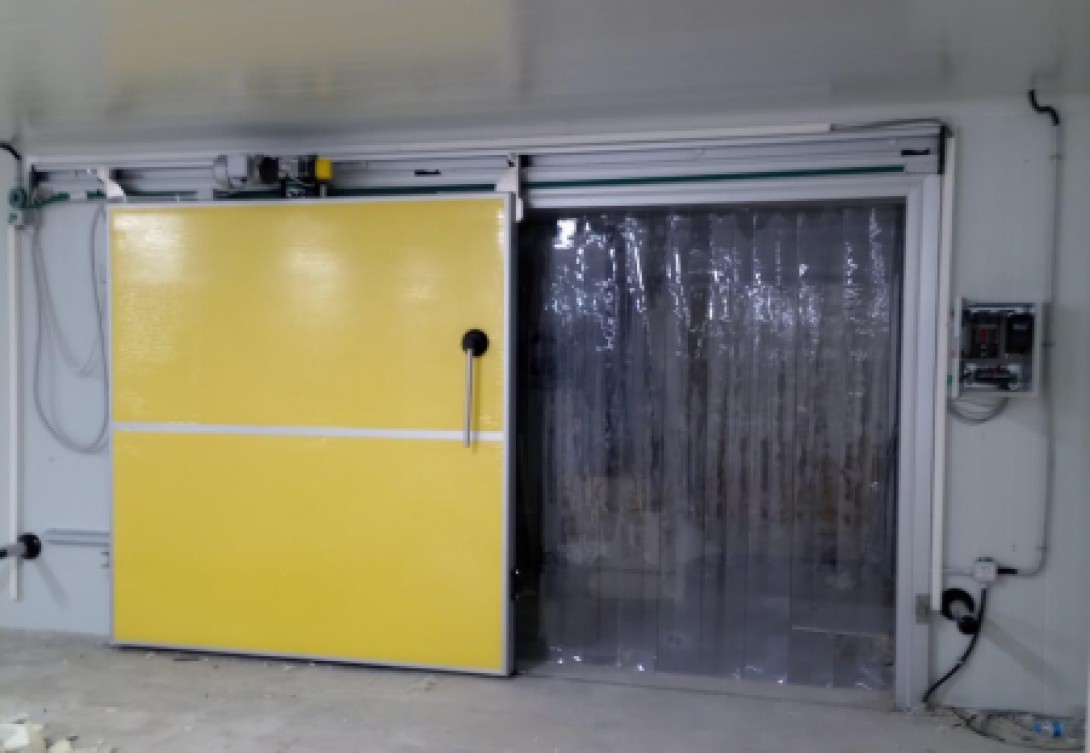
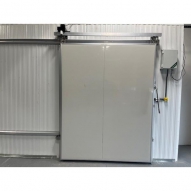
Smoother Movement Through High-Use Freezers | Automatic Sliding Freezer Door

Improve flow in busy freezer rooms with an automatic sliding freezer door that reduces delay, supports cleaner traffic, and lowers long-term strain.

Smoother Movement Through High-Use Freezers

An automatic sliding freezer door is often the best solution when a high-use freezer opening starts slowing people, carts, and product movement throughout the day. In busy cold storage environments, smoother movement is not just about convenience. It directly affects labor pace, threshold control, door wear, and how well the room performs under constant traffic pressure.

That is why the opening matters so much in high-use freezers. When staff, pallet jacks, carts, and racks pass through the same threshold over and over, the door must support the workflow without creating hesitation, congestion, or unnecessary manual strain. The right access system helps the room stay faster, cleaner, and easier to manage.

Movement Problems Usually Start at the Threshold

Most freezer access problems do not begin with complete failure. They begin with friction inside the daily routine.

A worker slows down to handle the door. A cart loses momentum at the entry. A pallet jack operator waits for clearance. One person passes through, then another pauses because the opening cycle is not keeping pace. None of these moments look major in isolation. Over a full shift, they become a real operational drag.

That is the hidden issue in high-use freezers. The room itself may be well built. The refrigeration may be working properly. The insulated envelope may still be strong. But if movement through the opening is awkward or slower than the workflow requires, the freezer starts losing efficiency where the pressure is most constant.

In real facilities, the threshold becomes the point where labor flow, cold retention, traffic discipline, and hardware stress all meet. When movement is not smooth there, the room works harder than it should.

Why Rough Movement Becomes a Bigger Cost Over Time

A freezer opening can still be working and still be costing the operation more than it should.

That cost usually appears as repeated small inefficiencies rather than one dramatic breakdown. Staff lose rhythm at the entry. Handling becomes rougher during peak periods. Seals, rollers, hardware, and surrounding protection points begin taking more abuse. The opening starts feeling older than the rest of the room.

Over time, poor movement at a freezer entry can lead to: 

  • Slower daily throughput.
  • More stop-and-go traffic at the threshold.
  • Longer exposure during repeated access cycles.
  • Added strain on door hardware and sealing points.
  • More bumps from pallet jacks or carts.
  • Higher maintenance attention without fully fixing the workflow.
  • Earlier replacement pressure than expected.

This is why the wrong access setup often feels like an operations problem before it looks like a door problem.

High-Use Freezers Need a Different Kind of Access Logic

Not every freezer room needs the same kind of door performance. A lightly used frozen room has very different demands from a high-traffic freezer that supports constant movement throughout the day.

In higher-use environments, the door is not just an opening. It becomes part of the operating rhythm. Teams rely on it during staging, picking, internal transfer, replenishment, back-of-house movement, and frozen inventory handling. When the opening slows down, the entire work pattern around it becomes less efficient.

This is especially important in U.S. operations where labor efficiency, workflow control, maintenance tolerance, and visible back-of-house order all matter. A door that still seems acceptable in a low-traffic setting may be completely wrong once usage intensity rises.

Manual Access Versus Smoother Automatic Movement

The real comparison is not simply automatic versus manual. It is inconsistent movement versus repeatable movement.

A manual sliding freezer door can still be the correct choice in lower-traffic rooms where access is controlled, equipment movement is limited, and the opening is not a constant pressure point. In those situations, simpler operation may still be the better fit.

But where daily traffic is heavier and movement must stay fluid, an automatic sliding freezer door usually becomes the stronger option. It reduces the repeated manual handling that interrupts flow and helps create a more consistent opening pattern across shifts. That consistency matters in spaces where access frequency is high and hesitation at the threshold has real operating consequences.

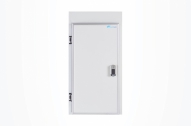
A swing door may still suit smaller or lighter-use applications, but in high-use freezer openings it often introduces more interruption, more clearance dependency, and more handling friction than the workflow can comfortably absorb.

Quick Comparison

Door TypeBest FitMain AdvantageMain Limitation
Automatic sliding freezer doorHigh-use freezers, repeated staff and equipment traffic, faster pass-through needsSmoother movement with less manual interruptionRequires proper layout and system planning
Manual sliding freezer doorModerate traffic, simpler access needs, predictable useStraightforward and practicalCan create drag as traffic intensity rises
Swing freezer doorSmaller openings, lighter personnel-based accessFamiliar operating styleLess efficient for repeated traffic and equipment movement

The Better Solution for Smoother Freezer Flow

If the opening is becoming a daily source of friction, the answer is not to expect staff to adapt indefinitely. The answer is to improve the way the opening behaves.

An automatic sliding freezer door is typically the better solution when the operation needs quicker pass-through, less manual interference, and a more stable movement pattern at the threshold. It helps the freezer opening function as part of the workflow rather than as a point of resistance inside it.

That becomes especially valuable when the room sees: 

  • Repeated personnel entry.
  • Pallet jack and cart movement.
  • Staging and transfer activity.
  • Busy shift transitions.
  • Pressure to reduce workflow slowdown.
  • Limited tolerance for repeated maintenance interruptions.

A good system should do more than open quickly. It should also support reliable closure, strong sealing, smoother traffic handling, and a threshold condition that stays manageable under real-world use.

This is where The Freezewize Cooling System fits naturally into the conversation. In practice, smoother movement through a high-use freezer rarely comes from door automation alone. It comes from understanding the full opening condition, including the surrounding panels, threshold detail, seal performance, protective hardware, traffic pattern, and service access needs.

What Buyers Should Review Before Choosing

The best selection decision usually comes from studying how the opening behaves during actual daily use.

The most useful questions are practical: 

  • How many times is the opening used during a typical shift?
  • Is movement mostly staff-only, or does it include carts, racks, and pallet jacks?
  • Does the threshold already create hesitation during busy periods?
  • Are staff using more force than they should to keep the pace moving?
  • Is the door becoming a visible wear point in the back-of-house area?
  • Does the room need a cleaner, more disciplined access pattern?
  • How much downtime or maintenance interruption can the operation tolerate?
  • Is the current setup still suitable for the way the freezer is used now?

These questions usually reveal whether the opening needs a basic door solution or a more capable access system built for smoother flow.

Quick Decision Guide

Choose an automatic sliding freezer door when: 

  • The freezer opening is used heavily throughout the day.
  • Staff and equipment need faster, cleaner pass-through.
  • Manual handling is slowing the workflow.
  • The threshold is a recurring congestion point.
  • The room needs more repeatable traffic control.
  • Long-term operating ease matters more than bare-minimum simplicity.

A manual sliding option may still be the better fit when: 

  • Traffic is moderate and predictable.
  • The opening is not a major workflow bottleneck.
  • Equipment movement is limited.
  • The facility prefers a simpler operating setup.

A swing-style door may still work when: 

  • The opening is smaller.
  • Use is lighter and mainly personnel-based.
  • Clearance is not a concern.
  • The operation can tolerate more interruption at entry.

Related Solutions

Smoother movement through high-use freezers is often strongest when the full opening environment is planned together. Related solutions may include:

  • Automatic sliding cold room doors.
  • Manual sliding freezer doors for lower-traffic zones.
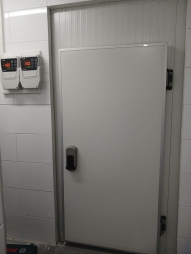
  • Hinged freezer room doors for secondary entries.
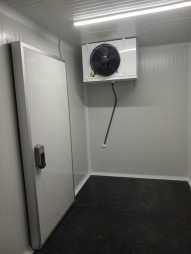
  • Insulated freezer panels.
  • Heated thresholds and anti-frost details.
  • Cold room sealing systems.
  • Impact protection for traffic-heavy openings.
  • Cold storage solutions for warehouses, supermarkets, and food processing facilities.

These related solutions matter because movement quality is rarely shaped by the operator alone. It is usually influenced by the entire condition of the opening.

FAQ

Why does smoother movement matter in a high-use freezer?

Because repeated slowdown at the opening affects labor pace, traffic flow, threshold exposure, and long-term wear on the door system.

Is an automatic sliding freezer door better for heavy daily traffic?

In most high-use applications, yes. It usually provides more consistent movement and reduces the manual interruption that builds up around busy freezer entries.

Can a manual freezer door still be suitable?

Yes. If the opening has moderate traffic and limited equipment movement, a manual sliding freezer door may still be a practical choice.

What operations benefit most from smoother freezer movement?

Warehouses, food processing facilities, supermarkets, commercial kitchens, distribution operations, and other busy cold storage environments benefit most when the opening supports steady flow.

Does smoother access also help reduce maintenance pressure?

Often yes. When the door operates with less rushed handling and less repeated force, hardware and sealing components are typically easier to manage over time.

What should be reviewed besides the door leaf?

Threshold design, panel interface, seal performance, hardware protection, traffic pattern, visibility needs, and service access should all be reviewed before final selection.

Smoother Movement Creates a Better High-Use Freezer

A high-use freezer does not stay efficient by refrigeration strength alone. It also depends on how smoothly people and equipment can move through the opening every day without creating delay, wear, or workflow disruption.

If the threshold keeps interrupting the pace of the room, it is no longer just a door choice but an operational weakness.

For facilities evaluating a busy freezer entry, the most useful next step is to assess the opening under real traffic conditions and choose a solution built to keep movement smoother, cleaner, and more reliable over the long term.

Fill the Form!

Write your needs and fill the form to contact us.

Freezewize | Industrial Cooling Systems & Custom Cold Room Solutions
Merhaba, Size yardımcı olabilir miyiz ?
Whatsapp Destek