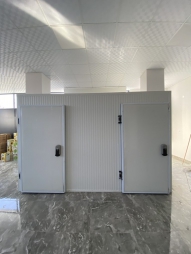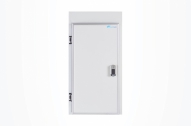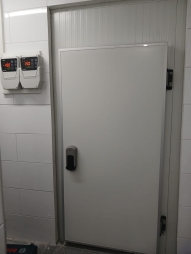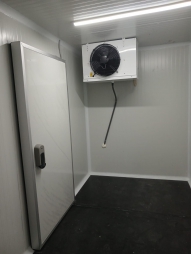





Flush Openings That Keep Coolers Cleaner
Flush Mount Cooler Swing Door for Cleaner, More Efficient Openings
Flush mount cooler swing doors help keep cooler openings cleaner, easier to sanitize, and better aligned with daily traffic, hygiene, and maintenance demands.
Flush Openings That Keep Coolers Cleaner
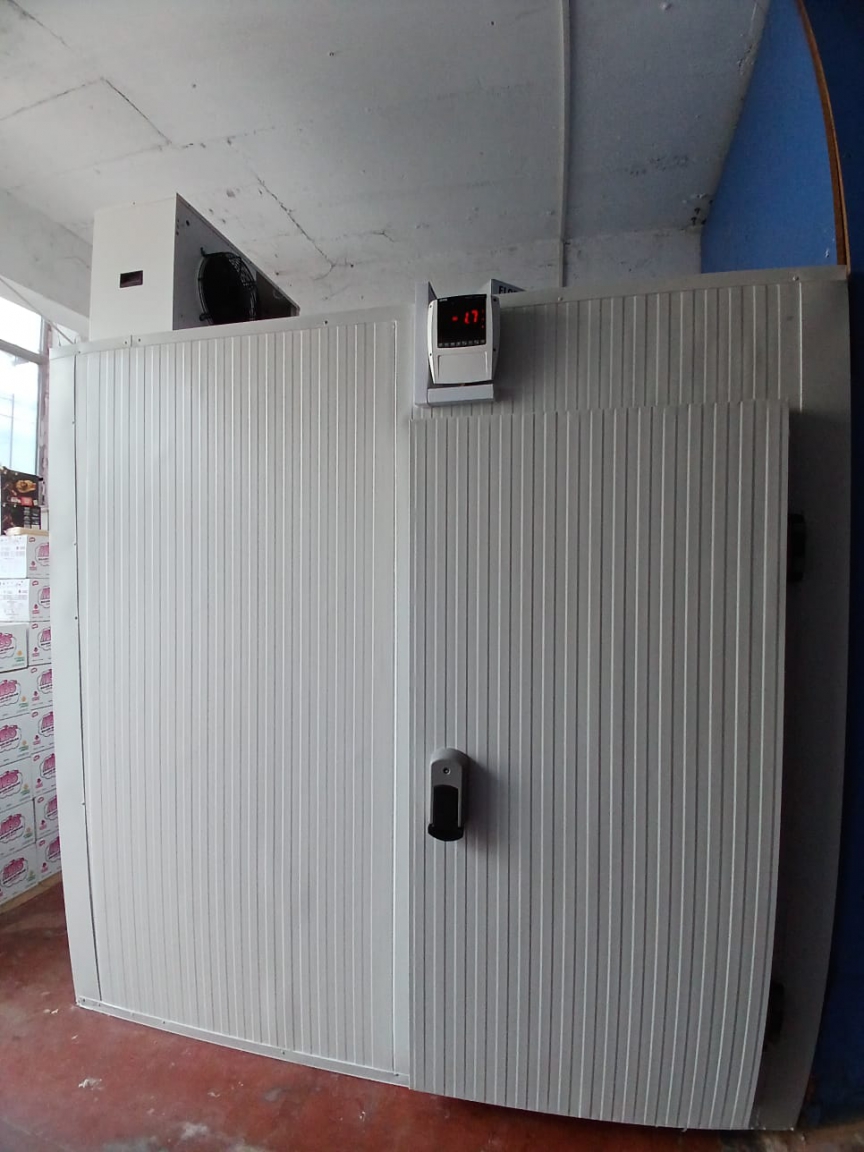
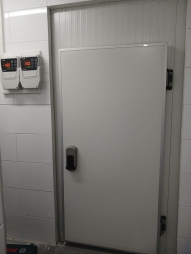
A recessed-mounted refrigerated swing door is one of the most practical options when a refrigerated opening needs to stay cleaner, wipe down faster, and provide a more controlled appearance during daily use. By reducing protrusions, exposed edges, and unsightly frame buildup points, it helps ensure better hygiene and a more orderly background environment.
This is critical in real-world facilities because refrigeration openings are touched, walked past, cleaned, bumped into, and visually inspected every day. When the opening itself becomes a dirt-trapping area, creates cleaning friction, or presents a rough visual surface, the issue is not merely cosmetic. It becomes an operational problem.
Where the Problem Actually Starts
In many cold storage rooms, the problem doesn’t start with temperature performance. It starts with the opening.
The door area is one of the most heavily used points in the room. Staff constantly pass through here. Carts and shelves pass by. Cleaning crews wipe this area under time pressure. Supervisors notice this because it is one of the most visible parts of the cold room’s exterior. If this opening has unnecessary edges, indented accumulation points, or a surface that is harder to clean than the surrounding wall, it begins to create low-level friction every day.
This friction typically manifests in predictable ways. Dirt accumulates along the transition lines. Moisture and residue linger longer than they should. Cleaning requires more effort than expected. The opening begins to look older than the rest of the room. In food environments—such as kitchens, supermarkets, prep areas, and distribution facilities—this is rarely a minor issue.
A cooler may continue to function even with a poorly designed opening. However, from the business owner’s perspective, this does not mean it was the right choice.
Why Does a Poor Opening Become a Daily Burden?
Even if a cooler door opening is technically acceptable, it can still create a poor user experience.
This typically occurs when the gap feels overly pronounced in the wrong places and insufficiently considered in the most critical areas. Protruding frame conditions, uneven wall transitions, or surfaces that are difficult to clean may not hinder the room’s operation, but they generally create a slower and more disorganized routine regarding hygiene and visual inspection.
Over time, the risks become more apparent:
- Cleaning crews spend more time on edges, joints, and accumulation points.
- The opening wears out faster than the surrounding panels.
- The appearance at the back of the facility begins to look inconsistent.
- Daily wiping procedures become less effective under labor pressure.
- Staff notice resistance, misalignment, or wear on the finish more quickly.
- Management begins to feel that the entrance was not designed with the entire workflow in mind.
For this reason, facility teams typically review door area decisions sooner than expected. The room still maintains its temperature, but the opening begins to feel like a weak point—one that would otherwise be present in a professional installation.
Flush-Mounted Openings and Standard Framed Openings
For many refrigeration applications, the decision is not merely a choice between a louvered door and another door type. It also concerns how the opening is attached to the wall and how this behaves under actual cleaning and traffic routines.
If the goal is a cleaner visual line, easier wiping, and a more integrated surface, a recessed-mounted refrigeration louvered door is generally the better choice. A more traditional framed structure may still work in certain function-focused environments, but it can cause more disruption in the opening.
| Feature | Flush Mount Cooler Swing Door | Standard Framed Opening |
|---|---|---|
| Wall transition | Smoother, more integrated | More visual interruption |
| Cleaning routine | Easier to wipe and sanitize | More edges can slow cleaning |
| Debris buildup risk | Lower in well-finished openings | Higher at exposed transitions |
| Back-of-house appearance | Cleaner and more uniform | More utilitarian look |
| Suitability for hygiene-focused areas | Strong | More limited depending on finish |
| Long-term perception | More intentional and premium | Can feel dated sooner |
The correct answer depends on the space. If the opening is located in a cleaner, more visible, and more controlled operational area, recessed mounting is generally more sensible. If the environment is simpler and appearance or hygiene efficiency is less critical, a standard framed approach is still acceptable. However, in many U.S. commercial facilities, tolerance for cluttered openings is not increasing—it is decreasing.
Why Do Recessed Swing Doors Work Better in Cleaner Refrigerated Environments?
The value of recessed mounting does not stem from its modern appearance. Its value comes from eliminating unnecessary friction in a high-traffic area of the room.
When the opening is integrated more cleanly within the wall line, managing the entire area becomes easier. Cleaning procedures are performed more directly. Hard-to-reach areas where residue can accumulate are reduced. The opening appears more organized; this is crucial in supermarkets, food service preparation areas, kitchens, processing areas, and all facilities where the refrigeration system is part of a visible operational standard.
A recessed-mount refrigerated door performs well even in environments where the refrigeration room does not experience heavy pallet traffic, but where there is regular staff movement, manual handling traffic, carts, shelving, and routine access throughout the day. In these environments, the goal is typically not maximum opening speed. Instead, it is controlled access, clean lines, and easier maintenance.
This is where product selection becomes more strategic.
In this category, a well-designed door should be evaluated based on the following:
- Surrounding panel cladding.
- Seal quality.
- Hardware durability.
- Viewing panel requirements.
- Threshold or floor clearance suitability.
- Exposure to cleaning chemicals.
- Expected opening frequency.
- Visibility of the cooler during daily operations.
When these factors align, opening is no longer a compromise. It becomes part of a cleaner, higher-performing room enclosure.
Practically speaking, this is why many operators are turning to recessed-mount solutions with the Freezewize Cooling System approach: not for the brochure appeal, but for a better balance between the actual demands of access, room hygiene, and usability.
Cleaner Openings Also Support Better Workflow
Cleaner openings are often discussed solely in terms of hygiene, but workflow is just as important.
In many facilities, staff do not have extra time to perform detailed cleaning around difficult-to-reach areas. They clean quickly, move on, and return to their workflow. If the opening is simple and smooth, this routine continues. If not, debris lingers longer, the door area appears less controlled, and the space eventually begins to require more corrective intervention.
This is particularly important in operations that combine the following:
- Repeated daily entry.
- Visual inspection pressure.
- Food safety expectations.
- Labor efficiency concerns.
- Moderate traffic without full industrial use.
A recessed-mount refrigerated swing door is highly suitable when the opening needs to look disciplined without becoming overly complex. It helps create an area that more easily meets both functional and visual standards.
Long-Term Cost Logic
Buyers rarely regret a refrigerated opening solely because of the invoice. They regret it because the door requires constant attention.
This attention may manifest as more detailed cleaning, premature wear, more noticeable wear in hardware areas, or recurring complaints that the entrance looks rougher than the rest of the facility. None of these issues may qualify as a malfunction, but when combined, they create an ownership burden.
Therefore, long-term cost should not be evaluated based solely on the door’s initial price. It should include:
- Daily cleaning labor.
- Maintenance of appearance.
- Downtime for maintenance.
- Coating durability.
- Replacement timing.
- Consistency with the facility’s operational standards.
A cleaner opening is not just a more attractive opening. When properly installed, it is an opening with less friction.
Quick Decision Guide
Recessed-mount refrigerated swing door is generally the right choice in the following situations:
- If the refrigerated opening is located in a hygiene-sensitive area.
- If the room is visible to staff, managers, or inspectors.
- If the facility wants faster and simpler cleaning procedures.
- If the opening is exposed to regular foot traffic rather than constant pallet impact.
- If appearance and hygiene standards are equally important.
- If the team prefers a more integrated finish from wall to door.
In the following situations, a different opening condition may be more appropriate:
- If the area is subject to extreme abuse.
- If hygiene and appearance take a backseat to robust functionality.
- If heavy freight movements dominate the opening.
- If maintenance teams accept a more industrial-grade cladding.
The basic decision is simple: if the opening needs to stay cleaner with less daily effort, a recessed door is generally the better option.
Related Solutions
If this application is part of a broader cold room solution, related solutions typically include:
- Refrigerated swing doors for daily staff access.
- Freezer swing doors for low-temperature areas.
- Cold room panels for a cleaner wall system finish.
- Insulated viewing panels for visibility and safer movement.
- Thresholds and floor transitions suitable for vehicle traffic.
- Seals, hardware, and protective details that reduce wear around openings.
These are most effective when specified as part of the same operational logic rather than selected in isolation.
FAQ
Is cleaning recessed-mounted refrigerated swing doors easier?
Yes. In most applications, the recessed-mounted design reduces difficult-to-reach protrusions and exposed transition points, making cleaning faster and more consistent.
Where do these types of doors make the most sense?
They perform particularly well in refrigerated rooms—such as supermarkets, prep kitchens, food service areas, and controlled storage areas—where there is regular staff access, hygiene requirements, and standards for visible back-of-house areas.
Is recessed installation always the best choice for high-traffic areas?
Not always. If there is frequent pallet contact, severe vehicle impact, or harsher misuse conditions in the opening, a full-opening design should be evaluated not only for aesthetics but also for durability and protection needs.
Does a cleaner opening really affect ownership costs?
Yes. Easier cleaning, better surface quality, and less visual deterioration can reduce ongoing labor pressure and delay the need to replace the opening prematurely.
Can recessed openings still provide strong sealing performance?
They can, provided that the door, gasket, hardware, and installation quality are properly selected for the refrigeration application and usage pattern.
What should buyers consider before making a selection?
Consider the type of traffic, cleaning frequency, hygiene expectations, compatibility with wall finishes, visibility requirements, hardware quality, and how the opening will perform not just on installation day, but after months of daily use.
Cleaner Openings Lead to Better Rooms
The best refrigeration openings do more than just close properly. They stay cleaner, look more controlled, and reduce daily maintenance for those managing the space.
If a refrigeration opening needs to support hygiene, presentation, and daily usability all at once, a recessed-mount refrigeration swing door is usually the better choice.
For facilities planning a cleaner and more professional cold room finish, the next step is to evaluate the opening not as an isolated door component, but as an integral part of the entire working environment.