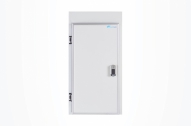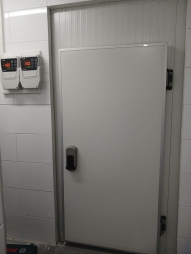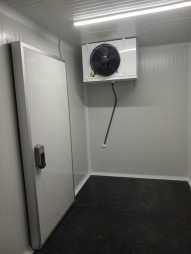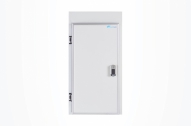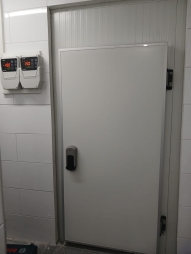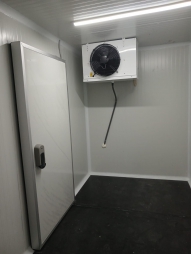





Swing Door Design With Tighter Finish
Flush Mount Cooler Swing Door With Tighter Finish for Cleaner, Longer-Lasting Cooler Entries
A tighter-finish flush mount cooler swing door improves cleaner lines, easier sanitation, steadier sealing, and lower wear in busy cooler openings.
Swing Door Design With Tighter Finish
When a refrigerator door needs to look cleaner, be easier to maintain, and retain its appearance during daily use, a refrigerator swing door with a tighter finish is often the better choice. A more refined finish at the entrance reduces visual clutter, supports better cleaning routines, and helps the door feel like an integral part of the room rather than a separate element added to it.
This is important because cooler entrances are high-traffic areas. Staff constantly pass through these areas, cleaning crews work quickly around them, and managers notice them every day. If the finish around the opening feels loose, bulky, or visually rough, the entrance begins to create maintenance pressure and appearance issues long before anyone would label it a malfunction.
2Where a Rougher Finish Begins to Cause Friction
Most refrigeration door issues do not start with a seal failure or hardware malfunction. They start with the appearance and behavior of the opening during daily use.
In supermarkets, food preparation rooms, kitchens, processing support areas, and commercial cold storage facilities, the entrance is one of the most visible and frequently used parts of the room. It is touched, cleaned, opened, closed, and walked through all day long. If the door design causes the opening to look heavy, uneven, or unfinished around the wall line, the room begins to lose control at one of its most critical points.
This loss of control manifests in practical ways. Cleaning takes longer because the path around the door is more circuitous. The opening appears to wear out faster than the insulated panels around it. During inspections or routine visits, the room looks more disorganized. Staff begin to feel that the entrance is functional but not truly well-resolved.
This is the real issue. A door can function and still create the impression of poor performance.
3Why Is a Tighter Seal Important in Daily Use?
A tighter seal does more than just improve appearance. It also offers a functional advantage.
When the opening of a recessed-mounted, cooling-fin door is sealed more tightly, the room benefits from a cleaner relationship between the wall and the door. This typically translates to fewer visually disruptive gaps, areas that feel less unfinished, and a more orderly overall appearance. In daily use, this helps make the opening easier to manage, especially in places where hygiene, presentation, and high foot traffic are all equally important.
For facility teams, this creates value in ways that are easy to overlook at first. The door area becomes easier to clean. The opening appears more harmonious with the wall system. Minor edge wear is less visually noticeable. The room feels more polished; this is important in professional environments where background standards are part of operational reliability.
A tighter finish does more than just make the door look better. It also helps the opening age better.
2The Risk of Choosing an Opening That Is Too Loose or Too Function-Focused
The wrong door design can leave the facility with an inadequately equipped access point, even if it fits the opening.
This situation is common in projects where the priority is too closely aligned with initial fit, yet not sufficiently aligned with daily use. A looser or rougher finish may appear acceptable during installation, but once the room becomes operational, visible wear at the entrance, cleaning difficulties, and a perception of poor quality begin to emerge.
Over time, this can lead to:
- More pronounced wear in the frame area.
- Slower cleaning around the opening.
- A rougher visual impression in visible work areas.
- Increased maintenance requirements at edges, hardware, and contact points.
- Earlier pressure to renovate or replace the entrance.
- A growing sense that the opening was chosen for minimum acceptance rather than long-term suitability.
This last point is important. Many buyers do not regret that the cooler has stopped working. They regret that it never quite felt right once the room was put into actual use.
Tighter Finishing vs. Simpler Opening Presentation
When buyers compare cooler door options, the useful distinction isn’t merely whether the door opens or not. What matters is whether the opening presents a clean, finished, and integrated appearance, or whether it feels more exposed and function-focused.
In situations where the room requires stronger visual consistency, more disciplined hygiene, and a cleaner relationship between the door and the wall, a recessed-mounted refrigeration swing door with a tighter finish is generally the more suitable choice. A simpler finish may still be acceptable in service areas with low visibility, but in active commercial areas, it typically leads to more friction in the long run.
| Decision Factor | Tighter-Finish Flush Mount Cooler Swing Door | More Basic Finish Condition |
|---|---|---|
| Wall-to-door appearance | Cleaner and more integrated | Rougher or more interrupted |
| Sanitation routine | Easier in frequent wipe-down environments | More cleanup around transitions |
| Long-term visual control | Stronger | More likely to look worn sooner |
| Fit for visible back-of-house areas | High | More limited |
| Perceived room quality | More professional | More utilitarian |
| Ownership logic | Better for long-term daily use | Better only for lower-standard utility spaces |
This comparison becomes most significant in situations where the entrance is not merely a technical access point but a part of the facility’s daily image.
Why Does the Flush-Mounted Design Provide a Tighter Seal?
The flush-mounted configuration creates the necessary conditions for a more disciplined opening by ensuring the door sits more cleanly within the wall plane.
This changes how the opening functions in practice. The entrance appears less bulky. The surrounding finish appears more seamless. The transition between the insulated wall system and the hinged door appears more refined. In work environments where cleanliness and visual order are important, this tighter seal helps the room maintain a more controlled standard.
This becomes particularly valuable in colder applications involving the following:
- Frequent entry and exit by personnel.
- Regular cleaning routines.
- Pressure to present a visible back area.
- Light vehicle or shelf traffic near the opening.
- Limited tolerance for early wear or cladding fatigue.
- A need for a system requiring less maintenance in the long term.
In these environments, coating quality is not a secondary concern. It is an integral part of the room’s performance.
This is where the Freezewize Cooling System approach makes practical sense. The goal is not to create a decorative opening. The goal is to provide a door condition that looks cleaner, operates more efficiently, and maintains its fit within the room even after real-world daily use begins.
A Better Solution Is a Permanently Designed Opening
The strongest solution is not merely a swing door that fits the opening dimensions. It is a door system that remains durable over time.
For many cold rooms, this means selecting a recessed-mounted cold room swing door with a tighter surface when the facility requires a more controlled entry condition. The correct design must be evaluated in conjunction with the surrounding panel layout, hardware load, gasket serviceability, threshold conditions, cleaning routine, and expected opening frequency.
This broad perspective is important because the opening’s performance is shaped by the entire system, including the following:
- Insulated panel alignment.
- Hinge and latch quality.
- Seal compatibility and replaceability.
- Floor transition or threshold detail.
- Review panel requirements.
- Exposure to cleaning chemicals.
- Daily traffic patterns near the door.
When these components are evaluated together, the opening ceases to appear as a vulnerable edge in the room. It begins to function as a complete access solution.
Quick Decision Guide
In the following situations, choose a recessed-mounted cooling swing door with a tighter seal:
- The opening is visible during normal operation.
- The room needs to have a cleaner and more professional appearance.
- Hygiene routines are frequent.
- The facility wants less wear on the seal over the long term.
- Staff traffic is orderly.
- Property value beyond the initial installation is important.
In the following situations, a simpler opening finish may still be acceptable:
- If the area is entirely focused on functionality.
- If appearance is a low priority.
- If cleaning demands are lower.
- If the opening is not very visible.
- If the team is willing to accept a rougher appearance in the long term.
The decision is simple: if the opening needs to remain clean-looking, controlled, and easier to manage over time, a recessed-mount design with tighter cladding is generally the better option.
Related Solutions
Depending on the application, related solutions may include insulated panels for cold storage rooms, freezer-flapped doors for low-temperature environments, insulated viewing panels, serviceable gasket systems, thresholds suitable for light vehicle traffic, and hardware packages selected for high-cycle daily use.
These solutions are most effective when selected to support the same finish quality and operational standard as the entrance itself.
FAQ
Why is a tighter finish important for a refrigerated sliding door?
Because the finish affects daily hygiene, long-term appearance, and how well the opening remains consistent with the room’s operational standard.
Is it easier to keep recessed-mounted refrigerated doors looking clean?
In many applications, yes. A tighter, more integrated opening typically reduces visual clutter and makes cleaning routines easier.
Does this primarily help with appearance?
No. It also reduces maintenance burden, improves hygiene efficiency, and enhances long-term suitability in high-intensity refrigeration environments.
Where is a tighter seal most useful?
It is particularly useful in supermarkets, kitchens, food preparation areas, processing areas, and cold rooms—places where the opening is visible and used repeatedly throughout the day.
Can a door function properly even if it has the wrong coating?
Yes. While a door may function mechanically, it may still look rough, wear out quickly, or create extra cleaning and maintenance burdens.
What should buyers evaluate before selecting a door?
They should review traffic volume, the visibility of the opening, panel alignment, cleaning routines, hardware load, threshold details, and long-term appearance expectations.
Better Finishing Ensures Better Long-Term Performance
The refrigeration entrance should not begin to look worn, rough, or inadequate while the rest of the room continues to perform well. It must remain clean, orderly, and compliant with facility standards.
If the goal is a cooler entrance that looks better, cleans faster, and retains its value longer, a recessed-mount cooler swing door with a tighter finish is a wiser choice.
For facility managers, contractors, and operators planning a new installation or considering replacing an aging entrance, the next step is to assess the overall condition of the entrance to ensure the door supports not only access but also the room’s long-term standards.