




Freezewize | Industrial Cooling Systems & Custom Cold Room Solutions

Where Speed Starts Protecting Cold

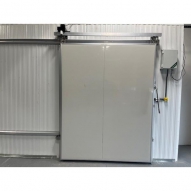
Where Speed Starts Protecting Cold | Automatic Sliding Freezer Door

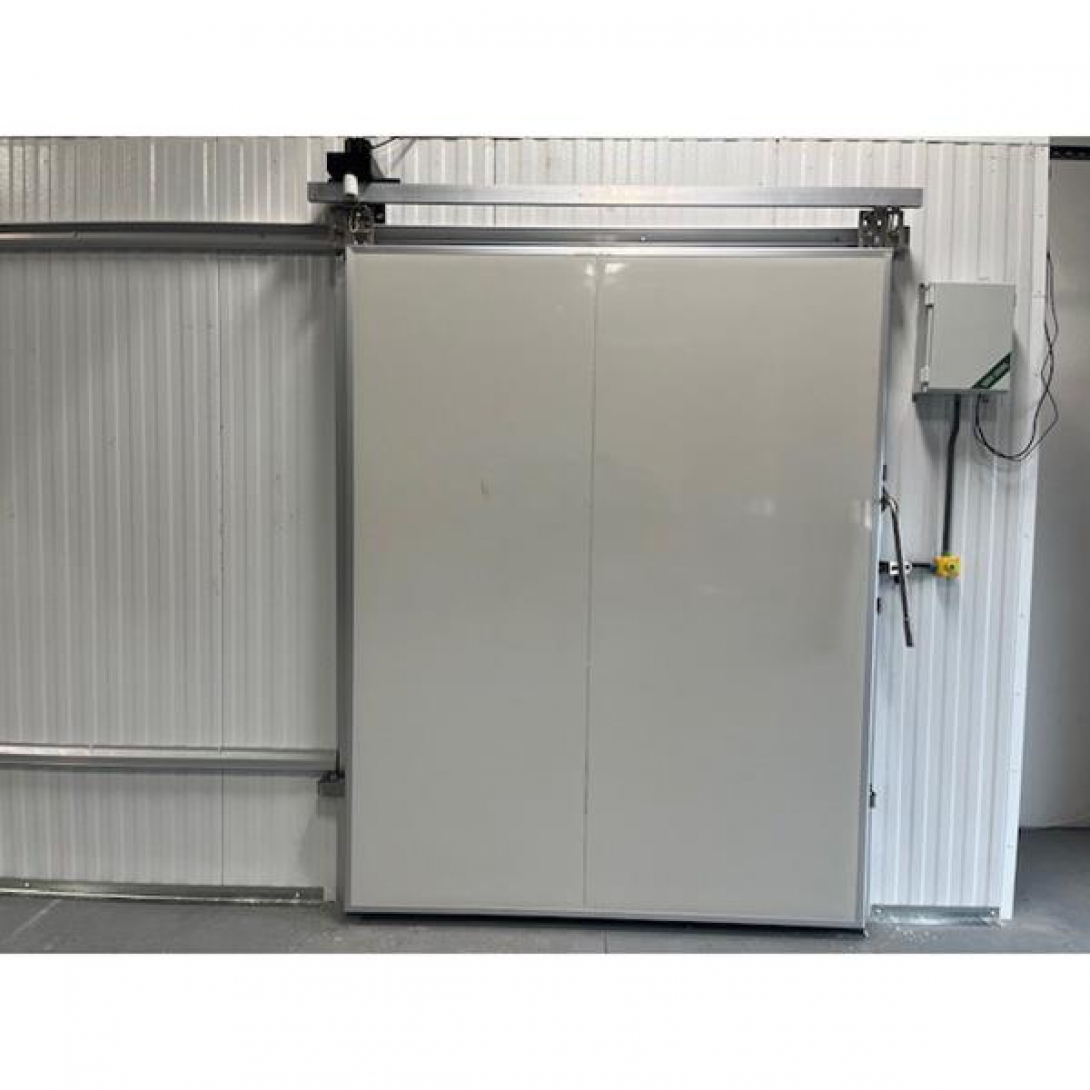
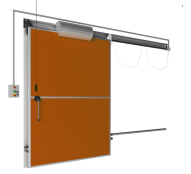
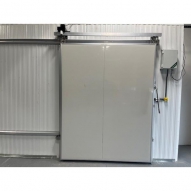
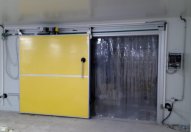
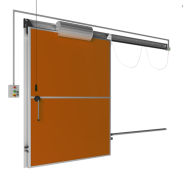
The automatic sliding freezer door preserves the cold by reducing losses caused by door dwell time, improving traffic flow, and making high-traffic freezer entrances faster, cleaner, and more controlled.

Where Speed Starts Protecting Cold

An automatic sliding freezer door begins to preserve the cold the moment speed becomes not just a convenience but an integral part of thermal control. In high-traffic freezer rooms, a door that opens slowly does more than just delay staff. It extends the threshold’s exposure time, disrupts the flow, and places unnecessary strain on the room’s ability to maintain temperature under real-world operating conditions.

That’s why speed matters at freezer entrances. As people, vehicles, shelves, and pallet jacks pass through the opening throughout the day, faster and more controlled access helps the room recover better, operate more efficiently, and resist small daily losses that can lead to major performance issues over time.

The Problem Starts at the Opening

Most freezer performance issues don’t stem solely from the cooling system. They typically begin where the cold barrier is most frequently compromised: the door opening.

A freezer room may be well-insulated, properly sized, and technically sound. However, if the entrance remains open for too long, responds too slowly, or causes irregular traffic patterns, cold protection weakens at the point of daily use. Staff wait at the threshold. Product movement stops. Manual handling adds seconds to every pass. The room begins to lose efficiency with every opening cycle.

This is particularly true in U.S. facilities where the pace of work, traffic frequency, and daily workload pressure are high. In these environments, the opening of the door is no minor detail. It is part of the system that maintains the cold during every shift.

The Risk of Viewing Speed as a Convenience Feature

One of the most common purchasing mistakes is viewing door speed as a comfort feature rather than an operational safety feature.

A door may provide good sealing when closed, but it could be the wrong choice in practice. If the opening process is too slow for traffic flow, the facility begins to pay the price for this mismatch in quieter ways:

  • Longer exposure during repeated access cycles.
  • Increased heat loss in the threshold area.
  • Increased strain on the cooling load around the opening.
  • Stop-and-go traffic during peak periods.
  • More rushed manual operation and risk of impact.
  • Increased wear on gaskets, guides, and hardware.
  • A growing sense that the entrance does not match the room’s pace.

For this reason, some freezer doors perform poorly without showing any obvious defects. The problem isn’t always a malfunction. More often than not, the issue is that the opening speed is too slow for the tasks being performed.

Why Does Speed Help Maintain Cold in Real-World Operations?

In freezer rooms, speed isn’t just about moving people faster. It’s about minimizing how long the cold environment is disrupted during each access event.

The faster the door can respond and the more consistently it can close, the better the room can resist preventable temperature fluctuations at high usage thresholds. This becomes particularly important when the entrance supports the following:

  • Repeated personnel movement.
  • Pallet jack and hand truck traffic.
  • Frozen product transfers.
  • Replenishment or preparation routines.
  • Food processing support flow.
  • Distribution activities with constant traffic.


In these environments, faster access reduces hesitation time, minimizes manual delays, and helps maintain cold storage by supporting a more disciplined movement pattern than open access.

Comparison of Manual Delay vs. Controlled Automatic Movement

The key comparison here is not speed itself, but the contrast between delayed access and controlled access.

A manual sliding freezer door may still be suitable in rooms where traffic is moderate, movements are predictable, and the threshold is not constantly in motion—and where the freezer is used less frequently. In these areas, a simpler solution may still be the right choice.

However, as traffic increases, speed begins to take on a different significance. The automatic sliding freezer door is better suited for openings where timing is critical and repeated manual use begins to compromise thermal discipline. It helps the entrance respond more consistently; this means the room is less exposed to hesitations and variable user behavior.

Swing doors may be suitable for certain small or lighter-duty freezer applications, but in higher-traffic areas, they typically result in more downtime, greater reliance on the door opening, and increased friction during movement. In situations where speed helps preserve cold, justifying this trade-off becomes more difficult.

Quick Comparison

Door TypeBest FitMain StrengthMain Limitation
Automatic sliding freezer doorBusy freezer rooms, repeated pass-through, traffic-sensitive openingsFaster access that supports better cold protection and smoother flowRequires proper specification and integration
Manual sliding freezer doorModerate traffic, simpler operations, lower cycle demandPractical and straightforward in lighter-use settingsMore delay and more user-dependent opening behavior
Swing freezer doorSmall openings, lighter personnel trafficFamiliar access methodMore interruption to flow and less suitable for traffic-heavy entries

Door Type Best Suited For Key AdvantageKey Limitation

Automatic sliding freezer door High-traffic freezer rooms, frequent passage, traffic-sensitive openings Faster access providing better cold protection and smoother flow Must be properly defined and integrated

Manual sliding freezer door Moderate traffic, simpler operations, lower cycle demand Practical and easy to use in less intensive environments More delays and user-dependent opening behavior

Swing freezer door Small openings, less personnel traffic Conventional access method Less suitable for entrances with more flow interruptions and high traffic

A Better Solution When the Entry Is Subject to Thermal Stress

If a freezer entry is in constant use, the door should be evaluated not only by how well it seals after closing, but also by how well it protects the room during movement.

This is where the automatic sliding freezer door becomes a stronger solution. It helps the entrance move faster, close more predictably, and allows the freezer room to function as an active working environment rather than a static, insulated box. The real benefit isn’t just automation; it’s reducing unnecessary exposure at a critical point in the room.

A suitable system should support the following:

  • Faster response in high-traffic entrances.
  • Smoother transitions during daily repetitive traffic.
  • Less hesitation at the threshold.
  • More consistent door behavior across shifts.
  • Better coordination with hand truck and pallet jack movements.
  • Less strain caused by rushed manual operation.

This is where the Freezewize Cooling System naturally comes into play. In practice, maintaining cold at the entry point depends on more than just the door leaf. Threshold details, perimeter panels, hardware durability, sealing logic, traffic flow, and service accessibility all influence whether speed translates into true thermal protection.

What Buyers Should Consider Before Making a Choice

The right decision usually becomes clear when buyers stop asking whether the door opens and start asking how the opening behaves under pressure.

Key points to examine are:

  • How frequently the freezer entrance is used per shift.
  • Whether staff consistently line up at the opening or hesitate.
  • How frequently vehicles, shelves, or pallet jacks pass through.
  • Whether the current opening increases exposure time.
  • How sensitive the facility is to temperature fluctuations at the entrance.
  • Whether the facility experiences premature wear due to rushed operations.
  • How much downtime the facility can tolerate.
  • Whether the entrance is part of a high-traffic route or used only for occasional access.

These questions determine whether speed is optional or already necessary for maintaining cold temperatures.

Quick Decision Guide

Select an automatic sliding freezer door in the following situations:

  • If daily traffic volume at the freezer entrance is high.
  • If control over open time is critical to the room’s performance.
  • If hand trucks or pallet jacks regularly use the threshold.
  • If staff are wasting time at the entrance.
  • If the room requires more disciplined movement and faster recovery.
  • If ownership costs are more important than basic initial simplicity.

A manual sliding option may still be reasonable in the following situations:

  • If traffic is moderate and predictable.
  • If the entrance is not a thermal weak point in daily use.
  • If equipment movement is limited.
  • If the facility prefers a simpler operating system.

A swing door may still be suitable in the following situations:

  • If the entrance is smaller.
  • If access is less frequent and primarily personnel-based.
  • If there is no space constraint.
  • If the workflow can tolerate more interruptions at the entrance.

Related Solutions

Depending on the application, this topic is typically associated with the following cold room solutions:

  • Automatic sliding cold room doors.
  • Manual sliding freezer doors.
  • Hinged freezer room doors.
  • Insulated freezer panels.
  • Heated thresholds and anti-icing details.
  • Cold room sealing systems.
  • Impact protection for high-traffic openings.
  • Cold storage solutions for warehouses and food processing facilities.

These related solutions are important because when all entry conditions support the same operational goal, cold protection at the opening becomes most effective.

FAQ

Why is door speed important in a freezer room?

Because speed affects how long the opening remains open during each access cycle. Faster and more controlled movement helps reduce preventable temperature loss at the threshold.

Can a faster freezer door really help preserve cold?

Yes. In high-traffic applications, faster access reduces hesitation and shortens exposure time; this ensures better thermal discipline during daily use.

Is an automatic sliding freezer door always better than a manual one?

No. It is better when traffic is heavy, movements are repetitive, and opening speed affects workflow or room performance. Manual options may still be suitable for less frequently used rooms.

Which types of facilities benefit most from faster freezer openings?

Warehouses, food processing facilities, supermarket backrooms, commercial kitchens, and distribution operations typically benefit the most because of the daily repetitive movements at freezer entrances.

Does faster access also reduce maintenance workload?

Generally, yes. When the door operates more consistently and relies less on hastily applied manual force, preventable stress on seals, hardware, and contact points is generally reduced.

What else should be evaluated besides the door itself?

Threshold design, perimeter panels, hardware, sealing performance, traffic flow, visibility requirements, and service access should be reviewed before the final selection.

Where Speed Begins to Protect the Cold

Cold protection doesn’t start with just insulation thickness or cooling capacity. In a high-traffic freezer room, cold protection begins at the opening; here, speed determines how much unnecessary exposure the operation is willing to accept each day.

When the threshold moves faster and more smoothly, the room retains its cold more effectively.

For facilities reviewing a freezer entrance under real traffic pressure, the smartest next step is to evaluate how the opening behaves during daily operations and select a solution designed to protect both the flow and the cold simultaneously.


Fill the Form!

Write your needs and fill the form to contact us.

Freezewize | Industrial Cooling Systems & Custom Cold Room Solutions
Merhaba, Size yardımcı olabilir miyiz ?
Whatsapp Destek