




Freezewize | Industrial Cooling Systems & Custom Cold Room Solutions

Traffic Doors That Keep Flow Moving

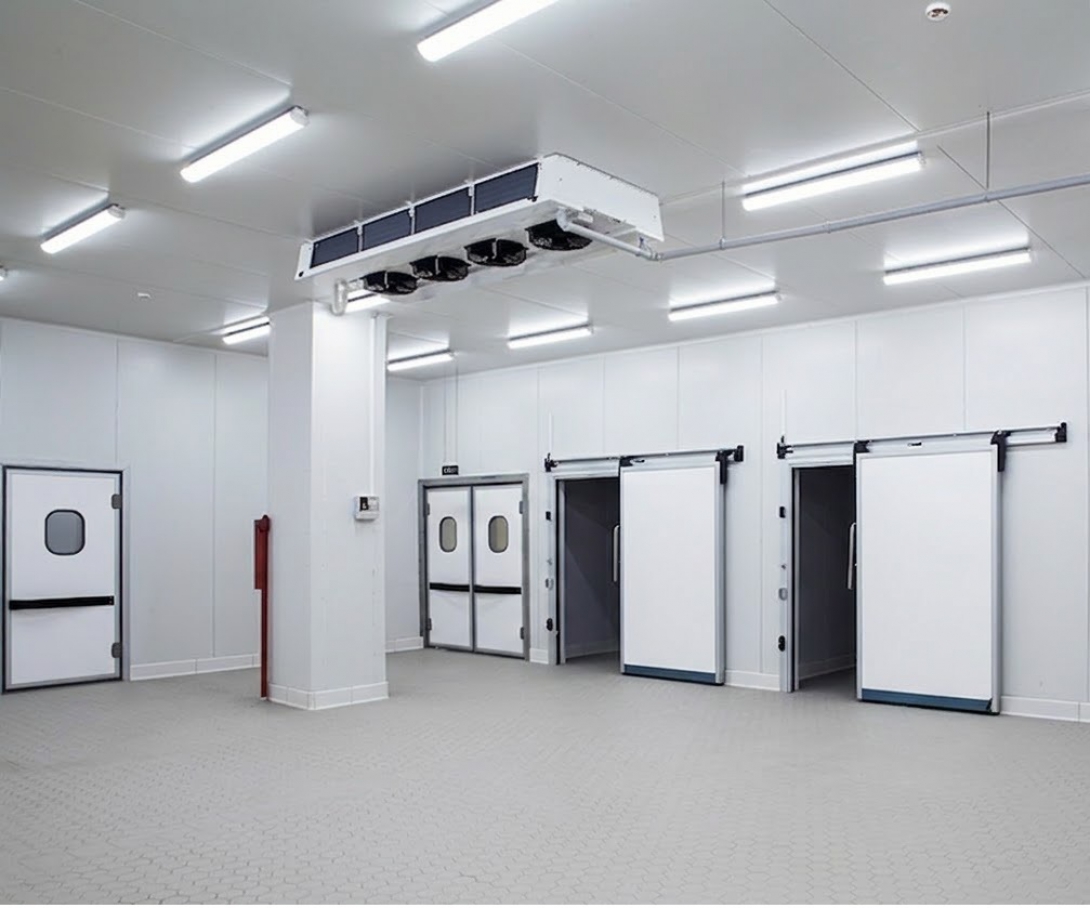
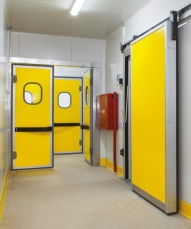
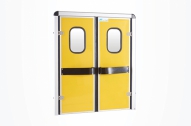
Traffic Swing Refrigeration Doors for Fast-Moving Refrigeration Traffic

Keep refrigeration traffic flowing smoothly with the right swing door selection. Reduce delays, impact-related wear, maintenance burdens, and disruptions to daily workflows.

Traffic Doors That Keep Flow Moving

If a cold storage opening constantly manages personnel movement, cart traffic, and rapid circulation in the kitchen back-of-house area, a traffic swing door is the right choice. In high-traffic facilities, a door is not just an access point. It directly impacts workforce flow, contact damage, cleaning routines, and how smoothly it supports cold storage operations.

For this reason, traffic doors are more important than many buyers realize. A refrigeration unit may maintain temperature, but if the opening slows people down, is subjected to repeated impacts, or begins to cause service issues under daily pressure, it may still perform poorly. The right traffic door maintains natural movement while supporting durability, hygiene, and long-term value.

The Point Where Refrigerated Flow Begins to Break Down

In many facilities, access issues don’t surface during the planning phase. They emerge after the room becomes operational.

A refrigerated opening may look good on paper, but it can start causing glitches once operations are running at full speed. Staff pass through here during preparation, stocking, restocking, picking, or shift changes. Carts and shelves pass through the same opening all day long. The door is subjected to repeated contact, forceful pushing, and constant reopening.

This is where the limitations of standard access options begin to emerge. The problem isn’t that the door breaks immediately. The problem is that it starts introducing small interruptions into a rhythm-driven process.

In a supermarket’s backroom, this could mean slower restocking during peak hours. In a processing plant, it could mean more bottlenecks between the cold storage and production support. In a commercial kitchen, it could mean staff hesitating at the door opening during service rushes. In a distribution cooler, it could mean repeated contact that accelerates wear before the room has fully deteriorated.

The real purchasing question is not whether the door works, but whether it allows operations to continue without becoming a friction point.

The Risk of Choosing the Wrong Traffic Door

Even if a door is technically usable, it may not be suitable for the opening.

This mismatch typically arises not from technical specifications but during operations. The opening begins to slow down the movement of people. The hardware is subjected to more pressure than expected. Impact marks form more quickly on surfaces. Alignment begins to require attention. Cleaning around the door becomes more difficult than it should be. Over time, the entrance begins to feel like the weakest part of the cooler.

This is important because the cooler door sits at the intersection of labor efficiency, maintenance burden, and temperature discipline. If this point is not aligned with traffic flow, the cost is not limited to repairs. It also manifests in staff movement, disruptions to daily routines, and pressure for early replacement.

Inappropriate doors typically lead to:

  • slower passage during peak periods
  • more frequent wear and tear from contact and use
  • additional service maintenance on hinges, gaskets, or hardware
  • decreased confidence in the door during high traffic
  • growing frustration that the original choice was too flimsy for the job

This is particularly important in U.S. commercial environments where operational time, labor utilization, and facility presentation influence purchasing decisions. A refrigeration door that creates resistance every day results in a higher cost than many teams initially anticipate.

The Logic of Traffic-Oriented Refrigeration Doors

A traffic-oriented refrigeration door is designed around movement. That is its true value.

In frequently used refrigeration openings, teams need a door that provides an immediate sense of access. They should be able to pass through the opening naturally, without unnecessary handling, awkward stopping points, or the feeling that the door is overloaded due to normal operations. A well-chosen traffic door supports repetitive passage behavior while better withstanding contact, pace, and routine use.

This makes it ideal for areas such as:

  • restaurant and commercial kitchen refrigerators
  • supermarket and grocery store backrooms
  • food processing support areas
  • beverage storage rooms
  • warehouse refrigerator preparation areas
  • material and packaging support rooms
  • distribution operations with frequent internal movement

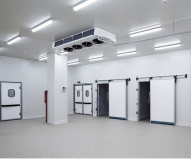
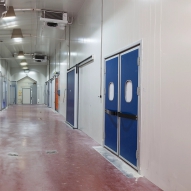
In these applications, the door is an integral part of the workflow system. It affects how quickly people move, how safely equipment passes through, and how well the room continues to function under actual operational pressure.

A Comparison to Help Buyers Make Decisions

Not every refrigeration opening requires the same access approach. The best choice depends on traffic patterns, opening width, clearance, exposure to impact, and maintenance expectations.

If people are passing through the opening repeatedly and speed is critical, a swing-type cooling door designed for high traffic is generally a better option. A lighter-duty swing door may still work in less-used rooms, but it may fall short in active environments. Sliding access can resolve specific layout issues, particularly where swing clearance is limited, but it is not always the most natural solution for fast and repeated traffic.

Here is a practical decision table:

Door TypeBest Use CaseMain StrengthMain Limitation
Standard cooler swing doorLower-frequency staff accessSimple for lighter operationsCan feel strained under constant daily traffic
Traffic swinging cooler doorFrequent movement, push-through use, active back-of-house flowSupports faster passage and better traffic suitabilityMust be matched correctly to traffic intensity and opening conditions
Sliding cooler doorOpenings with limited swing clearance or wider controlled accessSaves surrounding swing spaceNot always ideal for constant rapid staff flow


Door Type Best Use Case Main Strength Main Limitation

Standard refrigerated swing door Less frequent personnel access Simple for lighter operations May struggle under constant daily traffic

Traffic-style refrigerated door Frequent movement, push-through usage, active back-of-house flow Supports faster passage and better traffic flow Must be properly adapted to traffic density and opening conditions

Sliding refrigerated door Openings with limited clearance or wider controlled access Saves space in the surrounding opening area Not always ideal for continuous, fast personnel flow

The goal is not to impose a single style on every project. The goal is to select a door type suitable for the conditions the opening will face on its busiest typical day.

What Should a Better Traffic Door Solution Look Like?

The right solution starts with the opening’s actual behavior.

If the refrigeration entrance is subject to repeated passage activities, the door must be selected with traffic volume in mind. This includes not only the door panel but also the surrounding details that determine how well the opening will perform over time.

A better traffic door solution typically considers the following:

  • daily cycle frequency
  • movement of hand carts and shelves in addition to personnel use
  • the likelihood of repeated impact at the opening
  • cleaning routines and washing expectations
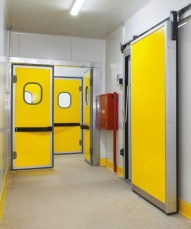
  • the need for a sight panel for safer movement
  • seal performance during repeated opening and closing
  • floor transition and threshold compatibility
  • hardware durability and service access
  • coordination with insulated panels and room layout

These details are important because they shape the ownership experience. A door may appear acceptable during installation, but if the hardware, protection level, or opening logic is inadequately specified, it can still become a source of daily friction.

In practice, the best results are achieved when the access decision is treated not as an independent element but as part of the cold room design. The Freezewize Cooling System typically adds value here: rather than treating the door as just another component on the bill of materials, it evaluates it within the context of movement, layout, and long-term use.

The Role of Hygiene, Visibility, and Daily Use

Access doors in cold environments are not evaluated solely in terms of movement. They must also function as part of actual hygiene and inspection routines.

In food service, processing, and retail support environments, the door must be both functional and aesthetically pleasing. If surfaces wear out quickly, edges sustain damage rapidly, or cleaning the opening becomes difficult, the room may begin to lose professional standards even before performance actually declines.

Therefore, buyers should generally think beyond just the door’s operation and consider the entire access area, including the following:

  • view panels for safer two-way movement
  • protective elements in areas where repeated contact is expected
  • surfaces that can be cleaned in accordance with daily hygiene routines
  • seal condition and closure reliability
  • equipment accessibility for easier servicing
  • compatibility with adjacent panels, flooring, and edge conditions

A good traffic door should ensure that the cooler is easier to operate, maintain, and keep ready for inspection.

Quick Decision Guide

If the opening is part of a high-traffic route rather than occasional access, choose a swinging refrigeration door.

This is generally the right choice in the following situations:

  • if personnel are entering and exiting throughout the day
  • if vehicles, shelves, or hand trucks regularly approach the opening
  • if the room supports preparation, organization, stocking, or rapid replenishment operations
  • if exposure to impact is a normal part of usage
  • if the facility desires not only a lower initial cost but also lower daily wear and tear
  • if appearance, hygiene, and maintenance control are important

If traffic is light and the opening is used intermittently, a standard swing door may still be suitable.

If space for a swing door is limited or the layout requires a different access arrangement, a sliding door may be a better solution.

The simplest rule is this: consider actual traffic, not theoretical access.

Related Solutions

Projects where cold room doors are frequently opened and closed are typically linked to more comprehensive cold room planning. Related solutions may include:

  • cold room insulated panel systems
  • freezer room door solutions
  • cold storage door hardware and protection details
  • hygienic wall and ceiling panel installations
  • refrigeration layouts for kitchen back-of-house food operations
  • warehouse and distribution cold room configurations

Since door performance is rarely separate from room structure, traffic design, and long-term service expectations, these present strong opportunities for integration.

FAQ

What is a swing-type refrigerated door most commonly used for?

It is most commonly used in refrigerated openings where daily traffic is repetitive, particularly where staff require quick access and the door opening supports active kitchen back-of-house operations.

Are traffic doors suitable for carts and shelves?

Yes, they are suitable when the opening width, protection level, threshold condition, and hardware are specified for this use. Cart traffic must always be considered during selection, not after installation.

Is a traffic swing-style refrigeration door better than a standard swing-style door?

In openings with heavy traffic, generally yes. In less-used rooms, a standard swing door may be sufficient. The correct choice depends on daily cycles, exposure to impact, and workflow intensity.

When does a refrigeration door become a maintenance issue?

It generally becomes an issue when traffic levels exceed the original specifications. Repeated impacts, heavy daily use, and inadequate hardware tend to accelerate the need for service.

Are sight panels important in refrigeration traffic doors?

They are generally important. In high-traffic openings, the sight panel supports safer two-way movement and reduces preventable contact, especially in kitchens, processing support areas, and active storage zones.

Should a traffic door be planned with consideration for refrigeration panels and floor conditions?

Yes. Door performance depends on all opening conditions, including panel integration, threshold details, and how surrounding equipment and machinery move at the access point.

Smarter Flow Starts at the Opening

In high-traffic refrigeration environments, the door is not a minor detail. It is part of the operation.

If there is constant movement at the opening, a swinging refrigeration door is usually the most practical choice in the long run.

For teams planning a new room or upgrading an existing refrigeration unit, the next step is to evaluate the opening in terms of traffic, impact risk, cleaning routines, and daily use to ensure the access solution supports the facility’s operations rather than slowing them down.


Fill the Form!

Write your needs and fill the form to contact us.

Freezewize | Industrial Cooling Systems & Custom Cold Room Solutions
Merhaba, Size yardımcı olabilir miyiz ?
Whatsapp Destek