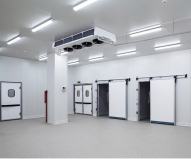





Where Traffic Doors Protect Workflow
Traffic-Swing Refrigeration Doors That Maintain Workflow in High-Traffic Cold Rooms
Keep workflow uninterrupted with a traffic-swing refrigeration door designed for high-traffic areas. Reduce workflow slowdowns, impact loads, and maintenance burdens in high-traffic cold rooms.
Where Traffic Doors Protect Workflow
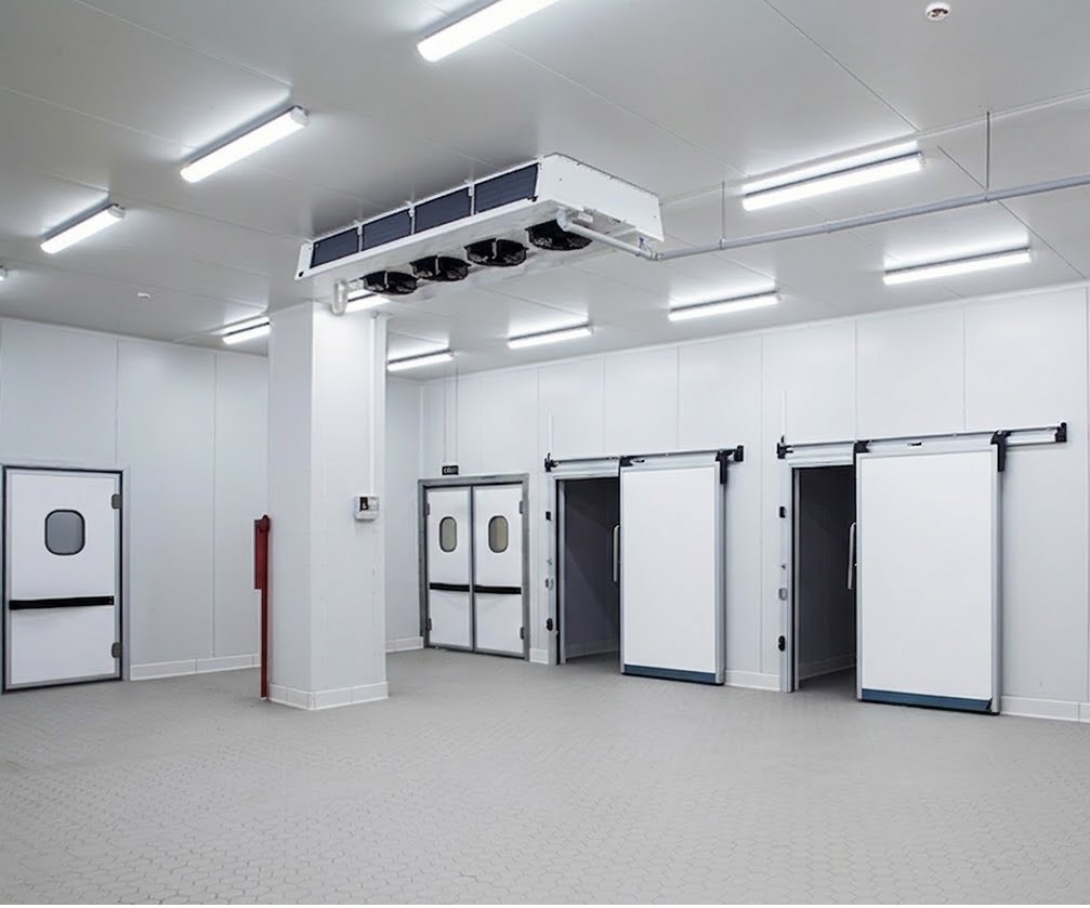
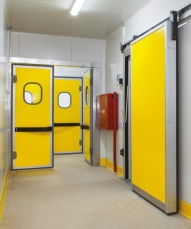
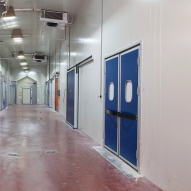
When a high-traffic cold room entrance needs to manage constant personnel movement, cart traffic, and repeated daily entries without becoming a bottleneck, a traffic-winged cold room door maintains workflow. In active food, retail, and distribution environments, the door is not just a part of the room—it is part of the rhythm of operations.
That is why the access point is so critical. When the wrong door is installed in a high-traffic entrance, the problem isn’t just wear and tear. It’s a cold room that feels harder to operate—with slower movement, more hesitation, and more contact at the threshold.
Workflow Issues Often Start at the Opening
Most cold rooms don’t lose efficiency because teams misunderstand refrigeration. The loss of efficiency stems from the access point beginning to disrupt the pace of work.
A high-traffic opening is tested all day long. Staff enter and exit during preparation, restocking, organizing, picking, shift changes, and internal product flow. Carts and racks approach from different angles. In some facilities, pallet jacks regularly cross the threshold. When this traffic encounters an access system that is too lightweight, too cumbersome, or too slow for the task, the entrance begins to cause small, repeated delays throughout the day.
These delays rarely seem dramatic at first. They manifest as hesitation, contact, clumsy use of the door, congestion at the entrance, and attempts to pass through the entrance for longer than anyone anticipated during planning. Over time, this turns into workflow friction.
In a supermarket’s backroom, this can slow down restocking during peak demand periods. In a kitchen support area, it can disrupt the preparation flow. In a warehouse cooler, it can disrupt the preparation rhythm. In a processing plant, it can create a sense that control over the connection between the cold storage and active production is diminishing.
This is the core issue. A cooler door may still function, but it may be the wrong fit for the workflow it serves.
The Risk of Allowing the Door to Control the Pace
When a high-traffic opening begins to impede movement, the cost extends beyond the door itself.
Teams begin to adapt their behavior to the door. They slow down near the entrance. They adjust their approach angles. They handle equipment with more care than necessary. They start to view the door not as a flow point but as a point requiring attention. When this happens, the door is no longer supporting operations. It is quietly dictating them.
The practical consequences of this situation are as follows:
- slower traffic flow during peak periods
- more impact on frames, surfaces, and edge areas
- extra strain on hinges, gaskets, and hardware
- increased maintenance needs around an opening intended for daily use
- more difficult cleaning around the threshold and traffic path
- a growing sense that the room was not designed for its actual conditions of use
This is why traffic door decisions are critical in the U.S. commercial market. Labor pressure is real. Downtime is costly. Back-of-house operations must run smoothly. An opening that repeatedly disrupts workflow can create long-term costs far exceeding what many buyers anticipate at the point of purchase.
A door doesn’t have to fail to be a poor choice. It’s enough that it continues to slow down the room’s operations.
The Comparison That Really Matters
For most buyers, the most useful comparison isn’t between a premium and a basic model. It’s a comparison between suitability for the workflow and the situation where the workflow is slowed down.
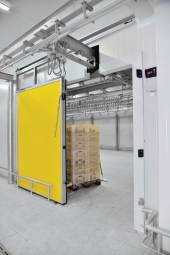
A standard swing-door cooler may still be acceptable for a room with limited entry frequency. When the opening is part of a repetitive work route, a traffic swing-door cooler is generally a stronger choice. Sliding access can resolve specific space issues, particularly where side clearance is limited, but it is not always the most natural solution when rapid passage is more important than preserving floor space.
Here is a practical comparison:
| Door Type | Best Fit | Workflow Advantage | Main Limitation |
|---|---|---|---|
| Standard swing cooler door | Lower-frequency access | Works in lighter-duty rooms | Can interrupt pace in high-use openings |
| Traffic swinging cooler door | Repeated staff and cart movement | Better supports continuous pass-through flow | Needs correct clearance and traffic-based specification |
| Sliding cooler door | Layouts with limited swing space | Helps preserve surrounding clearance | May feel less immediate in fast-entry applications |
Door Type Best Suited For Workflow Advantage Main Limitation
Standard swing-type refrigeration door Lower-frequency access Works well in less-trafficked areas Can disrupt the flow in high-traffic openings
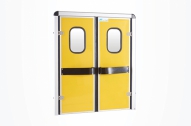
Traffic-style swing refrigeration door Repeated personnel and vehicle movement Better supports continuous traffic flow Requires proper opening size and traffic-based features
Sliding refrigeration door Setups with limited swing space Helps preserve surrounding clearance May feel less immediate in high-speed entry applications
This comparison is useful because it shapes the purchasing decision based on how the entrance behaves during actual operations rather than superficial preferences.
Why Do Swing-Type Doors Better Preserve Workflow?
The swing-type refrigerated door helps preserve workflow because it is designed around movement rather than occasional access.
In high-traffic environments, the opening must recover from continuous activity without feeling sensitive or disruptive. People should be able to pass through naturally. Vehicles should not turn every passage into a slow maneuver. The room should feel as though it were built around usage, not theory.
This is where swing-style access designed for traffic performs well. This gives the opening a more direct role in supporting daily movement within the room. Rather than forcing teams to work around the door, it helps the door function as part of the process.
This is particularly useful in:
- refrigerated rooms at the back of supermarkets
- restaurant and institutional kitchen support areas
- refrigerated preparation areas
- food processing support zones
- beverage and supply storage rooms
- warehouse and distribution refrigerated entrances
In these environments, the door maintains workflow by reducing unnecessary interruptions. It facilitates faster access, greater durability with repeated use, and adaptation to the facility’s pace.
A Better Solution Starts with Traffic Reality
The right solution isn’t just about choosing a traffic door by name. It’s about tailoring the door to the actual operating patterns of the opening.
This means asking practical questions early on. How many times will the entrance be used during a typical shift? Is traffic primarily made up of personnel, or is it mixed with vehicles and carts? Is there sufficient clearance for movement to remain natural? Does the opening require a sight panel for safer two-way use? Will cleaning crews need easy access to thresholds, seals, and hardware? Is the entrance part of a visible back-of-house area where early wear and tear affects the presentation?
A more robust solution typically involves considering the following:
- traffic frequency and usage intensity
- opening width and clearance path
- approach patterns for hand trucks, shelves, or pallet jacks
- threshold suitability for wheeled traffic
- seal and closure reliability under repeated cycles
- equipment power and service accessibility
- frame protection and impact-prone areas
- integration with insulated panels and floor conditions
This is where application experience becomes crucial. The Freezewize Cooling System evaluates the opening not merely as a door location on a drawing, but as a functional point within the room. This approach generally leads to better workflow protection, as the access system is selected not just based on the opening’s dimensions but on the facility’s movement patterns.
Workflow Protection Also Improves Room Standards
When traffic doors protect workflow, they typically do more than just improve movement.
A better opening tends to stay cleaner during use, is easier to maintain, and remains visually manageable under constant use. This is critical in food service establishments, commercial kitchens, processing areas, and retail support environments, where the condition of the doorway affects both hygiene routines and the overall perception of the room.
If the opening is constantly taking a beating, slowing down staff, or accumulating visible damage, it weakens the standard of the entire area. If it remains consistent under pressure, it supports both performance and presentation. Therefore, workflow protection is not separate from property value—it is an integral part of it.
Quick Decision Guide
When the opening is part of the daily work route—not just occasional access to the room—a swinging refrigeration door is usually the right choice.
It is particularly suitable in the following situations:
- if staff pass through the entrance throughout the day
- if vehicles, racks, or pallet jacks regularly use the opening
- if the cooler supports preparation, restocking, assembly, or picking operations
- if quick access is more important than minimizing every inch of the swing path
- if the facility wants to reduce daily friction at the entrance
- if long-term maintenance and workflow reliability are important
If the room’s traffic is less intense and the entrance is not part of a continuous operational path, a standard swing door may still be sufficient.
If the surrounding area makes opening the door difficult or if layout constraints pose a more significant issue than passage speed, a sliding option may be a better solution.
The simplest rule is this: If the door is part of the workflow, it should be selected to maintain the workflow.
Related Solutions
Other page opportunities related to this topic may include:
- insulated panel systems for cold rooms
- sliding cold room door solutions
- freezer door systems for low-temperature zones
- refrigerated door hardware and protection details
- hygienic wall and ceiling panels for cold rooms
- threshold and floor transition solutions
- warehouse and distribution cold storage layouts
- commercial kitchen refrigeration access systems
These are important because the workflow in the opening is typically shaped not only by the door itself but also by the surrounding room design.
FAQ
What does it mean for a passage door to support workflow?
This means the door supports repetitive daily movement without slowing down staff, creating unnecessary handling friction, or turning the opening into a maintenance-intensive bottleneck.
When is a swing-type refrigerated door a better choice?
It is generally a better choice when the entrance manages frequent personnel movement, mixed traffic, and constant passage activity as part of normal operations.
Can the wrong door cause workflow issues even if it still functions?
Yes. A door can still open and close properly while causing hesitation, slower passage, more contact, and increased frustration in a high-traffic work environment.
Do vehicles and racks affect door selection?
Absolutely. When wheeled traffic is part of the entrance, threshold conditions, clearance, durability, and traffic suitability become much more critical.
Is workflow protection solely about speed?
No. It also includes motion control, reduced risk of contact, easier maintenance, better daily usability, and a more organized back-of-house environment.
Should traffic doors be planned together with panels, thresholds, and hardware?
Yes. The best results are achieved when the entire entry area is evaluated together, including insulated panels, floor conditions, gaskets, visibility requirements, and hardware durability.
The Right Door Maintains Workflow
In a high-traffic cold room, the opening should facilitate the progress of operations, not force work around it.
When an opening is subjected to daily wear and tear, the clearest path to maintaining workflow in the long term is often a swinging cold room door.
For new installations and retrofit projects, the best approach is to examine the entrance as a real-world workspace—including traffic flow, opening size, threshold usage, and maintenance expectations—before finalizing the access strategy.